Interviewing Phoebe Waller-Bridge
If you had the chance to interview the writer of your favorite TV series, what would you ask? Two years ago, I found myself facing that enviable dilemma when I landed an interview with Phoebe Waller-Bridge, the creator and writer of Killing Eve. The interview came close on the heels of another interview that I’d conducted with executive producer Sally Woodward Gentle. Both interviews were really exciting, opening doors to behind-the-scenes information that I would use in my Killing Eve book. They were surprisingly complicated too.
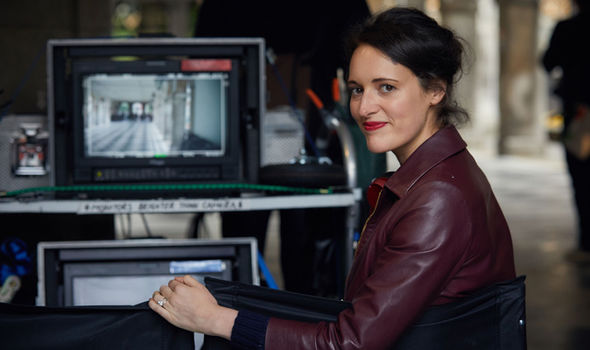
As I noted in my last post, I wrote the book as a scholar interested in queer cultures, madness, and belonging. I also wrote it as a long-time Killing Eve fan with deep ties to online fandom in all its creative, chaotic glory.
In theory, that wasn’t so strange. Academics have hobbies too and fans come from all walks of life. In practice, however, things can get weird pretty fast. Scholars who work in the field of Fan Studies use the term “acafan” to describe people who study their beloved object — whether it’s a TV show, celebrity, or fandom itself — from both academic and fan perspectives. From reading work in Fan Studies, I knew that acafans often navigate difficult terrain, with some academics dismissing their work as superficial and some fans accusing them of exploitation.
When I began writing my book, I didn’t give those issues much thought because I wasn’t studying fans. For me, this was an important boundary. I’d made good friends in the Killing Eve fandom and I had no interest in muddying those waters, or grappling with the ethical quandaries that such a study would involve. Instead, I wanted to “study up,” by interviewing the powerful industry figures who had created Killing Eve, to learn about their actions, intentions, reactions, and craft. As I quickly realized, however, my disinterest in studying fandom didn’t mean that fan perspectives would somehow disappear from my mind the moment I entered industry spaces. Instead, as I interviewed Killing Eve’s creators, I found myself grappling not only with my own obsessive attachments and longings, but also with a complex allegiance to other fans, most of whom would never have the type of access that I’d secured.
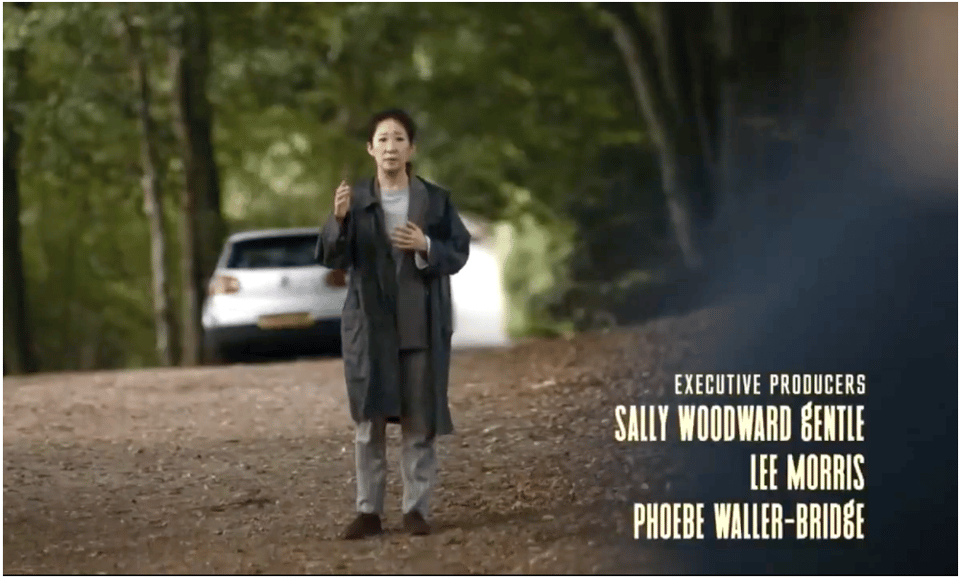
To be honest, the fact of my access still surprises me. Perhaps it shouldn’t. After all, I wasn’t only a fandom regular, obsessed with a series about obsession, but also an award-winning academic with a book contract in hand. (Unlike many other writers, academics sometimes get publication contracts before their books are fully written). This meant that when I approached Waller-Bridge, I wasn’t asking for help with a hypothetical future project, but inviting her to contribute to a book that was already scheduled for publication, regardless of her participation.
I was also creating something unique: a widely accessible, fan-forward book grounded in academic analysis. The latter point matters because academics write about TV differently than journalists do. Specifically, we’re less concerned with assessing whether a show is “good,” than with exploring what it does — and why it matters — culturally, politically, and aesthetically. I imagine this framework appealed to Waller-Bridge, because it took her creative labor seriously, while offering a way to contend with the series’ fraught reputation, refusing to either shy away from its disappointments or let them overshadow all that came before.
Preorder the book hereMost of the time, my academic and fan investments felt complementary — i.e., I loved the show because of its sharp and clever subversions, and I analyzed it to dig deeper into what I loved. Sometimes, however, my dual perspectives pulled me in different directions, as when I interviewed Sally Woodward Gentle, at London’s Sid Gentle Films office, and we discussed Killing Eve’s ending in remarkably honest and open terms. (This is the focus of my book’s final chapter). Even as I prepared to interview Waller-Bridge — who’d left long before the final season — I found myself torn between my academic and fan investments, as I sorted through the questions I most wanted to ask, and the information I suspected many fans wanted to hear.
To be transparent, I interviewed Waller-Bridge in writing. This meant that I sent her my questions and eagerly awaited her reply. When we first made those arrangements, I felt a little disappointed, because I’d really wanted to meet her. But once I received her written responses — pages and pages of Waller-Bridge brilliance — my disappointment evaporated. She is one hell of a writer.
The interviews that appear my book — with Waller-Bridge and Woodward Gentle — are very different than those that appear in the entertainment media. Media interviews with TV writers, producers, and actors are typically conducted as part of a promotional campaign for an upcoming (or ongoing) show and they focus on the creator’s career: how they reached their current position, the obstacles they’ve overcome, and what they hope to work on next. (Post-season interviews have also become a staple part of the TV landscape, for better or worse — another topic I take up in my book). Although journalists sometimes include personal questions, asking about favorite films for instance, these interviews primarily operate as marketing tools.
I had no interest in any of this. I didn’t want “fun facts” or polished soundbites. I wanted a deeper understanding of how Waller-Bridge had created the series, imaginatively and practically. This required a type of interviewing more aligned with sociological and ethnographic research than with entertainment journalism. But I didn’t want to study the whole TV industry. I just wanted to talk about Killing Eve.
Subscribe nowBy the summer of 2024 (two years after the series ended), I’d almost talked Killing Eve to death, particularly with people I’d met online. As a result, I knew the questions that many fans would want to ask: What did Waller-Bridge think of the ending? Why did she quit after season one? Would she ever come back? For me, though, those questions were off the table. Asking a wildly talented and successful writer about somebody else’s work, instead of her own, felt disrespectful, as did asking why she’d left, instead of what she’d accomplished while she was there. Putting those questions to one side, I instead was guided by two principles: (1) Focus on her expertise. (2) Don’t be afraid to bring my own.
Waller-Bridge is an expert at writing emotionally complex “dysfunctional” characters, twisted humor, and taboo desires. To quote The Ringer, she “has an eye for the deliciously fucked up.” In particular, her unflinching portrayals of “flawed and desperate” women characters have earned her numerous industry awards, rave reviews, and legions of fans.
Sneak Peek: In our interview, Waller-Bridge used the phrase “flawed and desperate” to describe Killing Eve’s characters, explaining how these characteristics helped her bring the series to life.
For example, when Killing Eve aired in 2018, The New Statesmen described her as the “best thing to happen to women and TV in 45 years,” while British GQ named her “one of the most talented writers working in film and television today.”
These accolades loomed in my mind as I prepared the interview. My questions focused on Waller-Bridge’s writing craft and creative process as they manifested in Killing Eve. I was particularly interested in the ways she created character and tone, and the places where our expertise overlapped. As a professor of sexuality studies, I theorize a lot about sexuality, normality, and difference - themes that run through Killing Eve. Consequently, I wanted to know how she conceptualized sexual desire, queerness, and psychopathy, for instance, and how that structured the way she wrote Eve and Villanelle’s seductive dynamic: obsessive, erotic, and steeped in violence, but achingly tender too.
Spoiler alert: “love story”
In short, I knew what I wanted from the interview. I also knew how to ask. Still, I found myself wracked with doubt. Specifically, I was unsure whether my “edgier” questions about sexuality reflected my deep understanding of the series (yay) or my deep immersion in fan culture (uh-oh). Dedicated fans often delineate between two categories of knowledge: canon (the official events of a series) and fanon (fan-generated collective agreements). What if I had muddled the two? For example, I wanted to ask Waller-Bridge about the persistent presence of kink in Killing Eve. Was that canon? Or had I been on ao3 too long?
Fortunately, I have great work friends who love Killing Eve. They encouraged me to stick with my questions and I’m very glad I did. Waller-Bridge’s detailed reflections on kink, desire, and sexual fantasies were exceptionally useful to me, vastly enriching my understanding of Killing Eve and the book as a whole. Unfortunately, I can’t yet share her answers, but here are some topics I asked about:
Killing Eve’s distinctive tone, particularly its juxtaposition of humor, cruelty, and moments of tenderness.
The decision to represent queer sexual desire delinked from sexual identity
The centrality of kink in the Killing Eve universe
The pleasures of writing a psychopath character
The interplay of knowledge, excitement, sex, and violence throughout season one
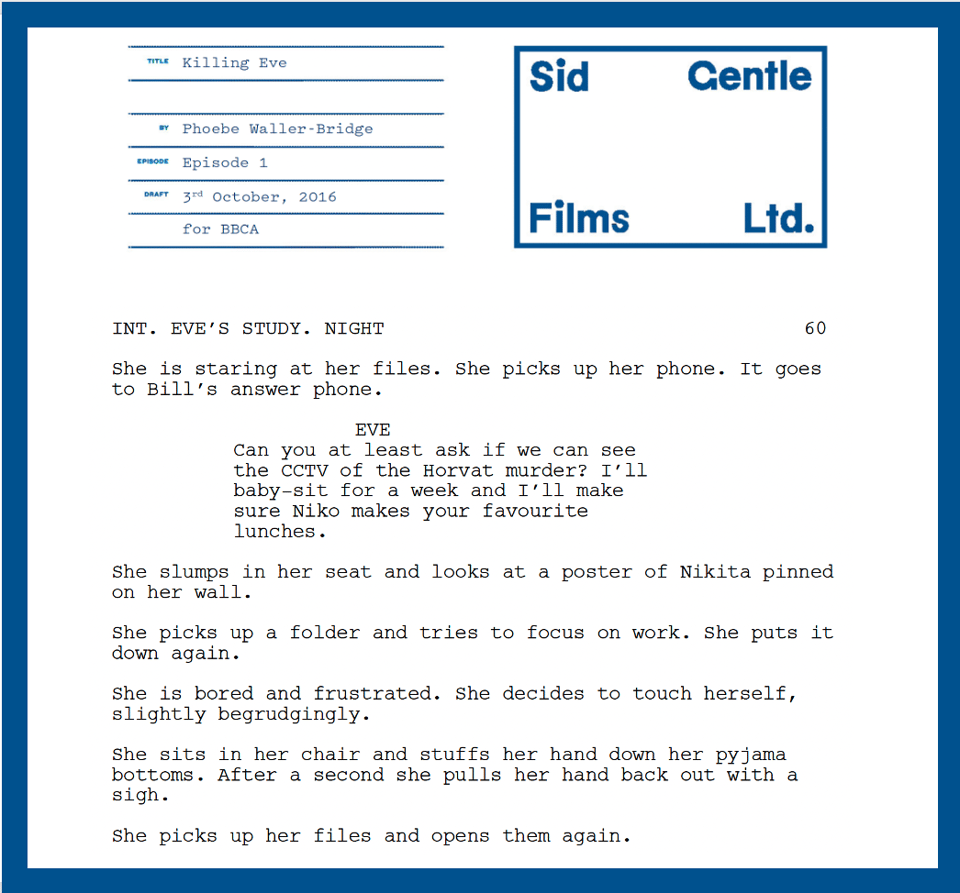
Deleted scenes from the pilot script (e.g., Eve masturbating while thinking about CCTV footage of Villanelle).
After I received Waller-Bridge’s answers, I faced the fantastic challenge of figuring out how to place her insights into conversation with my own. Unlike more traditional interviews that are published in self-contained Q&A formats, I wove her answers throughout the book, as they mapped onto my main themes: humor, tone, and characters (chapter 1), queerness and kink (chapter 2), and psychopathy (chapter 3).
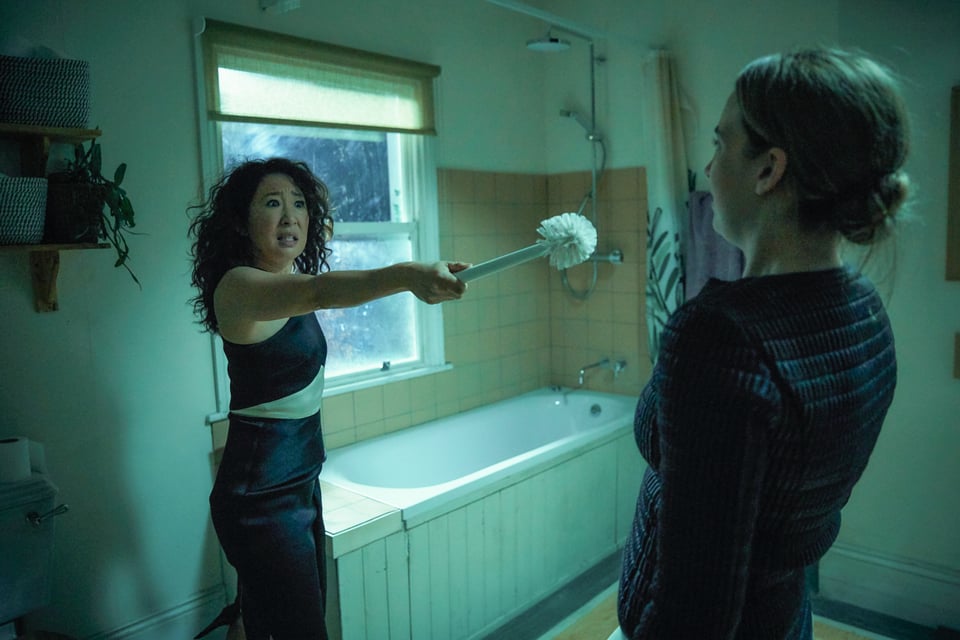
Occasionally, I used her answers to fill gaps in my knowledge, as when she explained the early difficulties of finding a network to buy the show. Mostly, however, I used her insights to expand my analysis, as when she described the specificity of Eve and Villanelle’s queer attractions (trust me: it’s hot!) or explained her goals for season one’s iconic bathroom scene (“I Have a Thing About Bathrooms”).
Only once, did Waller-Bridge’s analysis differ from mine, when she discussed the joys of writing a psychopath character. Figuring out how to center her perspective, while also suggesting an alternate approach, was a tricky but very rewarding challenge. Once the book is out, I’d love to know what you think!
Preorder Killing Eve hereAs I write this, there are six weeks until publication. I’ll try to squeeze in a couple more posts before then, so please subscribe if you haven’t already. In the meantime, feel free to leave me a message below or track me down on social media (see links below). It would be great to hear from you.
Subscribe now-
Thank you for these tempting glimpses of the book, they truly brightened my monday evening. Totally worth waiting!
-

You’re welcome! Excited for you to see the full book soon.
-
Ooh some really interesting context here. There’s a reason I’ve never wanted to meet my idols. But I’m looking forward to seeing how you approached the interviews in the book!
-
Thanks! I’ll be eager to hear your thoughts.
-
CLARE!! thank you for leaving the comment on AO3 so I could find this!! I'm thrilled for you and cannot wait to read this book, especially now that some time has passed and we (or perhaps I'll just speak for myself lol) have cooled a bit from the final season drama. It is exciting to hear that PWB sent you pages of answers...daaaamn. The fickle hinge between canon & fanon is so real, I'd have had that same fear, but I'm so happy to hear you stuck to your questions. The KE folks must have loved having a brain like yours dissecting their show. I bet PWB loved it. Can't wait!!
-
Hey Kate! So good to see you here. Thanks for following the ao3 breadcrumbs and thanks for just getting it as always. Hope you enjoy the book and hope we get to catch up sometime. Recently, Hannibal came up in conversation and it made me think of you!


Add a comment: