An interview with s.e. smith
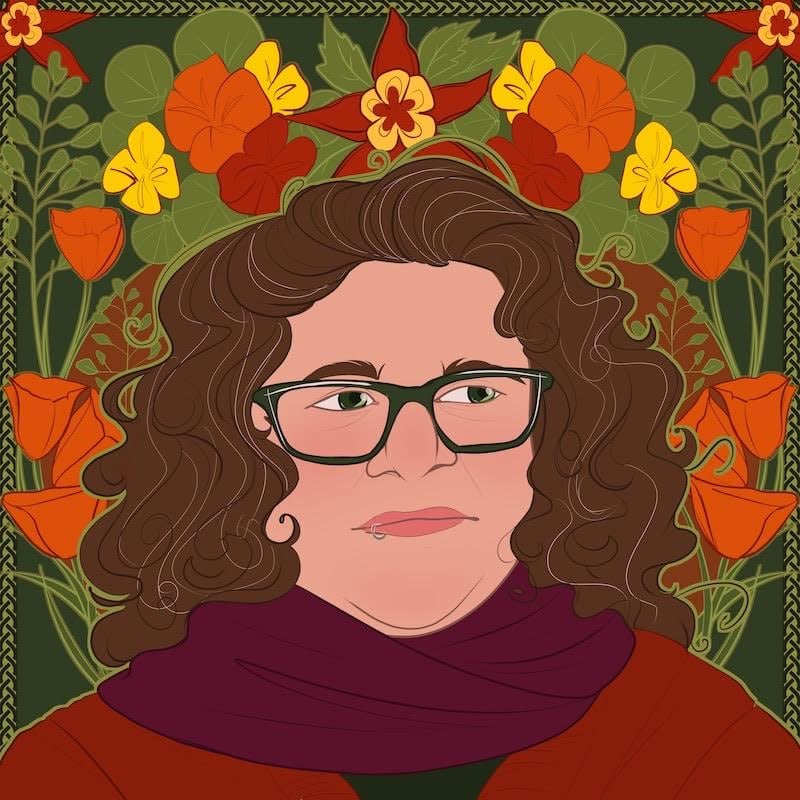
Writer and cultural critic s.e. smith and I first met back in 2008, when we came across each other’s work during a time when both of us had written about the lack of disability inclusiveness in the feminist blogging world. Along with a few of the internet’s most outspoken disabled bloggers, we co-founded a site called FWD/Feminists with Disabilities. The blog itself only lasted for two years due to a combination of factors, but over the last 18 years, our friendship has endured. We’ve also collaborated on a couple of projects, my favorite of which is this Bitch feature on language and accessibility that was later republished at the Flytrap.
One of the many things that I admire about s.e.’s journalistic work is their commitment to exploring nuance, complexity, and difficult questions that don’t always have straightforward answers—-a rarity in a media ecosystem that rewards virality, instant responses, and boiling hot takes.
A few of my favorite articles of theirs include this piece on traditionally published fanfic for the Flytrap, this Rolling Stone feature on survivors of mass shootings, this essay on complicated grief (originally published in Bitch and reprinted at the Flytrap), and this feature for The Verge on AI and ableism.
Their debut book All My Dead Cats and Other Losses: Practicing Good Grief in a Culture That Fears Mourning is out now from HarperOne. You can find out more about smith’s work at their website.
How did you get the idea for this book, and was there a specific impetus that started your work about death and grief? I've been covering death and grief from the start of my career—-they're important cultural phenomena to explore, and say so much about who we are as a society. Like many of us, I brought personal experience to this work, but also, I have an insatiable thirst for cultural criticism and this is an area of analysis that is really underexplored. The fact that people are so responsive and clearly wanting more signals to me that this work continues to be valuable.
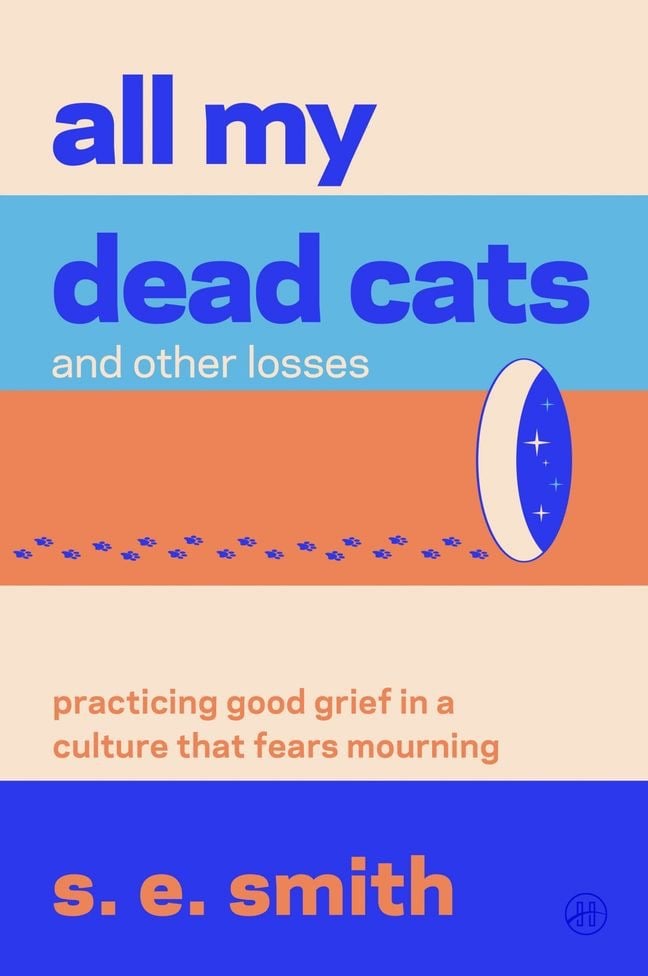
The way that this collection is organized—-by your experience(s) with the deaths of your cats and the grief that comes with those deaths—is really unique, and serves as a way in to all of these different aspects of mourning death/experiencing grief that you address in the book. Did the manuscript start this way, or was this something that came up later in the process? It did indeed start this way! I've found over the years that my features on pet loss in particular tend to result in an influx of responses. People grieving pets often feel unrecognized and marginalized. Tapping into that to invite people to think about how pet loss is complex and maps to many forms of grief lures people in for bigger conversations that they might be scared to have.
What was the most challenging aspect of writing this book? The least? Most challenging? Absolutely the research. I started working on this book specifically in 2020, and conducted hundreds of interviews, read a whole lot of books and journal articles, and watched a ton of media. That research was often really interesting, rewarding, and informative, but it also required a lot of time, care, and dedication. I'm sad that I had to leave so much on the cutting room floor, and [I] am so grateful to the many people who shared their expertise and experience with me.100% worth it, though!
My decision making about the structure was probably the most straightforward part, as discussed above; I didn't have to agonize over how I wanted to tell the story, or what order I wanted to present the chapters in.
It’s hard for me to pick a favorite essay, but I think “Tab4” is going to stay with me for a long time. It tackles some really challenging subject matter beautifully, and I was wondering if you’d mind talking about your process for writing this piece—and how you approach writing about subjects that are hard and/or tend to be hidden culturally (complicated grief, for example). That chapter built on years of experience in animal welfare and my frustration that society tends to focus on animals to the exclusion of the people who help them—unless they're blaming those people for not doing enough, or for doing things "the wrong way." I wanted readers to really understand the emotional and physical costs of this work, and to think about this in the larger context of "cause work" and the burdens we ask people to carry. My personal experiences obviously played a role in the process and the storytelling, and my background in trauma-informed journalism, making sources feel supported, and taking care with how I talk about complicated things was definitely essential here. As I did throughout the book, I did a lot of interviews, and I read scientific research, features, memoirs, and other media to help me think about the bigger picture, rather than relying solely on my own experience (and understanding).
A lot of people have commented that this chapter was difficult to read, which reflects the larger purpose of the chapter and the book: We need to have conversations that make us uncomfortable, discomfort is a growth experience, and being confronted with our own complicity can be really hard, but it's an important part of thinking about society as a whole as a collective project. On behalf of so many people working in animal welfare, I wanted to make people do some internal reflection on their relationship to this work and ask themselves what they can do to make the world a better place for animals.
Since you work in animal rescue, what are the biggest misconceptions about the field that you’ve run into as a shelter volunteer and later staff member? That people making difficult choices about euthanasia, medical care, animal housing, and other parts of this work are callous, aren't affected by those choices, or don't really care about the animals. Communities often offload their own guilt, remorse, and responsibility onto shelters and rescues and expect them to pay the literal and emotional price for it. We live in a resource-limited culture, which sucks, but shying away from that means we never actually think about how to solve these limitations. Animals will always need shelter and care and the crisis in animal welfare isn't about careless or heartless people, but huge systemic inequalities that we need to address. And shaming people who surrender their animals doesn't contribute anything of value to this work, in fact, it actively makes people's jobs harder—and makes people feel like shit on what may be one of the worst days of their lives.
For those who are new to your work, what do you hope that readers take away from your professional oeuvre from the past 20 years? Overall, the throughline of my work is one of collectivism: We cannot address inequality and injustice on our own and we have to work together, not separately, or worse yet, against each other. Being alive and navigating society are a group project. And we must explore, and reckon with, our own complicity in these systems, including thinking about ways where movement work falls short and fails some communities—liberation for some is justice for none, as the header on my website used to say. My work is also about doing the reading and thinking, especially when it is hard and scary. That work requires us not just to identify and call out injustice, but to say "okay, what next." How do we fix this?
Last question: please tell me about your favorite Six Feet Under episodes and why you love them. Obviously, everyone loves the finale, "Everyone's Waiting," [season 5, episode 12] which is an absolutely fantastic hour of television. They did a really great job of wrapping up the lives of the Fisher family for viewers without making it feel hurried, and those endings felt really true to the characters and carefully thought-out.
"The Eye Inside" [season 3, episode 3] also really sticks with me because of the opener: Callie Mortimer is walking alone on the street when three men start harassing her...and it turns out the three men are actually her friends, and "just joking around." Because she's distressed and distracted, she doesn't realize she's in the street, and a driver strikes and kills her. It was such a sharp illustration of the deep fears many women have just existing out in the world, and how clueless many cis men are about them.
"The Room" [season 1, episode 6] is another one I love. As Nate is reviewing the funeral home's financials, he finds some entries that don't make sense and visits a number of local businesses trying to reconcile them. In the process, he learns a lot about his father, Nathaniel Fisher, including that he maintained a private room above an Indian restaurant and got a steady supply of marijuana from a grower. After the death of my own father, I've been thinking a lot lately about people's secret lives and how we never truly know them—in death, we often learn surprising and interesting things that change our perspective, and sometimes we wish we'd known and talked about those things in life.
I also really love "Falling Into Place," [season 4, episode 1] where Nate illegally takes Lisa's body out into the wild to bury her, which is what she wanted (also what I would want!) and a great nod to Edward Abbey. It's a very intimate episode and moment, with Nate taking this task on by himself, pushing through because he wants to honor her one last time. It sparks a lot of reflection about our wishes for disposition, and who we trust to carry them out.
*
Thanks for reading Citizen Cane! As always, this newsletter is free, but if you’d like to support my work financially, you can do so at my ko-fi.
-
So glad to read this! We just lost our beloved 19-year-old kitty and the mourning is different.
-
I’m so sorry for your loss.
Add a comment: