Two Essential New Novels About Queer Longing and the Dark Side of Hollywood
First, a few quick plugs:
Do you like vampires who can time-travel? Pre-order my novel Good Things Are Coming Your Way! Get it signed/personalized.
I’m coming to Philcon in a couple of weeks!
I’m on a Zoom panel about book criticism on Tuesday.
You can still get Star Trek: Zero Point #1!
New Books: Public Access Afterworld and There’s Only One Sin in Hollywood
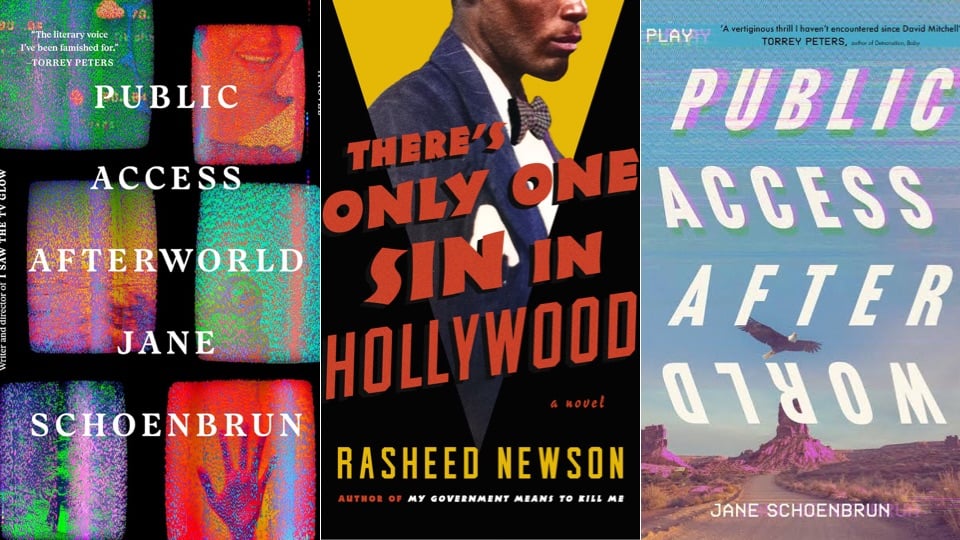
Two recent queer novels deal with Hollywood and the dark side of mass entertainment, from very different perspectives. I read There's Only One Sin in Hollywood by Rasheed Newson and Public Access Afterworld by Jane Schoenbrun back to back, and both novels seemed to be somewhat in conversation. They're both delving into queer yearning, obsessive fandom, and what happens when you step inside the inner workings of the fantasy machine.
Warning: There will be relatively minor spoilers for both books below, because this is more of an essay than a straight-up review.
To be a queer person is to be on the outside of culture by definition — but we also construct our identities largely out of images we find in pop culture. We magpie our way through a variety of images and motifs and take whatever suits our needs. I grew up without any positive trans representation in movies and TV shows, but I pulled together a self-image out of Wonder Woman comics, sitcom heroines and various cartoon characters.
Hyper-obsession with pop iconography — hyper-fandom — is a huge part of queer culture, and it's the reason why Tumblr is one of my main online hangouts these days. Schoenbrun's movies have dealt a lot with the axis of queer longing and media obsession, from the two fans of the Pink Opaque TV show in I Saw The TV Glow to the director remaking a slasher movie in Teenage Sex and Death at Camp Miasma. Schoenbrun's characters are frequently stuck, unable to move forward with their lives in equal proportion to their fixations on luminous screens.
Subscribe now! It’s free!But I'd argue that queer yearning and a fixation on how stories become mass culture is at the heart of both of these novels.
There's Only One Sin in Hollywood follows Aaron Toussaint, a gay Black man who's been a movie nerd since early childhood. Aaron works as a "fixer" for a Hollywood studio in the 1950s and 1960s, covering up potential scandals and literally helping to construct the stories that are told about real-life celebrities. Aaron starts working with a rising star, Xavier C. Barlow, who's also gay and Black — and Xavier is determined to use his star power to challenge Hollywood's homophobia. Xavier is cast as the lead in a biopic about Horace "The Hornet" Dixon, a heroic Korean war Navy pilot and the only man Aaron has ever loved.
Meanwhile, the plot of Public Access Afterworld is harder to summarize, especially without going to deep into spoiler territory. A trans woman named Bethany Peters is a content moderator at GlobalVill, an internet company that posts short-form videos, and she becomes obsessed with one user, Jules Estrada, whose extreme videos reference Public Access Afterworld, a place that lives in the static of old TV sets. Through other characters, including teen obsessive-turned-adult cult leader David Sawyer, we delve into the mythology of Public Access Afterworld, which turns out to be both the source of all television shows. Certain "crooked" people who have television shows in their heads, mostly women, get pulled into Public Access Afterworld, including David's high school best friend Erin. I'm barely scratching the surface.
Schoenbrun, obviously, is an acclaimed filmmaker, and Newson is a major television writer and showrunner. So both of them are writing about entertainment from an insider perspective, but there's a very strong undercurrent of critique running through their stories.
Both There's Only One Sin in Hollywood and Public Access Afterworld have formats shaped by their focus on entertainment. Only One Sin reads like a showbusiness memoir, apart from the flashbacks to Aaron's time in the Navy with his lover Horace. Newson strings together anecdotes and vignettes about Hollywood gatherings and crises, in between sections that summarize huge events — and we eventually realize that Aaron is telling his story to someone, perhaps a biographer. Meanwhile, Public Access Afterworld is mostly written as a series of episodes of a non-existent TV show, and the different episodes often follow different characters or delve into different pieces of the puzzle.
Subscribe now! It’s one email per week!I found the narration in both books a bit off-putting at times, which appears to be by design. Schoenbrun spends a lot of time in the head of characters who are obsessed to the point of creepiness, particularly Jules and David, neither of whom is able to enter Public Access Afterworld and who fixate on those who can. And Newson skilfully shows Aaron's repression and guilt through his narration, where he talks honestly about his love for Horace and his complicated relationship with Xavier but skips over other stuff, like his failing marriage to the conservative Kimberly.
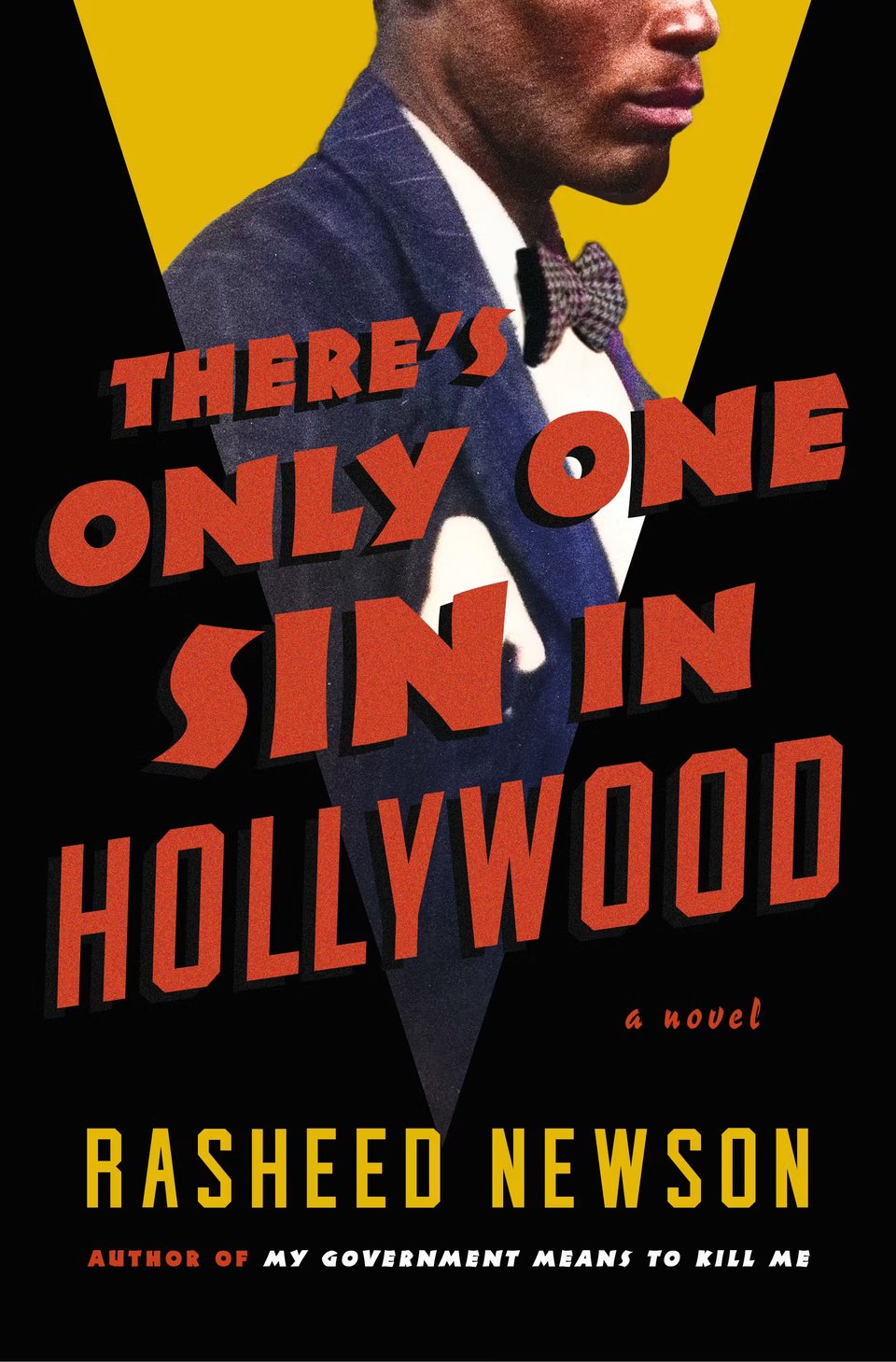
In There's Only One Sin in Hollywood, Newson braids together the birth of LGBTQIA+ rights in America with the beginning of the end of the studio system in Hollywood. He slowly reveals these two stories to be one and the same: Powerful white men kept our stories and our sexuality under their control, and it took the cockiness and foolhardiness of a ton of young rebels to break their grip.
Xavier's determination to challenge the system and flaunt his Blackness and queerness in a world that hates them is the driver of the story — and it's repeatedly contrasted not just with Aaron's caution but with Horace's repression. Xavier is emotionally available in a way that Horace never could be, but Aaron is unable to reciprocate. Aaron's work as a "fixer," massaging the truth and managing the facts on behalf of major studios, is slowly shown to be incompatible with having any emotional truth in his life.
There's a great deal of tenderness and joy in There's Only One Sin in Hollywood. The engine of the book is Aaron's love for Horace, which he can never express publicly and can hardly even admit to himself. This is very much a book about how we create larger-than-life figures, and what that process requires people to sacrifice.
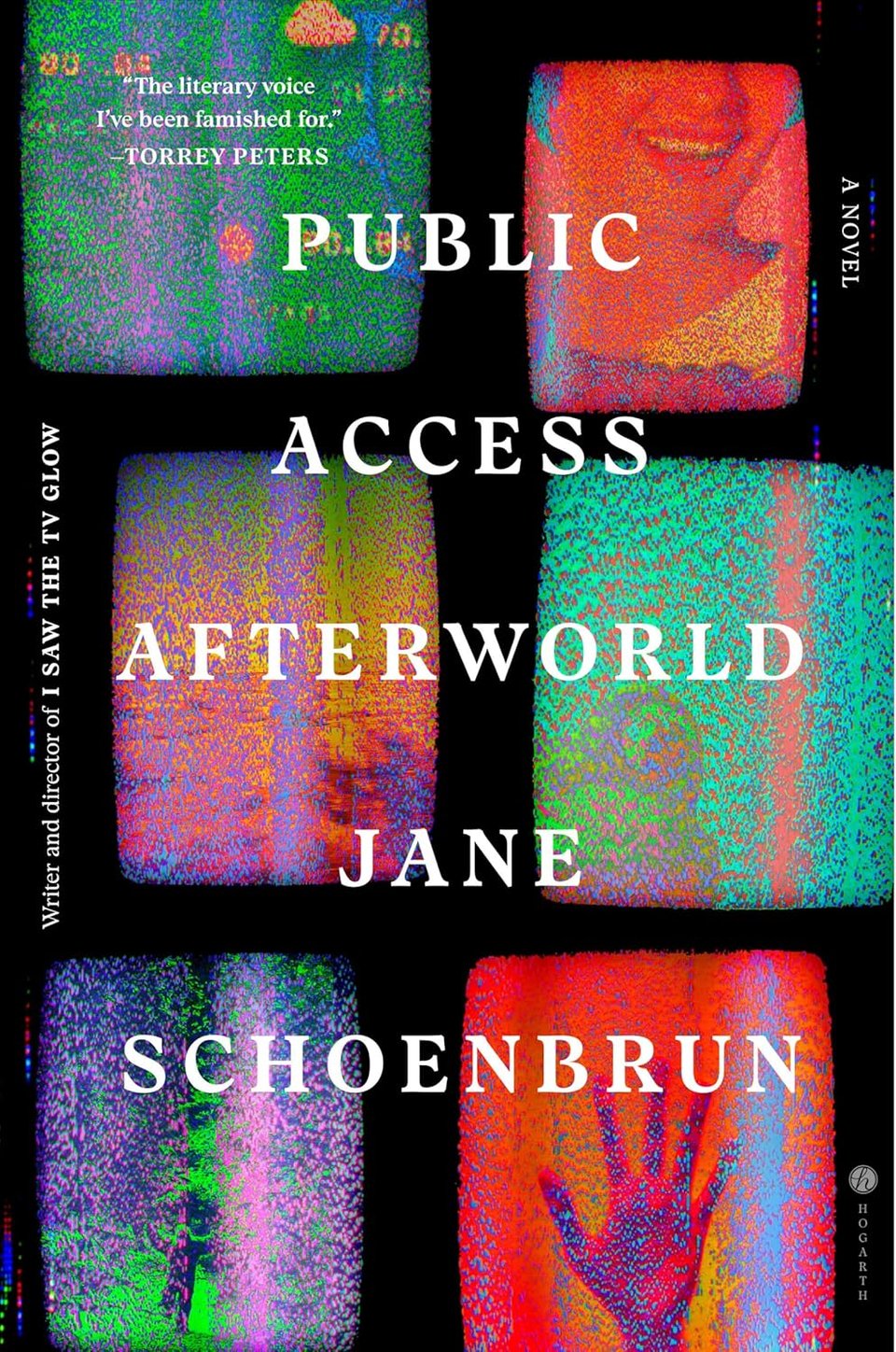
Public Access Afterworld, meanwhile, is much weirder — but is still very much about the costs of creating stories that are bigger than yourself. It's easy enough to see Public Access Afterworld itself as a place where people lose themselves in the process of creating television shows. The novel's mythos, too, inspires paranoia: GlobalVill is your classic evil corporation that's doing a bit of light human sacrifice, and there turns out to be a century-old conspiracy to offer up disposable people to the static in exchange for allowing humans to survive the birth of our glorious industrial society.
Alienation is at the heart of Schoenbrun's work, and Public Access Afterworld is no exception. There are endless Texas chain restaurants and stores, strip malls and suburban desolation, and meanwhile Austin's gentrification appears to be intertwined with the sinister growth of the tech-company slaughterhouse. (One issue I did have: this book takes place in Texas, but I didn't feel like Mexican or Latino culture was much in evidence, though one character does have a Spanish last name.) Surrealism licks at the edges of everything, but the creepiest parts are often the most realistic: the horror of an exploitative tech company, the desolation of postmodern America.
Subscribe now! What could go wrong???The most fascinating thing about Public Access Afterworld is the way it deliberately breaks its own rules. This is also the queerest thing about Public Access Afterworld. We're told that certain "crooked" people have television shows in their heads, and this allows them to enter into Public Access Afterworld, which is the dehumanizing heart of television itself. Except that the novel's main character, Bethany, is the chosen one because she has the strongest potential of any "crooked" person — and yet, Bethany is also defined by not giving a shit about television or having any imaginative relationship with it. If anything, her superpower appears to be not-fandom.
And meanwhile, the book's two most pathetic characters, David and Jules, are defined by their obsessions with not just Public Access Afterworld but with television itself. They feel this yearning more strongly than anyone, but it doesn't gain them access to the hell dimension where TV is made.
No spoilers, but I found the final hundred pages of Public Access Afterworld incredibly powerful — and they spoke to me as a trans woman. Bethany's relationship with her transness, which has seemed ambivalent and somewhat tied to self-destructiveness for most of the novel, comes into focus as she learns, at last, to construct a narrative of herself. It took my breath away.
Both of these novels feel especially vital right now, in an age of culture war and corporate consolidation, when powerful people are determined to push us back to the repressed era Newson writes about in Hollywood. And they both left me feeling deeply hopeful — not for "progress," but for revolution. The axis of queer yearning and media fandom that I talked about earlier slowly comes into focus in both narratives, and the answer is very much to do what Bethany Peters does: tell the story of ourselves, speak the truth, create ourselves without being constrained by the stories that have been imposed on us.
These are vital reads for everybody, but especially queer readers, right about now.
Music I Love Right Now
It’s Bandcamp Friday — the day when all the proceeds from your Bandcamp purchases go to the artists themselves. And by coincidence, there’s a brand new album by Noon Fifteen, the “prog soul” band from Ithaca, NY called Finish What You Started. I’ve written about Noon Fifteen before: they have a breezy indie-rock sound that is indeed tinged with influences of prog rock and classic R&B. They’re the ones who did that excellent anti-data center song a while back.
Finish What You Started contains more earworms and catchy melodies, and the rhythm section has only gotten tighter and more danceable. But this is, in part, an album that “invites you to face what you fear,” and the lyrics kind of sneak up on you. In particular, there are a couple of powerful songs about turning to crime and finding solidarity in resistance: “Cell” and “Barricades.” And a couple of songs about bloodsuckers, either ticks or vampires, that feel full of meaning. And “Imposter” is literally a song about believing your boyfriend has been replaced by, well, an imposter. My favorite bit comes in the song “Feel,” when Mandy Goldman sings, “I want to feel my teeth sinking in/I want to lose something I can never get back again.”
So that’s my Bandcamp Friday recommendation!