Make Temporary Disposable Art! It's Fun!
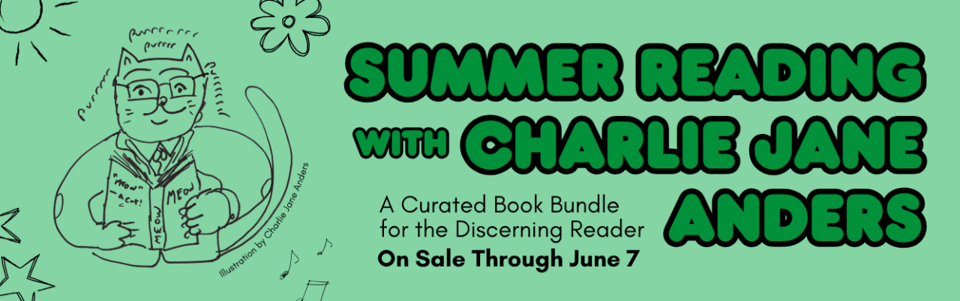
First off, if you are looking for some fun books this summer, I have teamed up with the wonderful folks at Green Apple Books to offer three fantastic reads in a special Summer Reading Bundle. I chose three of my favorite books which you probably haven’t read yet, and it also comes with a sticker of a cat doodle and another treat. Get it here by June 7.
Also, if you want to get a special signed limited-edition paperback of my novel Lessons in Magic and Disaster with fancy sprayed edges, you can still pre-order that here.
Why We Make Art That’s Not Meant to Last
Lately I've been thinking a lot about ephemera — and more specifically, about making works of art that are intended to be for the moment rather than for posterity or whatever.
There’s a couple reasons for this.
I've been thinking a lot about Writers With Drinks, the monthly spoken word show which I used to host in a gonzo surrealist manner. Partly because I am thinking about trying to bring it back now that I'm returning to being more of an extrovert.
But also, I’ve been thinking about the fact that Writers With Drinks was designed to be an awesome thing that happened and was experienced by people in a particular time and place — and then it was over.
Subscribe now! ! ! !!People often asked me to turn Writers With Drinks into a podcast or some other more permanent artifact, and I always resisted — partly because I was nervous about having my loopy stage patter and introductions analyzed endlessly on the internet rather than experienced in a brief moment by tipsy people. And partly because I felt like there was something magical about people in a bar having an experience that was only for them, which would never be repeated.
When people said they wanted to film Writers With Drinks, I would give them my blessing (and notify the writers, of course). But I would never make any effort myself to turn it into something enduring. Incidentally, here's a show from 2007, filmed by the incredible Lisa Rein:
Another thing that's making me think about ephemerality is the recent discovery of two Doctor Who episodes that nobody has seen since 1965, both of them coming from the epic story “The Daleks’ Master Plan”. Whenever you watch a DVD feature or some other interview with the people who made Doctor Who back in the day, they always say that they had no notion that home video would ever become a thing, and the show was almost never rerun. Meaning that they expected these episodes to be seen once and never again.
Ironically, the fact that 1960s Doctor Who was intended to be a one-time experience makes it even more magical when you watch it now, because it feels almost like watching a recording of a stage play. Or some kind of glimpse into a moment where most of us were not yet alive. It feels unique and special.
I find myself putting just as much time and effort into a purposefully disposable piece of art or entertainment as I do into the novels and short stories that I hope at least some people will read years from now. It's a different process —when I write a novel, especially, I think about how to keep it from becoming dated too quickly: What references or bits of slang will instantly trap a story in a particular time and place, versus what will seem natural to people five years from now. Still, there's a certain satisfaction and fulfillment in creating something that is just for now.
Upgrade nowPart of why I want to go back to doing Writers With Drinks is because I miss that feeling of ephemerality. And I want to find other ways to create stuff or moments that have a certain beauty that does not persist.
A seemingly contradictory notion
I wrote before about how to be an archivist, and the importance of preserving culture — especially works by marginalized creators, which often get swept under the rug during periods of repression and oppression. And I still believe in the importance of preservation, which is why I'll always be angry at the BBC for vandalizing its own legacy with regards to Doctor Who and other classic TV shows.
So I've arrived at a belief that seems contradictory but actually isn't:
I think it's awesome to make art that is intended to disappear after a short time. I also think it's essential to try and preserve some of that art — if not all of it — with the understanding that it has a context and whoever is looking at it in the future, by definition, is not the intended audience.
To some extent, everything is ephemeral. I recently reread one of my favorite novels for the fourth or fifth time, and I was shocked to be reading a very different book than I’d remembered. I was approaching it from a new perspective, and my form of reference had shifted since the last time I had picked it up, so the words appeared completely different on the page. If your brain is the hardware and the book is the software, then it runs differently every time you load it because your configuration is new.
The internet enforces a certain amount of impermanence by its very nature, especially nowadays. I frequently have the experience of Googling for something specific that I was able to find a few years ago, but which now does not exist as far as Google is concerned. The other day, I was talking to a friend about something she did which made the whole internet extremely angry with her twenty years ago, and neither she nor the internet remembered it. Which feels like a form of healing, honestly. I've talked before about how I wrote and published things back in the day that I'm ashamed of now, and I'm glad they’re buried and thus unable to cause more harm in the present — like nuclear waste, kind of.
Recently I went to a launch event at the Internet Archive — a wonderful organization that you should support! — for a book about “the erosion of our collective memory” called Vanishing Culture. I’ve only read a bit of it so far, but it looks fantastic. Anyway, at the event, people talked about the old maxim that “the internet never forgets,” and how untrue it is. They spoke about the importance of preserving internet culture for the future. The internet archive is the only reason you can still read God Hates Figs, the website I ran from 1999 to 2005, for example.
Subscribe nowSpeaking of the friend who got mobbed by the internet twenty years ago, social media is one factor that complicates our relationship with the temporary. Most of the time, you post something online, people pass it around for a few hours, and then it disappears. But many of us have learned to our horror but malicious actors can always go searching through the things you impulsively posted at three A.M. a decade ago and turn it into proof that you are a horrible person who deserves to never existed human society again. (For more on this, read my essay on the concept of cancel culture, and the importance of distinguishing between social media abusiveness and some societal problem writ large.)
One reason, incidentally, why we need a national privacy law with teeth is because we always appear to be a few jumps away from creating some kind of social credit score that follows you around, whereby everything you have ever posted on the internet becomes part of determining whether you have a right to exist in the world. Plus if everything you do is for clout, then nothing you do is for real.
And finally, I sometimes feel a bit mortified by any fiction I wrote more than five years ago — not just because I hope I've gotten better at writing since then, but also just because it feels so alien to me and I can't look at it without going, What was I thinking? Because I honestly no longer remember.
Zines, parties and internet shapeshifters
So I get why so many people in my life seem to be trying to create disposable culture again. I have friends who are going back to making zines, which they leave in little free libraries or hand out or trade. Often the zines are tiny and easy to lose or damage. Other people I know are putting a lot of energy into throwing elaborate parties with costumes and decorations and props, that will live on only in a handful of photos and videos that don't convey the full range of what it was like to be there.
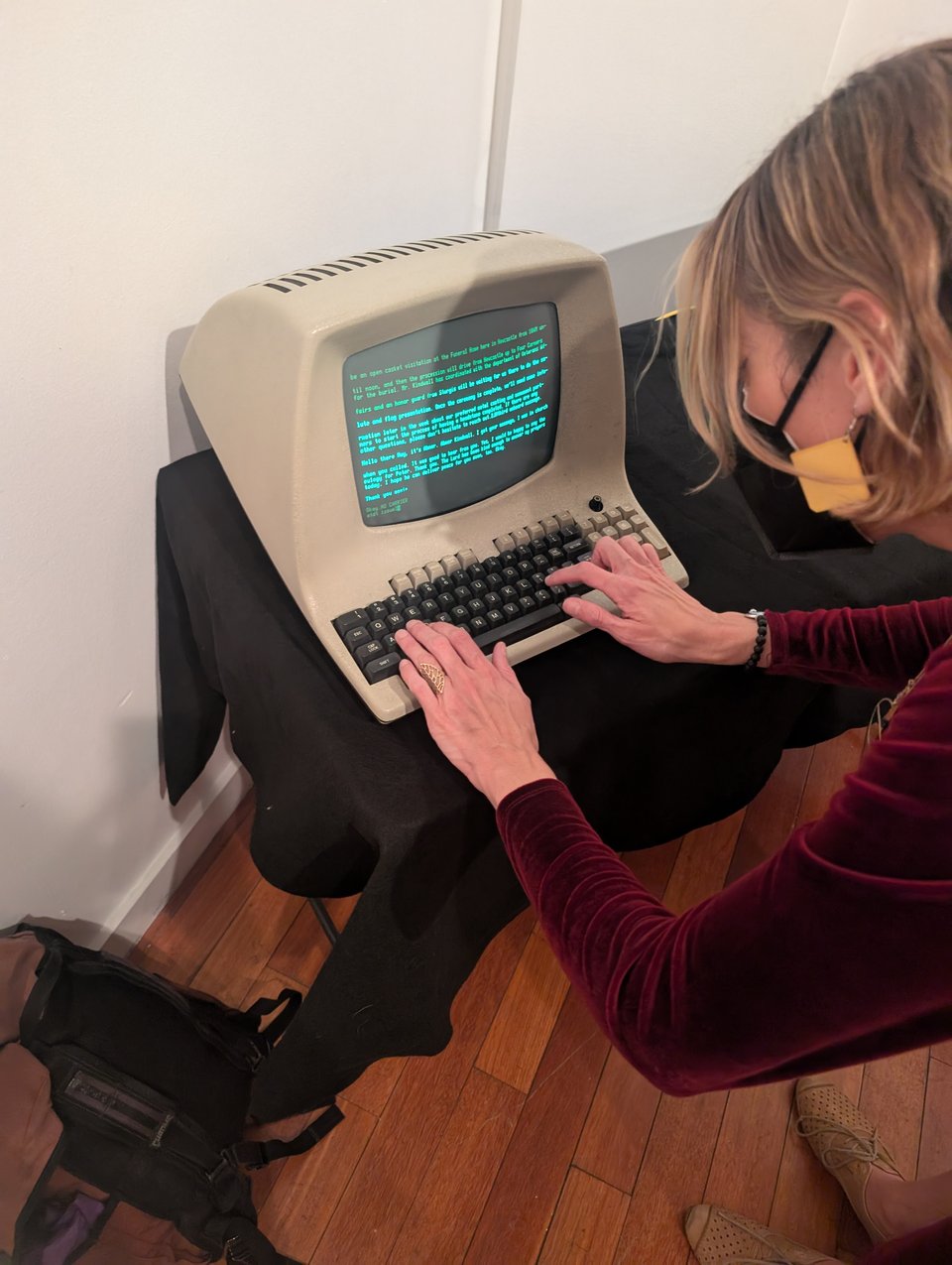
I've been pretty fascinated lately by new session, an online literary magazine that looks like words on an old green-screen terminal for a mainframe. You can access new session via telnet as well as the web. It’s edited by Cara Esten, June Martin and Never Angeline Nørth, and here is a photo from the launch party for their third issue!
Anyway, many of the stories in new session change every time you read them, or they have different stuff depending on various factors. I talked to Cara about this, and she told me that “issue three has stories that you may miss part of because you never checked it on a Tuesday.” There’s also “one story that changes if the weather changes.”
Cara said she wanted to “make time and conditions part of the story.” She added:
I think there's something about that which makes it feel like it's alive in a way that normal text couldn't? like it sees you and knows you to some extent? It feels like you're existing as part of the narrative… it's highly specific! You have some specific experience that has to do with it, and I feel like that's so rare with most media.
Cara remembers exactly where she was when she was reading Notes from a Regicide by Isaac Fellman — she has a vivid memory of sitting at Crown Beach in Alameda and sobbing. “One thing that's cool about new session is that it's internet art that forces you to see it like that. And most internet art is stuff that you glaze over or consume on your computer or phone without specific context.”
Anyway, I strongly encourage you to go check out new session if you haven't seen it before.
Upgrade now! I’d really appreciate it.So yeah. Art is always informed by the context in which it's made, and ephemerality feels like one strategy for creating art that cannot be taken out of context.
So when I think about preserving works that were intended for a particular audience or time and place, I think about trying to contextualize them. I think this is one of the uses of curation. I've been to a few exhibits in recent years that preserved documents and bric-a-brac around a particular moment, including a beautiful exhibit of left-wing book stores of the 1960s and a display of flyers from queer organizations from the AIDS era and before. There's something really powerful about seeing mimeographed fliers alongside other stuff from the same time and information about what was going on when it was made.
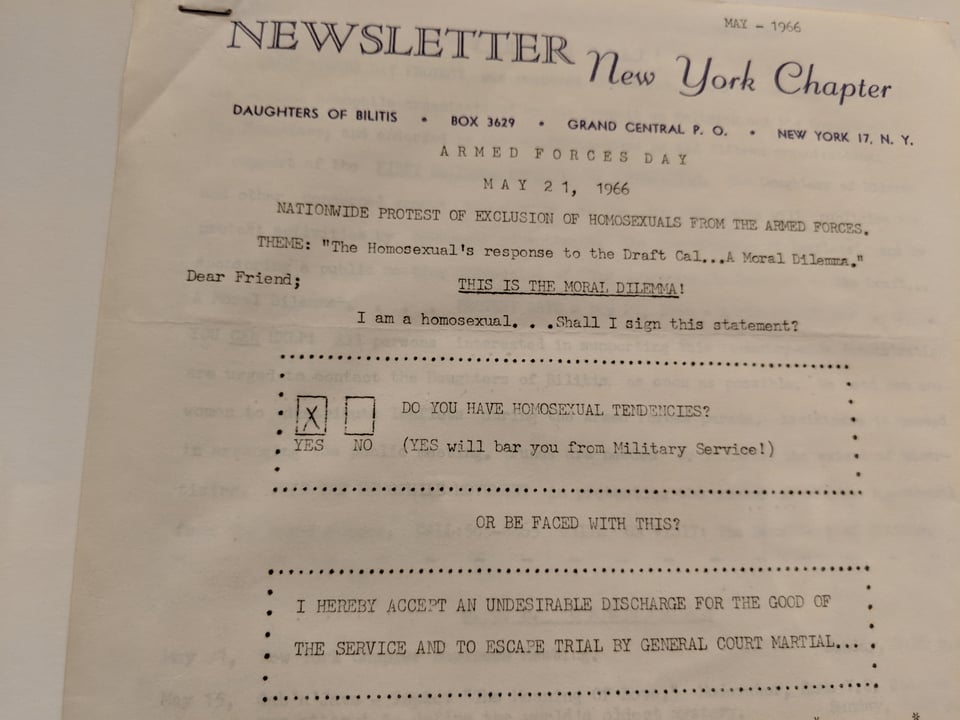
I guess my final thought is that it's all relative, and nothing is ever really permanent anyway. We all know that some of the most enduring art was created without a single thought for posterity, while we’ve forgotten plenty of stuff whose creators hoped it would last forever. I've never had much confidence that I knew what the future would bring, and I'm less and less confident about that as time goes by. So increasingly, I don't want to build a monument — instead, I just want to throw one hell of a good party.