
Life, uh, Finds a Way
My May 2026 in Media
The world has finally tilted back towards my favourite stretch of the year! So while the northern hemisphere warms up, you’ll find me blissfully snuggling down in the dark with my books, movies, TV shows, records and knitting for the next few months. Southern hemisphere molefolk unite!
BOOKS READ:
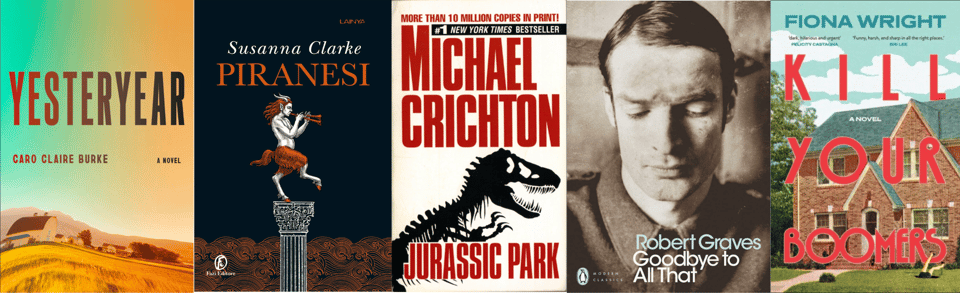
YESTERYEAR by CARO CLAIRE BURKE (2026) Oof. I knew almost nothing about Yesteryear going in, except that it had something to do with tradwives and, with a screen adaptation already fast-tracked to development as a vehicle for Anne Hathaway, was shaping up to be THE zeitgeist book of the season. So, in need of a new audiobook to listen to, I skipped reading the back cover blurb and went straight into it. And just as well, because whoever wrote that blurb read a different book to the one I did.
Yesteryear is a contemporary fiction with possible speculative elements (it turns out the blurb/marketing is very invested in you not knowing what genre this book belongs to) follows Natalie Heller Mills, a young conservative woman of unspecified Christian faith who has won millions of followers (and possibly dollars?) as a tradwife influencer. But just as everything seems to be hitting peak perfection for this beautiful, successful, devout, and attentive mother, Natalie wakes up in someone else’s tech-free life. And boy, does that life suck.
There’s a lot of potential in the concept of Yesteryear, both in the version presented in the blurb and the version that actually sits inside the covers. The former seems to want to explore the hypocrisy of influencers (specifically women) who promote and profit from “traditional” farmsteading lifestyles while refusing to actually live them; the latter to explore how an American conservative Christian upbringing can indoctrinate women into signing up for lives that go against their best interests and the interests of their daughters. A book that successfully did even one of these things could have been killer. Unfortunately, Burke doesn’t manage either.
There’s an odd lack of insight into the communities Burke is attempting to satirise. Everything is kept so purposely generic that it doesn’t land anywhere. Natalie is a woman of faith without a congregation, without a church, without a community of anyone (other than her mother, who is an inconsistent presence both in the literal and personality sense) to pressure her into obeying her oppressive lifestyle. Any attempted commentary on organised religion is completely undercut by the fact that Natalie seems to be doing all of this to herself. At one point, her mother tells her to imagine an invisible audience of people watching her all the time to keep her on track, which is an interesting thing to say to a person who winds up an influencer, but a bizarre thing to say between a pair of women who, presumably, are already being watched all the time by a) God and b) every member of their congregation. It made me wonder whether women who belong to strict church communities already feel primed for the scrutiny and harsh judgement of the internet. Burke, however, never touches on that.
Speaking of influencers, Natalie doesn’t make sense to me as one of those, either, let alone a full time content creator. Much like her church, her millions (literal millions!) of followers have little to no presence or impact on her life, despite being the people she is notionally performing her happiness for. She has no relationship or even contact with other influencers and none of the drama inherent to influencer culture exists in Natalie’s world. Even the nature of her successful content is mostly a mystery to the reader, relying on a prior knowledge of tradwife figures like whatsherface from Ballerina Farms and that other one with the 50’s doll hair to fill in the blanks. Which is a struggle if, like me, that prior knowledge is basically zip. There’s no sense of culture to Yesteryear, which is a real failure in a book whose express purpose is to satirise several of them.
It’s not a total bust. The first half of the book is a lot of fun. Natalie’s narration is delightfully vicious, the plot moves at a pretty unputdownable clip, and there are genuinely moving scenes in which Natalie struggles with severe post-partum depression which, according to her upbringing, doesn’t exist. But a few great scenes don’t add up to a cohesive whole, and the character work is incredibly weak across the entire cast. Natalie’s husband is at least five different idiots in a trenchcoat through which Burke pokes fun at every shade of right-wing man (a respectable goal!) but never manages to comb all the elements into one person. Nobody grows or changes so much as they put on different personalities as needed. None of them are grounded enough to feel real, and none of them are heightened enough to make effective caricatures. It’s all just a bunch of stuff. And because Burke sets the story up as a “how did we get here?” narrative, the more we learn about the how, the weaker the what becomes, and the less the book seems to have to say about anything.
It’s a real shame. There are much needed conversations to be had about the right-wing ideology tradwife influencers put forward (the Nazi regime deployed similar propaganda at German women in the 1930’s to great success) and their role in the rise of American facism, and there are ways that could be meaningfully achieved through fiction, including clever satire and loathsome heroines. Yesteryear just isn’t it.
But in the grand tradition of disappointing books, I had a fantastic time discussing this one all month with a bunch of friends. So at least there’s that!
PIRANESI by SUSANNA CLARKE (2020) There are fifteen people in the world. Thirteen of them are already dead, their skeletons scattered throughout the glorious statued labyrinth of The House; one of them is The Other, a grouchy old scholar who prefers to keep his own company; and the last is Piranesi, beloved child of The House, earnesrt scientist, meticulous diary-keeper, and loyal friend to all sea-birds. But The Other has warned that someone else is coming, a dangerous sixteenth person who Piranesi cannot let catch him lest he lose his greatest possession: his mind.
This was my second time reading this beautiful and very short fantasy, and while everyone and their dog will tell you NOT TO LEARN ANYTHING ABOUT IT BEFORE GOING IN, I loved it even more with full knowledge of where we were going. Funnily enough, Piranesi is similar to Yesteryear in that it’s structured as a mystery wherein the protagonist has to figure out how they got into their own story. But where I think Piranesi succeeds over Yesteryear (wildly different in tone and subject matter as they are) is in its simplicity of scope and clarity of vision. Although Clarke (utilising the magical system she created for her GARGANTUAN project, Jonathan Strange & Mr. Norrell) creates an entirely new world, various histories and a conspiracy for her book, she never loses sight of the fact that this is a character piece about a very kind, very lost young man.
If you get the chance, you should try to experience this one via the audiobook. Chiwetel Ejiofor gives the performance of his (very good!) career, and really nails the earnestness of Piranesi’s narration. I also have a personal theory that he’s doing a (also very good) impression of Sir Ian McKellen for one of the voices. That dishy Italian indeed.
JURASSIC PARK by MICHAEL CRICHTON (1990) Somehow, despite having seen the movie many, many times in my life so far (including when it was first released in cinemas at the ill-judged age of six) it had never occurred to me to read Jurassic Park. But my partner and I had a lot of driving to do this month, and there aren’t many books that appeal to both of us, so I whacked this on. “What a good, cheesy time we’ll have,” I thought! “It can’t possibly be scarier than the movie, that first viewing of which traumatised my tiny brain to the point where velociraptors still turn up in my stress dreams!”
No. The book is way fucking scarier. Cheesy, yes, and a bit too heavy on exposition, but legitimately scary. A death that’s played for comedy in the movie had me deeply emotionally shooketh to the point where I had to take a break. Well, the first of many.
In between all those breaks, it was really fun to mark the differences made between the book and the adaptation. Many of which made sense and that I supported (sequences cut for time, giving Ian Malcolm hair) and one of which I’m quite miffed by. The movie takes a real benevolent billionaire angle that the book absolutely doesn’t, and I think the movie suffers for it a little. The movie sets up Dennis Nedry as its primary human villain, but he’s only part of a cascade effect (sorry, Malcolm effect) of Hammond’s cost-cutting and greed in the book. Hate to say it, but justice for the corrupt nerd.
All in all, a cracking read. Could have done with less repetitive dialogue and shorter monologues from Ian Malcolm, but I can’t really blame that man for wanting to shriek “I quite literally told you so” in every way possible.
GOODBYE TO ALL THAT by ROBERT GRAVES (1929) I’m sure you’ve all figured out by now that I have a bit of an interest in the World Wars, specifically the first one. This is a memoir from poet and author Robert Graves, who signed up for the war at the age of nineteen, largely to prove that his German middle name didn’t make him sympathetic to the German cause, and partly to put off going to Oxford. It’s a fascinating piece that is both wry and vulnerable, and quite unflinching in its depiction of the realities of war.
I can’t say it’s going to be of interest to everyone (I forgot my partner was in the room while listening to it until I heard a horrified, muttered, “Jesus CHRIST”) but definitely one for anyone with an interest in life in the early 20th century. It’s also one of those lovely historical documents that proves that queer folk did not, in fact, hatch out of a mirrorball in the 1980’s.
KILL YOUR BOOMERS by FIONA WRIGHT (2026) A would-be journalist in her 30’s struggles to survive in current day Sydney. Journalism as an industry is dying a swift death, her rent keeps skyrocketing as her rental rots around her ears, and the one solid gig she’s managed to find (nannying for a wealthy couple who live in a completely different universe to her) is looking more precarious by the day. As homelessness becomes a genuine possibility, Kiera fixates on the impossible dream of owning her own home… a dream she can’t possibly achieve unless she suddenly inherits a large sum of money.
Kill Your Boomers is billed as a dark comedy, and from the blurb and title, which make no secret of the book’s ending, it feels like it’s being set up to be a zany romp. But, given the choice to telegraph where we’re going, Wright sets about creating a surprisingly slow and gentle argument for why. Instead of looking for villains, Wright opts to illustrate the tangible mental effects of the Australian wealth gap between adults who have no hope of ever owning their own homes, and adults who do. The title pokes fun at baby boomers, but this isn’t a book interested in perpetuating the generational wars. It’s a piece that looks more holistically at how many adults who did everything “right” are struggling and stagnating, living in states of arrested development enforced by the demise of every industry you can think of, soaring property and rental prices alongside some of the worst rights for renters in the western world. It’s enough to make you crazy. It’s enough to make you desperate.
There’s a clear sense of purpose supported by a really strong sense of time and place in Kill Your Boomers. I haven’t spent too much time in Sydney, but Wright transported me back there in all its stickily hot, crumbling beauty. The cast is thoughtfully fleshed out, and just under 300 pages the book doesn’t overwork its premise. Aside from the flashbacks it gave me to all my worst rentals, I had a nice time with this book. Sadder than I expected, but that’s always a plus for me.
TV SHOWS AND MOVIES:
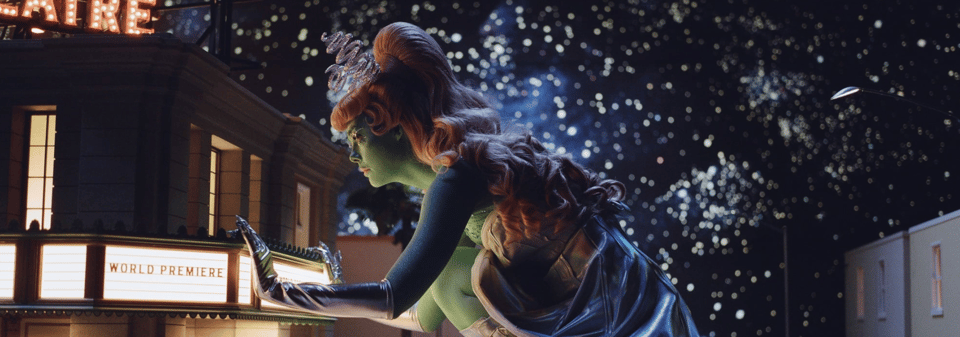
As a big fan of Elle Fanning, Nick Offerman, Nicole Kidman, Marcia Gay Harden and Michelle Pfeiffer, I was very keen to watch Margo’s Got Money Troubles and, aside from some difficultiy buying into the idea that Margo would ever have that sleazoid’s baby, I really enjoyed it. The story more or less works, the performances are unsurprisingly strong, and the hair, makeup, costume and art departments are all delivering a perfect level of homemade gorgeousness with Margo’s sexy alien videos (while also delivering some impressively convincing prosthetic boobs). The drug addiction and sex work elements were treated with welcome empathy, and I’m thrilled Executive Producer Nicole Kidman cast herself as a pro-wrestler turned blingy Californian lawyer. It looks like the most fun (and the best wig) she’s had in ages.
The theme song as perfomed by Robyn has still not left my head in weeks.
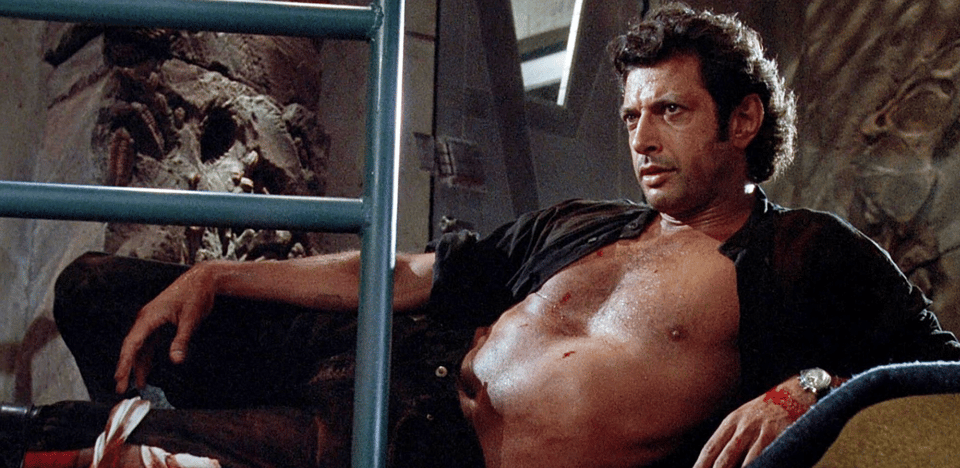
Obviously my partner and I watched Jurassic Park in the midst of listening to the book. Unfortunately, we watched it while on holiday in a cabin in a cow paddock surrounded by bush, in which there was a little mouse that made alarming night noises. Immersive in a way one did not sign up for.
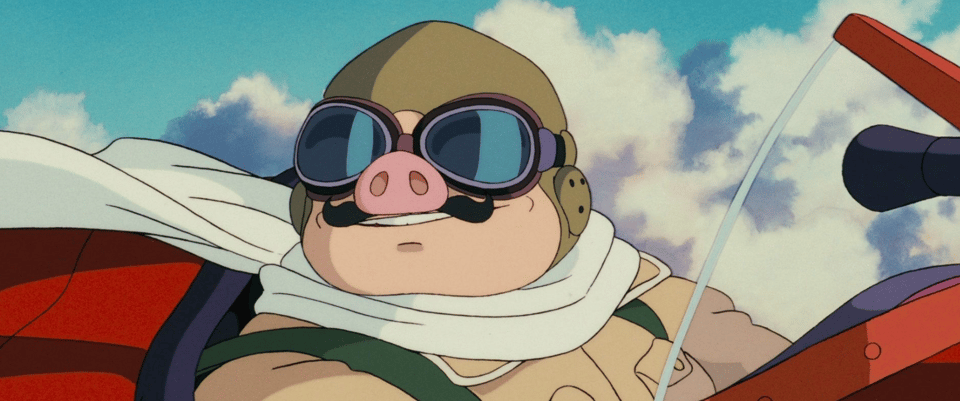
I filled in two movies missing from my Hayao Miyazaki list this month! Porco Rosso was an absolute hoot, and The Wind Rises was very beautiful. The latter has me teetering on the edge of writing an essay about how much easier we all seem to find it to criticise the actions of other nations in war than our own (Miyazaki has been quite demonstrably anti-war across his films, but The Wind Rises is curiously apolitical given that the protagonist is designing Japanese fighter jets and bombers to be used in combat in WW2, and in a way that Porco Rosso, set in Italy and critical of rise of fascism after WW1, is not) but I don’t currently have the time it would require to be done well. Needless to say it made me think a great deal about a great many books and films, and I love it when that happens.
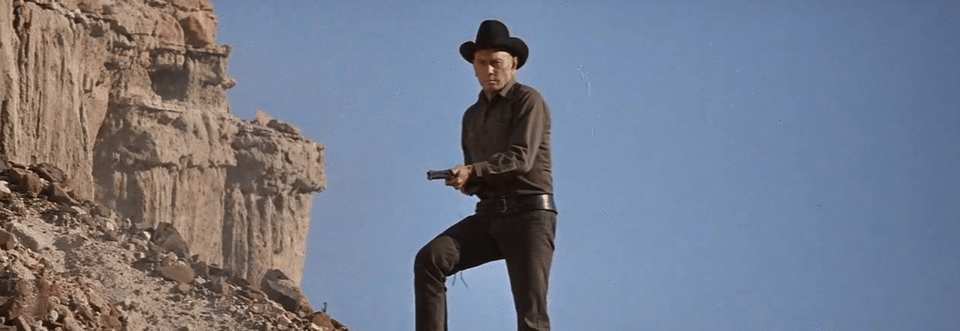
Finally, off the back of reading and watching Jurassic Park, I watched Michael Crichton’s West World starring Yul Brynner with my partner and my mum. It’s a bit aimless and cheesy, but delightful in its 70’s low-tech, high concept way. The HBO show actually did a great job of engaging with the idea that the wealthy keep finding new ways to reinvent slavery (for a season or two at least), but you can also really see the seeds of what would eventually become Jurassic Park, the book, and then full circle to the movie.
An interesting development amongst the great push to make people believe that generative AI is A) cool and ethical, and b) conscious, is that I’ve largely lost my appetite for sci fi featuring “AI” powered robots. I used to be such a fan of them and now I just want to smash them all to pieces with a baseball bat. Not because I believe in the dumbass hype that AGI or superintelligence is possible, but because all I can see now is Sam Altman and Dario Amodei winking at me with their weirdly moist eyelids. Tech bros really do ruin everything.
GAMES PLAYED:
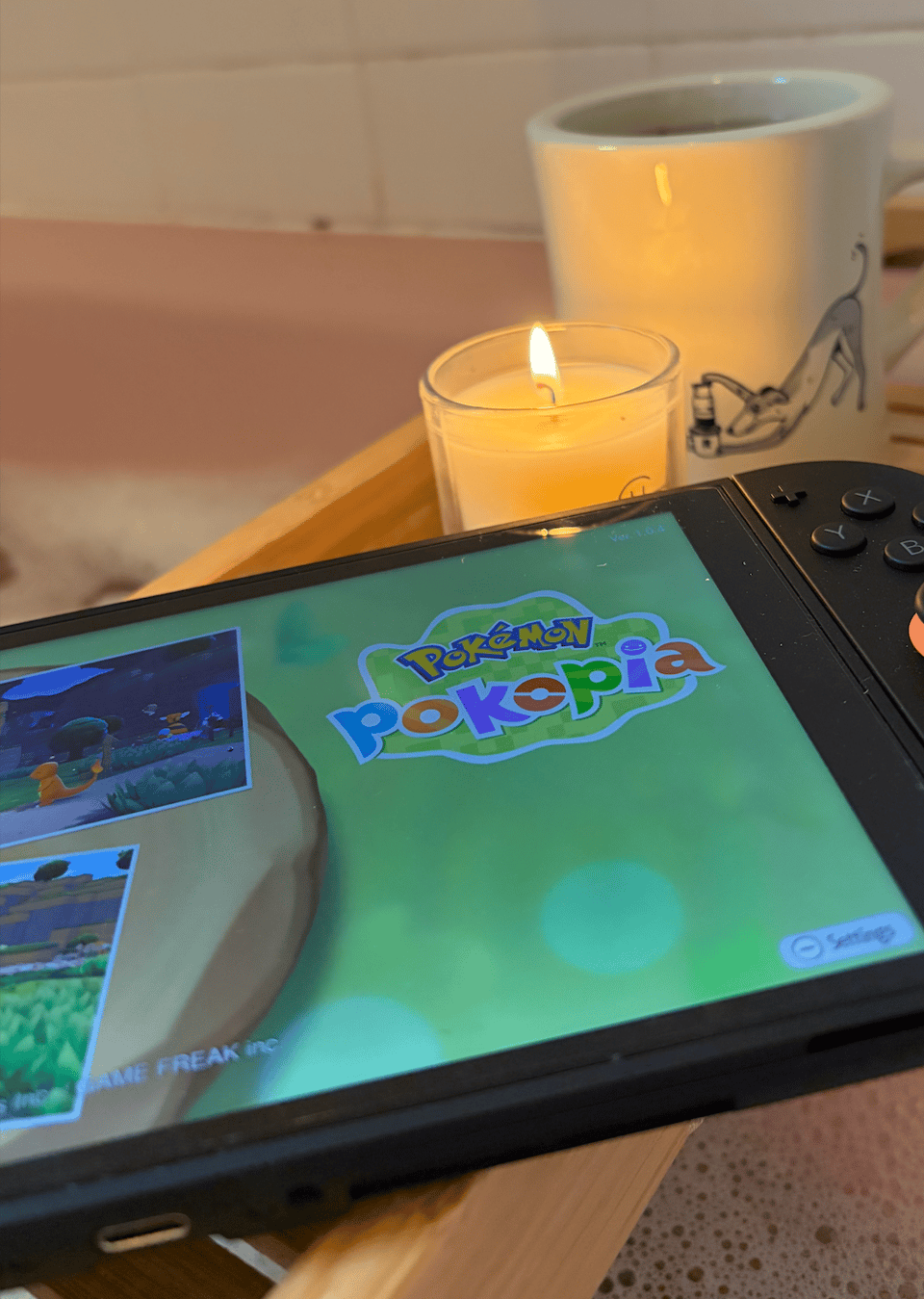
I’m still in an exclusive relationship with POKOPIA. Prior to this month, I had just been noodling around doing repairs, cleanup, and the minimum level of building (the game wants me to industrialise all the Pokemon islands and put the Pokemon to work, and I want the Pokemon to frolic in pristine natural habitats), but then I unlocked the final island which is such a trash pile (literally) that I have been forced to start playing the game properly. I’m about to attempt to build my first block of flats, but even though I have caved on my anti-development ethics, there will still be no landlords in Pokopia. Stay on your own damn island, Tom Nook.
And that was May! No matter which hemisphere you’re in, I hope you’re safe and well and experiencing the weather and reading conditions of your heart.
’Til next time!
x
Any typos, spelling mistakes or missed words in this blog are completely on purpose.


Add a comment: