Russian Accents Fascination: An Origin Story
I. Inception
I accidently became a lover of Russian accents. It started in high school, when a boy I was dating had a fixation about a movie I never saw, setting in motion something that has continued to flourish, lo these many years, though I am now hard-pressed for the hormones that initially fueled it.
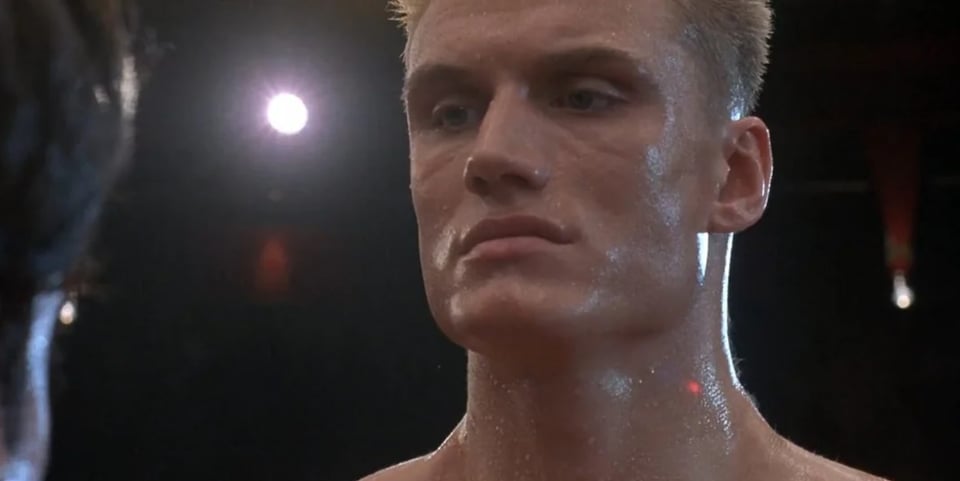
This boyfriend, who I made out with for about a year in the early 90’s, liked to quote a line from Rocky IV spoken by a Soviet Russian boxer named Ivan Drago. Played by Swedish actor Dolph Lundgren, Drago looks at our boy Rocky Balboa just before their match begins and says, “I must break you.”
A full year younger than me, and now sadly no longer with us on this earth, this boyfriend used to hold my head between his hands, callused from constantly playing guitar, and in his best Russian accent, would quote Ivan Drago’s line while staring directly into my eyes.
Then we’d make out a whole bunch.1
Thus began this obsession of mine with Russian accents. Completely unchosen and uncultivated, yet proven to be more durable and expansive as the years have unwound.

II. Fermentation
The year I got married, my friend Holly gave me a book with a perfect ending: White Oleander by Janet Fitch.
White Oleander tells the story of Astrid, a girl struggling through multiple foster homes, after her mother is sent to prison. As a teenager, Astrid is sent to live with a Russian woman named Rena, who keeps a full crew of foster daughters who make money for her reselling trash at swap meets. Rena’s household is pretty loose, with truancy, alcohol, drugs, sex, petty crime, and on-going parties all commonplace. One night, a drunken friend of Rena’s accosts Astrid; when she goes downstairs to complain to her foster mother, who is currently making out with her boyfriend, Sergei. Here is Fitch’s description of Sergei:
Handsome as a Cossack, a milky Slavic blond with sleepy blue eyes that caught every movement. By profession, a thief. Rena occasionally moved merchandise for him, a truckload of leather couches, racks of women’s coats, a shipment of stuffed animals from Singapore, small appliances from Israel. Around here, he was a constant sexual fact. He left the bathroom door open while he shaved in the nude, did a hundred push-ups every morning, his milky white skin veined with blue. If he saw you were watching he’d add a clap to show off. Those wide shoulders, that neat waist. When Sergei was around, I never knew what to do with my hands.
One night, Sergei appears in Astrid’s bedroom, offering a stolen diamond. He tells her he knows things about her that others don’t, that he has always clocked her desire for him. But when he takes off Astrid’s clothes, he is surprised by the damage to her young body.
He was looking at my scars. Tracing the Morse code of the dog bites on my arms and legs with his fingertips, then the bullet scars, shoulder, chest, and hip, measuring their depth with his thumb, calculating their age and severity.
“Who does this to you?”
The question proves too intimate for Astrid. Instead, she invites Sergei to fuck her, which he does with great skill, all while she watches their bodies in the mirror.
Everything about this situation is bad. This is not the first time Astrid has been sexually exploited as a child in a foster home. Though she’s older when she meets Sergei, she’s still underage and vulnerable. Additionally, Rena is Astrid’s guardian, with great power over her, and Sergei is “the spiritual equivalent of what comes out the sewer after a heavy rain.”
But that the mercenary Sergei shows the broken Astrid a brief moment compassion has always stuck with me.
The miracle of someone knowing you without context, see beyond the artifice of shared language and history, even if they lack the endorsement of polite society. Reading Fitch’s Sergei reminded me of sexual experiences I had with men from different cultures and languages than mine, who viewed me as a raw, uncurated artifact without a plaque in a museum, just the visible facts of my body and expression, no backstory. Their reaction to me was like a dispatch from an outer planet of my own self-percention.2
III. Enrichment
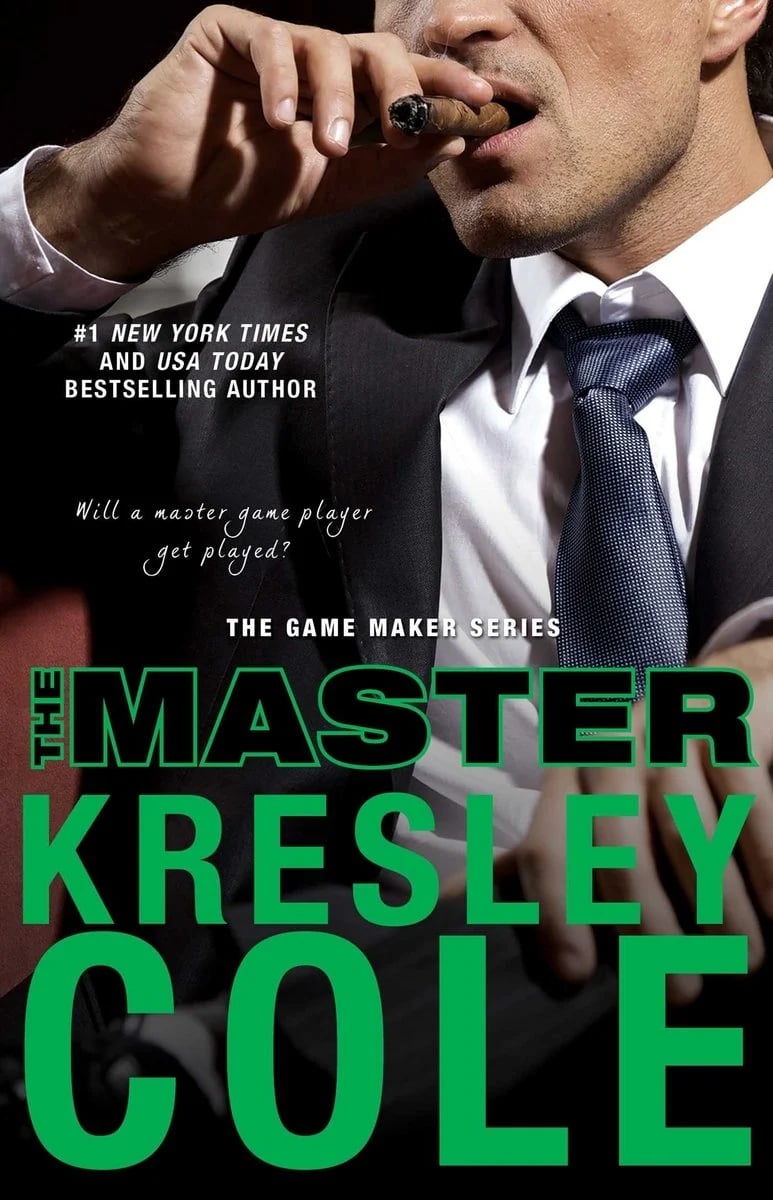
A few years after publishing my own Sergei, my beloved pal Christa introduced me to Kresley Cole’s The Master, a romance novel telling the story of Cat, a Cuban-American heroine whose financial and relationship turmoil results in landing her first-ever sex work gig with a Russian billionaire and S&M fan named Maksim.
The novel mostly takes place in a penthouse of a Miami hotel, fully kitted out with a rooftop pool, kitchen, workout space, plus all the rooms and accoutrement necessary for Maksim to introduce Cat to his fave S&M practices, to which she is a novice but willing to play along.
There are many reasons to love a hotel as a setting for romance and fantasy — privacy, luxury, attentive servants — but in my mind, the best part of a hotel isn’t the pool or the room service or the 10,000 square foot bathroom3 but the fact that I don’t live there. There will never be any jobs or chores or hassles for me to attend to in a penthouse suite. Hanging out with a good-looking man with infinite wealth and comfort sounds like a decent compromise even if nipple clamps are a new experience for our imperiled-yet-adventurous Cat. It is delightful watching Cat’s optimism brighten the dour Maksim in warm sunny city so far from the homeland of his difficult childhood.
IV. Embodiment
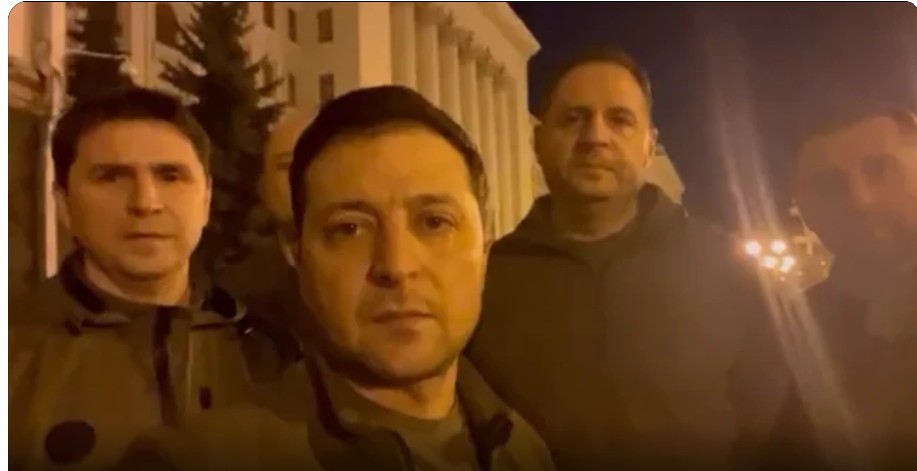
I know this video isn’t in Russian, but I still find it riveting to my untrained ear. The flagrant competency demonstrated from a speaker who continues to be an honorable statesman against a tyrannical regime never fails to affect me.
V. Ice-Breaking
Finally, we have arrived at the statistically most recent iteration of my Russian Accent Fascination, Heated Rivalry. This TV series portraying the romance between hockey players Shane Hollander and Ilya Rosanov (based on the novels of Rachel Reid and developed for television by Jacob Tierney) debuted on HBO in early December 2025. This was the same month that murderous federal agents began terrorizing my homestate of Minnesota. Between patrolling my community and spending the holiday at my mother’s house, I wasn’t able to watch it until late February.
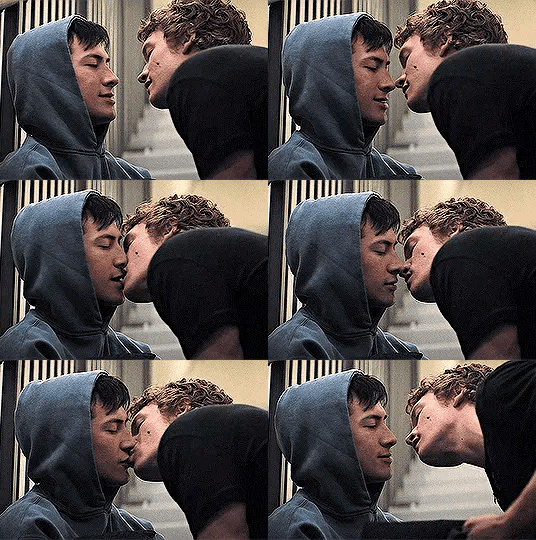
There it was again, the beguiling Russian accent, wielded over me by Ilya. But not just that. This series was startlingly beautiful and complex. Watching the yearning between the two beautiful young men, listening to them be tough and tender, in English, French, and Russian—I was glad to see it on my own first, without having to deal with anyone else’s reaction. Tenderness between men still strikes me as unlikely on screen. We are not well-resourced when it comes to images of male tenderness in the United States.4
Dominated and misunderstood by a father who only knows brute force, Ilya becomes a man who behaves both sternly and whimsically. He takes risks, yes, but also takes care, especially when he’s with Shane, who is less savvy in relationships and sex but as ensorcelled by their secret affair as the viewers.
A brutalized and traumatized hero who is gentle and loving is often served up as a trope in heterosexual romance stories. I always have trouble imagining it. Because I grew up as a girl and live as a woman, I know that these kind of young men mostly grow up to inflict the same on others. In fact, we were currently seeing what such men can do to people in the streets where I live. We want to believe that these men would become protectors, motivated to right the way they’d been wronged. I don’t think the odds are in our favor.
Still, I could imagine the story of Ilya and Shane completely. Maybe it’s a Russian cultural thing, where the intense dichotomy about what can be openly said and what must be secretly done5 made it easier to imagine that Ilya could manage his sexuality in a way that didn’t make him destructive or cruel.
Because as presented in the series, though he’s playing a somewhat brutal sport, Ilya did not become a brutal man. I think this is because he must protect the parts of himself that is vulnerable, the parts that still mourns and grieves his mother, the parts that his father could never love. In keeping with the happy ending necessary to the romance genre, that Ilya can show this gentle, tender side to Shane, who desperately needs to feel it himself, is not just what makes their relationship so intense and beautiful, it’s also what makes women such dedicated fans. Women want a world where men like Ilya are possible.
VI. Conclusion
I don’t speak Russian, have never visited Russia. Likely never will. But it’s the oddest thing. A boy now in the ground had a loop in his brain that made him say something he never actually did: I must break you.
His rough hands and his soft mouth did the opposite, really, building up an enchantment that still lives inside me. Makes me soften and yield. Makes me yearn and desire. Makes any echo of that original accent resonate and reverberate again, immediately and endearingly.
Our sexual histories can be so strange, unkempt, thrilling, embarrassing, chaotic, insightful. May we all be so lucky to experience such chaotic beauty.
Learn more about this doomed boy here.
In homage, I ended up writing a book nearly two decades later, with a character named Sergei, a man coded much less sinister than Fitch’s version, but with problematic messiness all of his (my) own.
Seriously, what Cat and Maksim get up to in this penthouse bathroom requires some serious square footage.
My third novel was another experience in discovering male tenderness.
I went on an M. Gessen and Svetlana Alexievitch reading kick a few years back; this maybe contributed to this notion. A few titles of interest: The Man Without A Face: The Unlikely Rise of Vladimir Putin and The Future is History: How Totalitarianism Reclaimed Russia by M. Gessen; Voices from Chernobyl and Secondhand Time: The Last of the Soviets by Svetlana Alexievitch.
-
Loved reading this, Carrie. Thanks for sharing.

Add a comment: