Answering The Call
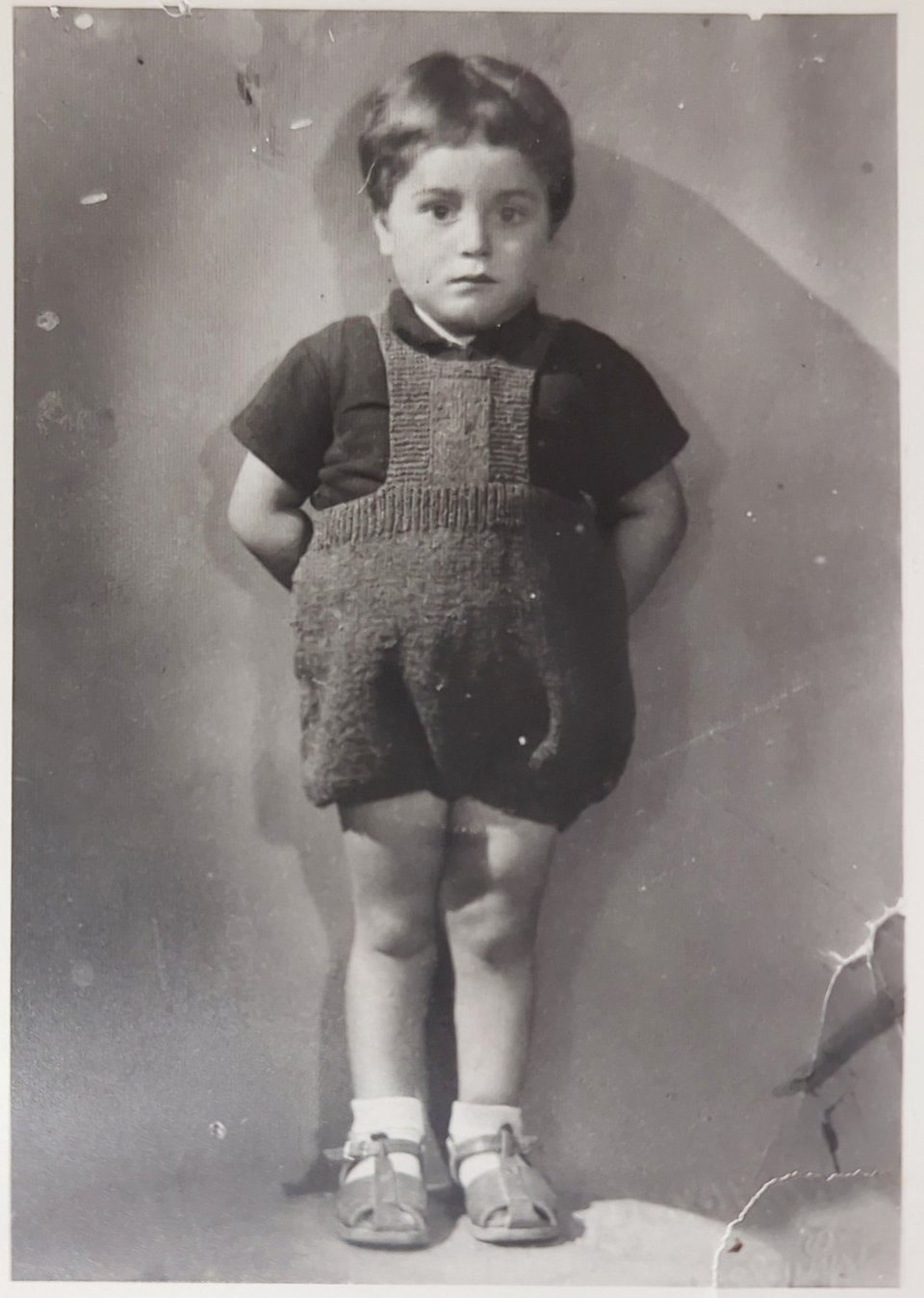
Early in the morning the day he died, my father called me.
I don’t remember what he said.
I don’t think I even answered on the first ring.
Maybe I didn’t answer at all.
All I can say is it was 3:00 am and he called and I hadn’t really been sleeping deeply, anyway. Earlier, he had decided to remove all the medical apparatus involved in helping him breathe. He wanted to die naturally, without wearing an oxygen mask. He didn’t want to do it anymore.
So, I told him something. Or I didn’t tell him anything. He had been in the ICU for almost two months, and middle-of-the-night panic calls had happened before. Sometimes we could help him. Sometimes, the nurse took the phone and told us it was okay.
Why did he call? What could I have said? What did he have to tell me that last night of his life? Why didn’t I answer?
I’m not entirely sure what I’m doing, but I’m standing here regardless. It’s dark, ten degrees Fahrenheit. I’m listening to the call and watching traffic while other people call in plate checks and relay what’s been cleared. From my post in front of a closed cellphone store, I’m watching every car that comes into the lot.
Is that one of them?
What about that one?
People really like to black out their windows more than I thought—wait, is that one?
No, there’s rust on the wheel well and a bumper hanging crooked enough to draw sparks.
My spouse is at home. He suggested this work isn’t the best use of my skills. You should really just help with translation work instead of patrol, he said.
The first thing is 100% true. I have never paid attention to cars, am not a savvy driver, panic in crisis. But I have told the group how I can help with language barriers if they arise. In fact, I mention it almost every time I show up to help. I mention it because people are stressed and might not remember.
But what’s been requested is not that kind of help. Instead, I’m asked to watch, hunt, guard, patrol. I could plead my case, pushing for a role that might be a better fit. My Spanish is passable, though I’m not terribly confident about using it in a moment of crisis.
But there’s not really any one person in charge of what we’re doing. We’re all just sharing what we can. Throwing out needs, tossing out solutions. I suppose I could have pressed ahead and insisted. I’m not great at that, though. And I don’t want to be in charge. I only want to be useful.
Useless: one of my dad’s worst insults. When he called someone useless, they were beneath mockery, almost beneath actual consideration. The youngest son of refugee parents, who were themselves survivors of the 1918 Armenian genocide, my dad had made a good life in America, mostly by making himself useful: studying hard, getting a degree, becoming a leader of engineering teams at big manufacturing companies. Being the strong, steady man who guarded and provided for my mother, my sister, and me. The hole left behind when he died two years back is still a crater. He took care of so many things in our family. Kept his eyes on the prize, which was security, the exits, and the bottom line. No distractions. Constant vigilance. That is how you survive as an immigrant in a place where you don’t know anyone.
Right now, in this world he left behind, in this city I chose to live in by a string of pell-mell coincidences, there are people afraid to exit a grocery store in the same strip mall as the cellphone store where I’m standing. Across the city, there are people afraid to go to a laundromat to wash their family’s clothes. Afraid to drop their children at school. Afraid to leave their homes.
Masked people in blacked out fleet vehicles circle our city, a first-ring suburb, barely a mile square. People are afraid and we need to protect them. Not with weapons but with intelligence. With presence.
On every continent, there is a form of this story. A cruel leader, masked brutes, secret abductions, prison hellholes where no one can hear screams for help. Iran. Egypt. Argentina. Germany. El Salvador. Algeria. Haiti. Chile. Italy. Portugal. Spain. China. Zimbabwe. South Africa. Afghanistan. Cambodia. Cuba. Guatemala. Hungary. Russia. Somalia. South Korea. The United States.
Syria, where my dad was born.
It’s a shorter list of places where they don’t have this history.
Dispatch, this is Grey Duck, I’m due in [REDACTED] to [REDACTED]. Be about 5 minutes, someone on the call says.
This next part must be imagined. By now, people in Minnesota and Chicago and Los Angeles and Portland and many more cities can imagine this easily, though. Suffice to say, there are protocols and safety measures. Solemn practices. We are moving people who are afraid to be seen. People that are being hunted, who others don’t care if they hurt. We are people who can be hurt as well. We are doing this anyway.
When I was little, my sister and our friends played house and school. We made pretend beds and laid pretend tables and desks, set up little scenarios where someone was the mom and someone was the kid. The pretend mom told her pretend kids what to do. The kids colored worksheets at the pretend school or were told to go to their pretend bed to pretend sleep. Sometimes my sister wanted us to play “olden times” which meant we had to live in a pretend hut and not have any fun and we couldn’t smoke crayon cigarettes or have stuffed animals on our pretend beds. There were never any dads in our play; we had no idea what they did at their jobs all day. And we didn’t have boys who played these games with us.
The point is: I didn’t play army as a child. I didn’t do missions, I didn’t have a codename, I wasn’t pretending every object was a gun, there were no scouts or spies or ambushes. The most militarized reference in my life was the mystery-solving mission of the Scooby Doo gang as they looked for clues in haunted locales.
Now I have a codename that I’m shy about saying. I talk every day with other people with codenames. I say “Dispatch” and “Copy that” and “Say again” when I miss something on a call. I have kit I must secure every time I leave the house (passport, lip balm, whistle, phone battery pack, more things added daily). I make sure that what I am wearing when I go out to defend my city is something I wouldn’t be uncomfortable wearing if I were detained for many hours or days. I have signed waivers placed with trusted people and my Congressional representative that are meant to protect me. I have a safety vest and a water bottle.
Since coming back to work after the holidays, I have been distracted. When I messaged a colleague that my city was crawling with ICE agents, that someone had been murdered by ICE agents, they wrote back: “You’ll be getting a lot of media attention there, I suppose.”
A woman was shot in the face. Two weeks later, a man would be shot in the back, multiple times.
I don’t know what kind of answer I expected from this coworker. But the one I got seemed like a kind of sin.
In 2013, my dad had his memoirs printed and published. He had been writing them for years, and asking me to edit them, a task I disliked, because a) I don’t write memoir b) he thought editing meant ‘fixing grammar.’
As a reader of memoir, however, I tried to explain to him the nuances of storytelling, even when relaying real events. But he said, I can’t remember who said what, that’s ridiculous and refused to recreate his life as ‘scenes.’ Finally, I encouraged him to pay a developmental editor I knew to help him with the project, as I thought maybe he would listen to someone else over me. I knew a woman—an experienced memoirist and writing instructor—who could handle the project with the care that would make my dad feel good. The result was a paperback book, with a cover showing the original photos of the Mesrobian family tree my grandfather had created. The title: One Mighty Tree.
A major portion of One Mighty Tree is about my father’s 1964 emigration to the US from Aleppo, Syria, in hopes of getting a college education. He had grown up in a desert climate, went on school trips camping in Iraq. Since landing in Boston, then traveling to Chicago to Minnesota to South Dakota, he struggled to acclimate to the cold. He struggled more to make money, given that he was an immigrant just learning English smack dab in middle America.
At college in South Dakota, my dad’s first roommate was a six-foot-two white guy named Bobb. Bobb was from a small town on the Missouri/South Dakota border. My dad sensed he was a surprise to Bobb, as a foreign student from another culture, but he wrote how Bobb “taught him everything about college life.” Bobb knew the two brothers across the hall, Leroy and Elroy, because he’d played basketball with them in high school, and hosted poker games every night in their dorm room. They scoped out girls in the new coed dorm, they went to bars and drank beer. Bobb and my dad and Elroy and Leroy always ate meals together.
In his memoir, my dad wrote, “Bobb was very helpful in making me adapt to the American lifestyle. He exemplified the true American spirit of accepting an immigrant. There was no air of superiority in him.”
This unlikely kindness has stuck in my head since my dad died. He talked to Bobb every day of his life in the decades since they both retired. Every day. I think of 17-year-old Bobb, hunting and fishing and wearing cowboy boots. Of Elroy and Leroy: the former, a tribal land protector, the latter, an actual cowboy who owned a ranch. And my dad, five foot five, black haired, wearing glasses, speaking in an accent, learning how to handle cold weather and being away from his family. Learning how to be a friend. Learning how to be an American.
Now I am standing defending a place I’ve never personally used as a business, though I’ve been a customer at some of the other stores. I have no weapons. It’s cold out, but I am not cold. I know how to dress for the weather. I’m layered up, double socks, thermals, gloves and mittens, a neck gaiter to hide my face from federal scanning and the wind.
Another layer I wear: burning hot rage. I stand here, shedding sparks when I think about these agents sent to harm others in my city.
Because I will stand out here all night, motherfuckers.
You don’t get to come here and behave this way. You just don’t. Because you don’t live here, you don’t know anyone here, you don’t get to say who can buy tamales and Korean short ribs and helado. Who can buy toilet paper and school supplies at the dollar store. Who can wash their clothes.
And you sure as fuck don’t get to pull people out of their cars in the middle of moving traffic. Ambush people leaving laundromats with heavy loads of clean clothes, their children in tow. Frighten tiny old women who cook food for a living.
If you want to do this, you’ll have to do it over my menopausal white body. You’ll have to knock me over and beat me while other people film it.
Part of me wants that to happen. Part of me welcomes that. Part of me is disappointed when I call in a plate check, and the dispatcher comes back: Not in the database.
Another classmate in my father’s dorm was a kid named Dave. My dad wrote, “Dave was from southeast Ohio, next to West Virginia. He was muscular but not the body builder type. He did not smile at all and would walk with his head down. He would come and go looking worn out and shuffling his feet. Later on, I found out that Dave was the captain of the football team and star defensive linebacker. Dave’s mood would be awful after losing and we left him in his misery.”
After football season, my dad reports that Dave was a changed person. He was up for a good time, joined the group playing ping pong in the student center, a game my dad was quite good at. When Dave needed help with algebra, my dad helped tutor him so he could pass the class and still be eligible for football season.
“He introduced me to his friends. Most of them were also nice, gentle giants, and they took a liking to me. Somehow these big fellows did not intimidate me, and I felt at ease being under their armpit. As a result, I was pretty well protected against the drunken bigots who did not care for foreign students.”
After about a year into college in South Dakota, my dad found himself short on cash to pay for two electives he needed to graduate. He was determined not to ask family for money to help him any longer and explained his predicament to Dave, who knew a local banker who was also a football team booster. The banker explained that loaning money to foreign students was discouraged, as “they just skip the country after graduation and never repay.” But the banker, on Dave’s recommendation, was willing to take the risk.
That loan was the first one my father paid back when he landed his first job.
All my life I have avoided risk and danger. Adrenaline might as well be poison as far as my constitution is concerned. I’m someone who reads and embroiders and enjoys sitting on the porch. I’m someone who has trouble sleeping and needs medication to balance out my fearfulness.
And I grew up as a girl in this world that doesn’t give a shit about girls. I learned to be wary, but I never learned to fight. I made my pretend bed, colored my pretend worksheets. My parents raised my sister and me to be pretty, to dress well, to have manners. I was raised by a mother who had to wear dresses to college classes. Some of my dad’s siblings had arranged marriages; his only sister was given to a man 15 years her senior. Beauty and compliance were things girls should have. Long hair, good skin, an alluring body.
Before the agents came, I had manners. Mostly.
But when these assholes began terrorizing my neighbors, ordinary people doing laundry or picking up their children from school or trying to get to work, my manners evaporated. Now there is no room left in my brain for fear. The absolutely wretched nerve of these unimaginative fucks, their chaotic, unskilled strategies.
Things happen in the parking lot. Though what we are doing is called “Rapid Response,” mostly things happen slowly, and then all at once. Cars pull up and leave. License plates get checked. Plans are verbalized on the call, informing those in certain locations about arrivals and departures. People are moved secretly. Nobody knows everything but we don’t need to know everything.
Doing this work, night after night, has left nothing in me but righteous disgust. I don’t really think about self-preservation. It’s a matter of standing here, or driving there. We are just bodies getting in the way of cruelty. Bodies that are witnessing and recording and listening. At home, our loved ones know we are out here; they are also witnesses.
A football star who became an Army colonel.
A Native American cowboy rancher and his brother, a tribal land manager.
A small-town guy who liked to hunt and fish.
These people didn’t have to be kind to my father. They didn’t have to protect him. They didn’t have to befriend him and love him.
They had no reason to do any of that for him. Nobody would have said anything bad if they hadn’t.
But they did.
I’m working from home one day when agents take a preschool boy and his father.
They took a little boy. A four-year-old boy.
How can they take a little boy? Is there a prison for children? How can there be a prison for children? There must be, if they took him. Do they fund the child prison with taxpayer dollars?
The video of the boy comes through my phone hours later. I can hear shouting at the agents: He is a child! You cannot take him! He is a child!
The workday isn’t quite over, but I log off. I watch the video many times. The voice saying He is a child! echoes even after I shut the video off. It’s a voice I will come to know well, by codename and real name. Because in less than two weeks, I will lose my job. The disappointment and hassle, the paperwork, the change of status in insurance, the loss of income—none of it matters. I am glad. I have more time to look out for people.
The little boy wore a blue bunny hat. He was taken with his father, while his pregnant mother hid inside the house and another family member pleaded with agents to let them keep the little boy.
The little boy’s family came from a different part of the world than my father. But his sweet, scared little face reminds me of a photo of my father at that age.
I am standing in front of a school, eye-fucking every car that pulls into the drop-off zone. Sometimes people wave. Mostly they don’t; they’re in a hurry to get their kids into the building. Because the sooner the children are inside, the safer they are. Technically. If we could trust what authorities tell us. What the law tells us. They are safer, theoretically, until dismissal time, when another group of people stand and watch while holding whistles and phones.
To make money for tuition, my dad ironed shirts for guys in his dorm, a quarter a shirt. On weekends, when the cafeteria was closed, he lived on a loaf of bread and three cans of soup.
Outside an eating establishment, my sister and I sit in my car as workers open the back door to take out the night’s trash to the Dumpster, pausing and looking both ways before leaving the doorframe. I open my window and wave, give a thumbs up. My sister and I have been calling in plates, checking for activity, sharing a pair of headphones as others report into the call. We have been monitoring a parked Jeep running nearby, with two people inside the blacked-out windows. We agonize about that goddamn Jeep. Why are they sitting there? What is their problem? I tell everyone on the call that I’m this close to getting out of my car and doing flagrant hootchie cootchie dance moves in front of them so they’ll drive off and leave. We laugh. Someone says, uh oh; we’ve entered Rapid Response: After Dark Edition.
Later, we discover they are two teenagers, probably just making out.
Did we just witness Baby’s First Hand Job? I ask everyone on the call. More laughter, including that of the woman whose voice had shouted weeks earlier He is a child!
This thread will get picked up in future calls; we’ll giggle, remembering how laser-focused we’d been on two harmless teenagers.
Before we know this, though, we are deadly serious about ensuring that the restaurant’s workers can safely run out, dump the trash, and run back in. I wave to them again and the door closes.
After graduation, my dad’s first job was as a draftsman at a manufacturing company. His first boss was “very gracious and encouraging, praising my command of the English language, while most people made fun of my pronunciation.”
I am in a store, asking people if they need rides in Spanish. I float around, connecting with each worker, trying not to barge into their space or make myself too obvious. Everyone smiles, but says no.
Go ask again, says the patroller I’m working with when I report back. People don’t want to be trouble; they say no. Go back and ask again.
My Spanish is rusty as hell; I’ve had to Google a couple words. I go back and ask again. This time, three people say yes.
If my father could call me again, I would have so much to tell him. I know he would not like hearing about things my sister and I have done that are risky. He wouldn’t want us near federal agents with guns.
If he’d lived to see this, he’d likely have planned an escape. Helped us become refugees like his own parents. His own grandparents had been murdered. Their graves are unknown. He was so proud to become a grandparent himself. I know he had so much love and so much fear.
There is no fear in me, though. Because in 1944, my father was born in a Syrian refugee camp and in 1964 he emigrated to the US and was loved by other Americans and taught to be an engineer and married my mother and had my sister and I and now we are both older women, standing in the cold, driving around checking license plates, watching laundromats and bus stops. Because we would not be here if people hadn’t given my father love, hadn’t given he and my mother acceptance in their culturally mixed family, hadn’t stuck by our family in countless ways.
Alongside many, many others, my sister and I will not allow this because it’s hurting people, hurting families, scaring children, imprisoning children, gassing and killing people in the streets, imprisoning them in warehouses full of misery. We will not allow this because we are all together, witnessing and watching, full of rage and exhaustion, bolstered by kind words from voices on the call, laughing at the jokes, rearranging schedules, tossing our coins into a bucket for neighbors who can’t make rent. Morning or evening, high or low, we are lit up with and warmed by this hidden, dynamic, furiously incandescent love.
Dad, if you called me right now, I know I would answer. I know just what I’d say.
-
Really beautiful, Carrie.
-
-
This made me cry. I want to think I would be out there like you in the cold. I carry a whistle at the library where I work, but honestly, I don't know how I would react if someone came in to take one of my little patrons. I hope I would react the way I hope I would.
-
-
Reading from start to finish, hanging onto every word. Thank you for you humanity. Your dad sounds like a good human I would have loved to meet.
-
-
Thank you for this Carrie! I'm grateful for every ounce of humanity in this writing and for you and all of our neighbors standing in the way, looking out, bridging gaps and loving on one another.
-
This was so moving and powerful to read. What an impactful mix of grief and acceptance and love and fear. Thank you for sharing it with us.
-
This was such a powerful read. What an impactful mix of grief and love and acceptance and fear. Thank you for sharing it with us.
-
So beautiful. Thank you for sharing.

Add a comment: