Popular Epistemology Digest — 21 August 2026
News and views on the sources and systems behind what we know and believe.
U.S. Department of Education Issues Proposed Rule to Overhaul Higher Education Accreditation System
2026-08-20 · U.S. Department of Education / Higher Ed Dive
The Trump administration released a 354-page Notice of Proposed Rulemaking that would expand accreditor duties to include oversight of intellectual diversity policies among faculty and ease the formation of new accrediting bodies. Critics, including the AAUP, warn the proposal could subject universities to politically motivated compliance pressure, while the public comment period runs until 21 September 2026.
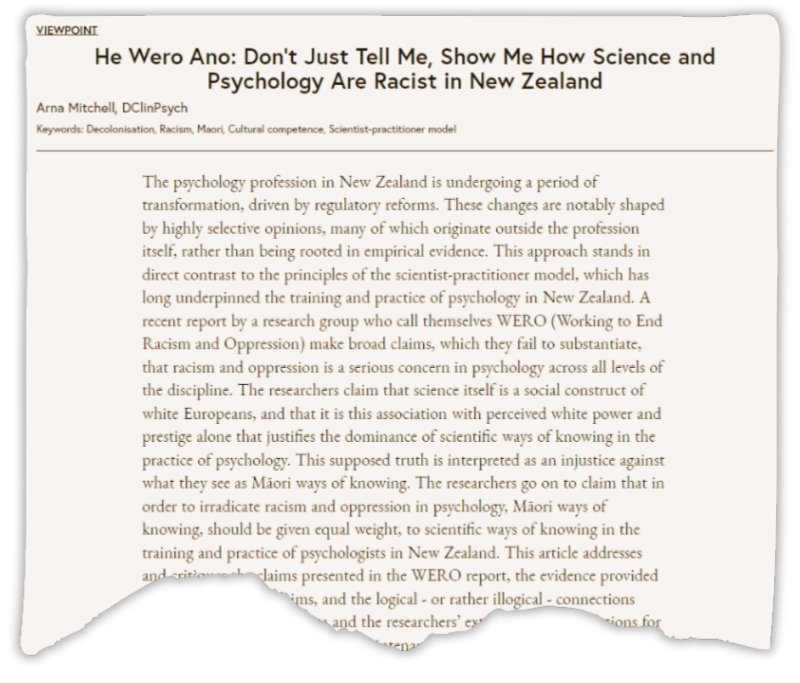
A New Zealand Journal Deleted a Paper for Potential Harm to Māori Months After Publishing It
2026-08-19 · Retraction Watch
The Journal of the New Zealand College of Clinical Psychologists deleted a peer-reviewed 2025 article by Arna Mitchell that critiqued proposed differential clinical standards for Māori clients, citing inconsistency with the college's values rather than research fraud or factual error. The decision has prompted member resignations and drawn criticism from within the field, reigniting debate about editorial values-based suppression of published scholarship.

Pew Research: Trump's Job Approval at 34%, Partisan Gap Widest in Over Seven Decades
2026-08-18 · Pew Research Center
A Pew Research Center survey found Trump's second-term approval averaging 84% among Republicans and 6% among Democrats — a 78-percentage-point partisan gap that Pew identifies as the widest in more than 70 years of tracking presidential approval. The finding illustrates the depth of affective polarisation now structuring Americans' basic perceptions of political reality.

AAUP Report: 'Extorted Compliance' Threatens Institutional Autonomy and Academic Freedom
2026-08-18 · American Association of University Professors (AAUP)
A joint AAUP committee report approved in May 2026 and updated in August details how coercive federal executive measures, including funding freezes and legal threats, have been used to pressure universities into compliance, eroding shared governance and institutional autonomy. The report was updated on 10 August 2026 following a dispute with Princeton over characterisation of its faculty policies.
Psychological Barriers to Improving Carbon Competence: Availability Heuristic and Motivated Reasoning Distort Climate Action Beliefs
2026-08-03 · Nature Sustainability / University of Geneva
A preregistered study surveying nearly 3,000 people, published in Nature Sustainability, finds that people systematically overestimate the climate benefit of low-impact behaviours like recycling and underestimate high-impact ones like avoiding flights — driven by the availability heuristic and motivated reasoning. Offering more accurate heuristics as replacement rules of thumb showed some promise in shifting these misperceptions.

EU AI Act Core Obligations Now Fully Enforceable: High-Risk Systems, Transparency, and Deployer Duties in Force
2026-08-02 · Cooley LLP / EU Commission
As of 2 August 2026, the EU AI Act's main body of obligations — covering high-risk AI systems, deployer transparency duties, and Article 50 labelling requirements for AI-generated content and deepfakes — became legally enforceable, with fines of up to €15 million or 3% of global annual turnover for non-compliance. The European Commission adopted implementation guidelines on 20 July 2026 to assist businesses with compliance.

Filament Games August 2026 AI and Learning Roundup: Guardrail-Free Chatbots Found to Harm Durable Math Learning
2026-08-01 · Filament Games
A research roundup covering August 2026 findings highlights a Wharton School PNAS study in which high school students who used a standard AI chatbot for maths practice performed worse after losing access to it, while those given a hints-only version fared as well as students using traditional methods. Researchers attributed the gap to 'cognitive offloading,' whereby students delegated thinking rather than building durable understanding.

UK AI Regulation and Safety Bill Clears House of Commons
2026-08-01 · AI For Developing Countries Forum / Cubbbix
Britain's AI Regulation and Safety Bill passed the House of Commons in August 2026, with Royal Assent expected by October, as part of a global wave of AI governance action that also saw China issue its first fines under new companion-AI rules and the US federal 'Great American AI Act' stall in the House over a state-preemption dispute. The developments mark a divergence in regulatory philosophy between the EU's enforceable risk-based framework and US legislative gridlock.

AI & Society Paper: Clinicians' Tumour-Detection Accuracy Dropped 6% Three Months After Adopting AI Diagnostic Support
2026-07-30 · Science News / 2026 International AI Safety Report (cited in SAN)
Reports synthesising 2026 research on AI and cognitive atrophy note that, according to the International AI Safety Report, clinicians' ability to detect tumours without AI assistance fell by 6% within three months of beginning to use AI diagnostic tools — mirroring findings on student skill atrophy from AI use in homework. The pattern is cited as evidence of a systemic 'cognitive offloading' risk extending well beyond education.
