|
Having trouble viewing this email? / Problemy z wyswietleniem?
If this email doesn't render correctly, click the title above. / Jesli email nie wyswietla sie poprawnie, kliknij tytul powyzej.
|

|
|
|
|
Jump to your language / Przejdz do swojego jezyka:
|
|
|
|
(links work in browser view / linki dzialaja w przegladarce)
|
|
|
|
How BowSmith Decides What You Should Tune Next
Hi there,
Behind the scenes this week. When you finish a tinkering session, a sheet slides up with up to five suggestions for what to do next. Several of you have asked how it picks them and whether it is “AI”. It is not, and I think the real answer is more useful than the buzzword.
It is a map, not a model
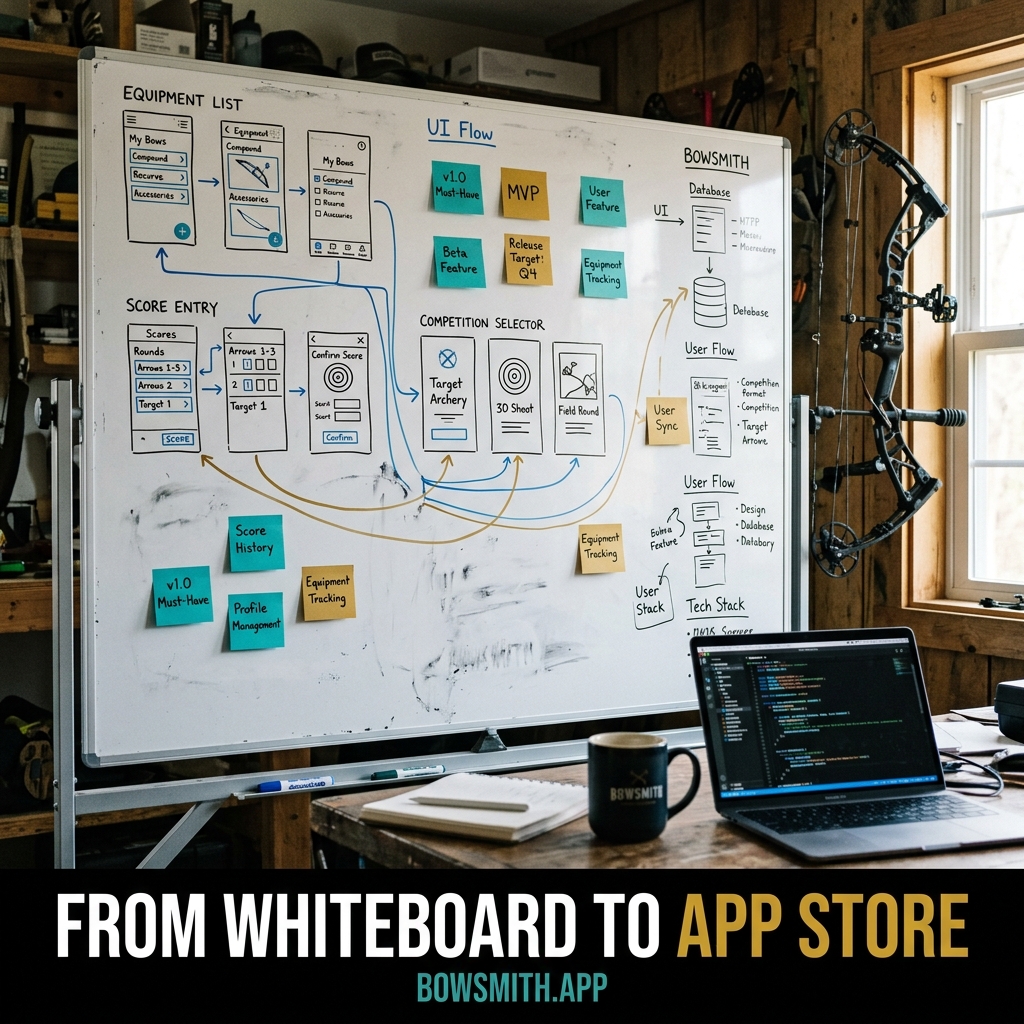
Every recommendation comes from a declarative flow map: a table keyed by three things — which session you just finished, how it went (improvement achieved or not; inspection clean or not), and what kind of bow you shoot. Each entry lists the sessions that make sense next, and for each one: a reason, a priority, an estimated duration, and how complex it is.
Paper tuning that ends in a clean hole leads somewhere different from paper tuning that ends in a stubborn tail. A stubborn tail on a compound leads somewhere different from a stubborn tail on a recurve. That branching is the whole trick, and it is written down where I can read it, test it, and be wrong about it in public.
Why I chose boring
An earlier version had hand-written handler code for about eight session types and nothing for the other fifty. In practice, no user ever saw a recommendation — the trigger was built but never wired in. When I fixed that in the spring, the choice was: write fifty more handlers, or write one table and fill it in. The table won because I can audit a table. I can put it in front of a coach and ask “is this the right next step?” and get a straight answer. You cannot do that with a model.
What it reads, and what it does not
- Reads: the session type, the outcome you recorded, the bow type from the setup, your skill level (so a beginner is not sent to an expert stabiliser protocol), and the gear you used — so the next session opens with the same bow and arrows pre-selected.
- Does not read: your scores, your location, your history across months. It is deliberately local to the session you just closed. That is a limit, and it is the next thing to lift.
- Says why: since the October update, every card shows its reason and when it was generated, and result screens tell you how many arrows a conclusion rests on. A suggestion you cannot interrogate is not advice.
Where the troubleshooters fit
The flow map answers “what next?” after a session. The new troubleshooters answer the earlier question — “what is wrong?” — from a symptom: today a paper tear or a pin float. They sit on top of the same table: a troubleshooter’s output is a first session to run, and the map takes it from there. Symptom, session, next session, logged against the setup. Both are already in the app you have.
Argue with the mapIf the app has ever suggested a next step that made no sense for your bow, reply and tell me which session and which suggestion. That is a row in a table, and I can fix a row in an afternoon. 
|
|
|
|
|
Jak BowSmith decyduje, co masz stroic dalej
Czesc,
W tym tygodniu zza kulis. Gdy konczysz sesje w Tinkering, wysuwa sie arkusz z maksymalnie piecioma sugestiami, co robic dalej. Kilku z Was pytalo, jak on je wybiera i czy to „AI”. Nie jest i mysle, ze prawdziwa odpowiedz jest bardziej przydatna niz modne slowo.
To mapa, nie model
Kazda rekomendacja pochodzi z deklaratywnej mapy przeplywu: tabeli indeksowanej trzema rzeczami — jaka sesje wlasnie skonczyles, jak poszla (poprawa osiagnieta czy nie; inspekcja czysta czy nie) i z jakiego luku strzelasz. Kazdy wpis wymienia sesje, ktore maja sens jako nastepne, a dla kazdej: powod, priorytet, szacowany czas i stopien zlozonosci.
Strojenie na papierze zakonczone czysta dziura prowadzi gdzie indziej niz strojenie zakonczone upartym ogonem. Uparty ogon w bloczku prowadzi gdzie indziej niz uparty ogon w recurve. To rozgalezienie to cala sztuczka i jest zapisane tam, gdzie moge to przeczytac, przetestowac i publicznie sie pomylic.
Dlaczego wybralem nudne
Wczesniejsza wersja miala recznie pisany kod dla okolo osmiu typow sesji i nic dla pozostalych piecdziesieciu. W praktyce zaden uzytkownik nigdy nie zobaczyl rekomendacji — wyzwalacz byl zbudowany, ale nigdy nie podlaczony. Gdy naprawialem to wiosna, wybor byl taki: napisac piecdziesiat kolejnych procedur albo napisac jedna tabele i ja wypelnic. Wygrala tabela, bo tabele moge zaudytowac. Moge polozyc ja przed trenerem i zapytac „czy to wlasciwy nastepny krok?” i dostac prosta odpowiedz. Z modelem tego nie zrobisz.
Co czyta, a czego nie
- Czyta: typ sesji, zapisany wynik, typ luku z ustawienia, Twoj poziom (zeby poczatkujacy nie trafil na ekspercki protokol stabilizacji) i uzyty sprzet — wiec nastepna sesja otwiera sie z tym samym lukiem i strzalami juz wybranymi.
- Nie czyta: Twoich wynikow, lokalizacji, historii z miesiecy. Jest celowo lokalna dla sesji, ktora wlasnie zamknales. To ograniczenie i to nastepna rzecz do zdjecia.
- Mowi dlaczego: od pazdziernikowej aktualizacji kazda karta pokazuje swoj powod i kiedy powstala, a ekrany wynikow mowia, na ilu strzalach opiera sie wniosek. Sugestia, ktorej nie mozna przesluchac, to nie porada.
Gdzie pasuja troubleshootery
Mapa przeplywu odpowiada na „co dalej?” po sesji. Nowe troubleshootery odpowiadaja na wczesniejsze pytanie — „co jest nie tak?” — od objawu: dzis przedarcie papieru albo plywanie pinu. Siedza na tej samej tabeli: wynik troubleshootera to pierwsza sesja do zrobienia, a mapa przejmuje od tego miejsca. Objaw, sesja, nastepna sesja, zapisane przy ustawieniu. Jedno i drugie jest juz w aplikacji, ktora masz.
Klocic sie z mapaJesli aplikacja kiedykolwiek zaproponowala nastepny krok bez sensu dla Twojego luku, odpisz i napisz, ktora sesja i ktora sugestia. To wiersz w tabeli, a wiersz moge naprawic w jedno popoludnie. |
|
|
|
You're receiving this as part of the BowSmith community. / Otrzymujesz to jako czlonek spolecznosci BowSmith.
Unsubscribe / Wypisz sie
|
|