This week: Caterpillars Are Bird Food
Hello!
Maybe you’ve heard that native plants are nature’s bird food—hummingbirds sipping nectar from Cardinal Flowers, goldfinches gathering seeds from Purple Coneflower heads, and cardinals eating Flowering Dogwood berries. Yet the ultimate bird food is caterpillars.
Caterpillars are chock-full of protein and fat that fuel energy-intensive activities like nesting, migration, and overwintering. They also contain nutrients like carotenoids that help pigment feathers. Just one brood of Carolina Chickadees will consume roughly 9,000 caterpillars from hatching to fledging. And for every two or three hundred eggs a lepidopteran lays, only a few will become adult butterflies and moths—that’s how many caterpillars are destined to become somebody’s lunch.
This makes larval host plants even more critical. We want well-fed caterpillars to emerge as the next generation of butterflies and moths, and we also need healthy caterpillars to feed bird populations. With that in mind, let’s look at a handful of moth caterpillars with fuzzy, bristly hairs. Though these caterpillars may seem (intentionally) unappealing, birds eat them anyway!
American Dagger Moth Caterpillar
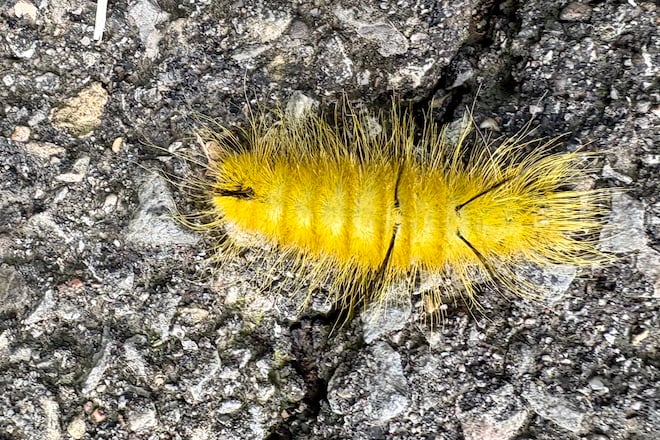
The American Dagger Moth caterpillar (Acronicta americana) is yellow, with four black setae (bristles) extending from its abdomen. Its host plants include maples, oaks, ash, willows, and elms.
Banded Tussock Moth Caterpillar
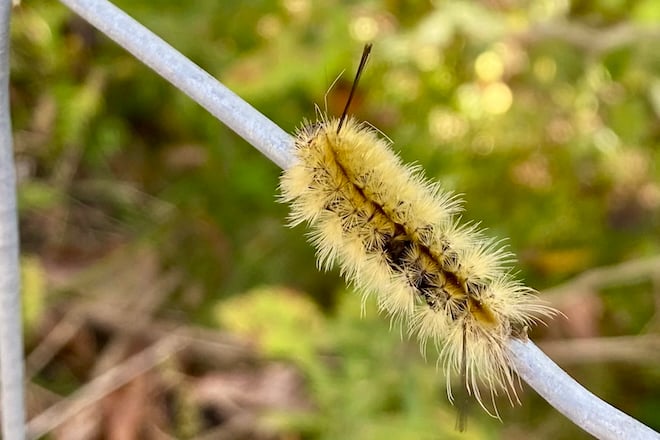
The Banded Tussock Moth caterpillar (Halysidota tessellaris) is yellowish, with longer “hairs” near its rear. Its host plants include hickories, oaks, ashes, elms, walnuts, willows, birches, alders, hazels, poplars, tulip trees, grapes, and hackberries.
Hickory Tussock Moth Caterpillar
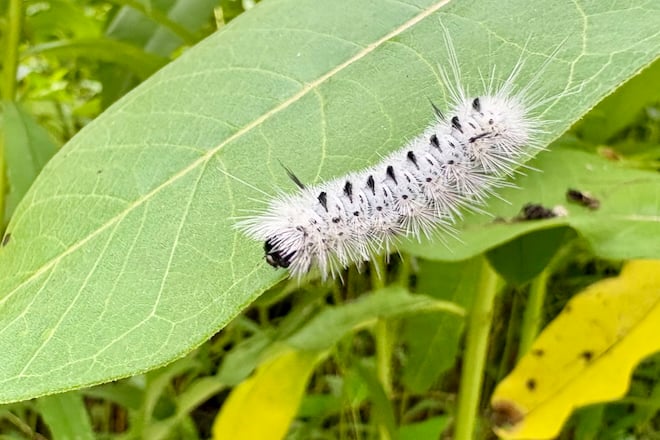
The Hickory Tussock Moth caterpillar (Lophocampa caryae) is white with black spots and feeds on the leaves of hickory, walnut, pecan, and American hornbeam trees.
Woolly Bear Caterpillar
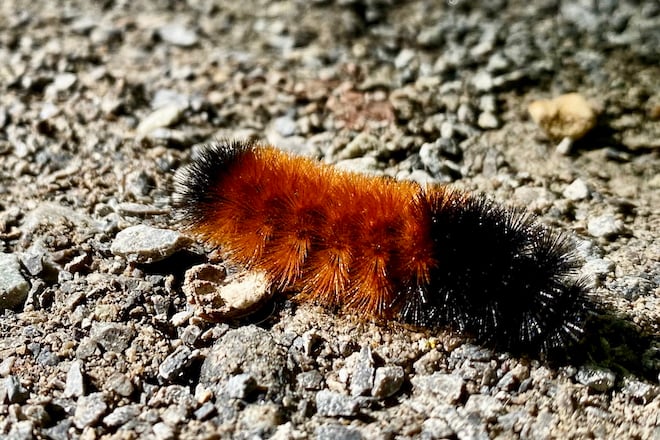
The caterpillar of the Isabella Tiger Moth (Pyrrharctia isabella) is so well known that it has its own name: the Woolly Bear. This familiar brown-and-black-striped caterpillar feeds on maples and birches, asters, milkweed, and some members of the rose family.
Giant Leopard Moth Caterpillar
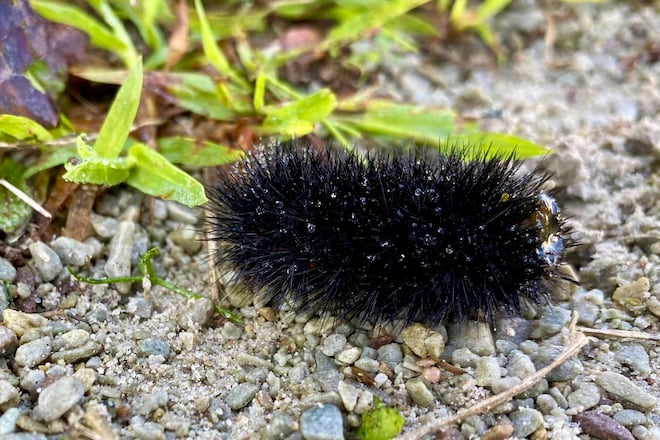
The Giant Leopard Moth caterpillar (Hypercompe scribonia) is covered in black bristles and is found in leaf litter during the fall, winter, and early spring. Its host plants include maples, sunflowers, cherries, willows, and violets.
Whether these caterpillars become bird food or grow into moths that pollinate flowers at night, they are critical to a healthy food web!
Elsewhere:
Fun with caterpillars continues! The latest episode of The Field Guides podcast explores the wonder of Fall Webworms. Give it a listen.
Have a great week,
Julie