Selling BzzAgent
Selling BzzAgent: a tale of British breakfasts, golden handcuffs, and navigating corporate icebergs
“I've been accused of sexually harassing a black, female co-worker,"
This the (very caucasian) very Senior Executive proclaimed to me sometime in 2009 - just before informing me that he was leaving the company.
And this is how the first sale of BzzAgent fell through.

I imagined this Senior Executive was telephoning from the bath, as he would; a space where he offered creative formulations to his countless creative agency underlings, and occasionally squared away large media buys or charmed a client, carefully, like a lion stalking unsuspecting elk.
He was British, if memory serves.
He was an actual Count, of that I'm sure.
He carried an accent that made you susceptible to ideas - like, say, the one where he was going to buy BzzAgent. Looking back I'm not so sure. There wasn't heavy diligence burying us in work we didn't have time to do, nor redlines nor hard-nosed negotiating strategies on indemnification clauses.
Nevertheless, on the day he was to get buy-in for his large and formidable ad agency to acquire BzzAgent, it seems he would not longer be employed there - due to accusations of egregious HR violations.
And I'd imagine - spidey sense tingling and antennae vibrating - accused justly so.
Three months later he rang, out of the blue, his voice muffled by the whip of wind and the lapping of waves, suggesting he was on a sailboat or yacht.
"You should meet Edwina Dunn," he shouted over the din. "I think she'd like you and you, she."
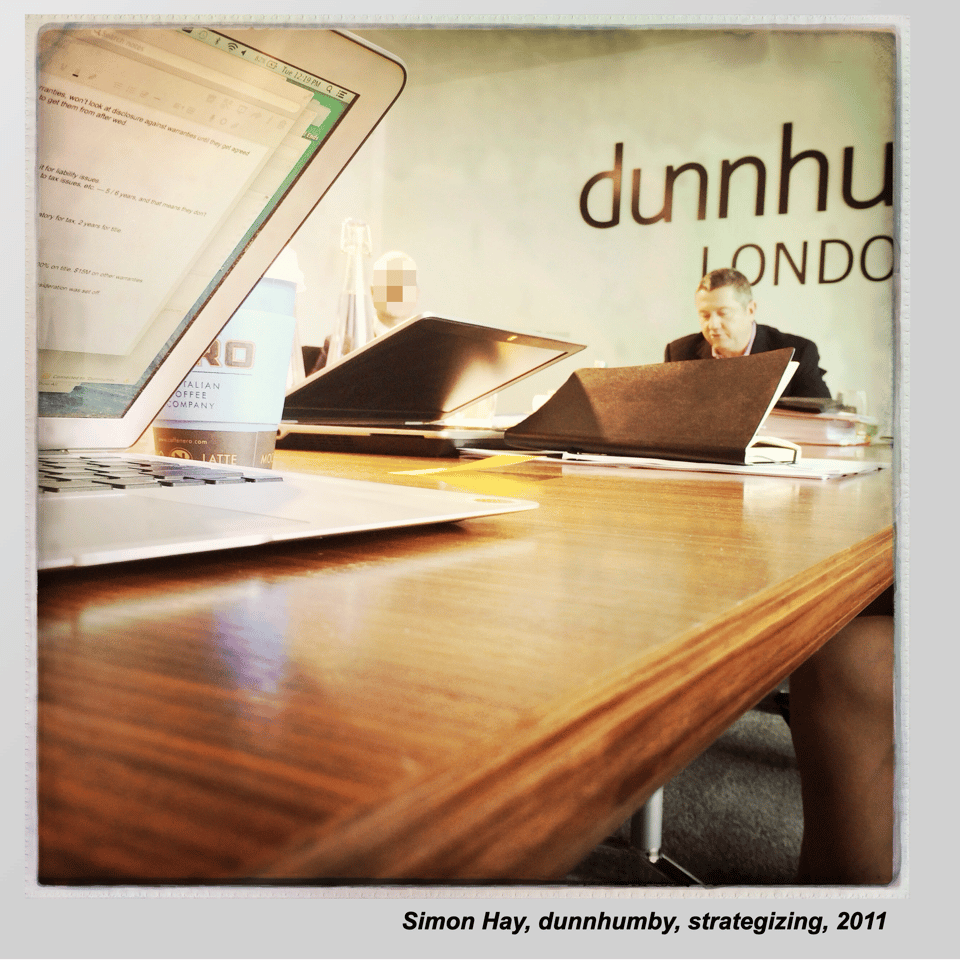
BzzAgent had a small outpost in London, so it was easy enough to set up a meet at Brown's, the historical landmark in London's Mayfair district, where Edwina and I sat for tea and maybe crumpets. Edwina was brilliant, and along with her husband, Clive Humby, had founded dunnhumby, the $1b revenue juggernaut that analyzed supermarket data and activated loyal customer behaviors.
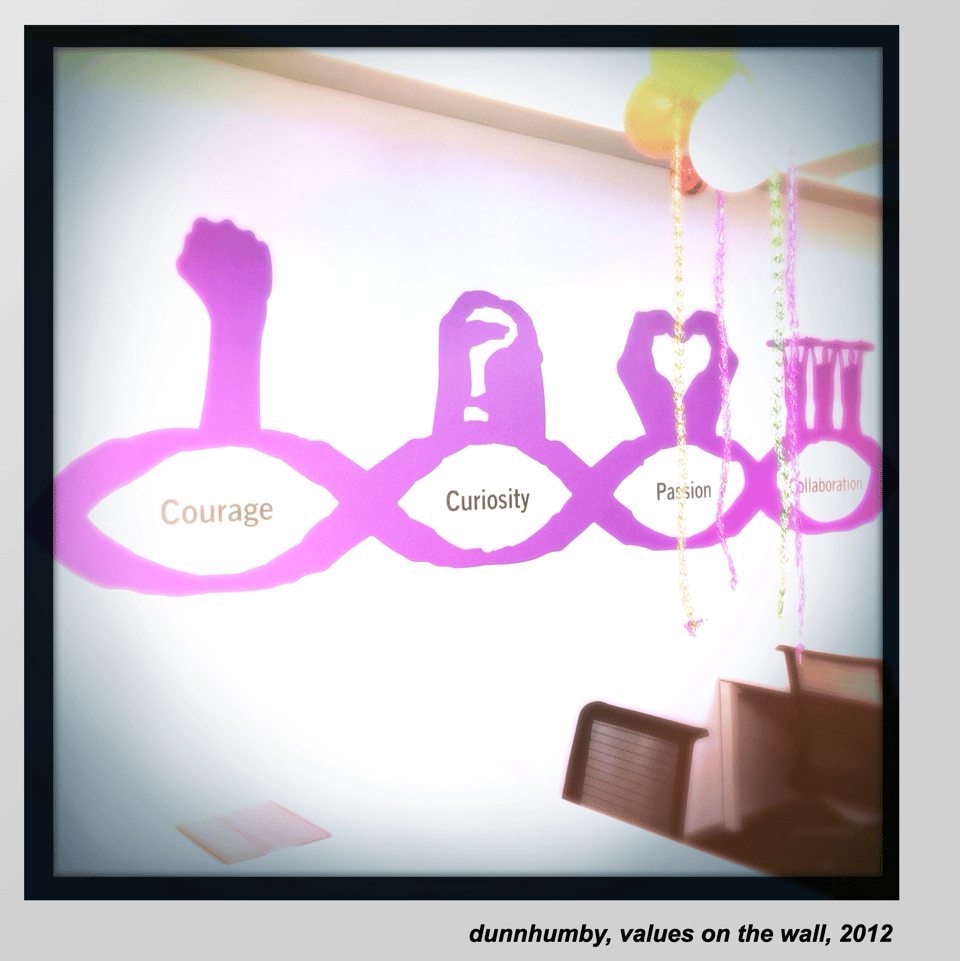
I didn't offer to Edwina exactly that we were for sale, but the context was obvious. Shortly after she sent me a note saying clear as day that she wasn't interested in the company. And that would be that.
Manufacturing exits is a strategy unto itself, and so we engaged the folks at British Supermarket Chain Sainsbury's, who were working with AIMIA to monetize Sainsbury's data assets. Over a most British breakfast of back bacon and black pudding, I mentioned to EMEA President David Johnston that it's maybe-potentially-not-a-sure-thing- but-open-to-ideas-possible that we would consider selling BzzAgent.
He perked up when I casually mentioned that we had been speaking with dunnhumby, a nemesis of sorts in that they were wholly owned by Tesco, their #1 competitor.
"Speaking with," no lie there. No lie at all.
And so I called Edwina to check in. I told her we were talking to Sainsbury's and I'd spent some time with a variety of insiders.
"David liked me," I said, no lie there. No lie at all.
She wasn't impressed. No thank you, again, she reminded me. But naïveté is the bravest of traits, and obliviousness is sometimes the gift that keeps on giving.
And so with two birds only softly in hand, we hired the bankers at Cowen & Co., to help us package our company for sale. We pitched, danced our little jig, carried water, and navigated a few different potential suitors, which we kept warm like hens sitting on eggs in a coop.
I called Edwina again. She was tiring of me: We weren't for them, regardless of what Sainsbury thinks. But then, just before she hung up, she paused with an afterthought, as if remembering to request utensils for take away.
"An update," she informed me, "there is a CEO taking over dunnhumby, someone who has been with the business eighteen years and, I suppose, if you wanted, I'd be happy to introduce the two of you."
And so, Simon Hay.
Simon was an entirely different character from Edwina, having risen from lower ranks inside of dunnhumby, he carried the humbleness of someone who had hand-written proposals into wee morning hours, and stayed late to carry trash out in the late evenings.
Hay was brilliant with customers, so much so that dunnhumby had sent him to live in the US village of Cincinnati Ohio for nearly a decade, with a purpose of leading the business line served their biggest customer, Kroger.
Hay was also charming, like the pleats of a pantsuit, or the buttons straining on the too-tight shirt of a European businessman. He carried a curiosity that made you feel as though anything was possible - and you had the permission and capability to make it so.
Hay seemed to like the cut of my jib; he often remarked that genius came with quirks, and fostered teams filled with quirky geniuses. As the incoming dunnhumby CEO he wanted to innovate. He wanted to help shape the future. Hay was decisive - and so we began to discuss what the companies would look like together.
Two horses make a race, and now we had dunnhumby and Sainsbury’s each moving down the track. We negotiated them individually, each partitioned in their own boxes, yet each aware of the specter of the other.
As with any transaction, each deal died and re-arose on multiple occasions; concepts that felt insurmountable one week were overcome the next.
A call on a Sunday would fix emotional tension. A compromise that didn't change a thing allowed everyone to keep advancing.
As things neared a head, I asked David Johnston one simple question over lunch: "Why should we sell to Sainsbury?"
Placing his half-peeled prawn back on his plate, "Because Tesco is the Death Star," he said with the coolness of a boat captain navigating inches between icebergs.
And there a lesson I reflect upon often: If you're making a case for your offering, addressing your competitor's weaknesses is a fool's gambit.
At the banker's celebratory closing dinner, David Istock of Cowen stood up with a parting gift: A pair of shiny golden handcuffs. You see in order to structure a deal with dunnhumby, the parties had unfortunately navigated a four-year earnout. And while there's a banker's quip - *earnouts are rarely earned, but always paid* - this felt restrictive and undesirable.
(I had yet to realize they would be the best four years of my operating career (so far)).
A few months later, at Simon Hay's wedding, I navigated between wedding guests making small talk, mostly trying to understand British affects and trying to keep up with the pace of the drinking. As the night wound to a close, I found myself standing over a punchbowl with Edwina Dunn.
I rambled on - sycophantically gushing about the company she built - and she listened with grace, then took my hand in a firm grip, stared me dead to rights in the eyes and made sure I still was clear,
"You know I wouldn't have bought the company, right?"