
Invisible
A meditation on why we choose invisibility in shared spaces
At the gym, in my building, every morning, I see the same people.
There's the guy with the short black socks and trim flat-top hairdo, the millennial who grunts like a constipated ape, the woman who can't seem to get enough of herself in the mirror.
There are at least two dozen regulars. Every single day, every single morning.
I don't speak to any of them, and they seem unaware of me.

Navigating the gym is a dance of conscious ignorance.
We sweat in each other's orbits, see-through and irrelevant; we're pixelated art in Minecraft, circling like NPCs.
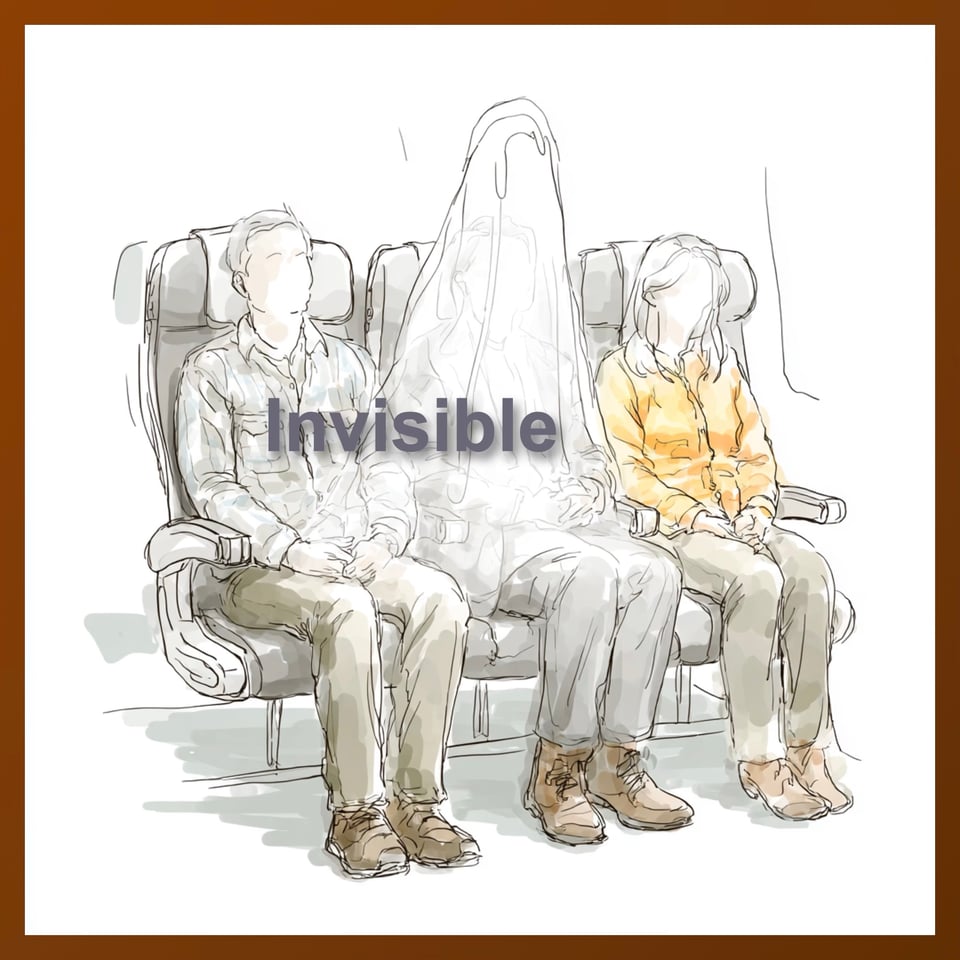
On the airplane, on the tarmac, I sit in the middle, elbow to elbow between two seat mates.
We’re traveling to the same place. We depart at the same time and arrive the same way. We’re offered a snack, a drink, a meal, one after another, in our specific sequence.
We sit closer than I ever will to most of my friends and almost every acquaintance. My arm touches yours. My feet graze your knapsack. Your seatbelt twists with mine.
And yet I mostly ignore you, as if I accidentally packed away the extroversion I wear like a badge in daily life. You do the same, as if engaging might be an untoward advance, risking conversation that lasts too long, or pleasantries that uncover political fault lines and turn us into enemies at 35,000 feet.
In our co-working space, I see the other tenants in the kitchen every day. Our four-to-a-pod desks sit in an open plan alongside other teams battling their own challenges, building their own opportunities.
I see these people more than most in my family.
We breathe the same manufactured office building air. I could describe most of their outfits. I know when they break for lunch and when they talk too loudly on the phone. I know when they seem tired or arrive late or leave early or don't seem inspired or seem bored in a corner conference room.
And yet we avoid eye contact and rarely nod as we pass in the hall. The rule seems to be don’t engage. Is it fear of becoming friends - or of the future requirements of casual conversation?
We do not exist to each other, even though I see them eight hours a day and run into them in the men's room.
They are nonexistent. I talk more to the barista at Starbucks.
In the Uber you are a driver sitting two feet from me, yet you're scrubbed from my attention like the trees passing by the passenger window.
At the concert, you are the row in front of me, but it might as well be an alternate dimension.
In line, you're so close that I feel the warmth of your breath and smell your shampoo; I make a fashion inventory and notice the weft on the cuff of your jeans. We are on the same journey, tip-toeing with patience to the cashier or to the bank teller or to the maître d’ to be seated.
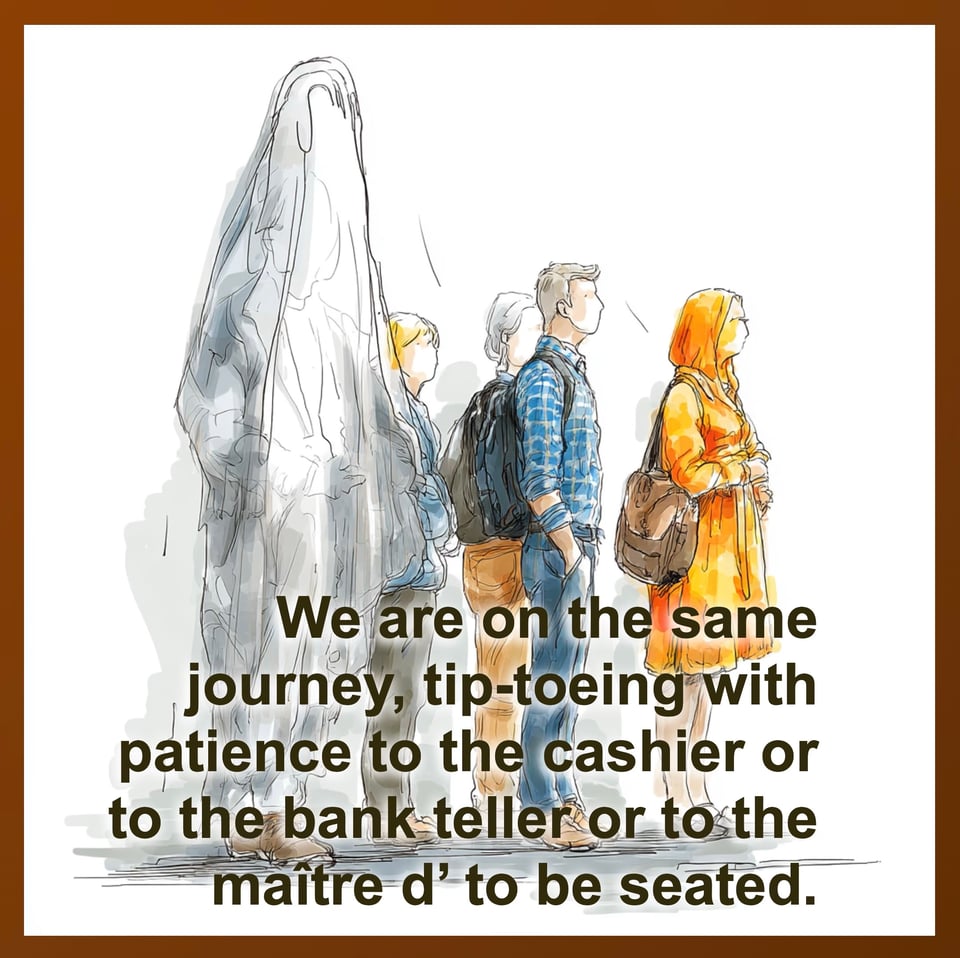
You are an object.
And I am in your way.
On the chairlift, your conversation is one that I pretend I don't hear.
In the waiting room we all have our own things to concern ourselves with.
My friend Devin will talk to anyone, anywhere, anytime. I ask why, and he asks, "why not?" I ask about commitment, and he says, "to what?"
I ask about rejection and he seems disappointed in me.
"There are eight billion other people on the planet, so what if one doesn't want to talk to me, someone else will," he scolds.
And yet real life with real humans can be a hazard. Conversations begun that don't feel finished. Judgments we place on others. Judgments we place on ourselves.
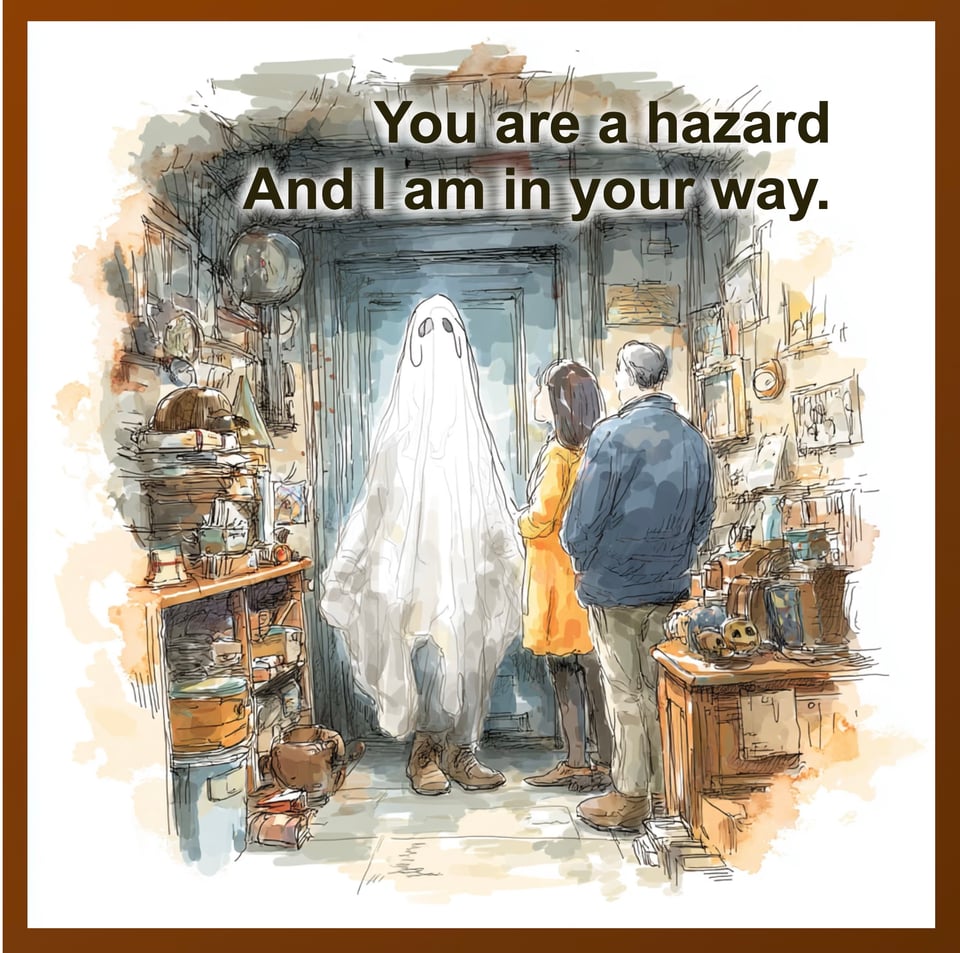
Because in real life, acknowledgment removes the cloak of invisibility. And who knows what obligation comes with being seen.