
Meeting Cohort 5 - ᒥᐢᑎᐠ Mistik Studios
2026-08-01
Hello ghosties!
We’re in the full heat of summer, the perfect time to take a road trip over to rural Saskatchewan to meet Mistik Studios.
Who is ᒥᐢᑎᐠ Mistik Studios?
ᒥᐢᑎᐠ Mistik Studios is a small Indigenous and queer led co-operative video game studio based out of rural Saskatchewan, on Treaty 6 Territory and within the Homeland of the Métis.
We want to highlight the Cree, Saulteaux, Dakota, Nakota, and Lakota peoples, as well as the Métis, who have lived on and cared for these lands for generations. We honour their histories, cultures, and ongoing contributions to this land that we are incredibly grateful to live and work on.
Mistik Studios was recently featured on Global News for “putting Indigenous culture on the gaming map.”
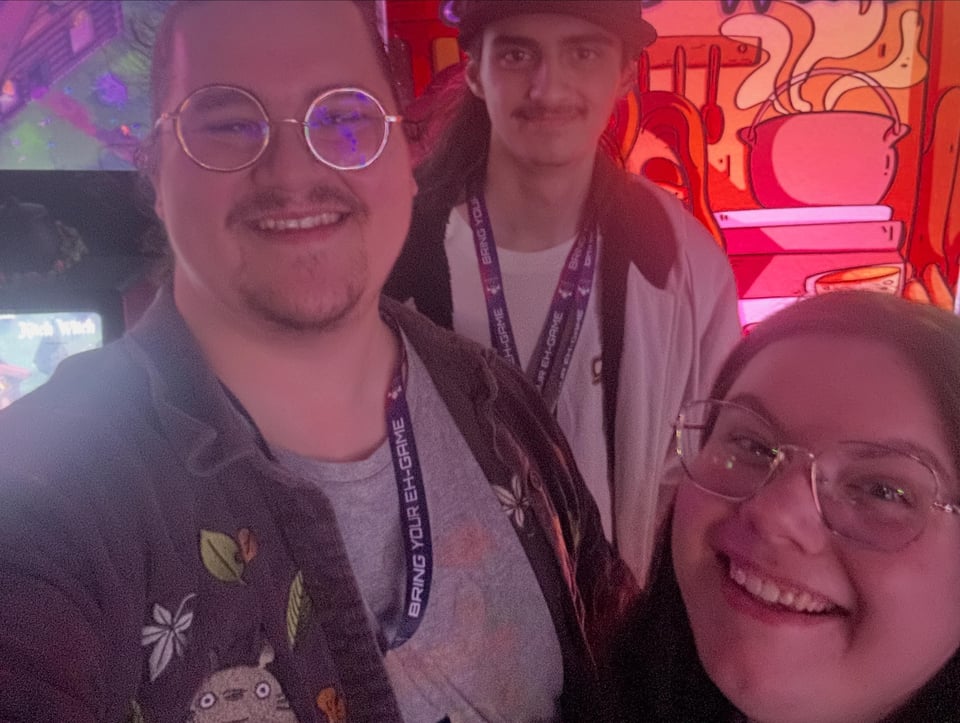
Mistik Studios started out as Kay-Lynne Fehr, Marentin Fehr and Xander Chalifour. We have since added a new member to our team, Teah Dreaver (Cainupe)!
Kay-Lynne (she/they) is a proud citizen of the Metis Nation of Saskatchewan, and has been working in the video game industry for the majority of their adult life. Kay-Lynne currently handles 3D art, narrative, prototype 2D art, community and production for our debut game, Kitch Witch. She hopes to live a life exactly like a Kitch Witch would!
Marentin (he/him) is a member of Waterhen Lake First Nation. He has been incredibly passionate about music since he was able to hold drum sticks at 6 years old. He is our designated beeps and boops enthusiast! He creates all of the music and SFX for our games, as well as owns the technical side of development.
Xander (he/him) is our local circus performer, meme enjoyer, vibe bringer and junior game developer. From narrative to game design to data entry to 3D art to light programming, he’s got it covered.
Teah (Cain) (he/she/they) is the newest member of our team! They are a 2D/3D artist from Big River First Nation. He has the most incredible art style, we are so happy to welcome her to the team!
We are always aiming to run a studio that defies the norms that capitalism and colonialism have created in our society and in this industry.
What makes you unique?
We ultimately have the goal of creating games that invite you to feel at home. That means not only in the genre of games that we make (cozy life sim is our jam currently) but also in the feelings our games give you. We want to craft stories that are personal and intentional. We believe that anyone should be able to play games and see themselves in the games they play, so that is why we really value and hold at the forefront of our development accessibility, diversity and inclusion. This also includes language!
We are working very hard on developing what is as far as we know the first commercial video game IP to be released with full Plains Cree and Northern Michif localization, as well as creating an open source language pipeline that allows more games to include Indigenous languages from around the world.
Can you tell us anything about what you’re working on right now?
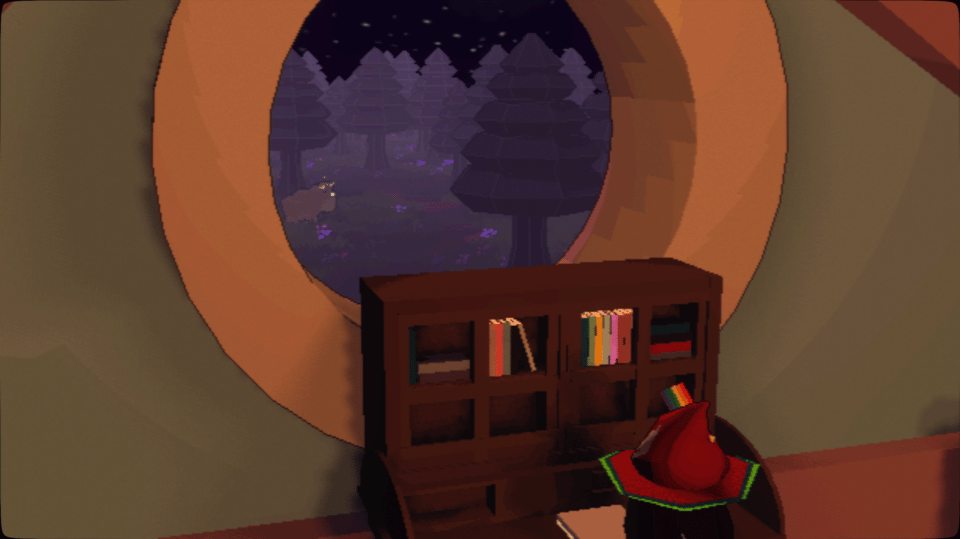
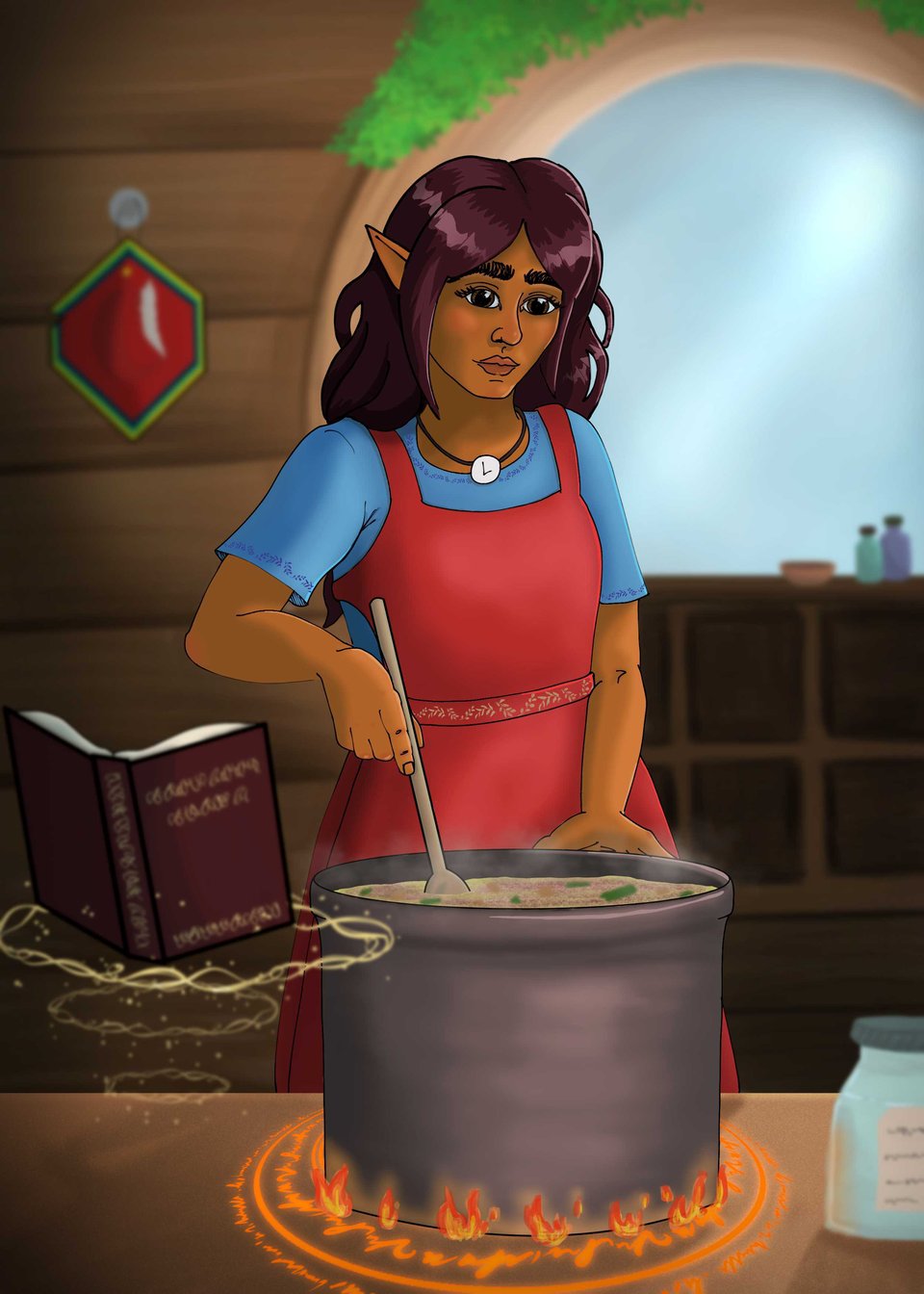
We are working on Kitch Witch, our first game as a studio! We’ve been in active development for around 4 months now, and we’ve come a long way. Kitch Witch is a cozy narrative cooking game about community care, healing and grief. You play as a healer witch who moves back home unexpectedly after your grandmother passes away, having to drop out of the Medical Magic Academy. You now must run a lone culinary clinic in the wilderness, healing adventurers that come seeking your aid with the power of magical food. Players choose between opening the clinic for adventurers who need your help, farming, foraging and hunting for ingredients, socializing with the world’s eclectic cast of characters, or resting. You must choose wisely what to do with your time, as you only have so much energy each day.
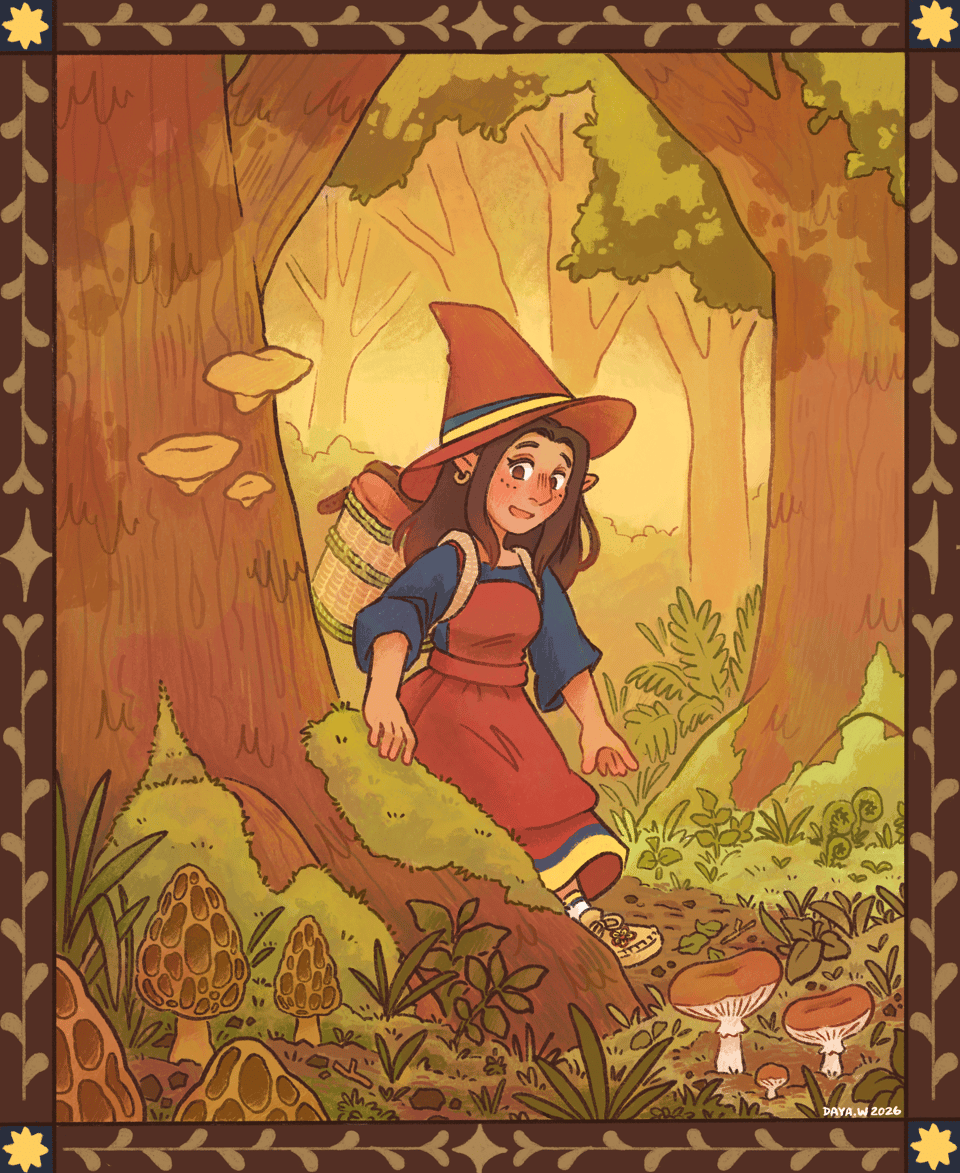
Kitch Witch incorporates subtle nods to our home province in Saskatchewan, as well as to Cree and Métis culture. Each foragable plant and fungus can be found in Saskatchewan, as well as the trees found in the various environments in the game. Kitch Witch will have four biomes that players can explore in the shape of a medicine wheel, with your forest home being in the centre. The clothing that the main character wears is inspired by our Creative Director’s own personal ribbon skirt that their mother made for them. Every color choice is intentional- we incorporate the medicine wheel colours very often in the clothing and in the environments. The medicine wheel is a model of thinking about the world as well as your own personal growth when it comes to achieving balance in your life and in the greater world. Each recipe is also inspired by real life recipes that either one of us on our team has regularly made, or takes on traditional Indigenous cooking.
In terms of gameplay, we feel that cozy farming sim games often gloss over the cooking aspect in their games, because it’s just not the main focus of the games. However, cooking games are often very chaotic and involve a significant amount of time pressure, which we wanted to omit from Kitch Witch. We ended up with some tactile, relaxing and satisfying cooking mini-games with zero time pressure. The difficult decisions in this game come from moral choices you must make. You cannot heal everyone, you are only one witch.
Kitch Witch is available to wishlist on Steam now and will likely be released in early access next summer! We plan to release it on Nintendo Switch as well after the early access period.
What’s been your biggest takeaway from the Baby Ghosts program so far?
Our team has gotten so much out of the Baby Ghosts Co-operative Foundations program over the course of the last couple months. We all agree that the community was one of the best parts, being able to connect with other studios who are aligned with our values and are pursuing the similar goal of being a co-operative and anti-capitalist studio. Every studio in our cohort is doing fabulous work, and we are so happy to call them our friends and allies in this industry now.
Mistik had so many revelations during the program, but we think the biggest takeaway was that we often assume that one person is “in charge” of making certain decisions based on their respective expertise, and while that does sometimes make operations run a little more quickly, it can also cause some confusion at times. Making these assumptions can also stifle learning and development of our studio members.
If one person was to stop being able to contribute to the studio, would no one else know enough about their responsibilities to not have their exit cause a significant rift?
That was a question that we wanted to be able to confidently answer, “It would be hard to lose someone, but we would be okay.” Before the Baby Ghosts program, I don’t think we ever even really considered this topic. Since being in the program, we have held regular knowledge sharing sessions about once a week internally so that we can teach each other new skills and assist each other when needed. We also have been delegating responsibilities a bit more evenly depending on capacity between all of us, especially the business aspects of running a studio. The Baby Ghosts program really solidified that all of us are important contributors to this studio, and we all deserve space and a voice.
What do you think all of us involved in games could do to make the video game industry better
We’ve been doing a lot of thinking about how we can support each other in this industry. We think uplifting each other where you can is so important. Share each other’s work with your own audiences, applaud each other publicly, and share knowledge and collaborate when possible. If all of us champion each other’s work, we are all one step closer to succeeding.
Ethically, we also believe it’s important more than ever right now to speak out against the use of generative AI in this industry. As we attend more industry events and pay attention to the state of the industry, the more we see that the money is going to gen-AI.
We must not sell ourselves out for the machine that steals from artists and ravages our planet. We are better than that. Make “bad” art, learn a new skill, collaborate with friends. Art is for everyone, and everyone can make art, no AI needed.
More Baby Ghosts updates:
Street Uni X is now out on Nintendo Switch.
One of the previous Baby Ghosts participants released a trailer for a spooky cooperative game Marrowood.
Void Blob Worker Cooperative posted their first devlog to mark the full release of There Will Be Beauty
Finally, Dany Guay-Belanger from the Université de Montréal is looking for help writing the first social history of video games in Quebec. The project, called “1967-2020: Over 50 Years of Video Game History in Quebec” and you can get involved by writing to [email protected]. Their coordination team will get back to you shortly!
That’s all for now,
eileen & Jennie, co-EDs
Don't miss what's next. Subscribe to Baby Ghosts' Newsletter: