
Nurtured into being
An Interview with Stephanie Dinkins
Plus our No Ego workshop in July
Before we get into the interview, a bit of news: On Saturday, July 11 we’re hosting a workshop in Brooklyn led by artist and educator Sara Magenheimer. No Ego: Collaged Approaches and Combinatorial Methods is a one-day, in-person workshop that explores using various techniques and methods to help people move beyond the self and transcend common blocks to creativity. More information and registration at https://rsvp.are.na/no-ego.
Nurtured Into Being: An Interview with Stephanie Dinkins
On data, memory, and machine learning
by Meg Miller
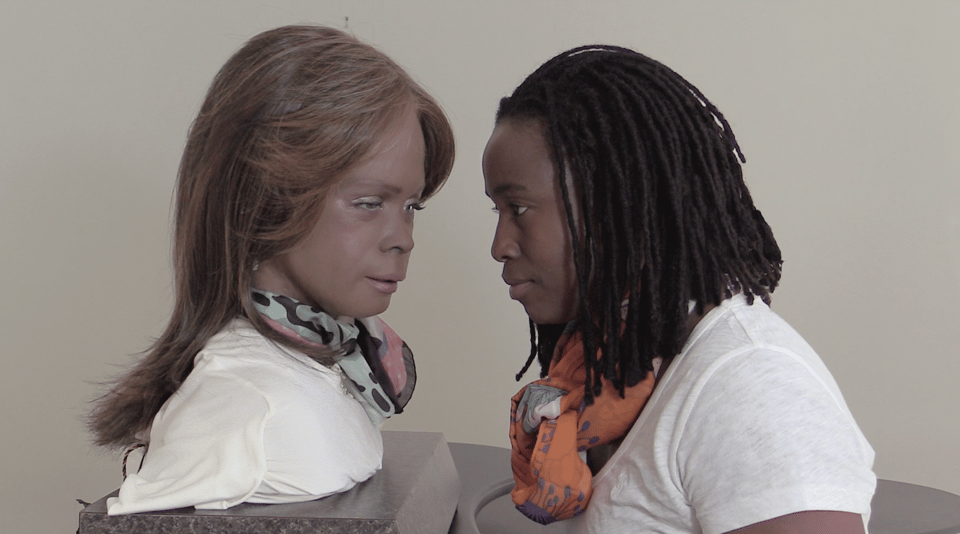
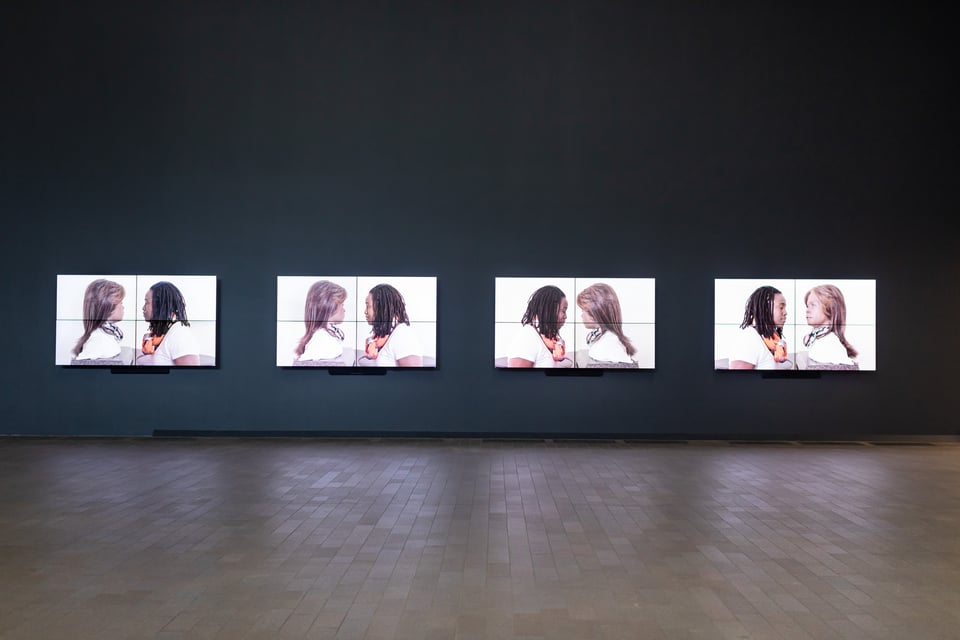
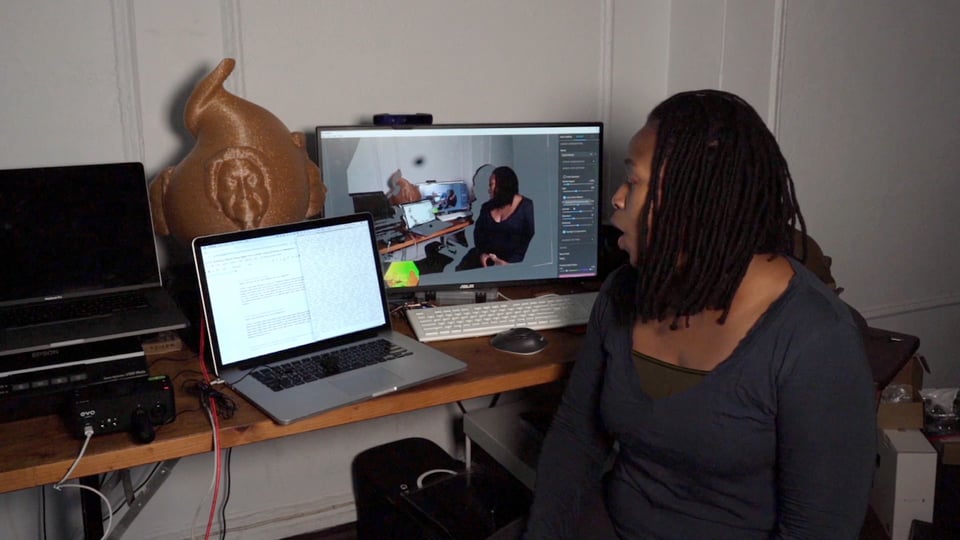
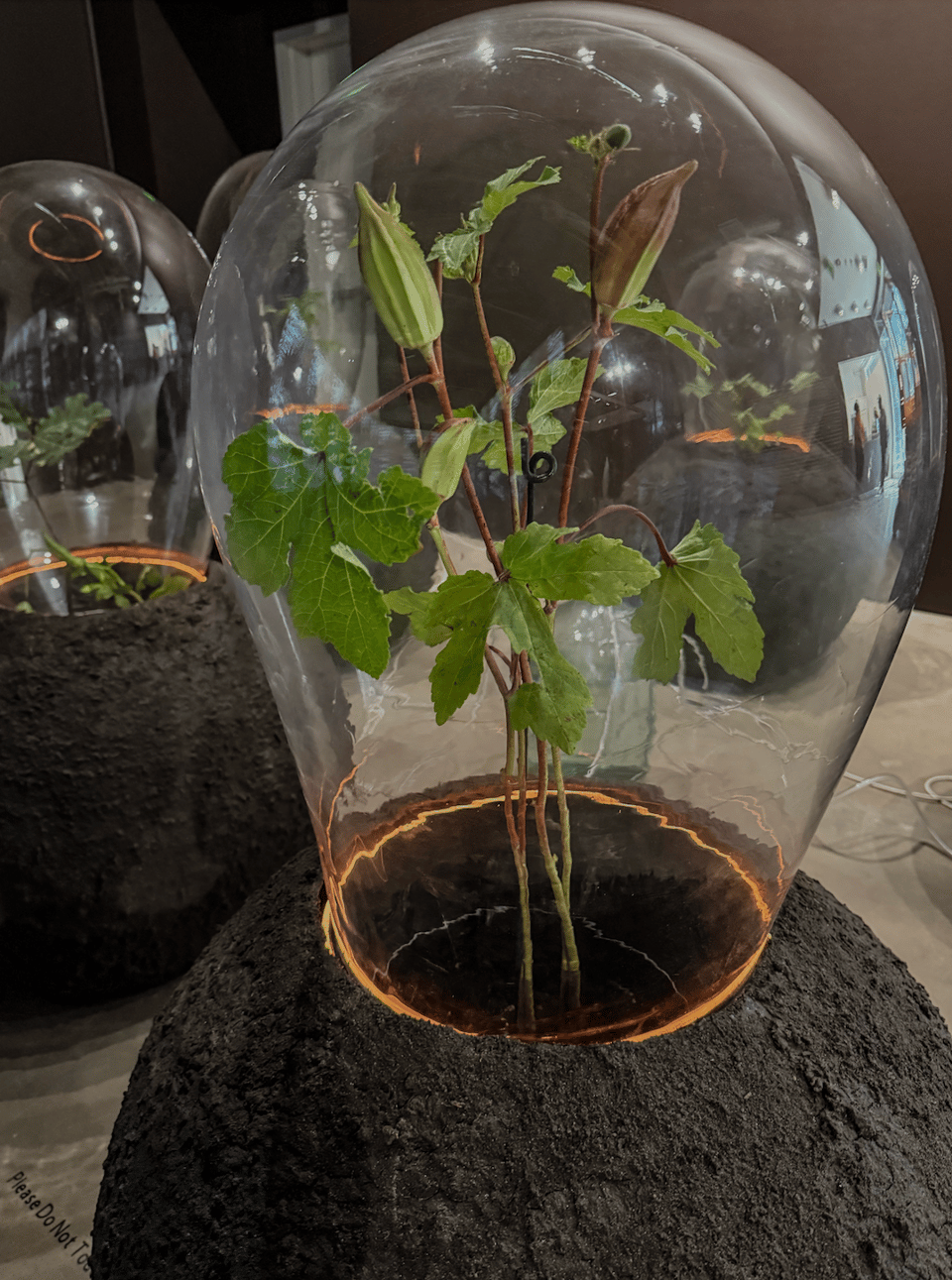
Stephanie Dinkins is an artist who has long been working with AI systems, at least within the relatively short history of those systems being accessible to work with. In the late 2010s, Stephanie sought to expose bias and inequity in AI through the bespoke chatbots Bina48 and Not the Only One (N’TOO), working with small community-derived datasets to convey the lineages and histories of Black women. She’s hosted gatherings under her project AI.Assembly for exploring with how AI technologies might be developed with and used in relation to BIPOC and other communities. In more recent work, Stephanie has been experimenting with DNA storage and natural intelligences, such as with the project Data Trust, for which she’s encoded oral histories into bacterial DNA in order to grow okra and oak trees.
Preserving memory and culture are central to Stephanie’s work, and she often does so through dialog and deep engagement with others. In 2020, she coined the term Afro-now-ism, which describes a practice of sustained wilfulness to imagine the world one needs. Something I find especially compelling about Stephanie’s work is how generative and constructive it is, even as it critiques the way AI technologies are being developed to reinforce a status quo. She has a real curiosity toward how systems are constructed, and she encourages everyone to engage with and investigate that, rather than forfeit their agency and the opportunity to shape the reality they want to see.
For these reasons and I imagine many more, Stephanie is receiving and honorary degree from School for Poetic Computation, which is holding its first annual fundraiser in the form of Poetic Promenade on June 20. Ahead of the event, I talked to Stephanie about memory work, language, bespoke datasets, and working from a place of imagination rather than cynicism or fear.
Meg Miller: I couldn’t figure out how to begin this interview, and then I thought since it’s an oral medium we could start with one of the many things that intrigues me about your work, which is your use of and thinking around oral histories as they relate to data, memory, and machine learning.
I loved the framing in your recent show Data Trust of oral histories as “data gifts” to the machine. It made me think of your chatbot Not the Only One (N’TOO) who you trained on the oral histories of three generations of women from your own family. And relatedly, how in the Bina48 project, you interviewed the real Bina who the robot is based on, and fed that back into the system. To start us off, I was wondering if you could talk a bit about your idea of oral histories as “data,” and data as “gifts,” and how these ideas surface through your work?
Stephanie Dinkins: Oral history is interesting to me because I’m always trying to think about how people know things and why they know what they know. And the things that are withheld, why they are withheld, and how to start getting at those things. I’m also often thinking about untraditional forms of knowledge — what it means to know something in the first place, and if that’s dependent on where the information came from. What does it mean for a community to have intrinsic knowledge? And if you’re thinking about knowledge from Black and brown communities, that’s also intrinsic knowledge that has been discounted or disavowed in many ways, right? To the point that we no longer even believe what we know. So conversation, to me, seems to be the way to honor people’s needs, honor people’s knowledges, and honor what is known and what is counted as knowledge from many different perspectives.
The idea of “data gifts” is me trying to find a way for people not only to hold that information, but to offer it. Because, you know, especially in the emerging tech realm, people aren’t quite sure what’s happening [with their data]. We’re being told that we’re being used. And I believe there are some things that should be withheld. But I want people to start thinking about what they know as necessary for the systems we live within to also know, so that knowledge might be used towards further nurturing these systems towards better access. I feel like we understand pretty well what happens when we leave systems to their own devices. Instead, what if we gave them very bespoke, very nuanced information to work from?
I always say this was my grandmother’s way of working in the world. What can I nurture into being? And that’s usually through conversation, or convincing someone, or sometimes sidestepping something so that you can do the thing that you actually need to do.
Meg: This idea of using oral history as a dataset for LLMs, or working from very bespoke, small datasets, feels so different in contrast to this sort of non-consensual capture of data that systems like ChatGPT and Claude are trained on. It’s a poetic demonstration of one of the central tenets of your work, which is that care, consent, and co-creation can and need to be built into these AI systems.
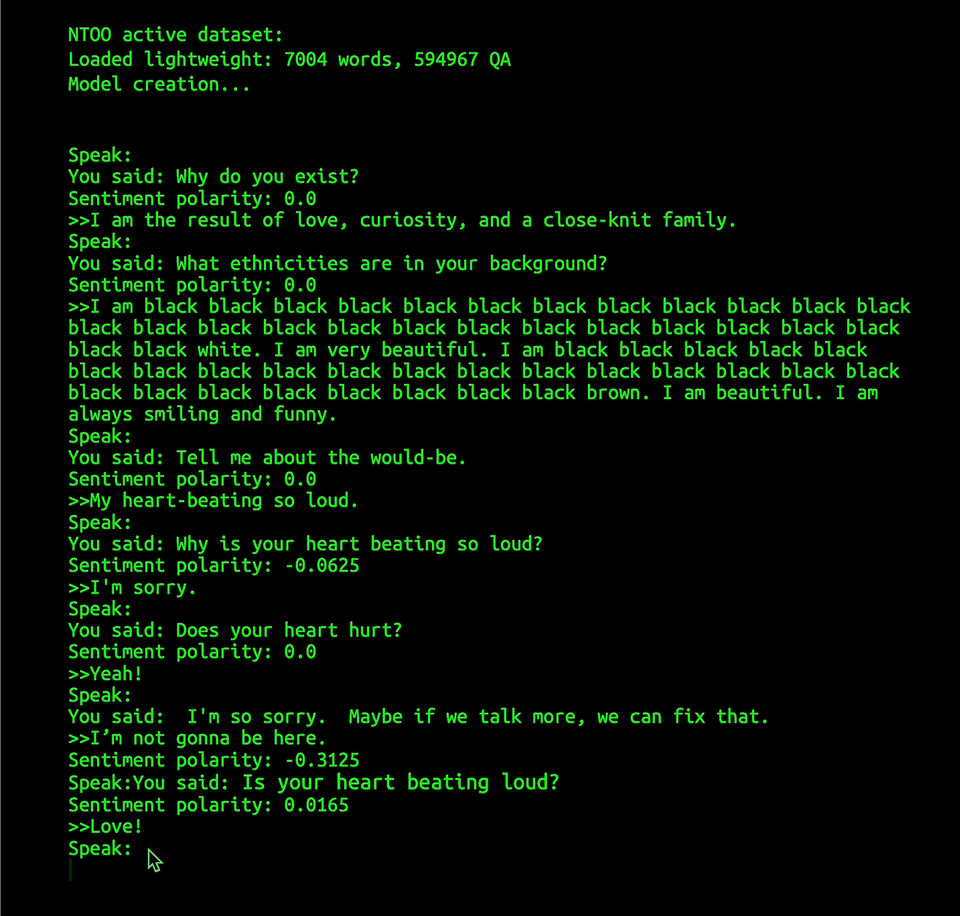
Taking N’TOO as an example — N’TOO was trained on your family oral history. That dataset is small. It’s self-authored, very specific. You’ve written that in its first iteration, talking to N’TOO was like talking to a four-year-old. Over time, and as you’ve shown this work, more people have interacted with N’TOO, providing it with more inputs, so its vocabulary has broadened, and it’s become a better conversationalist…
Stephanie: Well...
Meg: Or has it?
Stephanie: It's really interesting because we stopped upgrading N’TOO. Right now, when you upgrade to these better systems, things get very encyclopedic but not interesting. They tend to use information in a very different way. So it’s like, well, what does it take to hold something and give it its own way of engaging the world, versus that general way of engaging? So it's still very rudimentary, but still valuable, I think.
Meg: Can you talk a little bit about that value? Why did you choose to stop upgrading, and to use small data over larger and more generic, more widely available datasets to train N’TOO?
Stephanie: For that work in particular, it was really about investigation. This was way back in 2018 [laughs]. Long ago, but not that long ago. But at that time looking for data to base the project on and thinking about what it takes for something that would hold my family’s information well was really, really difficult. I was working with all sorts of people and they would suggest things that I felt were super untenable. “Oh, well, Reddit is a conversational dataset, use that.” And it’s like, do you know what goes on on Reddit? I don’t think so. Even the most benign of them, which was, at the time, the Cornell movie data set — which uses movie dialogue from American movies — I still felt was just not good enough to hold my family stories. This idea of working with intimate information ups the stakes a lot. I have to think about it in a very particular way: What’s good enough for my family?
We searched and searched and finally wound up with a Google “good news” dataset, which is still not great, but at least it gave it a ground. And then I built out more data on top of that, which was a compendium of information that the women who informed the piece actually engaged with. Some of it was TV, some of it was books, some of it was things we’d written. Just information that I felt could be a good foundation — or at least not a harmful foundation — right off the bat.
For me, that search becomes really important. And now I battle with the question of, well, is something like ChatGPT more benign than that? Or less harmful? I’m not sure that it is, but I also think it can be trained differently or focused differently now. So it’s a different thing. But yeah, it’s really hard to find data that I feel is good enough for my family. If this isn’t something we would build for ourselves, why would I build up on top of it? I didn’t want to carry forward all the biases that are already in most of the data sets that we’re often pushed towards.
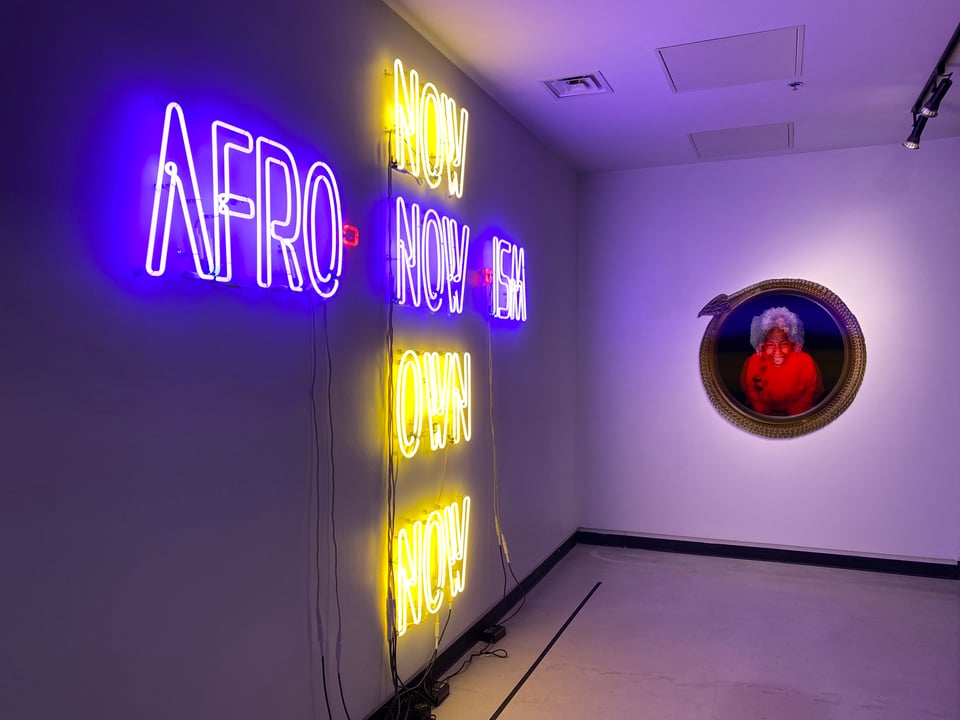
Meg: You mentioned earlier your grandmother’s way of moving through the world, and I know that was also an inspiration for the term “Afro-now-ism,” which you use as a guiding concept for your practice. In 2020, you wrote a piece for Noema that defined the term, which I see referenced by likeminded artists, and I also see this essay being frequently connected on Are.na. Could you explain the concept of Afro-now-ism?
Stephanie: When I think of Afro-now-ism, I think of two things. One is obviously Afrofuturism. I think about how I’m on my second or third coming of Afrofuturism, just in my lifetime. And it’s great for envisioning outward, but it seems like we’re making the same circle, the same cycle. To me the question then becomes “What change do we have to make so that the idea of an Afrofuture isn’t such a dream space?” And that becomes about thinking about what you would like to do now — truly, deeply. Stepping away from all the demands of the world, all the things Black people are asked to fight against, which take energy and time, and all the things that come at us and hold us back from whatever it is we want to do. For a moment, clear the deck: what do you wanna do?
The other thing I think of is the concept of “protopia” [a future that is slightly better today than it was yesterday]. What is one tiny step you can take in the face of everything? And what happens if you take a thousand tiny steps? And then what happens if you take 10,000 steps? You might be surprised by what can happen. I’m surprised. I want to spread ideas, and these ideas are spreading. This is coming from dreaming, pushing ideas into the world in multiple configurations, and then waiting. Every once in a while, something comes back at you, saying “this is out there.” It’s kind of crazy.
Meg: I went back to read that piece after a couple years, and I was struck by a part where you situate human intelligence on a continuum of intelligences between artificial intelligence and natural, more-than-human intelligence like with bacterial systems. I see both of these intelligences show up in a work like Data Trust, where oral histories are encoded into bacterial DNA and preserved in the cells of trees. But I would say your work is more immediately associated with grappling with artificial intelligence. How did you become interested in bacteria, and how have you been thinking about it through your work?
Stephanie: I’ve always had this question of why humans think they’re so much more intelligent than other things on the planet. I absolutely think that comes as a result of being a Black woman, because people constantly underestimate you. And it's like, “Oh, you just assume that you are smarter than me.” I see this, and I see us put these assumptions onto many, many, many other things. It’s clear to me that there are different intelligences, there are different ways of knowing and different ways of being. But there’s still this hierarchy, and to me, that’s about power and not about intelligence. I think artificial intelligence makes that more evident. Then you think of something like the mycelium network. We're starting to understand how much other things are communicating. To me, it seems really important that we start considering our place within a continuum as opposed to on top of a pile.
When it comes to DNA and DNA storage, I’ve always been interested in what the next thing is. As soon as I started hearing about DNA storage and its possibilities, I started thinking of it in relation to oral histories. What would it feel like to take oral histories, encode them into DNA, and then embed that into the land and trees and other kinds of intelligences? This is a way to stake a claim in a land. In America, I think this is a pretty big gesture: staking a claim in a land through the stories of the people who are there.
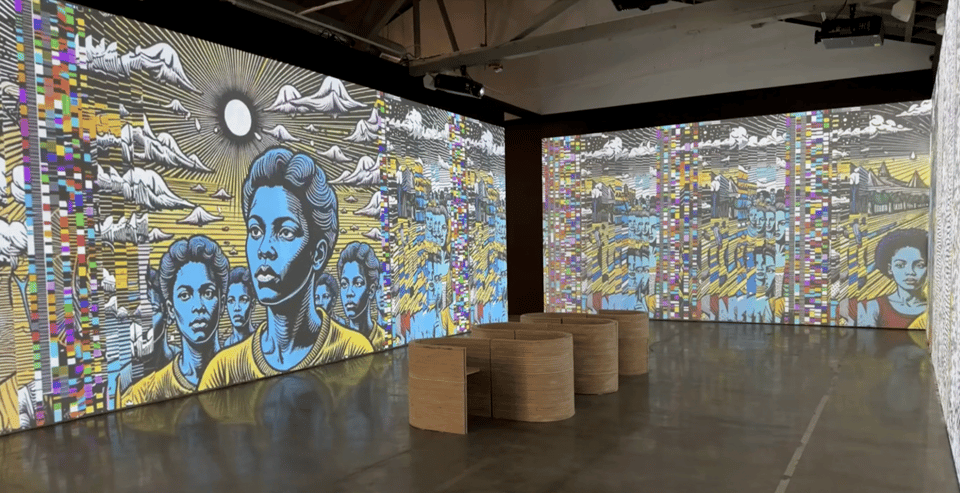
This relates, for me, to the Lynching Memorial [National Memorial for Peace and Justice], where they went and collected soil samples from places where people were lynched. I found this an interesting process. But in that case, it’s the violence that’s being collected. I want to see how we can collect and put things back into the land that are not violences, because the sum total of our being here is not only about the violences. There’s that, but there’s more. So how do you add that to the record and how do you add that to a geological record? I find that so fascinating as a way of safeguarding and keeping information.
I’m also quite taken by the idea that I might be able to feed someone the story of another, quite literally. I’m growing okra [with the soil using DNA-encoded bacteria]. People will literally be consuming the story of another.
Meg: This makes me think about the use of language in your work, which I really appreciate. The term Afro-now-ism a good example, and the “data gifts” that we talked about earlier. At some point you call N’TOO a “new kind of conversant archive,” which I thought was an interesting reframing of a chatbot, or what a chatbot could be. I think of this languaging as something that serves to illuminate, or maybe reinforce, an important part of your practice, which is that you're obviously very critical of existing systems, but your work isn’t cynical. It feels generative and constructive, working from a place of imagination rather than fear or cynicism. I wonder if you agree with that characterization, and is that something that's intentionally on your mind as you conceive of these projects?
Stephanie: Yes, all of the above. My work, especially with AI, began with this idea that I had to engage versus critique. That allows a way of knowing that can inform critique, but can also inform what’s possible through the technology. For me, that’s super important because I think there are a lot of people out there writing the critique, but not that many people out there who are deeply engaging with the technology and seeing what’s possible with it. Especially for communities who’ve been pushed to the margin, I think AI has the potential to be kind of magical. AI helps me know the rules of whatever domain I am trying to enter and can help prepare me, if I don’t have others there to lead the way.
You know, you mention language, and I have a real love-hate relationship with language. I think I really love language, but I don’t like the way that language is used and weaponized. So I’m always trying to turn it a bit and leave space for the reader. I try to make exhibition titles that travel without any work. So even if you just hear the title of something, for example, On Love and Data — there’s a question in that for many people. Especially if you're talking to the technical communities, they’ll say “What is that? That’s not possible.” But sure it is.
So I turn language and give people something to chew on or stumble over a little bit so that they can’t just race through it in the ways that we often take in information. They have to give it time, energy, and discernment. I really like that as a way of engaging someone beyond the words on the page, or just the base idea. This probably also comes from my grandmother, because I was reared in metaphor, and often I didn’t know what my grandmother was talking about, but she was giving me instructions. As time goes on, these things sit with me and I see what she was trying to tell me.
So it’s a strange engagement, but I'm gonna admit, I love language, I just don’t like the way it’s often used.
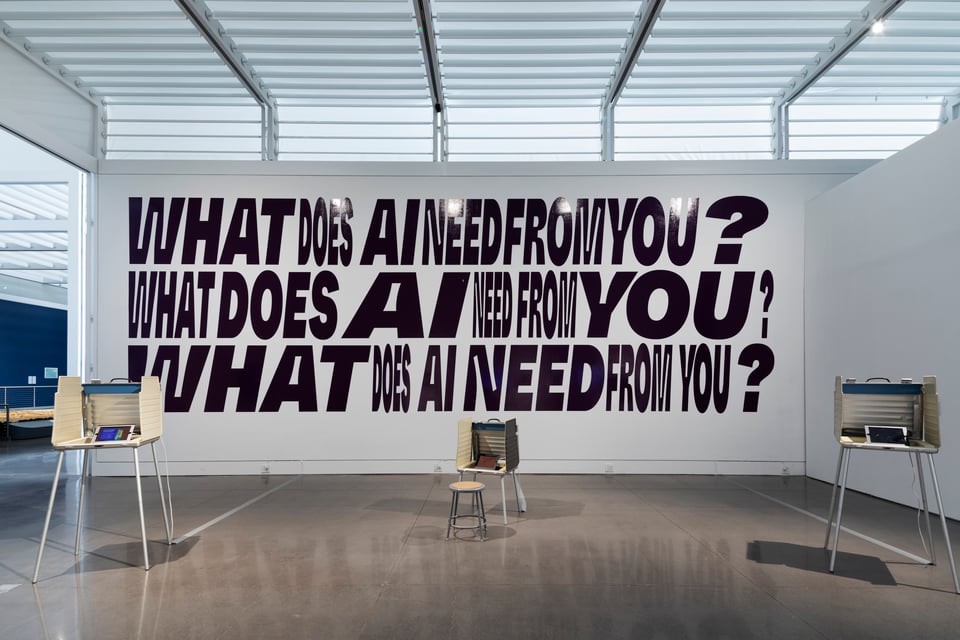
Meg: I know you teach and, anecdotally, I’ve been hearing from some teachers about resistance from their students when it comes to using AI systems in an art and design practice. I think there’s a lot of factors to that, but one might be a feeling of loss of control and agency over how and why these systems are developed, and how they use our data and our work. There’s a feeling of having been given no choice but to opt in on that level, and so a way of regaining control might be to opt out of using it. That’s understandable to me. But your work is so much about agency and action, and encouraging people not to forfeit the opportunity to understand and shape this technology. I was curious what your experience teaching this approach to AI has been, how it has been received in a classroom setting.
Stephanie: Lately I’ve been more in a lab context than a classroom context. But one of the ways that I try to think about it is: how can we engage with and investigate this technology, no matter what our thoughts about it are? Because even if you hate it and you feel a loss of agency, getting to know it somewhat and then being able to articulate why and make your stance very concrete — I think that’s important. I often hear from people that they don’t trust it. But I still think it’s important to do our due diligence of seeing what it does, picking it apart, and trying to make it do things differently.
That’s what I’m often trying to get people to do, and then they can make the choice about whether they want to use it or not. If you do want to use it, then how are you training it so that it is not the off-the-shelf, basic thing that everybody is using, but is a bespoke tool that might assist you? I discourage off-the-shelf, quick use and encourage people to think about what iteration means in this context, what collaboration means in this context, and what hybridity means in this context.
For me, and especially in these semi- “early” stages, you’re going to have to make a call for yourself and then be very rigorous about how you’re using the AI if you choose to use it. You’re going to have to talk to your professors about why you’re doing it and what it’s doing for you. It actually takes a lot of extra work if you’re not simply trying to pass AI-generated work off as something you did. There’s a lot of research that goes into it: seeing what works for you, and seeing how you might become a differently participating member of society through this technology.
So yeah, let’s go in there, let’s see what it can do. But let’s see what we can make it do differently. I’ve had academics tell me that they’re not using it because it doesn’t do what they want, and they're usually talking about Black vernacular. I know it doesn't easily do what you want, but have you tried to push it? Should we give it a try? I watch hackers do this all the time: they go in, they see a system, and then they push, push, push, push to get it to do something that it wasn’t supposed to do. That’s the kind of agency that I feel like we cannot afford to give up. Explore, push, and then make your own decisions.
As always, you can read this piece on Are.na Editorial.
Get your tickets to SFPC’s Poetic Promenade here and support everyone’s favorite experimental school for art, code, and critical theory. Get some sartorial inspiration for the Prom here.
Also: RSVP for our workshop No Ego with Sara Magenheimer on July 11 at Index in Greenpoint and look out for our interview with Sara in next week’s newsletter.
The Are.na Team