
Ask the Texts: How does Philo interpret the six days of creation and the role of the Logos?
Each answer provided by Ask the Texts is built by searching directly through Appian Way Press's translations and revisions of early Christian writings.
How does Philo interpret the six days of creation and the role of the Logos?
Philo interprets the six days of creation in a complex manner, suggesting both a non-literal understanding of the timeframe and an acknowledgment of the six-day structure as a divine pattern. In The Works of Philo, Volume One, he states that "the idea that everything was made in six days is removed." He elaborates that the phrase "when they were created" (Gen. 2:4) implies that what is created is "unclear, unmeasurable, and incomprehensible to the mortal race," and that "what comes into being by the cause happens without description," meaning without a defined period of time. Philo identifies the "day" mentioned in Genesis 2:4 as "the word of God," which he describes as "a book, in which the compositions of other things were able to be written and engraved." He further explains that "by his most manifest and radiant word God makes both, the idea of the mind, which he symbolically called heaven, and the idea of sensation, which he named earth by a sign." This suggests a metaphorical interpretation of the creative "days" as the unfolding of divine thought through the Logos.
However, Philo also acknowledges the six-day narrative in The Works of Philo, Volume Three, noting that the writings concerning creation state "that the world was created in six days, and on the seventh day God, having ceased from work, began to contemplate the things that had come into being in a good way." This narrative serves as the foundation for the Jewish nation's continuous observance of the seventh day, where people are commanded to work for six days and then devote the seventh to "philosophy and contemplation," thereby following God's example.
Philo consistently presents the Logos, or Word of God, as the instrumental agent in creation. In The Works of Philo, Volume One, he explicitly states that "the word of God" is the "book" where the compositions of creation are written, and that "by his most manifest and radiant word God makes both, the idea of the mind, which he symbolically called heaven, and the idea of sensation, which he named earth by a sign." This establishes the Logos as the divine blueprint and active force in bringing the world into being.
Furthermore, in The Works of Philo, Volume Four, Philo describes the world as "a visible imitation of the archetypal and intelligible pattern, containing in itself all that is intelligible in that pattern as perceptible, the most perfect model, most perfect in mind, formed for perception." This "archetypal and intelligible pattern" is consistent with his understanding of the divine Word as the perfect model through which the divine creator, referred to as "the father, maker, and craftsman," produces the world as "the product and offspring of that one."
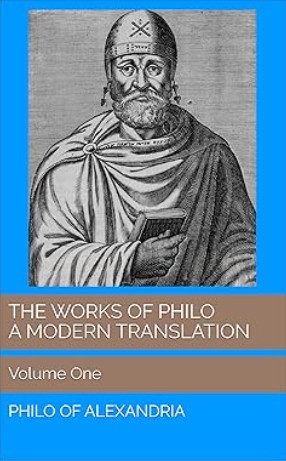 |
Philo of Alexandria, The Works of Philo: A Modern Translation, Volume One
Discover the wisdom of Philo of Alexandria in the first volume of The Works of Philo: A Modern Translation, a newly translated four-volume series.
|
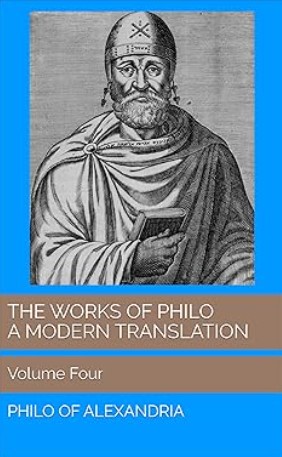 |
Philo of Alexandria, The Works of Philo: A Modern Translation, Volume Four
Complete your journey through Philo with the fourth volume of The Works of Philo: A Modern Translation, exploring ethics, providence, and the historical realities of Jewish life under Roman rule.
|
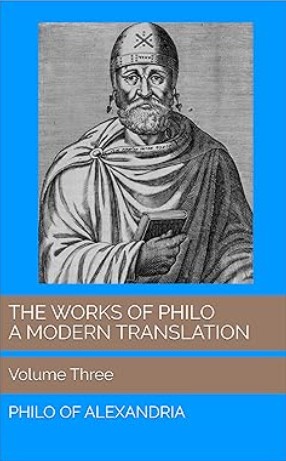 |
Philo of Alexandria, The Works of Philo: A Modern Translation, Volume Three
Delve deeper into Philo’s biblical thought with the third volume of The Works of Philo: A Modern Translation, focusing on Abraham, Joseph, Moses, and the laws that shaped Israel.
|
Enjoying Ask the Texts? Subscribe to get new issues by email.
This answer was generated on November 7, 2026 using a retrieval-augmented generation (RAG) system built on Appian Way Press's own translations and revisions of early Christian writings, with the gemini-2.5-flash language model producing the final answer text from the retrieved passages.
Copyright © 2026 Rick Brannan
