
2026 is the time to learn from reading
I’ve subscribed to many newsletters over the past months as I’ve been applying to publishing jobs. I don’t know why we all need newsletters now, but you’re reading mine, and I am grateful for it.
The newsletter that recently caught my eye was from Oxford University Press, specifically about the word of the year 2025. The word was rage bait. The president of Oxford Languages, Casper Gathwohl, theorizes that the word’s popularity reflects the increasing awareness among viewers towards the emotional manipulations the media uses to catch attention. Judging based on recent trends I have seen on social media, I have to agree with Gathwohl.
Perhaps some viewers indeed are tired of mindless consumption. That is why, every time I open my fyp page, it is filled with tips on how to create a personal reading curriculum or urges me to join the 75 Booked challenge. One advises me on picking a subject, for instance, the history of medieval times in Britain, and preparing a list of books and questions I am going to ask myself as I read those titles. The other urges you to lock in and start reading 1.5 hours a day, hydrate, and avoid purchasing new books. Both pursuits fundamentally arise from the same need: the need to stop mindlessly scrolling.
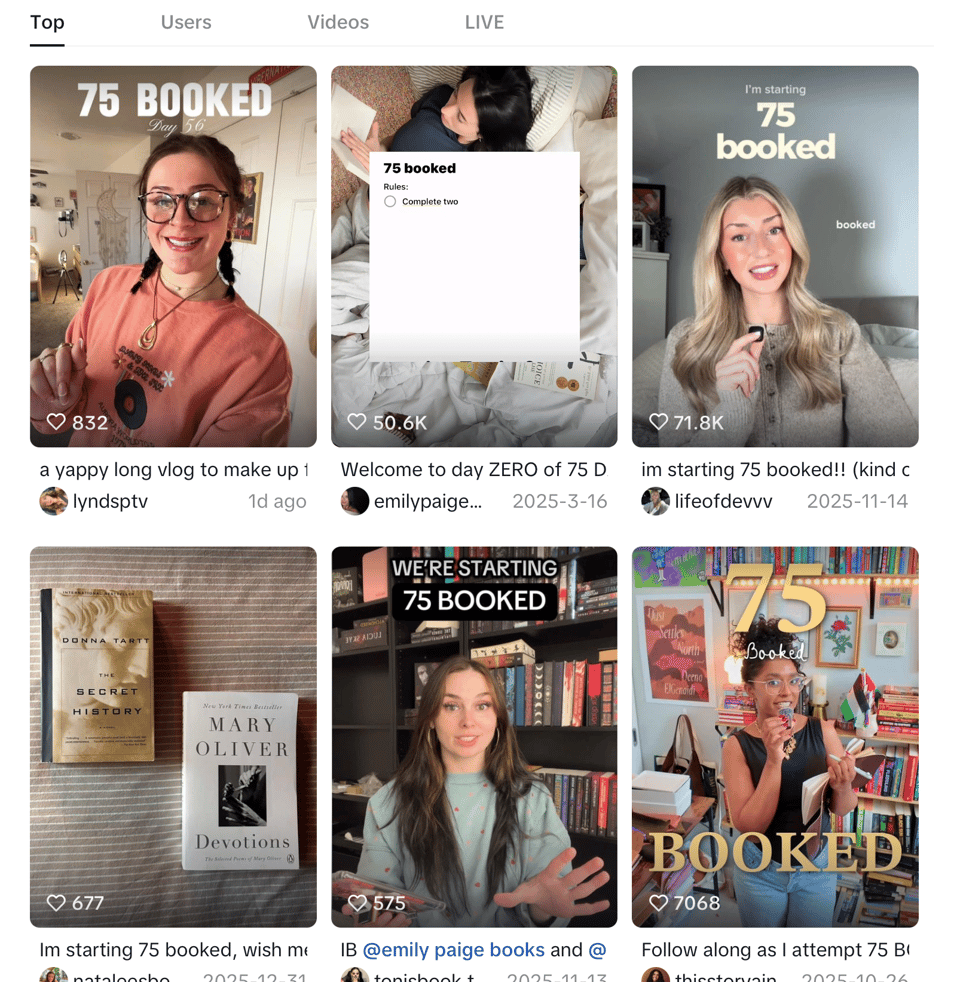
While I am sure that emotional hooks and hype will still bring engagement when it comes to social media content, I believe there is a benefit to this trend, and it is possible to shape promotional content for a product to fit in. It can be particularly helpful for products that already carry some educational value, such as books. Let’s then examine how the publishing industry can utilize the growing demand for conscious consumption to promote its titles.
Non-Fiction Books
Non-fiction books’ goals are to educate and inform; so when it comes to ways of integrating them in a reader's personal curriculum, it is important to highlight what they can teach readers. For example, to promote a title, the marketing team can create videos or posts addressing particular qualities of the books, like “Best of Literary Criticism” or “What to Read About History to Win that Thanksgiving Argument with Your Uncle. ”
For instance, in Everything is Tuberculosis, John Green writes about the history of the disease, people’s inability to access treatments, and the institutional flaws that let this preventable disease become deadly. His book can become a part of the curriculum of someone who’d like to learn more about medicine, inequity, or history. Similarly, Christine Webb’s The Arrogant Ape would attract people interested in primatology, evolution, or sustainability. In both cases, the books can become a part of a bigger list of titles tailored to a specific niche subject and made into a post. They can also be accompanied by a video series about that subject and the ways the book contributes to the ongoing discussion about this topic.
Classics
Since one of the aspects readers seem to focus on when creating reading curricula is expanding their reading list across genres, fiction titles can also tune into this trend for their promotion. For instance, if anyone is interested in expanding their knowledge on classics, it’d be useful for promotional content around classics titles to explain why this book would need to be included: be it the introduction of new, thoughtful annotations on a Shakespearean piece or the history behind new illustrations.
The content doesn’t need to focus on only “why that book.” It can also provide information on how to engage with it more thoroughly, be it a list of questions a reader should ask themselves while they read the book (perhaps provided in a free Notion template form) or an educational short series that would list interesting facts about the piece of work. Those series could also explain to people how to read classical literature and educate viewers on how to conduct literary analysis. The content could also expand on how some classical literature inspired modern media (a movie, a painting, a sculpture). Think of something impressive that would make your viewers look artful and knowledgeable next time they talk to someone.
Literary Fiction
Similar to classics, literary fiction can highlight its fresh, diverse perspectives and assumed prestige from literary prizes. I believe the strategies that I mentioned for classical literature could be used rather successfully here, so let’s move on to genre fiction.
Genre Fiction
In the case of genre fiction, it would be important to lean on the reader’s desire to read across genres, diversely. For the book’s promotion, marketers can rely on the author's identity or a fresh perspective offered by the book. It could be particularly helpful for a translated title; in that case, the promotional content may educate the viewers on how to engage with books that come from other cultures. It may expand on specific differences and provide context.
The ideas I’ve listed above are just a few examples of how books can be advertised online, leveraging the popularity of the personal curriculum trend. Obviously, this trend can be beneficial for the marketing of other products.
I have to say I am curious as to how long the conscious consumption on BookTok is going to be trendy, and if it received so much popularity and support in December due to it being the time of resolutions.
Happy January!
P.S. While drafting this newsletter, I’ve realized that it looks a bit dense without enough pictures. So I’ll be including more examples in the future pieces. Thank you for being with me on this journey.
P.P.S. If this email intrigued you and you aren’t yet subscribed, then click below. Let’s explore the publishing industry and the marketing sphere together.