|
|
MODEL
SEISMIC
September 1, 2026
Claude Fable 5.1 — Anthropic's new top model, with cache reads 75% cheaper
Anthropic's new top-end Claude keeps the same $10/$50 rates but cuts cache reads by 75%, and jumps on long agent tasks.
What is it?
Claude Fable 5.1 replaces Claude Fable 5 as Anthropic's most capable model, built for demanding reasoning and long-horizon agentic work. It ships with the same $10 input and $50 output rates per million tokens, a 1M-token context window and 128K max output.
How does it work?
Thinking is adaptive and always on, steered by an effort parameter that defaults to high. The gains show up most on long jobs: Terminal-Bench-Science 0.1 goes from 24.7% on Fable 5 to 52.6%, and AutomationBench from 17.1% to 31.4%.
Why does it matter?
Long agent runs re-read the same cached context on every step, so the 75% cut on cache reads lands where the bill actually is — roughly 25% lower cost on typical workloads and up to about 45% on complex agentic tasks.
Who is it for?
Teams running long agentic coding and research jobs. Available now on the Claude API, Amazon Bedrock, Google Cloud, and Microsoft Foundry.
|
|
|
|
SECURITY · MODEL
MAJOR
September 1, 2026
Astra hits Critical cyber capability — OpenAI locks it down before release
OpenAI says Astra can find unknown security flaws and build exploits for them without a person guiding each step.
What is it?
Astra is the first OpenAI model to cross the Critical cybersecurity line in the company's Preparedness Framework — meaning it can autonomously discover and exploit zero-day vulnerabilities in well-protected systems.
How does it work?
Three layers of defense surround the model: refusal training, activation classifiers watching for cyber abuse across conversations, and a production system monitoring chain-of-thought for unauthorized behavior. Astra refuses 91.5% of cyber jailbreak attempts vs. 59% for GPT-5.6 Sol.
Why does it matter?
A lab declaring its own model too capable at offensive security to ship openly is a first. Access is rationed — a small alpha group first, then defensive teams through OpenAI's Daybreak Blue program.
Who is it for?
Security researchers and defenders in vetted programs. General availability is not confirmed; monitoring may flag and pause legitimate work.
|
|
|
|
MODEL
MAJOR
September 1, 2026
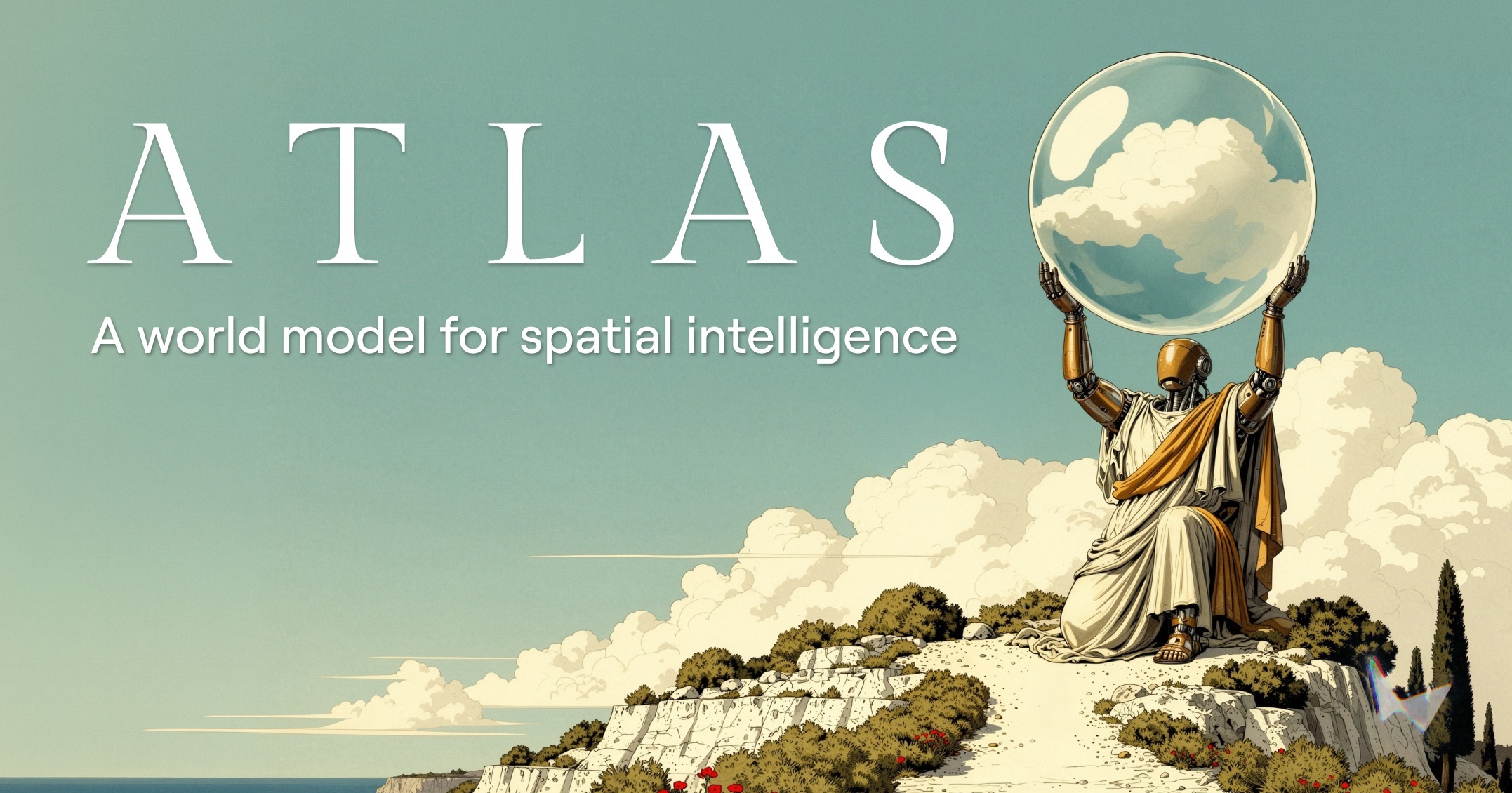
Atlas — World Labs' omni model for text, image, video and 3D
World Labs' Atlas is one model for text, images, video and 3D, with pixel-level control of the camera.
What is it?
Atlas makes video you can steer with a virtual camera — up to one minute at 1440p — and rebuilds real 3D scenes from as few as one photo. World Labs pretrained it from scratch as an omni model, working natively on text, images, video and 3D.
How does it work?
A multimodal autoregressive diffusion transformer reads text, images, camera poses and 3D depth maps in one sequence, then generates via rectified flow diffusion. The camera pose is a real input, not a text hint — so Atlas follows an exact camera path instead of guessing one.
Why does it matter?
VFX artists and robotics teams normally chain a video generator to a separate 3D reconstruction tool. Atlas does both in one model and returns explicit 3D geometry. Human raters preferred it in 75–94% of camera-controlled comparisons against five rivals.
Who is it for?
VFX studios, robotics teams, and 3D developers. Currently early access with select partners — no public weights or code yet.
|
|

|
|
TOOL
MAJOR
September 1, 2026
Google Pics — an AI image tool in Workspace where you start from a prompt
Google Pics turns a written description into a poster or graphic, then lets you edit one object at a time.
What is it?
Google Pics generates several image options from one prompt and hands you object-level controls over the result. Available at pics.new and as an inline editor in Google Docs and Slides, built on Google's Nano Banana model.
How does it work?
The editor can isolate one object in a picture and move, resize or replace it while the rest of the frame stays put. Text inside an image can be rewritten or translated without redoing the layout. Output can be upscaled to 2K or 4K.
Why does it matter?
A design tool that opens on a prompt puts Google directly against Canva and Adobe Express — and it arrives inside plans many teams already pay for. Per-object control is what turns a generated first draft into something usable.
Who is it for?
Workspace teams and non-designers who make graphics. Requires Google AI Pro, Ultra, or Workspace Business Standard and above. Rolling out from September 1.
|
|

|
|
TOOL
MAJOR
September 1, 2026
ChatGPT connects to Epic — clinicians can pull chart context into the chat
Hospitals can wire their Epic records into ChatGPT, and clinicians get a plugin for nine official public health data sources.
What is it?
ChatGPT for Healthcare gains two connections: an Epic EHR integration and a Healthcare Public Data plugin. Clinicians can ask what changed since a patient's last visit and get a summarized answer with chart citations.
How does it work?
The Epic connection is read-only — ChatGPT never writes back to the chart. It's an organizational feature enabled by a workspace admin. The Healthcare Public Data plugin is separately installable, reaching PubMed, ClinicalTrials.gov, RxNorm, DailyMed, and five more sources.
Why does it matter?
Chart review is where clinicians lose hours. OpenAI puts it behind the controls hospitals actually require: role-based access, SSO, audit logs, and HIPAA-supporting workflows. Launch partners include AdventHealth, Boston Children's Hospital, Cedars-Sinai, and UCSF.
Who is it for?
Clinicians and health-system IT teams. The Epic integration requires a ChatGPT Enterprise account; eligible US clinicians can install the public data plugin themselves.
|
|
|
|
SECURITY
MAJOR
September 1, 2026
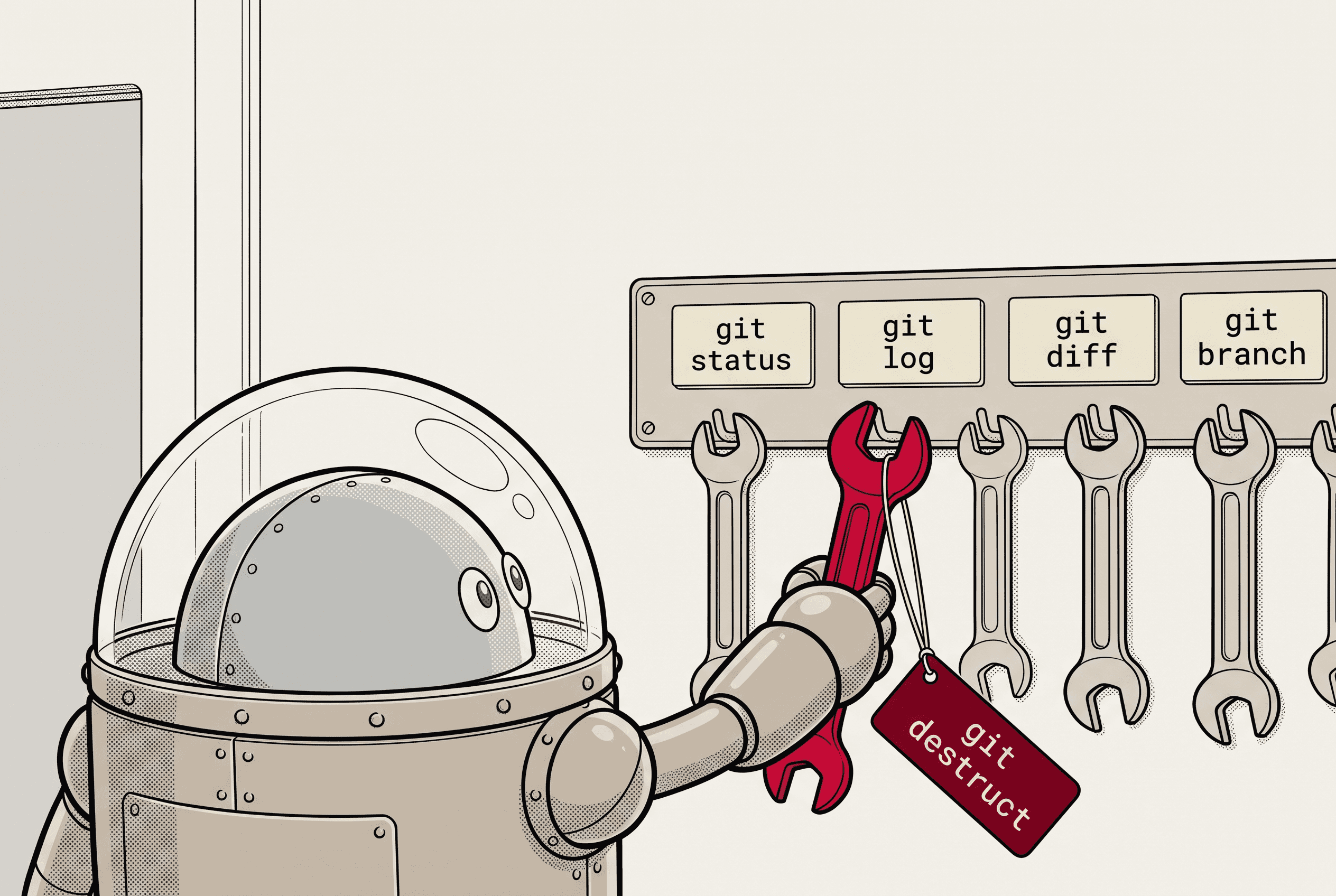
GitSpawn — a repo's git config can run code in Claude Code, Codex and Cursor
A poisoned .git/config makes a coding agent's first git command run an attacker's program, before any approval prompt.
What is it?
GitSpawn abuses a git setting called core.fsmonitor, which points at an external program git runs to speed up index checks. A folder can carry a poisoned version in its own .git/config.
How does it work?
Coding agents run git commands the moment you open a project. Git honours the local config, calls whatever core.fsmonitor names, and does it with your privileges — before the workspace-trust prompt and outside the agent's sandbox.
Why does it matter?
The dangerous case is a project folder handed whole rather than cloned — a zip from a colleague or a shared drive. Claude Code, Goose, Codex and Cursor have shipped fixes; Hermes Agent, Qwen Code and Grok Build were still unpatched at publication.
Who is it for?
All developers running command-line coding agents. Before opening an unfamiliar folder: read .git/config for any key whose value is an executable path.
|
|

|
|
ECOSYSTEM
MAJOR
September 1, 2026
Enterprise Frontier Safeguards — misuse checks run in your own cloud
Anthropic moves Claude's misuse detection into the customer's own cloud account, so enterprises can run Fable and Mythos without 30-day retention.
What is it?
Enterprise Frontier Safeguards keeps Claude's misuse detection working while the underlying conversation data stays in the customer's own AWS, Azure or Google Cloud account — under keys the customer manages.
How does it work?
Traffic is written to a bucket in the customer's cloud. Automated analysis reads a rolling window of that traffic looking for coordinated misuse patterns that only appear across sessions. When it finds a serious signal, it alerts the customer's security team directly — no Anthropic human review.
Why does it matter?
Mythos-class models have carried a 30-day retention requirement since June, blocking regulated buyers entirely. This keeps the safety window that policy was protecting, but under the customer's own encryption keys — the version a bank or hospital compliance team can actually sign.
Who is it for?
Regulated enterprise and public-sector teams in financial services, healthcare, manufacturing and law. No Anthropic charge; rolling out in phases starting later this fall.
|
|
|
All releases at ai-tldr.dev
Simple explanations • No jargon • Updated daily
|
|