|
|
PAPER
MAJOR
2026-10-16
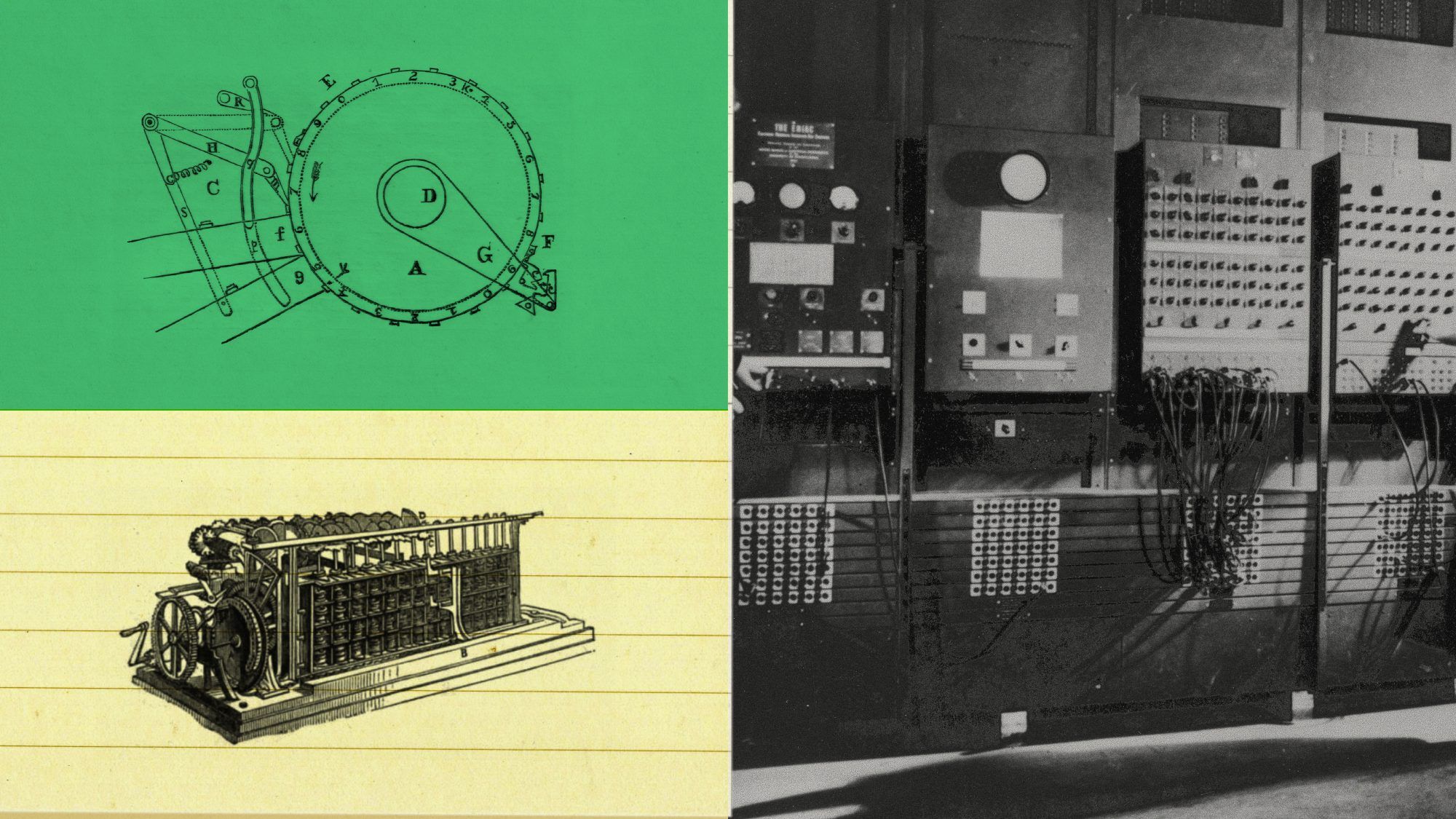
Claude Mythos 5 designs quantum circuits — beats the best published on eight tasks
Claude Mythos 5 searched for smaller quantum circuits and cut gate counts on chemistry, optimization and number-theory tasks.
What is it?
Anthropic reports that Claude Mythos 5 improved on the best published quantum circuits for eight tasks, using fewer qubits and fewer gates. The work was led by Andi Gu in Anthropic's STEM Fellows Program, with collaborators from Harvard and QuEra Computing.
How does it work?
The team gave Claude plain-language specifications for each circuit. An automated evaluator checked correctness and scored designs on qubits times gates, and Claude kept proposing new versions with no human input between rounds — an evolutionary search.
Why does it matter?
Smaller circuits bring useful quantum computing closer. The FeMoco chemistry estimate fell from about 50 trillion Toffoli gates in 2017 to about 340 million, and a decoded quantum interferometry decoder now needs 12 times fewer gates than Google's earlier design.
Who is it for?
Quantum algorithm researchers and AI-for-science teams.
|
|

|
|
SECURITY
MAJOR
2026-10-16
Claude explains the NIST ECDSA curve seeds — a 1990s clock-seeded generator
An Anthropic research model traced where the NSA-supplied seeds for the NIST elliptic curves came from, an open question for about 26 years.
What is it?
Anthropic's Frontier Red Team reports that an internal research model explained the published seeds for the NIST prime curves P-192, P-224, P-256, P-384 and P-521. The seeds came from the C library's lrand48 random generator, seeded with a Unix timestamp from May 1997 to April 1998.
How does it work?
The model guessed a weak 1990s random generator, wrote a scanner for 34 generator and output-slice combinations, and used LLL lattice reduction to rebuild the generator state. Each recovered 48-bit state regenerates all 160 bits of its seed.
Why does it matter?
The unexplained seeds fed decades of suspicion about an NSA backdoor. Anthropic argues the simple clock-based process makes a hidden backdoor much less plausible — and says there is no action to take, so systems using P-256 need no changes.
Who is it for?
Cryptographers and security engineers. Anthropic is donating Filippo Valsorda's $36,864 NIST seeds bounty to the Internet Security Research Group.
|
|

|
|
TOOL
MAJOR
2026-10-16
Claude Code 2.1.302 — fork subagents on by default in the SDK and apps
Claude Code 2.1.302 brings terminal-style subagent behavior to the SDK and apps and makes idle compaction easy to switch off.
What is it?
Fork subagents are now on by default in Claude Code 2.1.302 for claude -p, the Agent SDK, the desktop app and VS Code — as they already were in the terminal. Set CLAUDE_CODE_FORK_SUBAGENT=0 to turn them off.
How does it work?
In the desktop app and VS Code, the main conversation's subagents now run in the background. A new CLAUDE_CODE_AUTO_MODE_MODEL variable picks the model for the client-side auto mode classifier, and /config gains an Idle compaction toggle.
Why does it matter?
Agent SDK and headless users get the same subagent behavior as terminal users without extra flags. The release also stops the Read tool from loading files over 128 MB and fixes several prompt cache misses.
Who is it for?
Claude Code and Agent SDK users, teams on auto mode, and Claude Design users (note: standalone claude.ai/design closes by December 14, 2026).
|
|
|
|
MODEL
MAJOR
2026-10-15
FLUX 3 Image Klein — Black Forest Labs' 5.6B open-weights image model
A small open-weights FLUX 3 model that makes, edits and combines images on a consumer GPU.
What is it?
FLUX 3 Image Klein brings Black Forest Labs' FLUX 3 image line to open weights in a 5.6B-parameter model. One model handles text-to-image, single-image edits and composition from up to 10 reference images, with native 4K output and bounding-box control.
How does it work?
Two checkpoints ship: a Klein Base model for fine-tuning and research, and a step-distilled model that uses 16 steps with no guidance for low-latency generation. Day-one support in ComfyUI, Diffusers, TensorRT-LLM, SGLang Diffusion and vLLM-Omni.
Why does it matter?
Black Forest Labs claims it ranks first among open-weights models in internal tests while fitting on 8GB gaming GPUs — so local and self-hosted image pipelines get a strong default that gains 91 Elo over FLUX.2 [klein] in text-to-image.
Who is it for?
Image-pipeline builders, ComfyUI users and fine-tuners. Free commercial use for companies with annual revenue under $5M under the FLUX Kommunity License.
|
|
|
|
ARTICLE
NOTABLE
2026-10-15
How the Claude Code team does code review — seven layers, few humans
Anthropic shows how it reviews code when Claude writes most of it: automated layers first, humans for the risky calls.
What is it?
An engineering post by Addy Osmani and the Claude Code team. Claude writes about 90% of Claude Code's own code, so the team rebuilt review around one goal: less human review time with no rise in reverts or incidents.
How does it work?
Review runs in seven layers: Claude verifies its own work; a fresh-context subagent reviews the diff; parallel agents hunt bugs and a second group verifies each finding; blocking security review; required CI; risk-based human approval; and a merge queue with staged releases.
Why does it matter?
One-round passes rose from 65% to 78%, and PRs needing five or more rounds fell from 8.9% to 1.5%. Low-risk changes like docs now merge with no human approval once checks pass.
Who is it for?
Engineering leads adopting coding agents. The post also announces Code Review for Claude Code is now generally available on Team and Enterprise plans.
|
|

|
|
SHOWCASE
NOTABLE
2026-10-16
PS5LM v0.9.0 — llama.cpp runs on a jailbroken PS5's GPU
A homebrew app turns a jailbroken PS5 into a local LLM server for your home network.
What is it?
PS5LM v0.9.0 moves llama.cpp onto the PS5 GPU as its own console app, with a new TV interface covering Home, Models, API, Console and Settings screens. The first release on October 2 ran small Qwen models on the CPU only, with a 1.6 GB model cap.
How does it work?
The app uses llama.cpp's Vulkan backend on the console's RDNA 2 graphics, with 11.4 GB of shared memory. Other devices call it on port 8081 through /v1/chat/completions or /v1/messages, or a browser chat page.
Why does it matter?
A jailbroken PS5 becomes a private, always-on model server with no PC, cloud or account required. The project's tests put Qwen 3.8 27B at about 20 tokens/s on the console — only works on firmware 7.00 to 13.60.
Who is it for?
Local-LLM tinkerers with a jailbroken PS5.
|
|

|
|
TUTORIAL
NOTABLE
2026-10-15
Apple runs Muse Spark Open on four Mac Studios — 36 tokens/s with MLX and RDMA
A hands-on Apple guide to running near-trillion-parameter open models on a small cluster of Mac Studios.
What is it?
Apple Machine Learning Research published a guide to local and distributed LLM inference with MLX on Mac Studio. It benchmarks Qwen 3.8 27B and Mistral Medium 3.5 on one machine, then Meta's Muse Spark Open (816B total, 42B active) across two and four M5 Ultra Mac Studios.
How does it work?
MLX v0.30.1 adds the jaccl backend, which uses the RDMA-over-Thunderbolt driver in macOS 26.2. The mlx.launch tool starts a job across a hostfile of machines, splitting the model by layers (pipeline) or by width (tensor parallelism).
Why does it matter?
Frontier-size open weights no longer need a data-center GPU server to run privately. Tensor parallelism across four machines more than doubles single-node decode speed, and the post shows it driving OpenCode as a local coding agent.
Who is it for?
Developers running large open models locally on Apple Silicon.
|
|
|
All releases at ai-tldr.dev
Simple explanations • No jargon • Updated daily
|
|