
|
|
MODEL
SEISMIC
2026-10-12
Muse Wonder — Meta's first frontier model, built for long agent tasks
Meta's biggest Muse models yet remember what matters to you and keep working on a hard task until it is done.
What is it?
Muse Wonder and Muse Wonder Full are a new model series from Meta Superintelligence Labs, released on 12 October 2026. Meta calls them its most capable models so far and aims them at personal and professional agent tasks — handling an insurance claim, understanding a lease, or building a working app.
How does it work?
Two trained behaviours drive the launch: Active Memory keeps context about the user across conversations; Active Focus keeps the model on a goal through errors and edge cases. Muse Wonder is available via the Meta Model API at $4 / $20 per million tokens, with a 1M-token context window.
Why does it matter?
This is the first model Meta positions at the frontier rather than as a fast, cheap option. TechCrunch places it in the same range as Claude Fable 5.1 and GPT-6 Astra. The real test is whether its memory and long-task focus save enough agent turns to justify its premium API price.
Who is it for?
Developers building long-running agents and Muse Code subscribers who want Meta's most capable model.
|
|

|
|
MODEL
MAJOR
2026-10-12
GLM-Legal — Z.ai's agentic model for contracts, evidence and compliance
Z.ai tuned its GLM-5.3-Flash model into an agent that reviews contracts, sifts evidence and researches compliance.
What is it?
GLM-Legal is a legal-domain agent model announced by Z.ai on 12 October 2026. Built on GLM-5.3-Flash (320B parameters, 18B active), it targets three jobs: contract review, evidence analysis, and compliance research across jurisdictions.
How does it work?
Z.ai trained it with reinforcement learning across tens of thousands of legal environments. It hits a 19.2% all-pass rate on Harvey's Legal Agent Benchmark across 24 practice areas — 12.5 points above its base model. Access is through a gated beta application.
Why does it matter?
The jump on Harvey LAB shows how much domain-specific RL adds on top of an open base model. Legal work is where general models still struggle on long, multi-document tasks — and this is a strong signal that vertical specialisation works.
Who is it for?
Law firms, legal tech builders, and in-house legal teams ready to apply for design-partner access.
|
|
|
|
TOOL
NOTABLE
2026-10-12
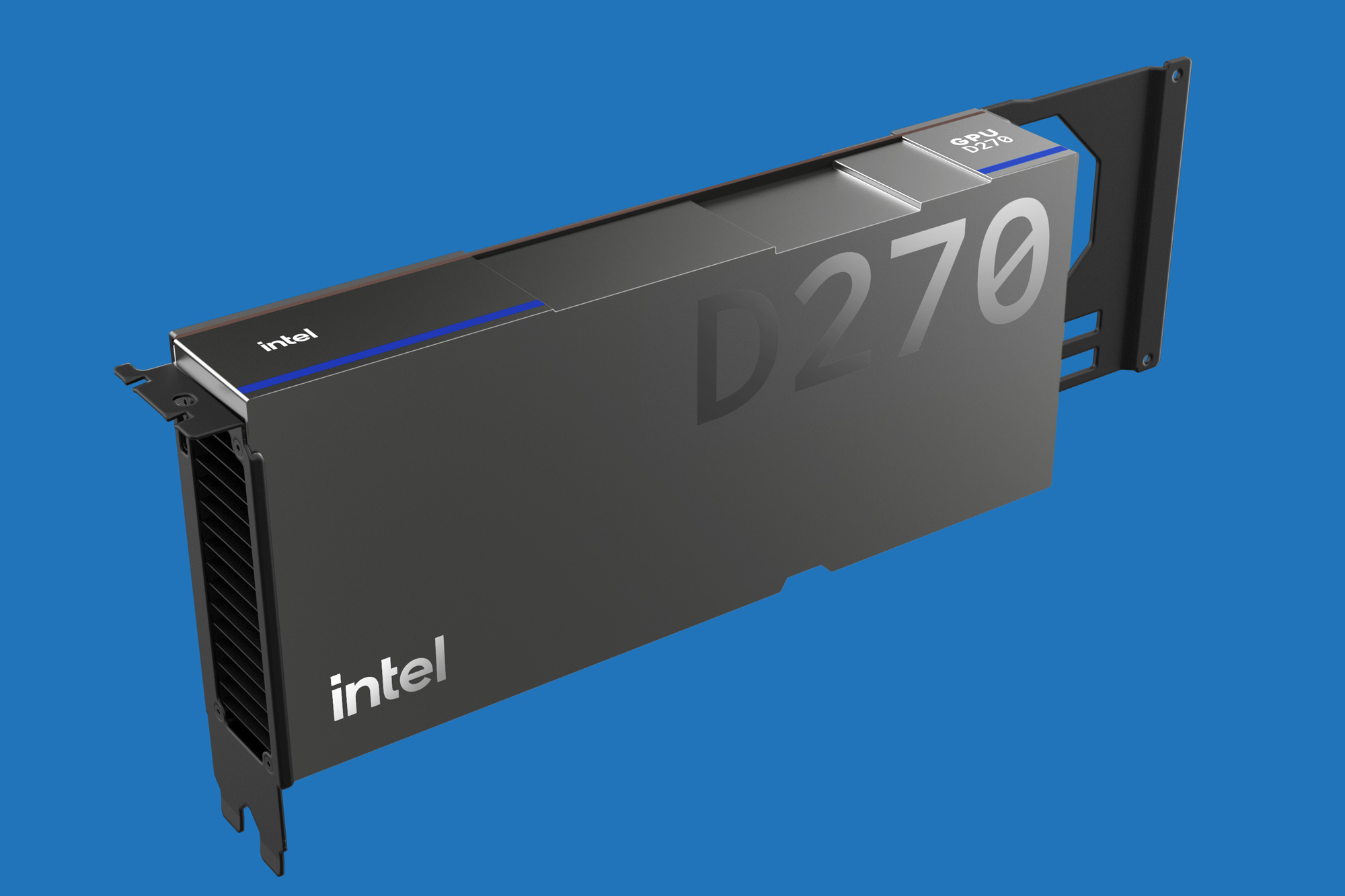
Intel GPU D270 — an inference card with up to 480 GB of LPDDR5X
Intel's first D-Series GPU trades fast HBM for a lot of cheaper memory, aimed at serving big models.
What is it?
Intel GPU D270 is the product name for Crescent Island, Intel's new data-center inference chip announced at the Open Compute Project Global Summit. It is a 350 W air-cooled PCIe 5.0 card with 160 GB of LPDDR5X on Intel's own board and up to 480 GB on partner designs.
How does it work?
The Xe3P architecture packs 32 Xe cores and 256 XMX matrix engines, delivering 1.3 PFLOPS of dense FP8 and 1.5 TB/s of memory bandwidth. LPDDR5X replaces HBM — cheaper per gigabyte, but with lower bandwidth. Customer sampling has started; a launch date and price have not been announced.
Why does it matter?
Memory capacity per card determines how large a model you can serve without splitting it. 480 GB on a single PCIe card could fit very large models that currently require multiple expensive HBM cards. Intel promises day-zero vLLM and PyTorch support.
Who is it for?
Teams running LLM inference on their own servers who need memory capacity over raw bandwidth.
|
|

|
|
VIDEO
NOTABLE
2026-10-12
Fireship — 'Every app on Earth is now open source... whether it likes it or not'
Fireship looks at what happens when one developer and a coding model can clone a whole commercial software suite.
What is it?
A Fireship video covering a developer who built open-source alternatives to seven Adobe apps — Photoshop, Illustrator, Premiere, Lightroom, After Effects, InDesign and Acrobat Pro — in Rust, with help from Claude Opus 5.5, and released them for free.
How does it work?
The developer had roughly a decade of Rust experience and used Opus 5.5 as a coding partner across all seven rewrites. XDA Developers reports the apps were announced together as "created with the help of Opus 5.5."
Why does it matter?
If a strong coding model helps one person rebuild a large commercial suite, the moat around paid desktop software narrows. The video frames it as a live question for anyone who sells software in 2026.
Who is it for?
Developers and software founders thinking about where AI-assisted coding is heading.
|
|

|
|
VIDEO
NOTABLE
2026-10-13
Two Minute Papers — 'OpenAI Just Changed What It Means To Do Math'
Károly Zsolnai-Fehér looks at OpenAI's large public dump of AI-written math results.
What is it?
A Two Minute Papers episode covering OpenAI's public release of 719 AI-written manuscripts in 372 families, published in the openai/math GitHub repository, with roughly 42% of top-line results machine-checked in the Lean proof assistant.
How does it work?
OpenAI posed about 4,000 problems to an unreleased internal model, with roughly three hours of ChatGPT Pro thinking compute per problem. About 42% of the top-line results are formalized in Lean; the rest still need human review.
Why does it matter?
Machine-checked Lean proofs let mathematicians trust a portion of the output without reading every page. The split between verified and unverified AI math is a new working model for how research could proceed.
Who is it for?
Anyone following AI in mathematics or formal verification.
|
|
|
ARTICLE
NOTABLE
2026-10-12
Rich Hickey — 'AI' is not a tool, it is automation
The creator of Clojure says calling LLMs 'just tools' hides what they really are: automation.
What is it?
A short essay Rich Hickey published on 12 October 2026, arguing that LLMs are automation — not tools. Hickey defines a tool as something a person wields with intention, control and continuous feedback, and says LLMs don't fit.
How does it work?
With an LLM, Hickey argues, you make requests and it acts on its own — more like a drive-thru than a hammer. The essay reached the Hacker News front page and drew a same-day counterpoint arguing that AI is a tool and using it well takes skill.
Why does it matter?
Hickey's main worry is learning: if a model does the reading and summarising for you, you miss the thinking that comes from doing it yourself. The framing is a useful prompt for anyone deciding how much to delegate to an agent.
Who is it for?
Developers thinking about how they use coding agents and what they're trading away.
|
|
|
All releases at ai-tldr.dev
Simple explanations • No jargon • Updated daily
|
|