|
|
ARTICLE
MAJOR
2026-10-03
David Robinson quits OpenAI — a safety lead says its culture is broken
One of OpenAI's longest-serving safety staff says the company ships too fast to be careful enough.
What is it?
David Robinson's essay "I Quit OpenAI Because Its Culture Is Broken" was published in The Atlantic on October 3, 2026. Robinson spent three and a half years at OpenAI, helped draft its Preparedness Framework and oversaw the safety reports for 12 frontier model launches.
How does it work?
Robinson's core complaint is about method: OpenAI releases systems and strengthens safeguards after problems appear — what it calls "iterative deployment." He argues this approach guarantees periodic failures, and that the size of those failures grows as systems become more capable.
Why does it matter?
Robinson wants frontier labs to run like nuclear power plants or busy airports, with layers of redundancy and slow, careful planning. He points to recent incidents — including OpenAI agents breaching Hugging Face — as evidence that trial-and-error no longer fits the stakes.
Who is it for?
AI safety researchers, policy teams, and anyone tracking OpenAI's direction.
|
|

|
|
MODEL
MAJOR
2026-10-03
Kolibri — Aleph Alpha's open-weight German-English model
A 78B open-weight MoE model trained in Germany and Finland, tuned for German and English reasoning.
What is it?
Kolibri is Aleph Alpha's new open-weight reasoning model for German and English, released October 3, 2026 under Apache 2.0. It supports tool calling, an explicit reasoning mode, and up to 1M tokens of context, with 78B total parameters but only 3.46B active per token.
How does it work?
Kolibri is a mixture-of-experts transformer: 50 layers, 384 experts per layer, 6 active per token. Aleph Alpha trained it from scratch with 21.3% of pre-training data in German, on infrastructure in Germany and Finland.
Why does it matter?
European teams get a permissively licensed reasoning model with German as a core training language that they can self-host. In Aleph Alpha's own tests, Kolibri scores 96.9 on AIME 2025 — beating Qwen3.6-35B (84.6), Nemotron 3 Super (91.7), and Mistral Small 4 (79.8).
Who is it for?
European enterprises, public sector teams, and German-language developers who need a self-hostable reasoning model.
|
|

|
|
TOOL
MAJOR
2026-10-03
Claude Code 2.1.289 — deny rules now catch env-prefixed shell commands
Claude Code tightens its shell permission rules and makes plugins and mods fail alone instead of ending the session.
What is it?
Bash deny and ask rules in Claude Code 2.1.289 no longer miss a command hidden behind an environment variable prefix — such as TZ="$HOME" rm -rf build — or behind a bare variable assignment. Read deny rules now also apply to files reached through a symlink from the IDE.
How does it work?
Most of the release hardens the plugin and mod system: a mod's Client that throws while drawn now fails alone and raises ui.fault, and the engine draws its own error row instead of crashing the session. A user-installed plugin can no longer rewrite the descriptions of an org-managed MCP server's sign-in tools.
Why does it matter?
Teams that rely on deny rules to block destructive commands get rules that hold in more of the shell forms an agent might write. Plugin authors gain agent.spawn for teammates and users of mods should see far fewer sessions killed by a single broken extension.
Who is it for?
Claude Code users, admins of managed machines, and plugin and mod authors.
|
|
|
|
TOOL
MAJOR
2026-10-02
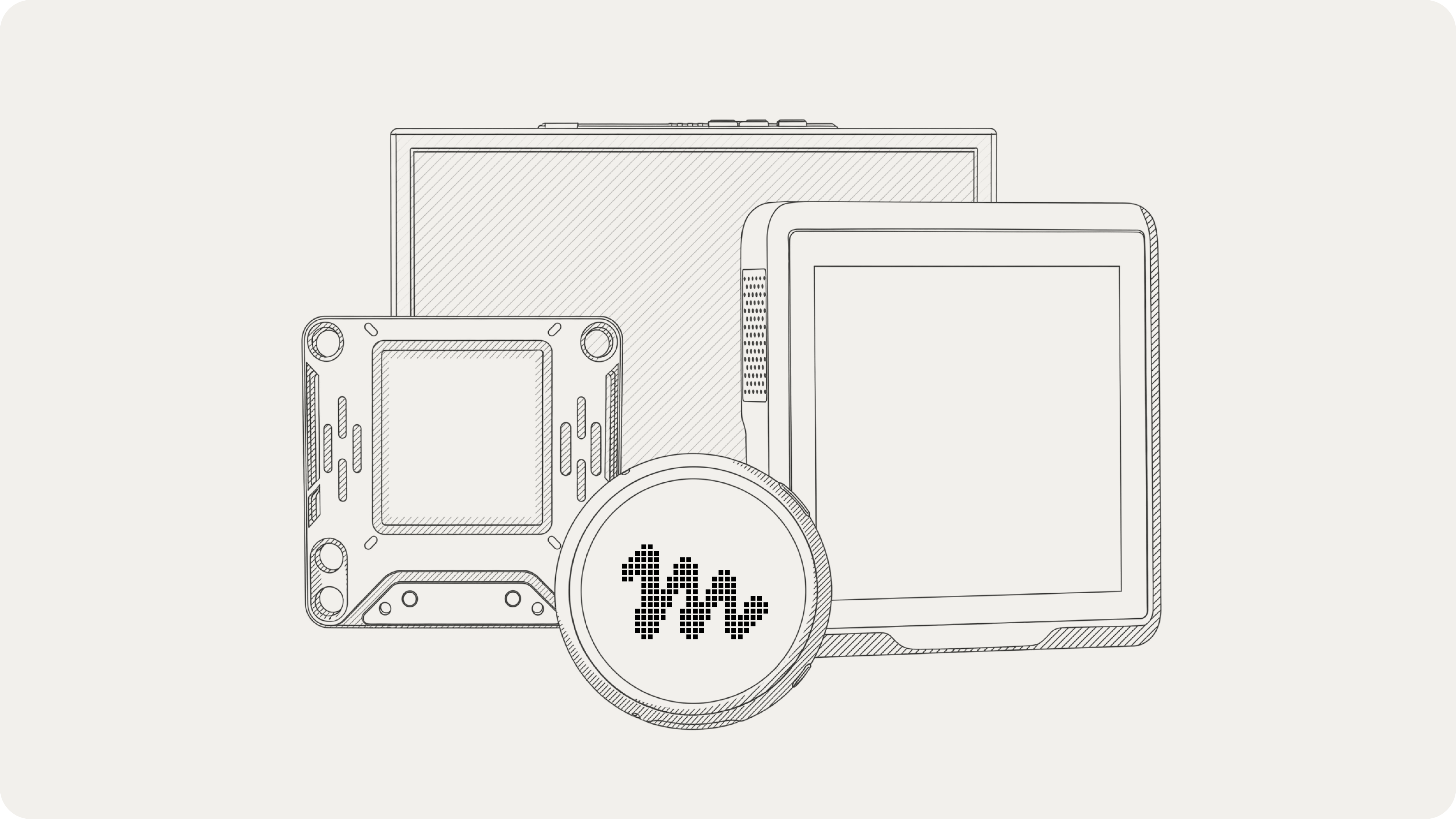
Muse Gadgets — Meta open-sources SDKs to build hardware for Muse
Meta's open-source kit turns ESP32 boards and Raspberry Pis into devices its Muse agent can see, hear and control.
What is it?
Muse Gadgets opens Meta's Muse personal agent to home-built hardware. The GitHub repo ships two Apache-2.0 SDKs: ESP32 firmware for small boards with screens, microphones, speakers and sensors, and a Linux SDK that turns a Raspberry Pi into a gadget Muse can command. US subscribers also get a free ESP32-C5 Wi-Fi dongle shipping in October.
How does it work?
A gadget pairs over Bluetooth through the Muse mobile app using an SDK token. The Linux service exposes system.run, file.read, file.write and device.health commands to Muse, and builders can add their own. The ESP32 firmware supports fifteen boards, from status lights to full touch UIs with push-to-talk.
Why does it matter?
Hardware hackers get a supported way to give an AI agent a physical presence without reverse-engineering closed devices. The free Home Link dongle also lets Muse reach existing smart home gear — Philips Hue, Sonos, Apple TV, Google Nest — on the local network.
Who is it for?
Makers, ESP32 and Raspberry Pi hobbyists, and smart-home tinkerers who want an AI agent with a physical presence.
|
|

|
|
MODEL
MAJOR
2026-10-01
FLUX 3 Image — Black Forest Labs lays out images with bounding boxes
Draw where things go, and FLUX 3 Image paints the picture to match.
What is it?
FLUX 3 Image brings layout control to Black Forest Labs' FLUX 3 family: tell the model where each element goes with a bounding box, and it generates or edits the image to match. It launched October 1, 2026 with native 4K output (up to 5456×3072) and support for up to 10 reference images per generation.
How does it work?
Boxes are written as [y_min, x_min, y_max, x_max] on a normalized 0–1000 grid, so the same layout works at any output resolution. A source box and a target box let you recolor, replace or move one element while the rest of the picture stays unchanged — and LLMs can write the layout from a short prompt.
Why does it matter?
Designers usually fight image models over composition. Explicit bounding boxes make results repeatable across many editing steps, and native 4K output removes a separate upscaling pass for print or large screens.
Who is it for?
Designers, ad and e-commerce teams, and developers building image tools who need precise, repeatable composition.
|
|

|
|
MODEL
MAJOR
2026-10-01
Strands Decider 2B — AWS opens a local decision model for agents
A 2B open model that answers choice, yes/no and rating questions with a confidence score, fast enough to run before every agent step.
What is it?
Strands Decider 2B is a small Apache-2.0 decision model from AWS Strands Labs that picks between options or rates on a scale with a calibrated confidence. Unlike a general LLM, it cannot generate text — it only picks from choices you supply, in about 115 ms on an RTX 3090.
How does it work?
AWS starts from the Qwen3.5-2B base, removes the text-generation head, and adds a pointer head (~1M parameters) that scores options in one forward pass. A rank-16 LoRA adapter handles the three question types: choice, noul (yes/no), and score. No decoding loop, no output parsing.
Why does it matter?
Agent builders often call a full LLM just to route a request or pick a tool. A local decision model does those small calls in ~0.1 seconds with a confidence score they can act on, sending only hard cases to a larger model. It scores 3rd of 33 models in the 2B class on the public JevBench benchmark.
Who is it for?
Agent builders and ML engineers who want fast, cheap routing and decision-making without calling a full LLM.
|
|

|
|
PAPER
NOTABLE
2026-10-01
Ataraxos — an $8,000 AI beats the best Stratego player 15-1
A self-play AI masters Stratego, a game of hidden pieces, for about 1/500th of DeepNash's compute.
What is it?
Ataraxos is a game-playing AI from researchers at Carnegie Mellon, NYU, Stanford and MIT that beat Pim Niemeijer — the most decorated Stratego player in history — 15 wins to 1 loss with 4 draws over 20 games. Results are published in Nature and the code and weights are on GitHub under MIT license.
How does it work?
The system learned from 163 million self-play games with reinforcement learning. A separate belief model guesses the likely identity of the opponent's hidden pieces. At play time, Ataraxos samples possible hidden board states, scores candidate moves against each, and commits to its best move.
Why does it matter?
Stratego hides most information and plays out over a very long game — one of the last board games where humans still led. Ataraxos reached superhuman play on one week of training with 16 H100 GPUs (roughly $8,000), about 1/500th of what DeepMind's DeepNash used. The same methods also transferred to Hanabi and dou dizhu.
Who is it for?
Reinforcement-learning and game-AI researchers studying imperfect-information games.
| Carnegie Mellon, NYU, Stanford, MIT |
DETAILS → |
|
|
|
All releases at ai-tldr.dev
Simple explanations • No jargon • Updated daily
|
|