|
|
MODEL
MAJOR
2026-10-01
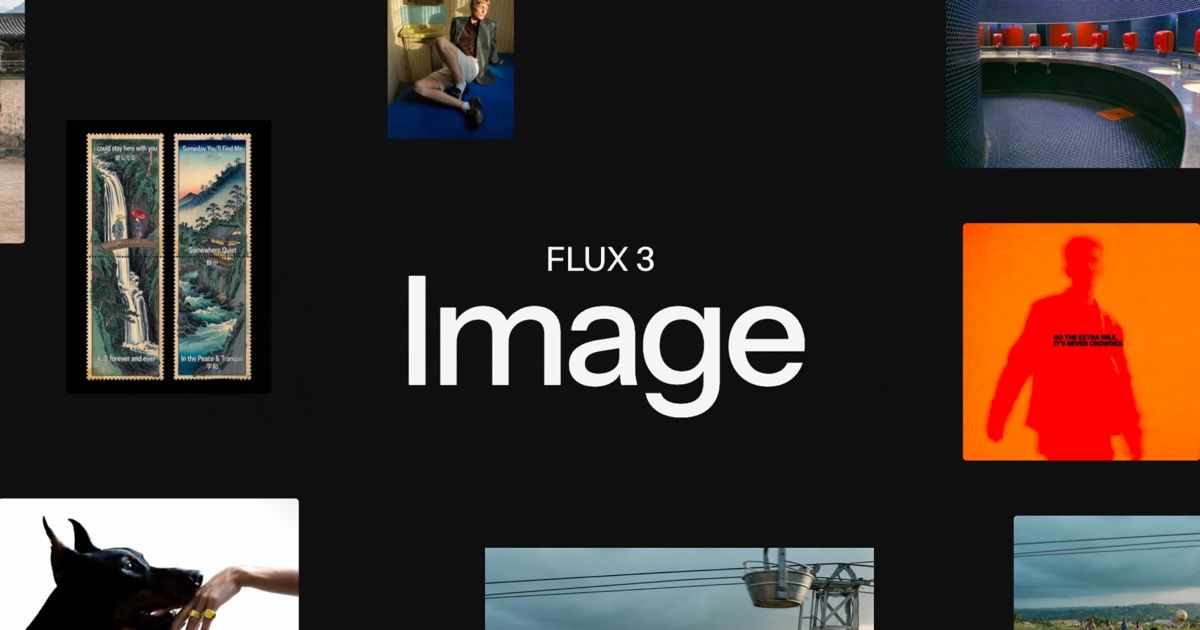
FLUX 3 Image — Black Forest Labs lays out images with bounding boxes
Draw where things go, and FLUX 3 Image paints the picture to match.
What is it?
FLUX 3 Image brings layout control to Black Forest Labs' FLUX 3 family: you tell the model where each element goes with a bounding box, then it generates or edits the image to match. It launched on October 1, 2026 with native 4K output and up to 10 reference images per generation.
How does it work?
Boxes are written as [y_min, x_min, y_max, x_max] on a 0–1000 normalized grid, so the same layout works at any output resolution. A source box and a target box let the model recolor, replace or move one element while the rest of the picture stays unchanged.
Why does it matter?
Explicit bounding boxes make composition repeatable across many editing steps, and native 5456×3072 output removes a separate upscaling pass for print or large screens.
Who is it for?
Designers, ad and e-commerce teams, and developers building image tools.
|
|

|
|
MODEL
MAJOR
2026-10-01
Clef — Cloudflare's open decision models answer typed questions in milliseconds
Cloudflare's Clef models turn an input and a schema of typed questions into scored decisions, with open weights.
What is it?
Clef is a family of two open-weight decision models from Cloudflare: Clef (27B, built on Qwen 3.8-27B) and Clef-flash (9B). A decision model does not write free text — it scores probabilities for each allowed answer in a typed schema of multiple-choice, true/false or ranked questions.
How does it work?
A two-stage attention routing step lets each valid choice pull relevant context; at inference the model runs one prefill-only pass and scores all schema choices in parallel — no token-by-token generation. Cloudflare trained it with label-smoothed cross-entropy plus a Brier loss and Reinforcement Learning for Calibrated Decisions (RLCD).
Why does it matter?
Clef-flash clocks a 38.8 ms median latency vs 524.1 ms for Jev, with double the context (64K) and full Jev API compatibility — so teams already using Jev-style tools can swap it in without changing their code.
Who is it for?
Developers building agent routing, triage and classification pipelines.
|
|
|
|
TOOL
MAJOR
2026-10-02
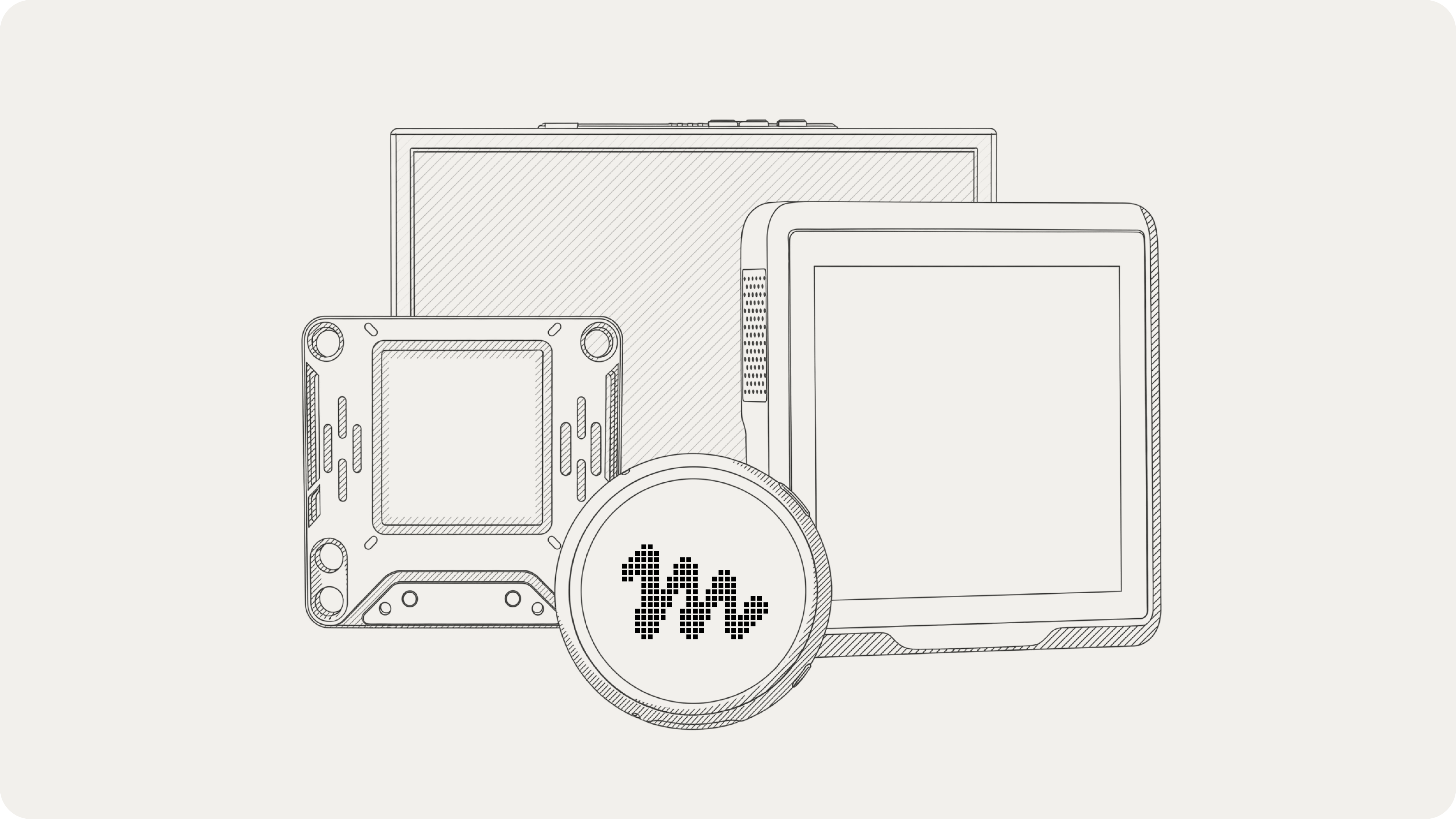
Muse Gadgets — Meta open-sources SDKs to build hardware for Muse
Meta's open-source kit turns ESP32 boards and Raspberry Pis into devices its Muse agent can see, hear and control.
What is it?
Muse Gadgets opens Meta's Muse personal agent to home-built hardware with two Apache-2.0 SDKs: ESP32 firmware for small boards with screens, microphones and speakers, and a Linux SDK that turns a Raspberry Pi into a gadget Muse can send commands to. US subscribers can also claim a free ESP32-C5 Wi-Fi dongle shipping in October.
How does it work?
A gadget pairs over Bluetooth through the Muse mobile app using an SDK token. The Linux service exposes system.run, file.read, file.write and device.health to Muse, and builders can register their own custom commands.
Why does it matter?
Hardware hackers get a supported path to give an AI agent a physical presence — a desk display, a push-to-talk button, a Home Assistant bridge — without reverse-engineering a closed device.
Who is it for?
Makers, ESP32 and Raspberry Pi hobbyists, and smart-home tinkerers.
|
|

|
|
TOOL
MAJOR
2026-10-02
Claude Code 2.1.288 — timed-out replies continue instead of failing
Claude Code stops losing whole turns to API timeouts and gets back drafts you clear by mistake.
What is it?
A mid-response API timeout no longer fails the turn in Claude Code 2.1.288: non-interactive sessions and subagents continue from the partial response, and thinking-only responses are retried automatically.
How does it work?
Long conversations that reported zero token usage now auto-compact instead of failing with "Prompt is too long". Press Up on an empty prompt to recover any draft cleared with Ctrl+C, including pasted text and images.
Why does it matter?
Unattended runs in CI and the Agent SDK are where a single timeout used to waste the most work; continuing from a partial reply saves tokens and time. The new /code-review --max-findings flag lets teams ask for more or fewer findings than the default.
Who is it for?
Claude Code users, CI and Agent SDK users, and plugin authors.
|
|
|
|
TOOL
MAJOR
2026-10-01
Pi 1.0 — Earendil's minimal coding agent reaches its first stable release
Earendil calls Pi 1.0 a hardened, minimal, extensible agent harness that you can make your own.
What is it?
Pi 1.0 is the first stable release of Earendil's MIT-licensed terminal coding agent and agent toolkit, shaped by hundreds of thousands of weekly users. It makes the full-screen TUI the default and cuts codemode prompt tokens by about 40%.
How does it work?
Codemode now uses ~3,300 prompt tokens instead of ~5,300 (on GPT-5.6) and can generate images. A companion Pi Durable package checkpoints every model call and tool call so long-running agents can survive crashes and resume.
Why does it matter?
A 1.0 tag signals the harness is stable enough to build on — which matters because Pi is also used as a library by other agent projects. Pi Durable also lets multiple clients watch and steer the same conversation.
Who is it for?
Developers who use or build coding agents.
|
|

|
|
PAPER
NOTABLE
2026-10-01
Ataraxos — an $8,000 AI beats the best Stratego player 15-1
A self-play AI masters Stratego, a game of hidden pieces, for about 1/500th of DeepNash's compute.
What is it?
Ataraxos, from researchers at Carnegie Mellon, NYU, Stanford and MIT, beat Pim Niemeijer — the most decorated Stratego player in history — 15 wins to 1 loss with 4 draws over 20 games, published in Nature with code and weights under MIT.
How does it work?
The system trained on 163 million self-play games. A separate belief model guesses likely identities of the opponent's hidden pieces; at play time Ataraxos samples possible hidden states, scores candidate moves against each, then commits to the best.
Why does it matter?
Training cost under $8,000 on 16 H100 GPUs for one week — roughly 1/500th of DeepMind's earlier DeepNash system. The same methods generalized to Barrage Stratego, Hanabi and dou dizhu.
Who is it for?
Reinforcement-learning and game-AI researchers.
| Carnegie Mellon, NYU, Stanford, MIT |
DETAILS → |
|
|
|
|
ARTICLE
NOTABLE
2026-10-02
One month on GLM-5.3-Flash — the Wagtail team's open-model coding test
A month-long attempt to do all coding work on one efficient open-weight model, with real token and cost numbers.
What is it?
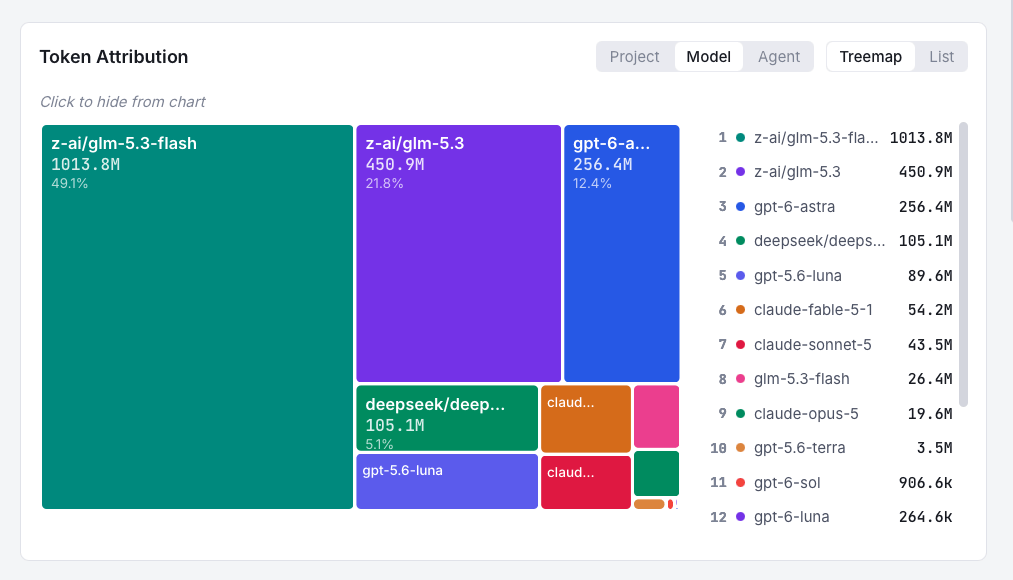
Wagtail core contributor Thibaud Colas reports on the team's September challenge to use only GLM-5.3-Flash for all coding work. Of 2 billion tokens consumed, only 1 billion actually went to GLM-5.3-Flash at $68; total spend was ~$218.
How does it work?
The team tracked usage per model with AgentsView. One MCP prototype alone burned 450M tokens ($150) on the wrong model, and provider capacity limits forced fallbacks to DeepSeek V4.1 Flash and Qwen 3.8 Flash.
Why does it matter?
The report offers rare real-world numbers on running day-to-day coding agents on a cheap open model, with concrete takeaways on budgeting R&D separately, measuring local usage, and using multi-agent setups.
Who is it for?
Teams weighing open models for coding agents.
|
|
|
All releases at ai-tldr.dev
Simple explanations • No jargon • Updated daily
|
|