
|
|
SHOWCASE
MAJOR
2026-11-21
Riemann Hypothesis proof certified — Lean checks Alpöge and Claude's proof
Lean experts say the AI-assisted Riemann Hypothesis proof is correct, after several independent checkers and statement tools agreed.
What is it?
On November 21, 2026 the Lean and Mathlib communities said they have full confidence that Levent Alpöge's proof of the Riemann Hypothesis is correct. Alpöge, a mathematician at Anthropic, released the 17-million-line Lean proof a day earlier, written with Claude.
How does it work?
Two independent tools compared the proved theorem with Mathlib's own definition, and Lean's kernel plus separate checkers such as nanoda, con-leche and con-ron accepted the exported proof.
Why does it matter?
Machine-checked certification removes the main doubt about AI-written proofs: that the code proves a slightly different statement or exploits a checker bug. A readable human write-up is still to come.
Who is it for?
Mathematicians, formal-verification and AI-for-math researchers.
|
|

|
|
SECURITY
MAJOR
2026-11-19
Dragos plants 2M canaries in AI prompts — three providers found breached
Two million booby-trapped prompts show where AI requests really go, and who reads them on the way.
What is it?
Dragos published a five-month canary experiment on the AI inference supply chain. HD Moore seeded unique fake AWS keys, passwords and URLs into about two million prompts and watched which were later used.
How does it work?
Every canary is tied to the exact prompt, model, router and privacy setting that carried it, so a reused secret points at the hop that leaked it.
Why does it matter?
Attackers were inside three hosting providers, and some hosts ignored Zero Data Retention flags. Anything an agent puts in a prompt, including credentials, can travel far beyond the provider you picked.
Who is it for?
Developers using AI routers, security teams, anyone sending secrets through agents.
|
|

|
|
SECURITY
MAJOR
2026-11-19
European Commission confirms AI-assisted cyberattack — staff systems down 10+ days
The EU's executive arm says attackers used AI agents against its own staff systems.
What is it?
The European Commission confirmed on November 19, 2026 that a cyberattack on its internal IT systems was an "AI-generated cyber campaign". The first signs were detected on October 22, and staff services were disrupted for more than 10 days.
How does it work?
CERT-EU identified the attackers' use of ARTEX, a publicly available AI-powered penetration-testing framework in which one operator runs several AI agents that plan, probe and exploit with little human input.
Why does it matter?
Agent-driven attack tools are now hitting large government targets. Security teams should treat fast, automated lateral movement as a normal threat, not an edge case.
Who is it for?
Security teams, CISOs, public-sector IT.
|
|

|
|
REPO
NOTABLE
2026-11-21
LookAtMyQuant — Inkling 2 Mini squeezed into 5.4 GB for Apple Silicon
A quantization compiler packs Thinking Machines' new open model into 5.4 GB so it runs on a Mac.
What is it?
LookAtMyQuant now ships a 5.38 GB build of Inkling 2 Mini, down from 18.89 GB of original text weights. A second 8.87 GB build is also published, and both run on Apple Silicon through the project's MLX runtime.
How does it work?
The compiler measures how much compressing each piece of the model hurts output, then picks one compression code per piece to fit a bits-per-weight budget with the least total damage.
Why does it matter?
The author reports 91.2% of the original's GSM8K and HumanEval score at 1.63 bits per weight, though commenters questioned whether the gains are beyond noise. The files run only on Apple Silicon for now.
Who is it for?
Mac users running local models, quantization researchers.
|
|

|
|
TOOL
NOTABLE
2026-11-21
Transformers v5.24.0 — Omnilingual ASR, Inkling 2 Mini and one cache name
New speech, vision and looped models land in Hugging Face's library, and the KV-cache argument gets one name.
What is it?
Transformers v5.24.0 adds Meta's Omnilingual ASR speech models (1,600+ languages), Thinking Machines' Inkling 2 Mini, NVIDIA's Dory looped model, Apertus 1.5, HY4-VL and Sarvam AI's mixture-of-experts models.
How does it work?
The generation cache argument is now called cache everywhere, replacing past_key_values and cache_params. The old names keep working with a warning until v5.40.0 for forward calls and v6.0.0 for generate().
Why does it matter?
Code that passes past_key_values by hand should move to cache. Upgraders also need peft 0.22.0 or newer.
Who is it for?
ML engineers using Hugging Face models.
|
|
|
|
MODEL
NOTABLE
2026-11-19
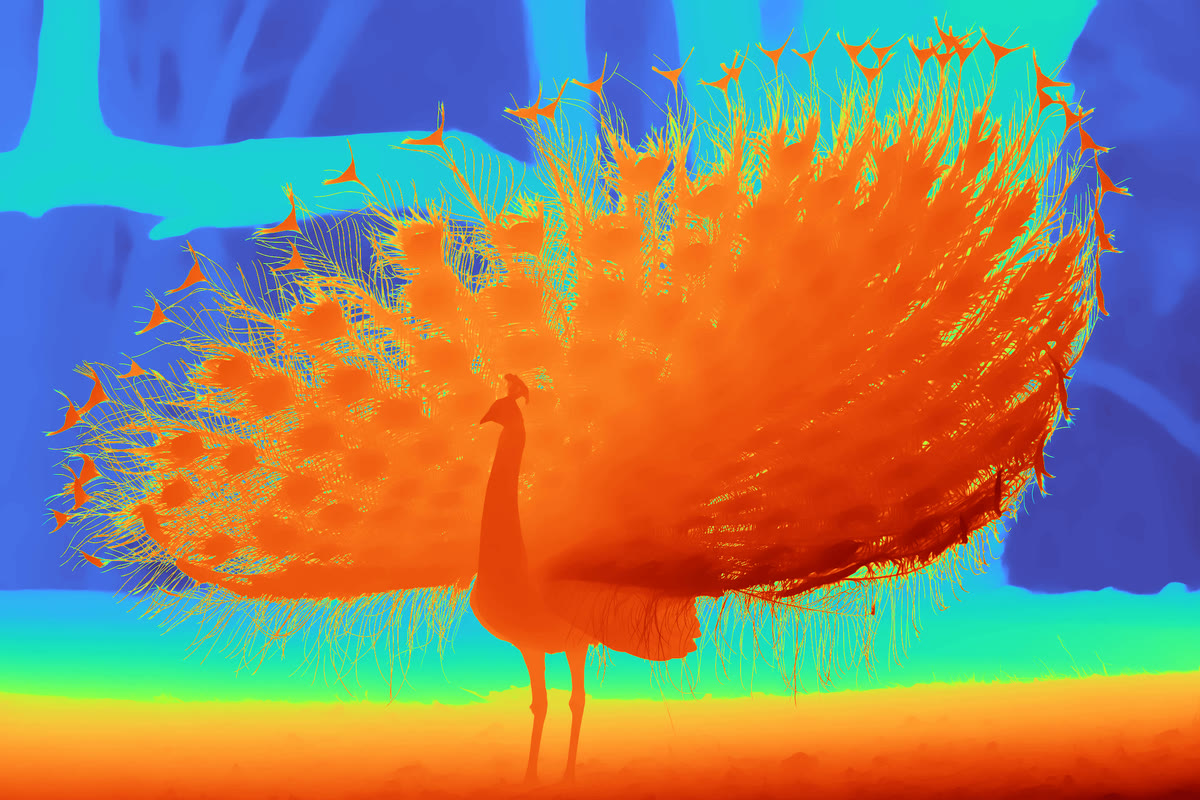
Depth Pro 2 — Apple's open depth model for sharp, steady video depth
One Apple network gives depth maps that are both sharp at object edges and steady from frame to frame.
What is it?
Depth Pro 2 is a family of models that predicts how far away every pixel is, in meters, from a photo, video or live feed. It comes in four sizes from 24M to 872M parameters.
How does it work?
A multi-view transformer alternates attention inside each frame with attention across frames, then a DPT decoder predicts a depth map for every frame at native resolution.
Why does it matter?
Apple reports it beats both multi-frame and single-frame methods on boundary sharpness and jitter. The weights are licensed for non-commercial research only.
Who is it for?
Computer vision researchers, 3D and video effects developers.
|
|
|
All releases at ai-tldr.dev
Simple explanations • No jargon • Updated daily
|
|