|
|
TOOL
MAJOR
2026-10-31
ChatGPT and Codex share one usage limit — token-based pool from December
From December, one token budget covers ChatGPT Work and Codex on Plus, Pro and Business plans.
What is it?
OpenAI's help article says paid plans will move to one shared allowance in December. The change lands when the agentic features of ChatGPT Work move into the main ChatGPT experience.
How does it work?
The pool is metered in tokens, so bigger models and harder tasks use more of it. Instant chat sits outside the pool, and Settings > Usage shows the combined balance.
Why does it matter?
Developers who split their day between ChatGPT and Codex will spend from one budget instead of two. OpenAI has not yet published per-plan token amounts.
Who is it for?
ChatGPT Plus, Pro and Business subscribers who use Codex.
|
|

|
|
REPO
MAJOR
2026-10-31
DeepSeek Super-agent — an open coding agent that takes work from GitHub chats
DeepSeek's open prototype of an agent that watches a repo's conversations, takes approved requests and answers with finished work.
What is it?
dsh-superagent is DeepSeek's MIT-licensed prototype of a proactive coding agent for a single GitHub repository. When an allowed person asks for work, it opens a tracked item and replies in the original conversation, for example with a pull request.
How does it work?
It is a plugin for DeepSeek Harness: a router session judges each GitHub or Feishu event and either ignores it or opens a ticket for a worker session. State lives in one SQLite database.
Why does it matter?
It puts the agent inside a team's existing conversations instead of a terminal. Proactive work starts in an "observe" mode that only records what the agent would have done.
Who is it for?
Teams running coding agents on a shared GitHub repo.
|
|
|
|
SECURITY
MAJOR
2026-10-31
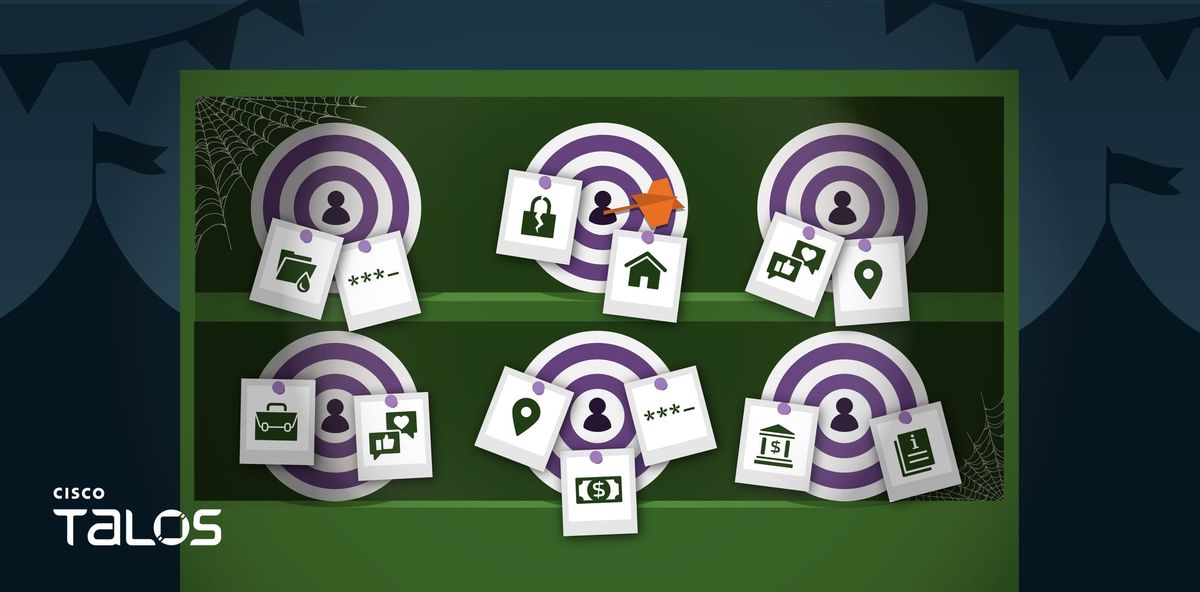
VOLTA infostealer — malware asks an LLM how much each victim is worth
A Windows infostealer sends each victim's stolen profile to an LLM, which ranks what the victim is worth.
What is it?
VOLTA is a Windows infostealer found by Cisco Talos. Its new feature is an optional LLM stage that ranks the victim's valuables as low, medium or high and judges their password habits.
How does it work?
It sends the collected profile as JSON to OpenRouter, defaulting to claude-opus-4.6 and falling back to kimi-k2 and gemini-2.5-flash if a model refuses.
Why does it matter?
Deciding which victim to exploit first is now one API call, and since VOLTA uses only third-party services there is no attacker server to block. Refusal checks alone did not stop it.
Who is it for?
Security teams and SOC analysts.
|
|

|
|
SECURITY
MAJOR
2026-10-31
ChatGPT Shared-Link Flaw — one click ran attacker code in the victim's session
A public ChatGPT share could run attacker JavaScript inside the viewer's signed-in session until OpenAI patched it.
What is it?
Parameter researchers chained flaws in ChatGPT so a malicious public shared chat ran JavaScript as chatgpt.com. The victim only had to open the link.
How does it work?
An unchecked postMessage listener, an un-sandboxed iframe fed through innerHTML, and a Content Security Policy bypass via YouTube's oEmbed JSONP callback combined into code execution.
Why does it matter?
It turned a normal share into a way to read private conversations. OpenAI fixed it on October 26, rated it P1 and paid a $5,000 bounty, so users need to do nothing.
Who is it for?
Security engineers, ChatGPT users and web app developers.
|
|

|
|
SECURITY
MAJOR
2026-10-30
Northflank breach — stolen customer secrets used to run up AI API bills
A cloud hosting platform tells all customers to rotate every secret after stored AI API keys were used by attackers.
What is it?
Northflank opened a security incident on October 30 after a Wiz threat alert and tells users to assume their environment variables were decrypted. Users then reported unauthorized use of AI API keys stored there.
How does it work?
Attackers target the place hosting platforms keep environment variables, then check, resell and flood the stolen model keys with calls. Northflank patched its network policy and turned on audit logs for every customer.
Why does it matter?
Wiz counts at least nine AI developer platforms breached in October, so a stolen key is now a direct bill. Revoke and replace every AI provider key and check usage dashboards.
Who is it for?
Teams hosting apps on Northflank.
|
|

|
|
SECURITY
MAJOR
2026-10-29
Claude Code extension 2.1.313 — tampered build carried an SSH backdoor
A modified Claude Code extension, version 2.1.313, planted an SSH backdoor on developer machines through the Cursor marketplace.
What is it?
Cursor says a tampered Anthropic.claude-code 2.1.313 was live in its marketplace for about 11 hours on October 29, affecting at most 5,000 users. Anthropic says it did not build the copy and that its own systems were not compromised.
How does it work?
Injected code adds an SSH key labeled svc-telemetry to authorized_keys and opens a reverse SSH tunnel, with a LaunchAgent on macOS or a scheduled task on Windows to keep it alive.
Why does it matter?
Uninstalling the extension does not remove the key or persistence, so affected developers must clean up by hand and rotate credentials. Auto-updating extensions are a real route to developer laptops.
Who is it for?
Developers who use Claude Code in Cursor or other VS Code forks.
|
|
|
|
MODEL
MAJOR
2026-10-29
Mistral Large 4 open weights — Le Chonk lands on Hugging Face
Mistral's trillion-parameter flagship is now downloadable, with better agent and coding scores than the preview.
What is it?
Mistral AI released the weights of Mistral Large 4, nicknamed Le Chonk, three weeks after the API-only preview. It had three more weeks of reinforcement learning, and Terminal-Bench 4.0 rose from 28% to 41%.
How does it work?
A sparse mixture-of-experts with about 1T parameters, roughly 49B active per token, reading text and images across a 1M-token context. FP8 and NVFP4 checkpoints come with vLLM and SGLang recipes for 8-GPU servers.
Why does it matter?
Security teams and regulated companies can run a frontier-class model on their own hardware instead of sending data to a US or Chinese API.
Who is it for?
Self-hosting teams, security teams and European enterprises.
|
|
|
All releases at ai-tldr.dev
Simple explanations • No jargon • Updated daily
|
|