|
|
MODEL
SEISMIC
2026-06-09
Anthropic Ships Claude Fable 5 and Claude Mythos 5
Fable 5 ships to everyone today; Mythos 5 stays gated to Glasswing partners and biology researchers.
What is it?
Anthropic's next generation of Claude, released as two products built on the same underlying model. Fable 5 is the public model on the Claude API and consumer apps; Mythos 5 is the same training run with safeguards lifted, restricted to vetted cyber-defense partners in Project Glasswing and a handful of biology researchers.
How does it work?
One pretraining run, two product configurations. Fable 5 keeps the constitutional classifiers, refusal training, and silent-degradation safeguards. Mythos 5 strips those safeguards for authorized users running zero-day discovery and protein-design work.
Why does it matter?
Fable 5 doubles Opus 4.8 pricing to $10/$50 per million tokens but claims state-of-the-art on nearly every internal benchmark, including Hebbia's Finance Benchmark and Cognition's FrontierCode coding eval. Mythos 5 puts frontier dual-use capability behind a partner program rather than a general API.
Who is it for?
Claude API users, Enterprise customers, and Project Glasswing partners. Rolling out to Pro and Max subscribers through June 22.
|
|

|
|
MODEL
MAJOR
2026-06-09
Google DeepMind Ships Gemini 3.5 Live Translate
First production speech-to-speech model that translates continuously instead of taking turns.
What is it?
An audio-native Gemini 3.5 variant focused on live speech translation. Where prior translation tools wait for a sentence to end, Gemini 3.5 Live Translate keeps speaking a few seconds behind the source, auto-detecting the source language from a pool of 70+ and preserving the original speaker's intonation, pacing, and pitch in the output voice.
How does it work?
Native end-to-end audio model — no separate ASR, MT, and TTS stack. Detects the source language continuously, generates target-language audio while the speaker is still talking, and watermarks the output with SynthID so the synthetic audio can be detected downstream.
Why does it matter?
Removes the turn-by-turn delay that makes existing translation apps awkward for live meetings and travel. Google is wiring it into Meet (2,000+ language combos), Google Translate on Android and iOS, and the Gemini Live API so third parties can build it into agents and call apps.
Who is it for?
Developers building voice agents, Google Meet users, Google Translate users, and accessibility teams. Public preview via Gemini Live API and Google AI Studio.
|
|

|
|
MODEL
MAJOR
2026-06-09
Cohere Ships North Mini Code 1.0
Cohere's first model aimed squarely at developers — a 30B/3B-active MoE coding model under Apache 2.0.
What is it?
North Mini Code 1.0 is an open-weights coding model from Cohere Labs, trained for agentic software-engineering work like running tests, editing files, and driving terminals. The weights land on Hugging Face under Apache 2.0, with hosted inference via Cohere's API and OpenRouter.
How does it work?
A sparse Mixture-of-Experts: 30B total parameters, 3B active per token, 128 experts, 256K context window, up to 64K token generation. Post-training stacks supervised fine-tuning with reinforcement learning over 70k+ verifiable coding tasks.
Why does it matter?
It is the smallest open-weights model to clear 80% on SWE-Bench Verified (83.2%) and 60% on Terminal-Bench v2, while serving 2.8× the output throughput of Devstral Small 2. Teams wanting a self-hostable coding agent no longer need Anthropic or OpenAI capacity.
Who is it for?
Developers running self-hosted coding agents and teams looking for an Apache-2.0 alternative to Devstral, Gemma 4, and Qwen3.5.
|
|
|
|
SECURITY
MAJOR
2026-06-08
GitHub Disables 73 Microsoft Repos After 'Miasma' Worm Hijacks AI Agent Configs
Self-spreading npm worm jumped from Red Hat packages to Microsoft GitHub orgs and weaponized AI coding agent config files to harvest cloud credentials.
What is it?
Miasma is a self-replicating variant of the Shai-Hulud worm. It first compromised 32 @redhat-cloud-services npm packages, then used a hijacked contributor account to push malicious commits across 73 repos in the Azure, microsoft, Azure-Samples, and MicrosoftDocs GitHub organizations — all disabled in roughly 105 seconds.
How does it work?
Malicious commits drop .claude/settings.json and .gemini/settings.json SessionStart hooks alongside Cursor and VS Code auto-run tasks. When a developer opens an infected repo in any of those tools, the agent's session-start hook executes a payload that harvests credentials from GitHub, npm, AWS, Azure, GCP, Kubernetes, and 90+ other developer tools.
Why does it matter?
This is the first widely-documented case of a supply-chain worm weaponizing the auto-load surface of AI coding agents — your assistant's startup behavior is now an attack vector independent of the package code itself. Any repo with agent config files is suspect on clone.
Who is it for?
Anyone using Claude Code, Gemini CLI, Cursor, or VS Code on Azure tooling repos — audit your .claude/, .gemini/, and .vscode/ directories now.
|
|

|
|
ECOSYSTEM
MAJOR
2026-06-09
Munich Court Rules Google Directly Liable for False Statements in AI Overviews
First major European ruling holds Google directly liable for AI Overview output, treating the summary as Google's own speech rather than third-party search results.
What is it?
A temporary injunction from the Regional Court of Munich (Case 26 O 869/26), after the court ruled in favor of two Munich publishers whose Google AI-generated search summaries falsely tied them to scams and subscription traps. Google must cease the false statements and cover 80% of legal costs.
How does it work?
The court classified AI Overviews as Google's own published statements, not a list of third-party search results, because the system produces "independent, new, and substantive statements" by combining and rewriting content — stripping the search-engine liability shield. An analysis cited by the court found 56% of AI Overview claims could not be traced to the sources Google linked.
Why does it matter?
It is the first European ruling to attach direct defamation liability to a major lab's AI summary feature and strips the long-standing "we are just an index" defense. Every AI-Overviews-style product launched in the EU now faces the same theory of harm.
Who is it for?
Publishers, regulators, AI search product teams, and defamation lawyers — and anyone watching how generative search liability is tested in EU courts.
|
|
|
|
ECOSYSTEM
MAJOR
2026-06-09
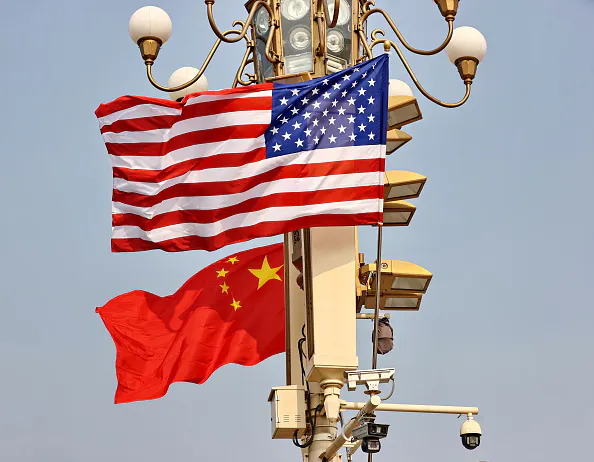
Bloomberg: China Drafts a Five-Year, $295B Nationwide AI Data Center Buildout
Beijing plans a $295B, five-year buildout to wire China's AI clusters together — and to do it without Nvidia.
What is it?
China's National Development and Reform Commission is drafting a five-year, 2 trillion yuan ($295B) blueprint to connect the country's regional AI data centers into a single nationwide compute network. State telecom giants China Mobile and China Telecom would operate the bulk of the sites, with a unified national system targeted for 2028.
How does it work?
Funding leans on ultra-long-term central-government bonds and state investment funds. The plan requires at least 80% of AI silicon and core infrastructure to come from domestic suppliers — Huawei first — effectively locking Nvidia and AMD out of the new buildout.
Why does it matter?
China already runs about 1.59 million PFLOPS of compute across roughly 42 AI clusters, ranking second globally. This unified, domestic-chip-only blueprint at scale codifies the decoupling that US export controls have been pushing toward and turns Huawei's Ascend roadmap into a national-scale procurement commitment.
Who is it for?
AI infrastructure investors, semiconductor analysts, policymakers, and anyone modeling China's AI compute trajectory.
|
|
|
|
REPO
MAJOR
2026-06-08
OpenCV 5.0 Ships With Built-In LLM and VLM Inference
The most-installed computer-vision library lands version 5.0 with a graph-based DNN engine and built-in LLM / VLM inference, timed for CVPR 2026 in Denver.
What is it?
OpenCV is the open-source computer-vision library that ships in roughly a million pip installs a day. Version 5.0 is the first major bump since the OpenCV 3.0 era, with a rewritten DNN engine and first-class LLM and VLM inference — the same library that does Canny edges can now decode tokens for Qwen 2.5, Gemma 3, PaliGemma, and GPT-family architectures.
How does it work?
The new DNN engine is graph-based with operator fusion, pushing ONNX operator coverage from about 22% to over 80%, plus dynamic shapes and control-flow subgraphs. LLM/VLM inference ships with a native tokenizer and a KV-cache for autoregressive decoding. Hardware routes through Intel IPP, Arm KleidiCV, Qualcomm FastCV, and RISC-V Vector backends.
Why does it matter?
Teams that wanted classical CV plus modern LLM/VLM workloads have been gluing OpenCV to a separate inference runtime for years. With 5.0 the same dependency covers camera I/O, classical CV, ONNX-shaped neural nets, language models, and edge accelerators. The release also moves to C++17, NumPy 2.x, and drops the legacy C API.
Who is it for?
Computer-vision engineers, robotics teams, and edge ML developers. Install with pip install --upgrade opencv-python.
|
|
|
All releases at ai-tldr.dev
Simple explanations • No jargon • Updated daily
|
|