|
|
TOOL / ECOSYSTEM
MAJOR
2026-06-08
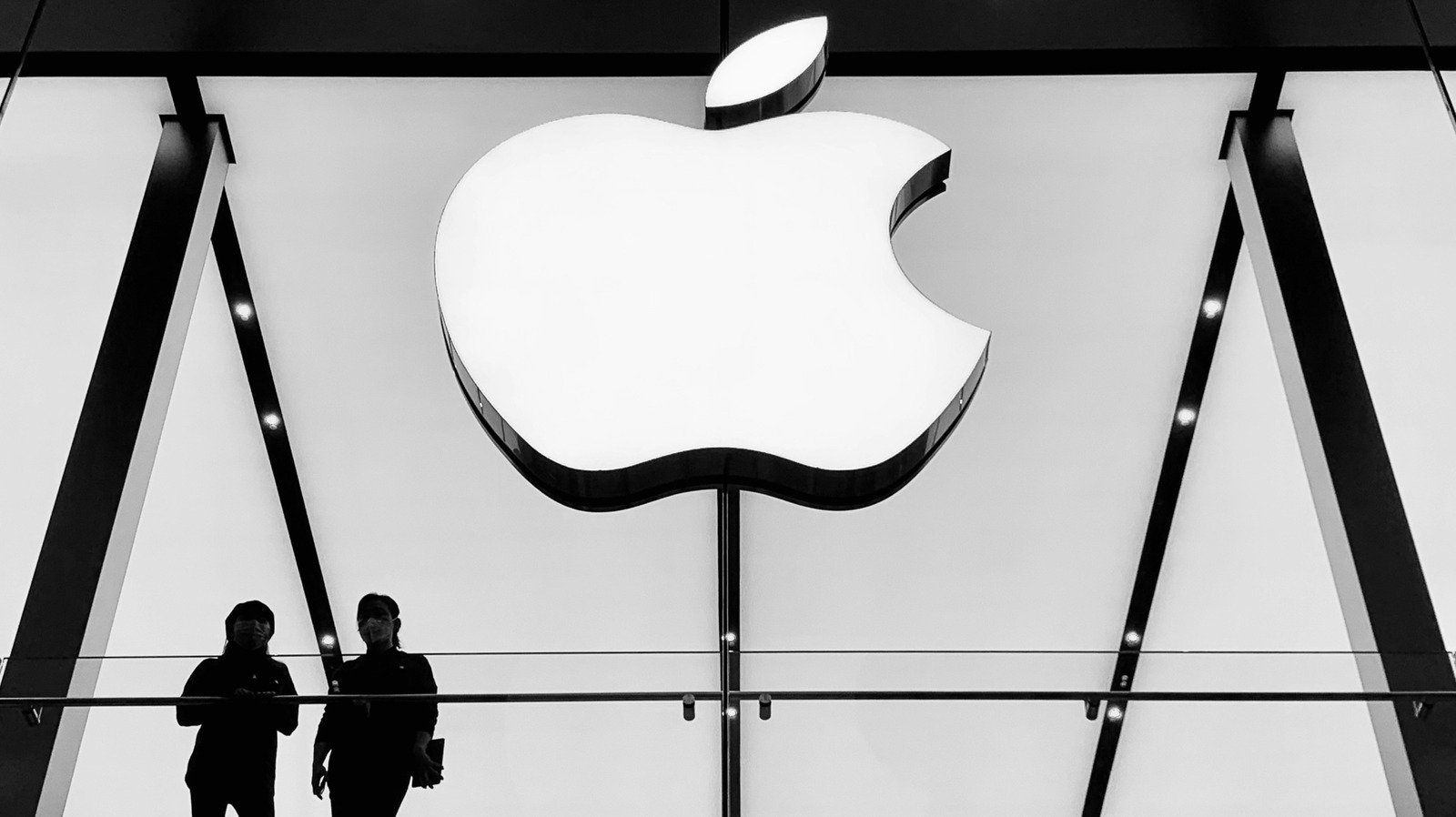
Apple Unveils Rebuilt Siri at WWDC 2026 — Standalone App, Persistent Chat History, and Image-Aware Foundation Models for Swift Apps
WWDC 2026 turns Siri into a real chatbot app and opens Apple's Foundation Models framework to image-aware third-party Swift apps.
What is it?
Apple's keynote unveiled a redesigned Siri with a dedicated 'Siri AI' app on iOS 27, iPadOS, macOS 'Golden Gate', watchOS, and visionOS, plus an expanded Foundation Models framework for developers. Users get a persistent chat history, the ability to type or speak, a Dynamic Island animation, and screen-aware features that can describe on-display images and text.
How does it work?
Apple Intelligence runs a hybrid stack of on-device models and a larger cloud variant via Private Cloud Compute, with the cloud model trained in collaboration with the Google Gemini team. The Foundation Models Swift framework now accepts image input, letting third-party apps call Apple's on-device 3B vision-language model directly.
Why does it matter?
Apple's ~2B-device installed base becomes a distribution channel for Claude, ChatGPT, and Gemini through iOS 27 Extensions — and the pluggable Foundation Models protocol is the first Apple framework that lets users pick their cloud model provider per app.
Who is it for?
iOS and macOS developers, AI app builders, and Apple ecosystem watchers. Developer beta is live now via developer.apple.com; public beta in July.
|
|

|
|
TOOL / ECOSYSTEM
MAJOR
2026-06-08
Anthropic Ships ClaudeForFoundationModels — Apache-2.0 Swift Package Swaps Apple's On-Device AFM for Claude With One SPM Dependency
Same Swift API as Apple's on-device model — point the SPM dependency at Anthropic's package and it is Claude under the hood.
What is it?
ClaudeForFoundationModels is Anthropic's official Swift Package Manager dependency that implements Apple's new LanguageModel protocol from WWDC 2026. A developer can prototype against Apple's on-device 3B AFM Core, then upgrade to Claude Sonnet 4.6 by changing one SPM line — no edits to the LanguageModelSession code required.
How does it work?
Add the package to Package.swift, construct a ClaudeLanguageModel with a model identifier (e.g. .sonnet4_6) and an API key, then use a standard LanguageModelSession. Streaming, @Generable typed outputs, configurable effort levels, and Anthropic-hosted tools — web search, web fetch, code execution — all flow through Apple's native session API.
Why does it matter?
This is the first implementation of Apple's pluggable LanguageModel protocol by a frontier lab outside Apple. It gives indie iOS and macOS developers a one-SPM-line path to Claude for workloads that need multi-step reasoning, code generation, or web search — without rewriting their session code.
Who is it for?
iOS / macOS / visionOS developers and indie Swift app builders targeting iOS 27, macOS 27, and the rest of the 2026 Apple OS betas.
|
|
|
|
REPO / TOOL
MAJOR
2026-06-08
OpenCV 5.0 Ships With Built-In LLM and VLM Inference — Rewritten Graph-Based DNN Engine, 80%+ ONNX Coverage, Native KV-Cache
The most-installed computer-vision library lands version 5.0 with a graph-based DNN engine and built-in LLM / VLM inference, timed for CVPR 2026 in Denver.
What is it?
OpenCV 5.0 is the first major bump since the OpenCV 3.0 era, with a rewritten DNN engine and first-class LLM and VLM inference. The same library that does Canny edges can now decode tokens for Qwen 2.5, Gemma 3, PaliGemma, and GPT-family architectures — all from one pip install.
How does it work?
The new DNN engine is graph-based with operator fusion, pushing ONNX operator coverage from ~22% to 80%+, plus dynamic shapes and If/Loop control-flow subgraphs. LLM/VLM inference ships with a native tokenizer and KV-cache, while a new hardware abstraction layer routes work across Intel IPP, Arm KleidiCV, Qualcomm FastCV, and RISC-V Vector backends.
Why does it matter?
Teams gluing OpenCV to a separate inference runtime — ONNX Runtime, llama.cpp, vendor SDKs — for years can now cover classical CV, modern neural nets, LLM/VLM inference, and edge accelerators under one dependency. The release also clears a decade of API debt: C++17 baseline, NumPy 2.x, no legacy C.
Who is it for?
Computer-vision engineers, robotics teams, and edge ML developers. Install with pip install --upgrade opencv-python.
|
|
|
|
BENCHMARK / TOOL
MAJOR
2026-06-08
Cognition Launches FrontierCode — 150-Task Benchmark Grades Whether Coding Agents Produce Mergeable PRs; Claude Opus 4.8 Tops Diamond Tier at 13.4%
First coding benchmark grading whether AI agents write code maintainers would actually merge — not just code that passes tests.
What is it?
FrontierCode is a 150-task software-engineering benchmark from Cognition (makers of Devin). Each task was hand-crafted by maintainers of 20+ flagship open-source repos who spent 40+ hours per task writing rubrics matching how they would actually review a pull request — three nested tiers: Extended (150), Main (100), Diamond (50 hardest).
How does it work?
Grading uses an ensemble of classical unit tests, reverse-classical tests that catch agents who delete failing assertions, code-scope validation flagging unrequested changes, and adaptive grading that re-runs tests after patches. Results: Claude Opus 4.8 leads Diamond at 13.4%, GPT-5.5 at 6.3%, Gemini 3.1 Pro at 4.7%.
Why does it matter?
Public coding benchmarks like SWE-Bench keep saturating while real agent-authored PRs still get rejected. FrontierCode reports an 81% lower false-positive rate than SWE-Bench Pro, and the Diamond tier remains far from saturated — giving agent labs a fresh, harder target to optimize against.
Who is it for?
Coding-agent labs, evaluation researchers, and engineering leaders comparing models for production use.
|
|

|
|
MODEL / ALGORITHM
MAJOR
2026-06-08
Xiaomi Ships MiMo-V2.5-Pro-UltraSpeed — FP4-Quantized 1.02T MoE Hits ~1,200 Tokens/Sec on Stock 8-GPU Nodes via Block-Diffusion Speculative Decoding
An FP4 backbone plus a block-diffusion drafter pushes Xiaomi's 1T MiMo MoE past 1,000 tokens per second on a stock 8-GPU node.
What is it?
MiMo-V2.5-Pro-UltraSpeed is an inference-optimized variant of Xiaomi's 1.02T total / 42B active MoE model with a 1M-token context. The MIT-licensed FP4-DFlash checkpoint is live on Hugging Face, with a paid API trial running June 9–23.
How does it work?
MXFP4 quantization is applied only to MoE expert weights (cutting expert memory ~4×), while attention stays at higher precision. The 'DFlash' block-diffusion speculative decoder proposes 8-token blocks in one drafter forward pass, then the backbone verifies in a single step — sustaining 1,000–1,200 tokens/sec on a commodity 8-GPU node.
Why does it matter?
Trillion-parameter MoEs typically only hit triple-digit throughput on multi-rack hardware. Pushing past 1,000 tokens/sec on a single 8-GPU node — and releasing the recipe and weights — turns FP4 plus block-diffusion drafting into a reproducible open-source baseline for the entire field.
Who is it for?
Inference engineers, MoE researchers, self-hosters, and agentic-systems teams running long-context workloads.
|
|

|
|
ECOSYSTEM / TOOL
MAJOR
2026-06-08
OpenEnv for Agentic RL Moves to Multi-Org Governance — 9-Member Steering Committee With Meta-PyTorch, NVIDIA, Hugging Face, and PyTorch Foundation Backing
The Gymnasium-style protocol for agentic RL environments moves from a Meta/HF project to a 9-org steering committee with PyTorch Foundation backing.
What is it?
OpenEnv is the Gymnasium-style standard for execution environments that AI agents train against — coding sandboxes, browsers, classic games, terminals. Today it transitions from a Meta + Hugging Face project to a community-governed standard with a 9-org steering committee including Meta-PyTorch, NVIDIA, Hugging Face, Unsloth, Modal, Prime Intellect, Mercor, Fleet AI, and Reflection.
How does it work?
Environments run as containerized HTTP servers exposing reset(), step(), and state() endpoints. Supporting adopters — PyTorch Foundation, vLLM, SkyRL (UC Berkeley), Lightning AI, Scale AI, and Stanford — already ship integrations in TRL, verl, TorchForge, and SkyRL. The roadmap adds tasksets via HF Datasets, an external rewards framework, and auto-validation for environment quality.
Why does it matter?
Every RL post-training team currently rebuilds the same environment-server plumbing from scratch. A vendor-neutral standard with PyTorch Foundation and NVIDIA backing means published environments stop being trapped inside any one trainer or company — turning RL infra from a per-lab side project into a commodity.
Who is it for?
RL post-training researchers, agent framework authors, and model-eval infra teams.
|
|
|
|
ECOSYSTEM
MAJOR
2026-06-08
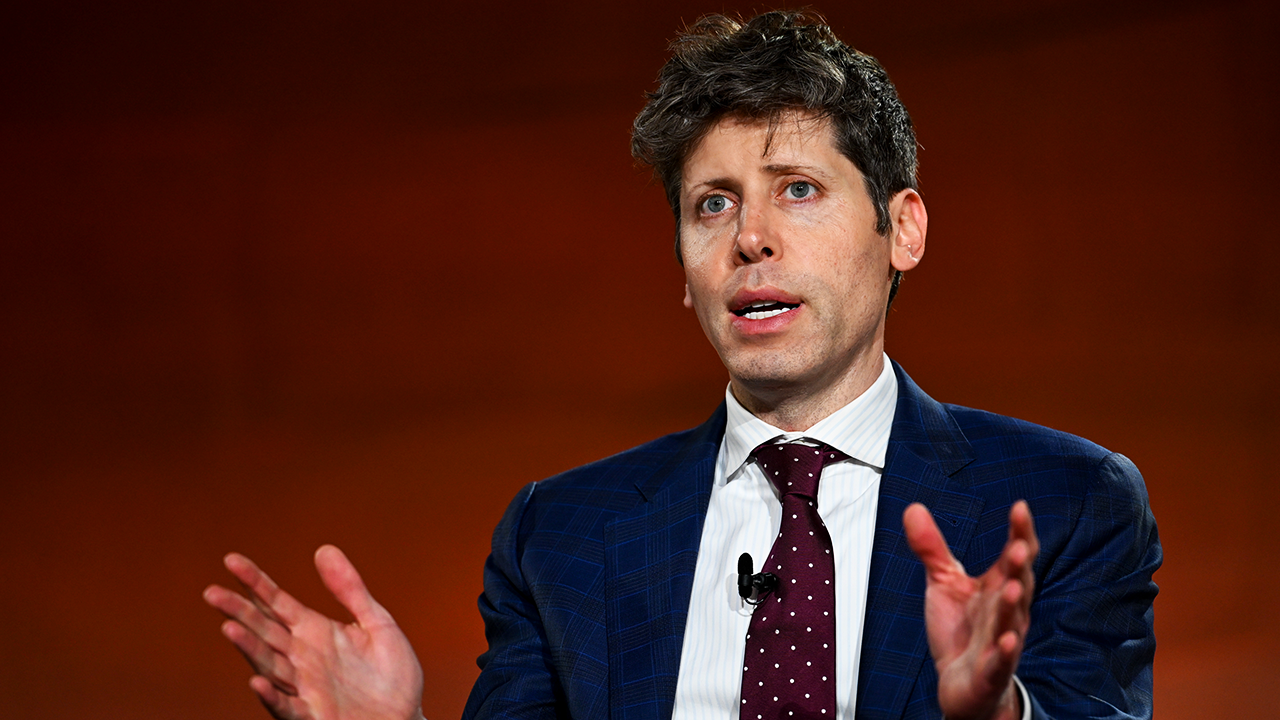
OpenAI Confidentially Submits Draft S-1 to the SEC — Targets Possible $1T Valuation With Goldman Sachs and Morgan Stanley as Bookrunners
OpenAI publicly confirms a confidential S-1 draft to the SEC, joining Anthropic on the IPO ramp without committing to a calendar.
What is it?
On June 8, 2026, OpenAI confirmed it has confidentially submitted a draft S-1 registration to the SEC. OpenAI said it disclosed the filing itself "because we expect it to leak," with Goldman Sachs and Morgan Stanley as lead bookrunners and a possible valuation range topping $1T per Reuters.
How does it work?
A confidential S-1 is reviewed privately by the SEC before any public registration, letting companies start the process while preserving the option to delay or abandon. OpenAI framed the submission as preparatory — "gives us the option to go public sooner if that ends up being best" — while noting there are things easier to do as a private company.
Why does it matter?
Anthropic confidentially filed an S-1 on June 1, so both leading frontier labs are now in the SEC review queue within a week of each other. That sets up the first public-market reference points for AI-lab balance sheets, compute commitments, and revenue — a pivotal moment for the entire industry.
Who is it for?
AI-industry watchers, equity investors, and OpenAI employees and shareholders.
|
|
|
All releases at ai-tldr.dev
Simple explanations • No jargon • Updated daily
|
|