|
|
SECURITY
MAJOR
2026-07-10
Apple sues OpenAI — trade-secret suit names io Products and two ex-Apple execs
Apple takes OpenAI to court over alleged trade-secret theft tied to Jony Ive's hardware team.
What is it?
Apple's civil complaint, filed July 10, 2026 in federal court in Northern California, accuses OpenAI and its io Products hardware unit of coordinating the theft of Apple trade secrets, naming two former Apple engineers now at OpenAI.
How does it work?
Ex-VP Tang Tan allegedly used Apple project codenames in recruiting and asked candidates to bring confidential Apple hardware to interviews; ex-engineer Chang Liu allegedly downloaded 1,000+ pages of engineering documents on an Apple-issued laptop he failed to return.
Why does it matter?
Apple is seeking damages, an injunction against further use of the alleged secrets, and return of materials — a granted injunction could delay OpenAI's consumer AI device roadmap, pegged for 2028 and beyond.
Who is it for?
OpenAI hardware watchers, AI industry followers, and teams tracking the io Products device roadmap.
|
|

|
|
PAPER
MAJOR
2026-07-10
GPT-5.6 Sol Ultra proves Cycle Double Cover Conjecture — 64 subagents, one hour
OpenAI says GPT-5.6 Sol Ultra proved the 50-year-old Cycle Double Cover Conjecture using 64 cooperating subagents.
What is it?
OpenAI published a proof of the Cycle Double Cover Conjecture — a 1970s open problem in graph theory asking whether every bridgeless graph has cycles covering every edge exactly twice — produced entirely by GPT-5.6 Sol Ultra.
How does it work?
Sol Ultra spawned 64 subagents trained to cooperate, share context, and delegate sub-lemmas; the run lasted under one hour and synthesized the results into a single argument. OpenAI released the exact prompt alongside the PDF so third parties can try to reproduce the run.
Why does it matter?
If the proof holds up, it makes AI-driven mathematics a second data point (after May's Erdős disproof) rather than a one-off. The proof is not yet formalized in Lean; mathematicians are cautiously reviewing it.
Who is it for?
Graph theorists, math researchers, and anyone tracking AI capability on open scientific problems.
|
|
|
|
TOOL
MAJOR
2026-07-09
ChatGPT Work — OpenAI's Codex-powered agent for hours-long projects
OpenAI ships a Codex-powered ChatGPT that stays with a project for hours and turns goals into finished work.
What is it?
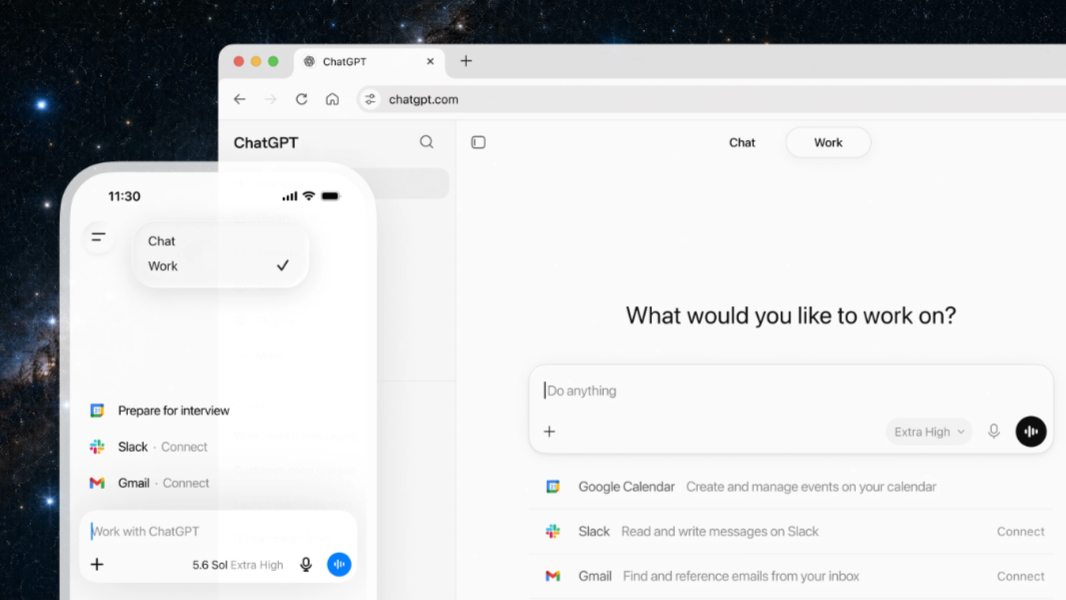
ChatGPT Work is an AI agent launched July 9 that treats a ChatGPT conversation as a persistent workspace, returning finished deliverables — spreadsheets, slide decks, documents, and live web apps — rather than stopping after each reply.
How does it work?
It runs GPT-5.6 Sol with Codex built in, plus a built-in browser and a scheduling layer that lets runs continue for hours; a parallel Sites beta turns a prompt into a live, interactive web page using the same model.
Why does it matter?
It's OpenAI's clearest bet yet that people will hand a whole project to an AI; it's live for Pro, Enterprise, and Edu today with Plus and Business rolling out in days — putting pressure on Claude Cowork and Google Antigravity.
Who is it for?
ChatGPT Pro, Enterprise, and Edu subscribers who want it to finish tasks, not just draft them.
|
|
|
|
TOOL
MAJOR
2026-07-09
AlphaEvolve GA — Google Cloud opens Gemini's code-optimization agent to everyone
The Gemini agent that beat decades-old algorithms now runs for every Google Cloud customer.
What is it?
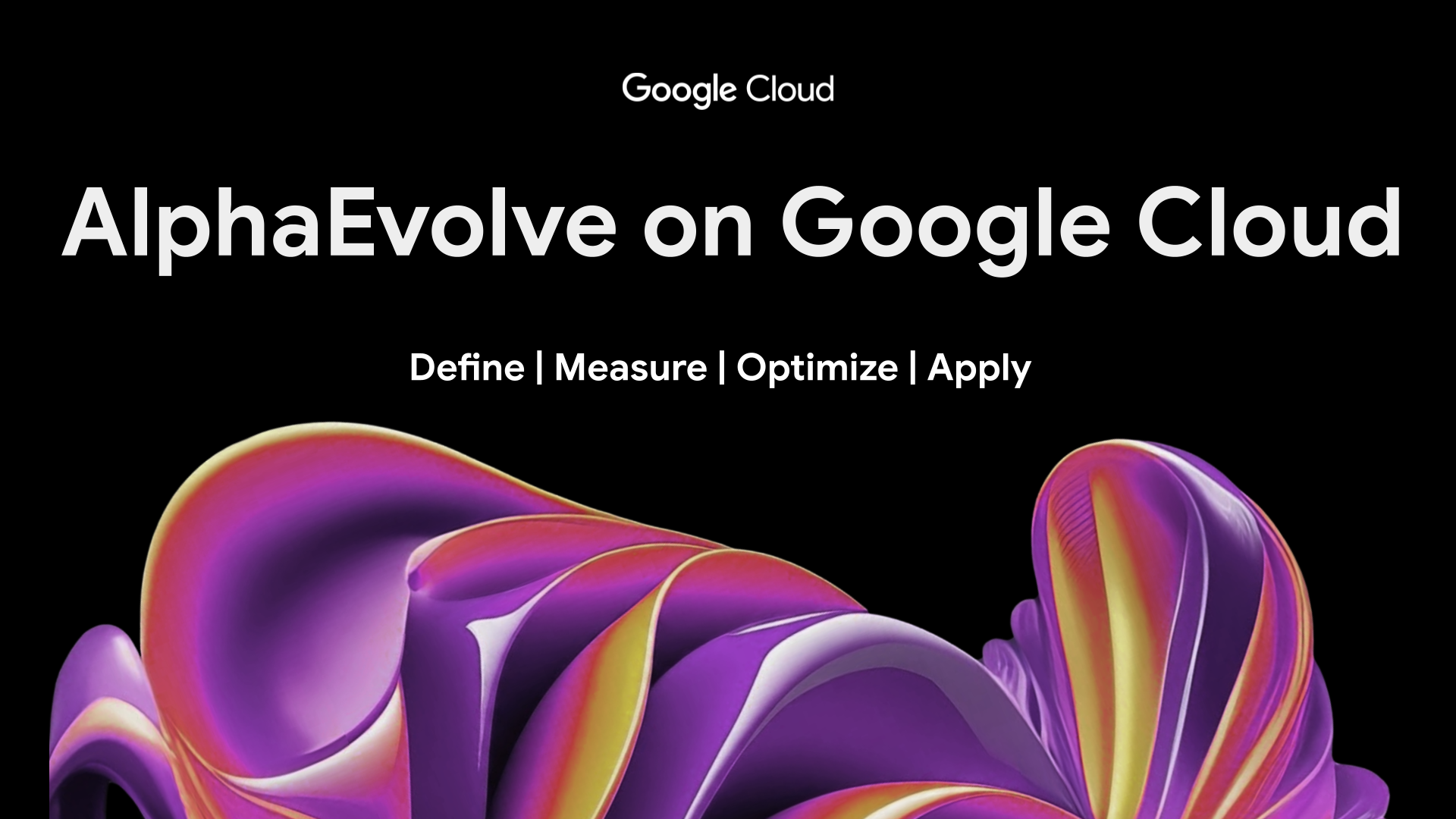
AlphaEvolve is Google DeepMind's evolutionary code-search agent, now generally available as a managed Google Cloud service after seven months in private preview with BASF, JetBrains, and Kinaxis.
How does it work?
You supply a baseline algorithm and a client-side evaluator that scores candidates; AlphaEvolve uses Gemini to propose variants, runs each through your evaluator, and iterates for hours or days — correctness stays pinned to code you control.
Why does it matter?
Any Google Cloud team with a hot algorithm — routing, chip placement, genomics pipelines, HPC kernels — can now throw a Gemini-scale evolutionary search at it without a private-preview invitation.
Who is it for?
Google Cloud teams with a specific algorithm they need to squeeze — logistics, semiconductor design, HPC, computational biology, quant finance.
|
|

|
|
REPO
MAJOR
2026-07-09
Colibri — pure-C engine runs GLM-5.2 744B on a 25 GB laptop
Colibri streams GLM-5.2's experts from disk so a 744B frontier MoE runs on a 25 GB laptop.
What is it?
Colibri is a 1,300-line pure-C inference engine (Apache-2.0, no CUDA, no PyTorch) that runs the full 744B GLM-5.2 mixture-of-experts model on about 25 GB of RAM. It hit 769 points on Show HN and 1,600+ stars in a day.
How does it work?
It keeps GLM-5.2's dense layers (~9.9 GB at int4) resident in RAM and streams the model's 21,504 expert modules from NVMe on demand; a speculative decoder and compressed persistent KV-cache cut costs on long conversations.
Why does it matter?
Frontier-scale open weights normally need multi-GPU rigs; Colibri puts a 744B model on a laptop you already own — cold speed is 0.05–0.1 tok/s, warm speculation hits 2.2–2.8 tokens per pass, and ~1.06 tok/s on Apple M5 Max.
Who is it for?
Local-inference tinkerers and cost-sensitive developers who want to explore GLM-5.2 without a GPU rig.
|
|

|
|
TOOL
MAJOR
2026-07-09
Reflect with Claude — Anthropic adds a screen-time dashboard to Claude
Anthropic launches an AI "screen-time" dashboard that asks whether the way you use Claude matches your goals.
What is it?
Reflect with Claude is a beta feature that gives Claude a usage dashboard — it summarises which topics you've been discussing and which task types you run, across 1, 3, 6, or 12 months of chat history, then invites a conversation about whether that fits your goals.
How does it work?
Reflect reads Claude's existing memory of past conversations and clusters it into topic buckets and time bands; on top of the summary it surfaces reflective prompts and lets users set quiet hours or schedule a break nudge after a chosen amount of use.
Why does it matter?
It's the first serious "screen-time" feature from a frontier lab — Anthropic is deliberately nudging users to use Claude less at times, a departure from engagement-maximising design at an AI assistant.
Who is it for?
Consumer Claude users on Free, Pro, and Max who have memory turned on and want visibility into how their AI use is trending.
|
|

|
|
ECOSYSTEM
MAJOR
2026-07-09
ChatGPT Atlas sunset — OpenAI kills its standalone AI browser after nine months
Nine months in, OpenAI's Atlas browser is being retired into a ChatGPT desktop app and a Chrome extension.
What is it?
ChatGPT Atlas, OpenAI's Chromium-based AI browser launched in October 2025, is being discontinued with an August 9, 2026 deprecation target — the second product retirement under CEO Fidji Simo's "eliminate side quests" push.
How does it work?
Atlas's agentic features move to two replacements: a refreshed ChatGPT desktop app with multi-tab browsing and downloads, and a new ChatGPT Chrome extension that gives ChatGPT access to any page in your existing browser.
Why does it matter?
Atlas users have a one-month migration window before the product stops working; teams that built workflows around Atlas need to move to the ChatGPT desktop app or Chrome extension before August 9.
Who is it for?
Current Atlas users who need to migrate, and teams evaluating AI-in-the-browser strategies going forward.
|
|
|
All releases at ai-tldr.dev
Simple explanations • No jargon • Updated daily
|
|