|
|
TOOL
MAJOR
2026-08-24
Claude Code 2.1.243 — the install drops from 340 MB to 75 MB
A lighter Claude Code: 75 MB to install, 40-70 MB less memory per session, plus four new settings for organizations.
What is it?
Claude Code 2.1.243 shrinks the native install from about 340 MB to about 75 MB by compressing the binary with zstd. The same release frees roughly 40-70 MB of memory per session and starts faster.
How does it work?
The size win comes from zstd compression on the native binary plus on-demand code loading, so the whole bundle no longer stays resident in memory. Caching is split in two: the main conversation can hold a 1-hour prompt cache while subagents stay at 5 minutes.
Why does it matter?
Smaller downloads and lower memory make Claude Code cheaper to run in CI and on constrained laptops, where a 340 MB auto-update on every release was real bandwidth. The managed settings also matter to platform teams: contracted per-model rates now drive /cost reporting, and keyless Console sign-in unblocks organizations that don't allow developers to hold API keys.
Who is it for?
Developers and platform teams running Claude Code in CI or on constrained machines.
|
|
|
|
TOOL
MAJOR
2026-08-24
NVIDIA Groq 3 LPX — the agent inference chip enters full production
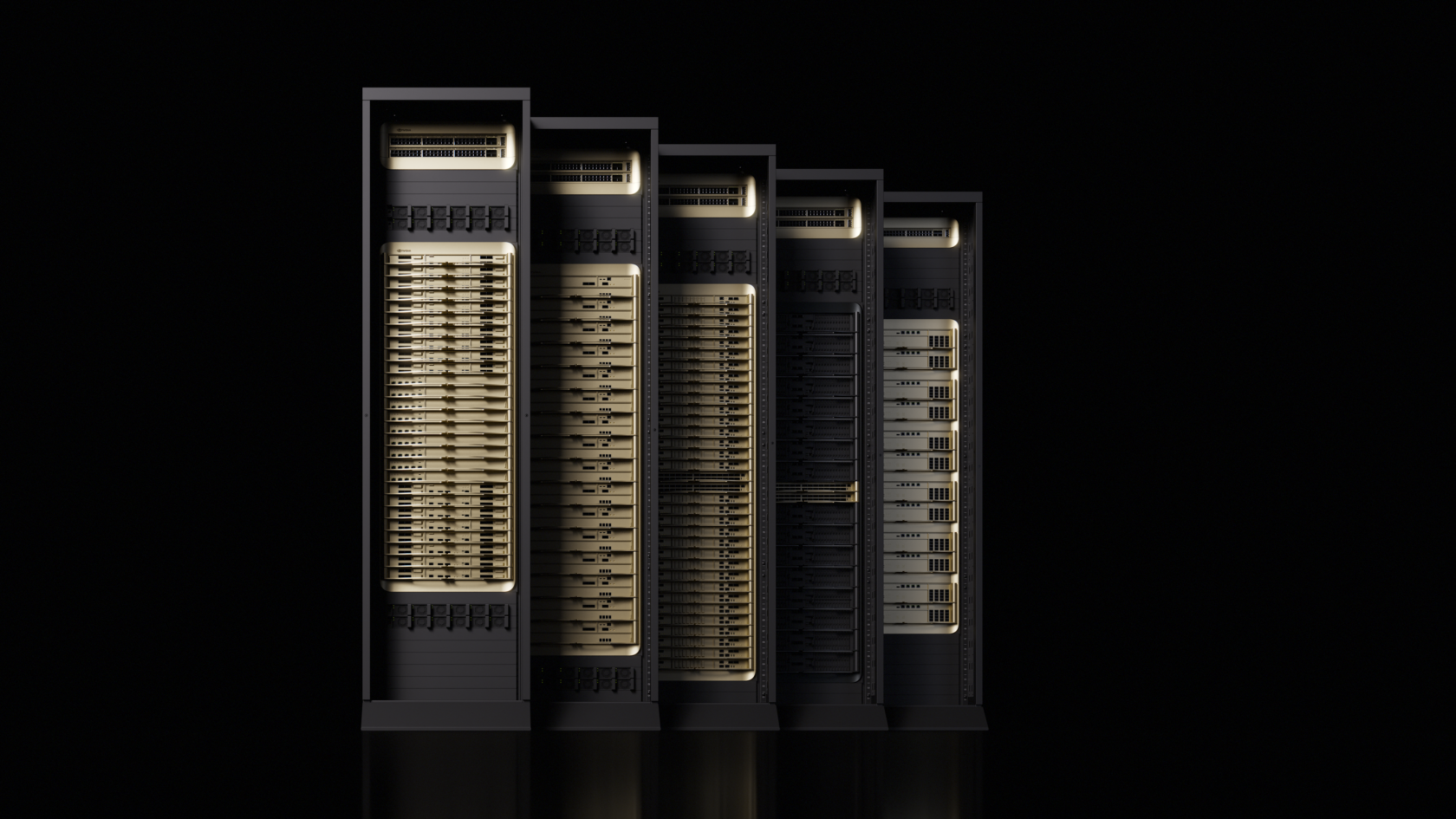
NVIDIA's Groq 3 LPX accelerator is in full production, built to decode tokens fast enough to keep AI agents responsive.
What is it?
Groq 3 LPX has entered full production — an NVIDIA accelerator built only for the token-generation half of AI inference. It extends the Vera Rubin NVL72 platform, so a rack can run both context processing and token decoding together.
How does it work?
Inference splits into two jobs: Vera Rubin GPUs read and process long context, while LPX accelerators decode output tokens — the latency-critical step. Running Gemma 4 31B with a 100,000-token context, Artificial Analysis measured 3,400 output tokens per second.
Why does it matter?
Agents spend most of their wall-clock time waiting on token decoding, so a chip aimed at that step changes how long a coding or research task takes. NVIDIA says Groq 3 LPX is 4x more responsive than the nearest alternative platform on latency-sensitive work.
Who is it for?
AI infrastructure teams and inference providers looking to reduce agent response latency at scale.
|
|
|
|
MODEL
MAJOR
2026-08-24
Apodex 1.1 — an agent model that finishes whole jobs, with 35B open weights
Apodex 1.1 works through long tasks end to end, and its 35B Mini version comes with open weights under Apache-2.0.
What is it?
Apodex 1.1 adds an Agent Team mode that splits one job across sub-agents running in parallel and folds their results back into the main task. It works directly with files, data and code — opening a CSV, running an analysis, and checking its own claims — rather than stopping at a written summary.
How does it work?
Training uses PIVOT-RL, which finds the few decision points in a long run that actually changed the outcome, so learning still works when the only signal is a final score. A Statement Review step verifies key claims before an answer is delivered.
Why does it matter?
The Mini version (35B, Apache-2.0) scores 50.2 on FrontierFinance and 27.7 on APEX-Agents, so a team can run long-horizon agentic work on its own hardware. FrontierAgent, the open-source framework released alongside it, brings the same setup to a local terminal.
Who is it for?
Research, finance, and analyst teams that need an agent to complete multi-step tasks end to end, not just generate a report.
|
|

|
|
MODEL
MAJOR
2026-08-24
Thomson 1.0 Small — Thomson Reuters ships its own 35B legal and tax model
A legal and tax specialist model, trained on Westlaw-grade content, with a small open-weight version anyone can download.
What is it?
Thomson is Thomson Reuters' first language model built in-house rather than licensed from a frontier lab. The company spent $40 million to specialize it on decades of its own legal, tax, regulatory and news content. Thomson-1.0-Small is published on Hugging Face with open weights for academic and non-commercial use.
How does it work?
Thomson-1.0-Small is a mixture-of-experts model: 35B total parameters with only 3B active per token, giving it the accuracy of a large model at the inference cost of a small one. It has a 262,144-token context window and an agentic Deep Research mode that forces tool use and citations to reduce hallucinations.
Why does it matter?
Owning the model means Thomson Reuters controls the inference bill for high-volume document review instead of paying frontier-lab API rates. The open-weight small version also gives legal and AI researchers a real, downloadable domain model to evaluate — something the industry rarely gets.
Who is it for?
Legal and tax technologists, domain-model researchers, and anyone curious what a $40M proprietary training run produces.
|
|
|
|
TOOL
MAJOR
2026-08-24
Tempus ECG-PH — FDA clears AI that spots pulmonary hypertension in a routine ECG
An FDA-cleared AI that reads a routine ECG and flags patients who may have pulmonary hypertension.
What is it?
Tempus ECG-PH is now FDA-cleared to screen for pulmonary hypertension using an ECG the clinic already takes. It reads a resting 12-lead recording and returns a binary yes-or-no signal about raised pressure in the lung arteries, intended for patients aged 40+ with cardiovascular symptoms and no known history of the condition.
How does it work?
The software looks for patterns across the 12 ECG leads that correlate with a mean pulmonary artery pressure above 20 mmHg — the clinical threshold for pulmonary hypertension. It returns a binary output meant to be read alongside the ECG, symptoms, and clinical history; it is not a stand-alone diagnosis.
Why does it matter?
Pulmonary hypertension affects up to 10% of adults over 65 but is often missed because early symptoms are vague and the gold-standard test is invasive. A flag on a recording clinics already collect gives cardiologists a cheap first filter for who needs an echocardiogram next.
Who is it for?
Cardiologists and primary-care clinicians screening patients for undiagnosed pulmonary hypertension.
|
|

|
|
ECOSYSTEM
RUMOR
2026-08-23
Hugging Face explores a sale — reports put the price at $13B or more
Business Insider reports Hugging Face is testing buyer interest at a price close to triple its last public valuation.
What is it?
Hugging Face has been testing interest from buyers in a sale worth $13 billion or more, according to Business Insider — picked up by Reuters and TechCrunch. No buyer has been named and no deal has been agreed. The company last raised in 2023 at a $4.5B valuation.
How does it work?
The reporting rests on unnamed sources who say terms are being discussed. Business Insider is the only outlet with original sourcing. A named acquirer, a regulatory filing, or a statement from co-founder Clément Delangue would confirm it; a new funding round instead of a sale would point the other way.
Why does it matter?
Hugging Face hosts more than 2 million models, 1 million applications and 500,000 datasets — almost every ML workflow touches it. Whoever controls the hub sets the hosting terms, default licences, and which formats stay free to publish.
Who is it for?
ML engineers and open-model publishers who treat the Hub as permanent free infrastructure — now a reason to check whether weights and datasets are mirrored elsewhere.
|
|

|
|
SHOWCASE
NOTABLE
2026-08-23
Varkos — a local AI companion that talks while it plays Skyrim with you
A demon-dog companion that hears you, acts in the world, and answers out loud in under half a second — all on local models.
What is it?
Varkos is an AI character that plays Skyrim alongside you instead of waiting for commands. It keeps an always-on microphone open, tracks the game world, holds persistent plans, and speaks back in a voice — all from local models running on an M4 MacBook.
How does it work?
Speech reaches Varkos through an optimized Qwen3-ASR 1.7b with a custom streaming harness; replies come back through PocketTTS-Raven and Qwen-3-TTS. An Action Latent Encoder decides what the character does in the game, mixing embeddings, classifiers, and rules.
Why does it matter?
The latency budget is the point: 40-80 ms for voice-to-text and a full spoken reply in under 500 ms — the range where a companion stops feeling like a chatbot. The PocketTTS-Raven component is already open-sourced.
Who is it for?
Game developers and voice-agent builders interested in real-time, low-latency AI companions on local hardware.
|
|
|
All releases at ai-tldr.dev
Simple explanations • No jargon • Updated daily
|
|