|
|
MODEL
SEISMIC
2026-08-03
Qwen3.8-Max — Alibaba's 2.4T flagship ships official with a full benchmark table
Qwen3.8-Max lands as Alibaba's official 2.4T-parameter, 95B-active MoE flagship with published benchmarks and $2/$6 per-million-token pricing.
What is it?
Qwen3.8-Max is Alibaba's flagship large language model — 2.4 trillion parameters, 95B active per request, with a 983,616-token input window and native text, image, video, and document handling in a single call. API access is live on QwenCloud today; open weights land next week.
How does it work?
Sparse mixture-of-experts routing keeps active compute low while total capacity climbs — only 95B of 2.4T parameters fire per token. The API speaks both OpenAI and Anthropic wire formats.
Why does it matter?
Qwen3.8-Max scores 86.6 on Terminal-Bench 2.1 (vs. GPT-5.6 Sol's 88.8 and Claude Opus 4.8's 84.6) at $2 in / $6 out per million tokens — roughly a third of Fable 5's list rate, with open weights coming.
Who is it for?
Coding agents, autonomous-workflow builders, and teams evaluating a frontier alternative to Sol or Opus at Chinese-lab pricing.
|
|

|
|
SECURITY
MAJOR
2026-08-02
Apple caps bug-bounty submissions — AI-slop reports buried a real $200K macOS flaw
Apple's bug-bounty inbox filled up with AI-generated 'flaws,' so Apple capped submissions — and then a real macOS root exploit couldn't get through.
What is it?
Apple has added a per-researcher submission cap and a 30-day cool-off period on its Feedback Assistant bug-bounty channel after a flood of AI-written vulnerability reports swamped reviewer time — and a real macOS Screen Sharing exploit (CVE-2026-43760, worth $100K–$200K) couldn't get through.
How does it work?
Once a reporter trips the cap, they must wait 30 days or request a quota bump. The rate-limit doesn't distinguish AI-generated fakes from real exploits — Italian startup Bynario had to contact Apple directly to get CVE-2026-43760 filed and fixed in macOS Tahoe 26.6.
Why does it matter?
If AI-generated reports can effectively DDoS a coordinated-disclosure inbox, other vendors will hit the same wall — and 'AI slop' becomes its own vulnerability class. Meanwhile Apple itself runs Anthropic and OpenAI models to hunt bugs internally and shipped five times more fixes than usual in its latest update.
Who is it for?
iOS/macOS security researchers, bug-bounty program owners, and vulnerability-disclosure policy teams at other vendors.
|
|

|
|
ECOSYSTEM
MAJOR
2026-08-02
EU AI Act Article 50 takes effect — chatbots must disclose, deepfakes labeled
The EU AI Act's Article 50 transparency rules begin enforcement today across the EU single market.
What is it?
EU AI Act Article 50 requires interactive AI systems to disclose they are AI, generative-AI providers to machine-readably mark synthetic output, and deployers to label deepfakes of real people. Effective August 2, 2026 for anyone serving EU users — roughly 450 million people.
How does it work?
Article 50.1 requires chatbot disclosure in the chat surface itself (not buried in ToS). 50.2 requires machine-readable marks on AI-generated text, images, audio, and video. The AI Office now has full penalty authority over general-purpose AI model providers.
Why does it matter?
Non-compliance now carries fines of up to €15M or 3% of global annual turnover. The one-year enforcement grace period that began August 2, 2025 is over — the AI Office can act today.
Who is it for?
Developers and platforms serving EU users — any product with a chatbot or AI-generated content distribution must comply now.
|
|
|
|
MODEL
MAJOR
2026-07-31
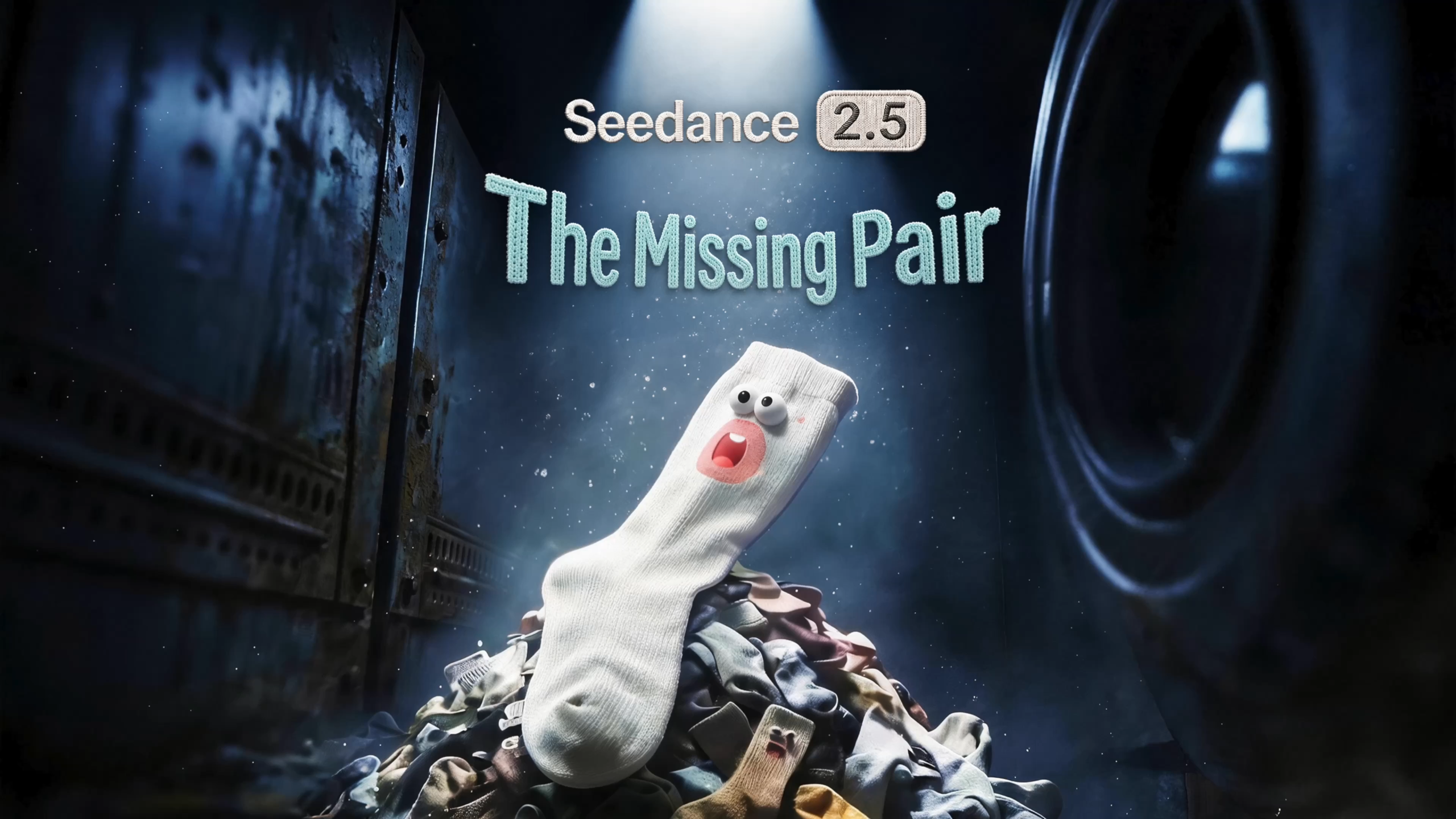
Seedance 2.5 — ByteDance's video model doubles to 30 seconds per generation
ByteDance's Seed lab doubles single-take video generation to 30 seconds with 50-asset multimodal referencing.
What is it?
Seedance 2.5 generates 30 seconds of high-quality video in a single pass — double Seedance 2.0's limit — and accepts up to 30 images, 10 video clips, and 10 audio clips as reference material per input. It's rolling out on Jimeng AI and Doubao Pro now.
How does it work?
Built on Seedance 2.0's unified audio-video architecture, with new timestamp-level editing and a green-screen mode for localized changes. Reference assets guide characters, scenes, camera, and audio simultaneously — all in one call.
Why does it matter?
A 30-second single take with 50 reference assets covers most ad, storyboard, and short-film workflows in one call — and it ships as OpenAI's Sora product was discontinued, making Chinese video models the practical default for many teams.
Who is it for?
Video creators, ad agencies, and film pre-production teams who hit the 15-second wall on the previous generation.
|
|

|
|
VIDEO
NOTABLE
2026-08-03
Two Minute Papers — 'Another DeepSeek Moment Has Arrived'
Two Minute Papers frames DeepSeek V4-Flash 0731 as the next 'DeepSeek moment' — a low-cost Chinese model catching the frontier again.
What is it?
Károly Zsolnai-Fehér walks through DeepSeek V4-Flash 0731 — promoted from April preview to official on July 31 — and asks whether it triggers another cost shock like the original DeepSeek V3 did last year.
How does it work?
Architecture unchanged from the April preview; the score jump to 82.7 on Terminal-Bench 2.1 (near Claude Opus 4.8) came entirely from extra post-training. Side-by-side coding demos show it driving agent workflows previously in the frontier-lab-only tier.
Why does it matter?
DeepSeek V4-Flash 0731 is why 'race to zero' is trending again — near-frontier coding performance at a fraction of frontier prices. This episode is the fastest visual explainer of what the 0731 build actually does.
Who is it for?
AI engineers and teams weighing whether to move agent workloads off Opus or Sol to a lower-cost Chinese-lab alternative.
|
|

|
|
ARTICLE
NOTABLE
2026-08-02
Nathan Lambert: 'Open artifacts #23' — open-model consolidation isn't happening
Interconnects #23 argues the open-model field is widening, not consolidating — more labs are training strong open models than predicted.
What is it?
Nathan Lambert and Florian Brand's Interconnects essay catalogs about ten open-model releases from the past month — Thinking Machines' Inkling (975B MoE), Tencent's Hy3, Poolside's Laguna S 2.1, Meituan's LongCat-2.0, and more — and pushes back on the 2026 consolidation thesis.
How does it work?
The essay walks through each recent release, showing labs spread across the U.S., China, Europe, and specialty accelerators — treating token production as a business and expanding the Pareto frontier rather than compressing it.
Why does it matter?
If Lambert is right, open-model diversification is the actual 2026 pattern — more labs entering the field, more geographies training frontier open weights — which has major implications for compute strategy and licensing decisions.
Who is it for?
Open-source AI followers, ML researchers, and infra leads tracking which open models to evaluate next.
|
|
|
ARTICLE
NOTABLE
2026-08-02
Simon Willison — three open letters split AI labs on open weights and safety
Simon Willison reads three back-to-back AI open letters and maps where Microsoft, Anthropic and 1,324 lab employees actually disagree.
What is it?
Willison's post walks through three open letters published between July 24–28: Microsoft's 'Open Weights and American AI Leadership' (235 co-signers including NVIDIA, Amazon, Y Combinator, OpenAI), Anthropic's solo position on open-weights models, and 'Pacing the Frontier' signed by 1,324 frontier-lab employees.
How does it work?
Willison quotes each letter, contrasts the arguments — broad-community safety review vs. distillation risk vs. government-paced AI research — and flags who is conspicuously absent: Anthropic did not sign the Microsoft letter and published its own rebuttal two days later.
Why does it matter?
These three letters are the clearest public split yet between the open-weights camp and the safety-cautious camp, and any US or EU rulemaking on model distribution over the next year will be shaped by which side lawmakers listen to.
Who is it for?
AI practitioners, policy watchers, and anyone tracking the open-weights vs. safety debate at the policy layer.
|
|
|
All releases at ai-tldr.dev
Simple explanations • No jargon • Updated daily
|
|