What people made |  | | Anthropic, the company behind Claude, filed to list on the Nasdaq as ANT, with trading expected in mid-November, and the filing shows both sides of the AI boom. Revenue reached $16.3 billion in the first half of 2026, 14 times as much as a year earlier. | Yet Anthropic has lost money every year since it was founded: $42 billion last year and $80.7 billion in the first six months of this one. Most of that is an accounting charge on its convertible notes, and running the business lost $693 million, but the bills keep growing: it has agreed to spend up to $120.5 billion on computing from SpaceX's AI unit, formerly xAI, alone. Blackstone, which leads a $63 billion deal to pay for Anthropic's chips, now expects its debt to be rated junk after the listing, TechCrunch reports. | Investors spent the week asking when all that spending pays off. Alphabet's shares fell 12.6% on Thursday, their worst day ever, wiping out about $500 billion after a weak quarter for search ads, which a Google executive partly put down to its AI search mode showing fewer of them. On Friday tech stocks lost more than $1 trillion between them, as Amazon said it would spend "meaningfully more" next year and Intel warned of weaker sales, NBC News reports. |
| This week in AI | OpenAI says its AI disproved a famous assumption | OpenAI announced three discoveries in mathematics, computer science and physics. The one that drew most attention is a 67-page paper in which, OpenAI says, its AI models disprove the Exponential Time Hypothesis, an assumption computer scientists rely on about how hard a classic kind of logic puzzle is to solve. Three leading computer scientists are checking the proof and wrote that their involvement "should not be taken as certification of the claim", Decrypt reports. It doesn't settle the bigger P versus NP question, and OpenAI says turning it into anything practical "will require significant further research". On Hacker News, where the announcement and the paper drew close to 2,000 points between them, one of the top comments credited OpenAI for bringing in mathematicians before announcing this time. |
| Google's new top model goes to security teams first | Google released Gemini 4 Carbon, its new top model, and claims it's the best yet at finding and fixing security holes. For now only selected security teams can use it, and Google gives no date for everyone else. Its launch post drew about 34,000 likes on X, but on Hacker News the top comments complained that Google keeps announcing models long before people can use them. |
| Mistral gives away its biggest model | The French lab Mistral released Mistral Large 4 for anyone to download and run, businesses included; only companies that resell it as a service need a separate licence. It's far too big for a laptop, so most people will use it through Mistral's own service or others that host it. It drew 1,700 points on Hacker News, where one of the top comments read: "The more countries are in this game the better for us all." |
| A cheaper OpenAI model that works your computer | OpenAI's GPT-6.1 Terra is built to use a computer for you, filling in forms and clicking through apps. Paid ChatGPT plans get it in Codex and ChatGPT Work, and for developers it costs half what OpenAI charged before, BleepingComputer reports. In a demo by someone who works on ChatGPT and Codex at OpenAI, it filled in a long web form in 53.5 seconds. |
| Genie 4 builds worlds you can change by typing | Google DeepMind showed Genie 4, a model that generates a scene you can move through and change with typed instructions, now with sound. Only trusted testers can try it so far, and Google AI Ultra subscribers are next. On Hacker News, commenters pointed out details that change when something leaves the frame and comes back. |
| Chatbots lose to an old model at spotting skin cancer | A London dermatologist tested GPT-6 Astra and Claude Fable 5.1 on 200 skin lesions confirmed by biopsy. Choosing from six diagnoses, both named the right one 42% of the time; a 10-year-old image model trained for the job got 62%. If a mole worries you, show it to a doctor rather than a chatbot. |
| This week's innovations | Fixing devices instead of replacing them | Most of these fixes were a setting or a small program, not a new part. | | • | A gamer asked Claude to review and tune up their PC. It updated the SSD's firmware, switched on a memory setting that lifted the RAM from 2,133 to 3,200 MHz, and spotted the wrong display cable. Without it, they wrote, the slow SSD would have been "broken already, will buy new one". | | • | A student with a cracked laptop screen had Claude keep every window in the part that still works. It got about 27,600 likes, the second most of any pick this week. | | • | An OpenAI employee had ChatGPT write an app for a $300 embroidery machine, instead of paying for the $12-a-month app it comes with. | | • | A founder built a new home screen for their TV with Claude Code: no ads, a drawing board they share with their wife, and an AI assistant. | | • | Old PDP-11 memory costs about $1,000 a megabyte, so a former Microsoft engineer designed their own board with ChatGPT. It almost works: every odd memory address fails. |
|
| Homemade 3D lessons | Each of these interactive lessons was built by one person, some in a few days. The careful makers check every number before anyone learns from it. | 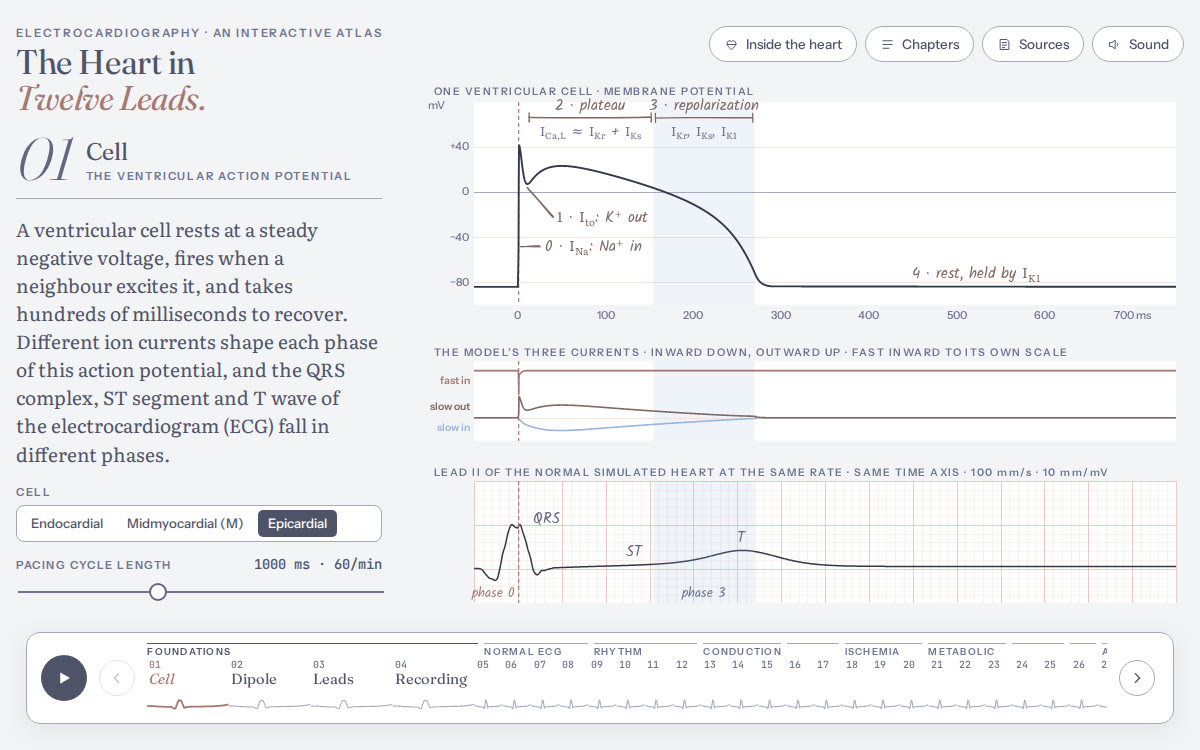 The Heart in Twelve Leads, a 27-chapter EKG course a psychiatry resident built with Claude Code. | | • | A developer in China gave away more than 50 3D science lessons for high school physics, chemistry, biology and geography. Each is one file of about 1 MB that works offline, from a USB stick or on a classroom whiteboard, and every number in it can be traced to a fact sheet that cites the textbook page. | | • | A psychiatry resident built a 27-chapter EKG course in which every tracing comes from one simulated 3D heart. They say they haven't fact-checked it beyond a few examples. | | • | A parent turned the PDF manual of their child's Bluetooth speaker kit into an animated 3D assembly guide with Kimi K3.1 Pro, then corrected what it got wrong, such as case screws that went in from the wrong direction. | | • | A software engineer's ESP32 lessons teach a small Wi-Fi chip one circuit at a time. |
|
| Games made by one person | Of the week's 31 game projects, 19 were built with Claude Opus 5.5, many of them with the AI working directly in Unreal Engine, Roblox or Blender. | |
| New products and tools | Models | 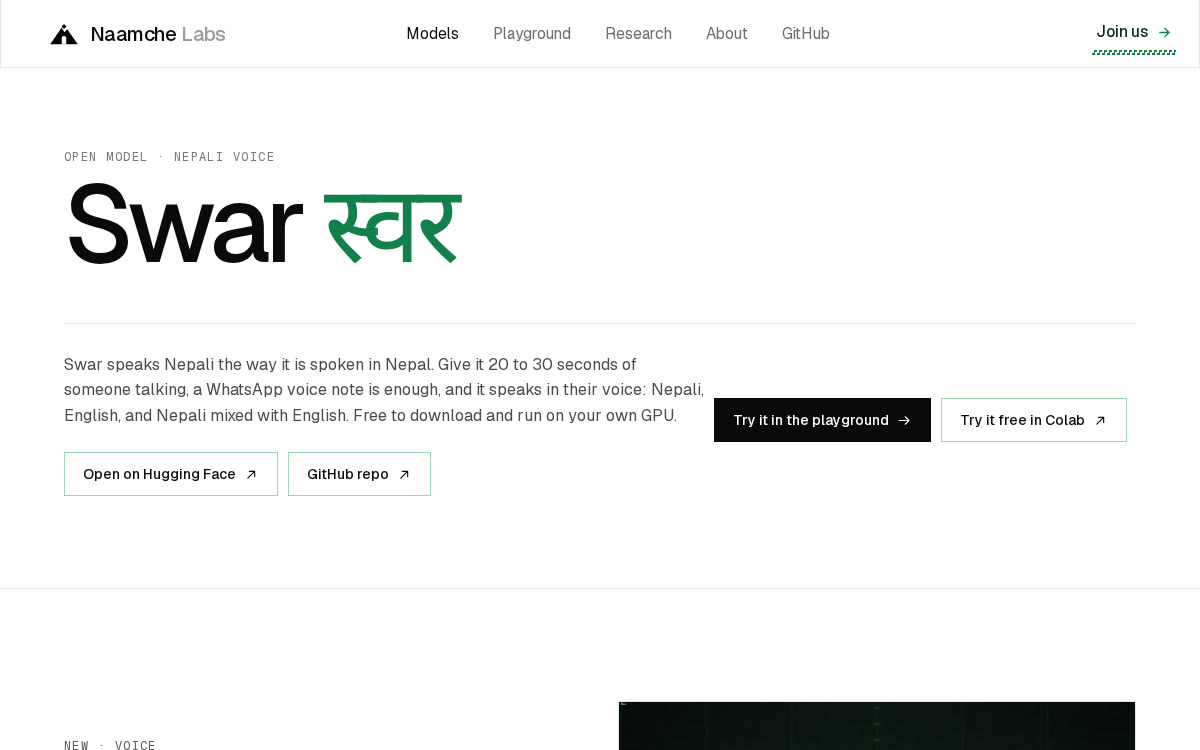 | Swar, from Naamche Labs, is a free Nepali voice model: give it 20 to 30 seconds of someone's voice and it speaks Nepali and English in that voice. Its makers say it mispronounces Nepali less often than ElevenLabs. |
| Apps | 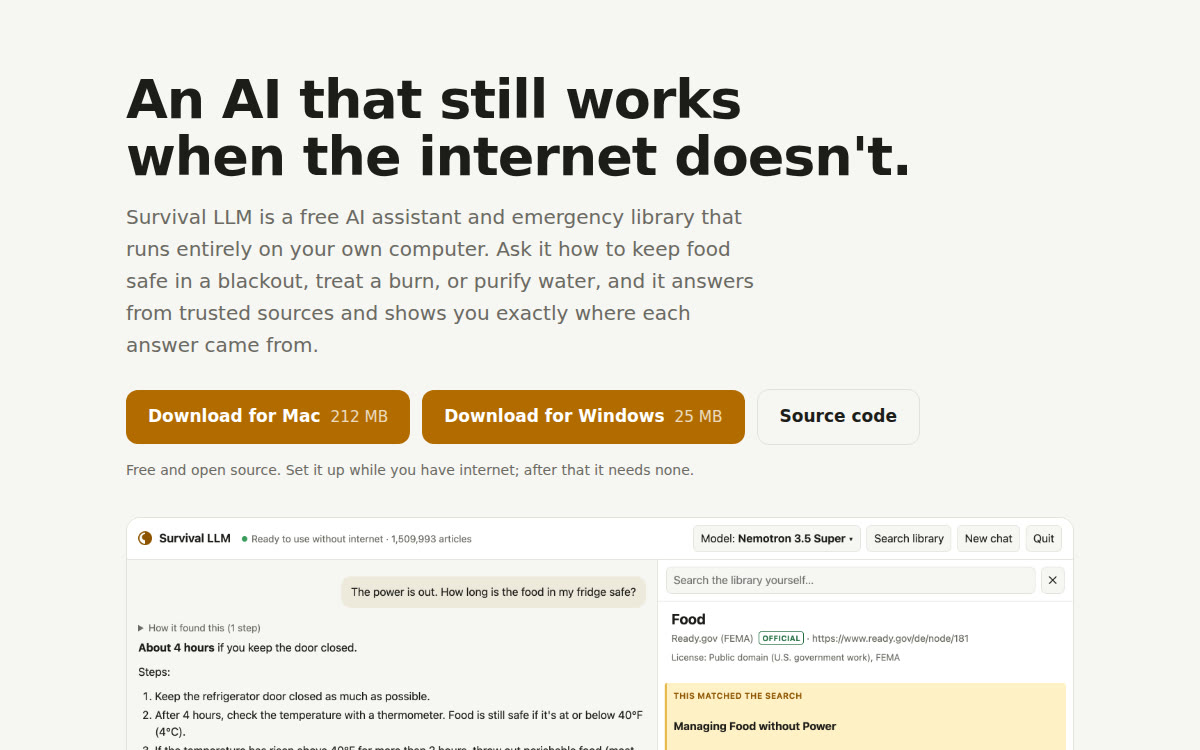 | Survival LLM is a free assistant and emergency library that runs entirely on your own computer and needs no internet once it's set up. It answers from medical references, FEMA and CDC guidance, survival manuals and about 930,000 Wikipedia articles, and shows where each answer came from. Version 0.4.1 came out on 29 October for Apple Silicon Macs and 64-bit Windows. |
| 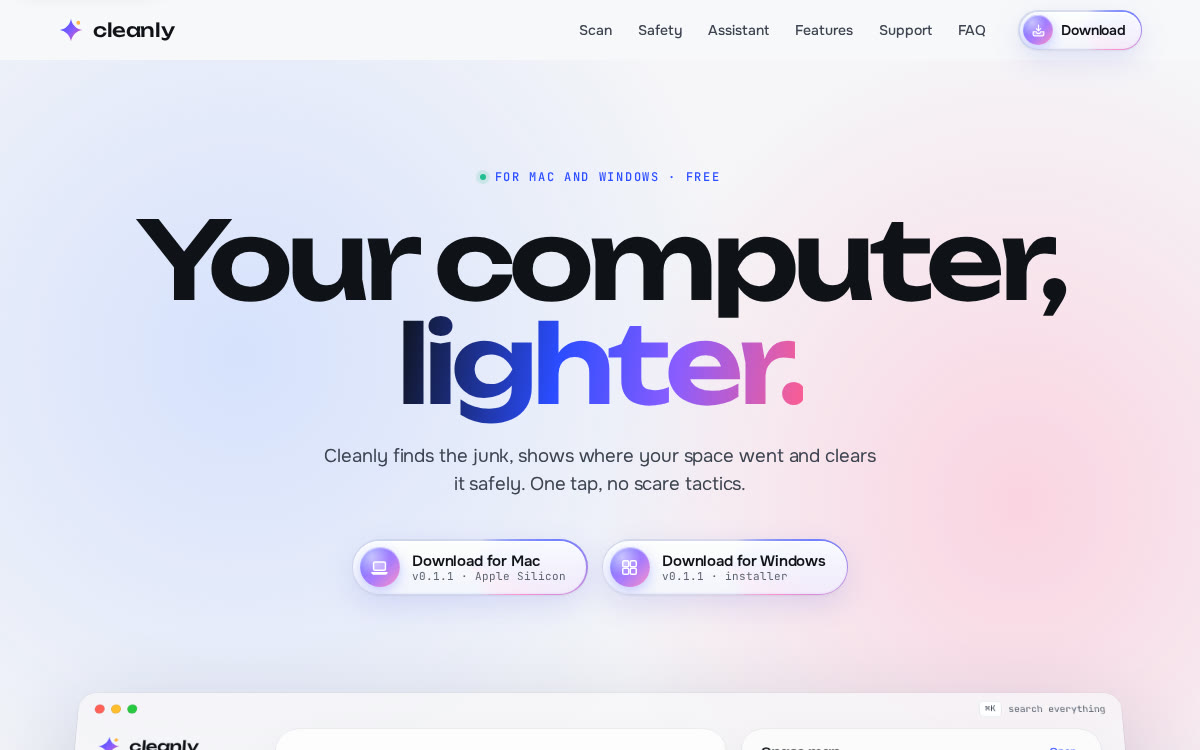 | Cleanly is a free cleaner for Macs and Windows PCs that finds junk files and shows where your disk space went, like CleanMyMac. Its maker built it with Claude Code and put the source on GitHub this week. |
| For creators | Unslop is a free Claude skill that reworks landing pages, dashboards and app screens that look AI-made into something that looks designed. It had more than 3,000 stars on GitHub two days after it went up. | Open Source Canvas is a free canvas for making AI video with models that run on your own computer through ComfyUI, modelled on Higgsfield's canvas but with no subscription. Its maker released it under the MIT licence on 29 October. | For developers | Mainplane is a free, open-source program that lets an AI model of your choice operate your computers, using their real browsers and apps, with controls over what it may touch. It runs on macOS, Windows or Linux, on one machine or across several, and its maker introduced it on X this week. | GEOInflow is free, open-source website analytics that shows which AI companies' crawlers read your site, which pages they skip, and how many visitors AI search sends you. It runs on your own server. |
| Made something with AI? Reply with the link. Every pick is on whatpeoplemade.com, with the original post. Unsubscribe |
|
|