
Hinkley Point and other news (4 December 2025)
The non-future of midcentury nuclear power stations, another local theatre from the 1970s, plus an ice rink, and updates on other news.
Ah, the west country. Quaint fishing villages. Moorland ponies. A scattering of cities amid the greenery.
Also, a hulking great nuclear power station. Or three.
This month’s round up of news covers Hinkley Point, the Taunton Brewhouse, an ice rink, a house for sale and updates on previously mentioned buildings.
Hinkley Point
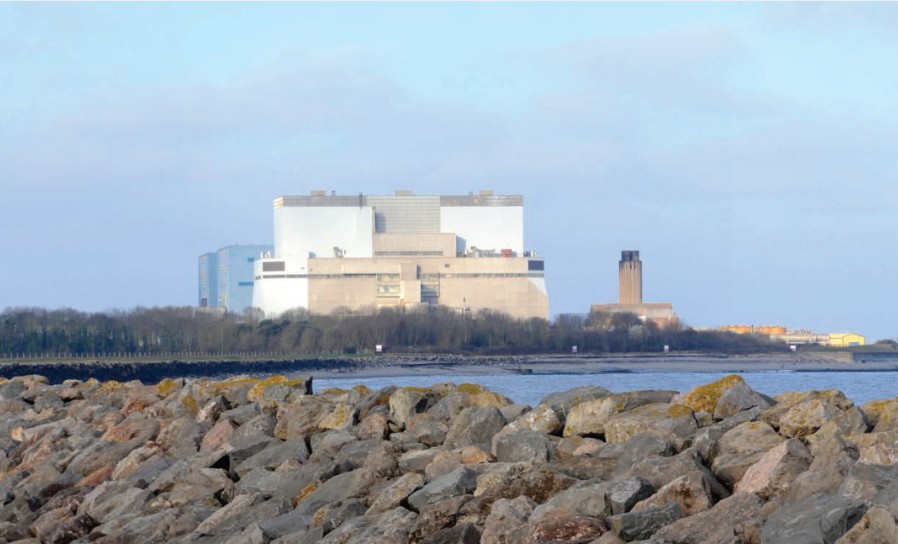
The last uranium rods were removed from Hinkley Point B this week. The reactors were turned off three years ago, and the building is now being decommissioned.
Mostly, when we talk about buildings being stripped out and demolished, the process is fairly quick. Even if asbestos is found. Decommissioning Hinckley Point B will take 95 years.
There are three nuclear power stations on Hinkley Point, a headland on the North Somerset coast. Hinkley Point A and B are both in the process of decommissioning. Hinkley Point C is under construction.
Work on Hinkley Point A started in 1957, with it being in operation from 1965 until 2000. The final demolition stage is projected to happen between 2081 and 2091. It’s two huge square blocks, clad in blue aluminium.
Hinkley Point B started to be built just two years after A started operating, in 1967. It came on-stream in 1976. It’s rather more of a concrete monolith, though the way the blocks of it fit together is oddly reminiscent of Battersea Power Station (1935 and 1955).
A quick search has not turned up a named architect for either power station. Both were built by the Central Electricity Board (CEB) and consortiums of building contractors. In 1959 the CEB were advertising for an assistant civil engineer to work along the chief engineer. Unless someone knows otherwise, this suggests both A and B were in-house, engineer-led designs.
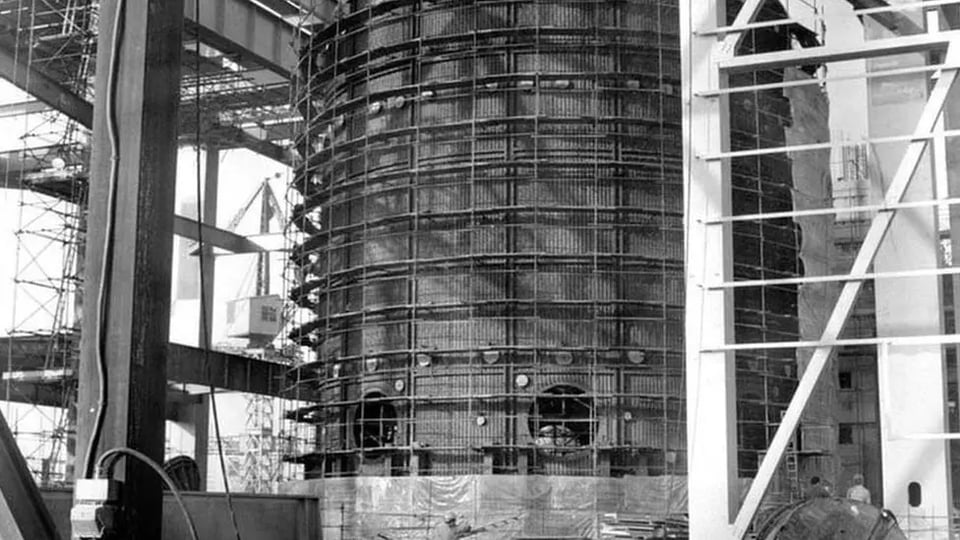
In contrast, Hinkley Point C has had at least three architectural firms involved in its design. Construction started in 2017 and it’s due to come onstream between 2029 and 2031. The building site has its own bus service and its own wharf on the Severn estuary. It employs 12,000 workers on site, due to rise to 15,000 next year. That’s nearly the same population as Nailsea 22 miles away.
Power infrastructure can have a new life after decommissioning. Both Bankside and Battersea coal-fired stations in London have been repurposed to become an art gallery and a mixed use retail/residential site. But Hinkley Point A and B can’t be repurposed, even if they were great architecture rather than utilitarian civil engineering.1 Unlike cooling towers, no-one will be campaigning to keep these structures as memorials to an industrial past. It’s a postwar modernism we all prefer not to dwell on, or near.
My deep dive into Tinside Lido (1935) is now FREE to read. This is about Wibberley’s Plymouth, the interwar version of the city that lies beneath the Abercrombie grid. Literally, in the case of the foreshore.
Paying subscribers can also settle in with a coffee to read my deep dive into the former Nailsea Library. This is a story about town planning - both in the 1960s and now - and is my first look at a repurposed building.
Nailsea Library was suggested by subscriber James. For next year I want to do more deep dives suggested by readers. So if you have a building you are curious about, do get in touch (reply to this email, or bug me on Bluesky).
Brewhouse Theatre
Taunton’s Brewhouse Theatre (Norman Branson and Somerset County Architects, 1976) has just secured funding from the town council to maintain the building.
The theatre’s operators lease the building from Somerset Council, with the terms indicating the landlord is responsible for maintenance and repair. Somerset Council have said they can no longer afford to do that. Taunton Town Council have stepped in with an offer of £105K a year for the next five years.
Norman Branson (1910 to 1993) designed several mid-century theatres, including Questors (1964) in Ealing and Rugby School Theatre (1974). There were plans for a £12million upgrade of the building, with a 2018 competition that appointed MICA as the architects. That was put on hold in 2019, ahead of the new unitary Somerset Council taking ownership of the building.
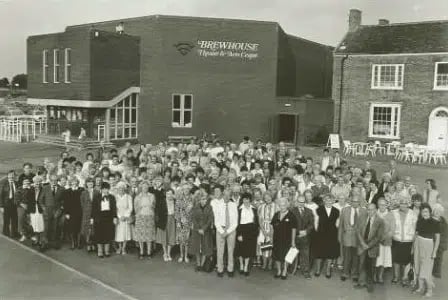
The theatre includes a hexagonal auditorium, hinted at by the outer brick clad shell of the building. Their first performance, back in 1977, was of Alan Ayckbourn’s The Norman Conquests. I can’t help but suspect that was a nod to the lead architect.2
In brief
Bath Fire Station decision
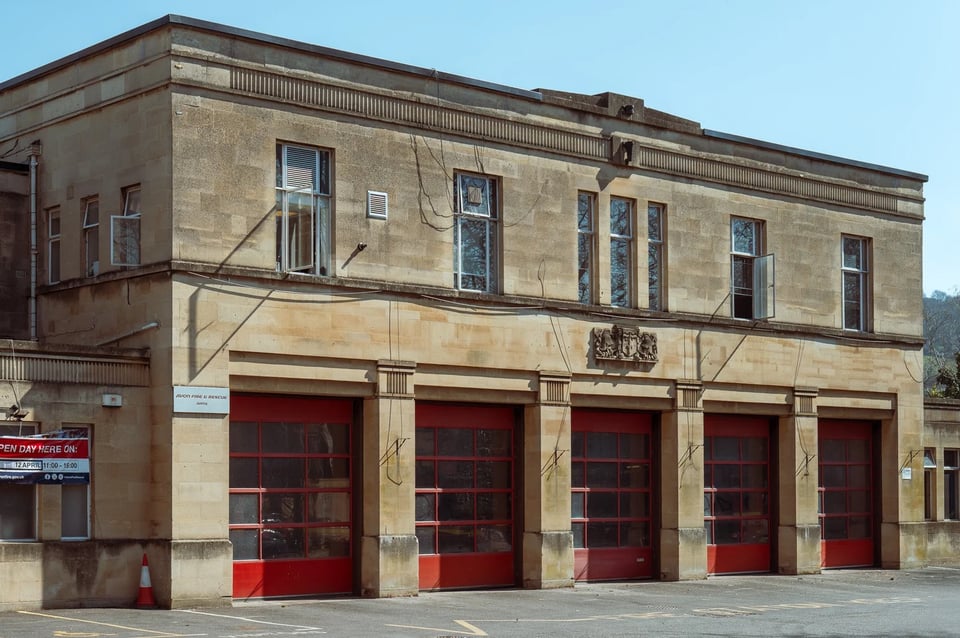
In unsurprising news Bath’s Fire Station (Molly Taylor and Alfred Taylor, 1939) is to be demolished unless a final appeal by Historic England changes the government’s mind.
BNES councillors approved the planning application to demolish and rebuild on 19 November.
Exeter’s mid-century police station keeps going on fire
In late November, the derelict Police Headquarters and Magistrate’s Court (1957) in Exeter went on fire. Twice. Despite warnings that the site is both dangerous to trespassers, and not properly secured against them.
This week revised details to the planning application to demolish it and build flats was resubmitted. A decision on it will be the only item discussed at a planning committee on 8 December. I wrote about the building back in July: it’s very generic and no-one is suggesting it should be kept.
Westover Ice Rink, Bournemouth
I’ve been saving this nostalgia article until the time of year when temporary ice rinks pop up all over the country.
Westover Garage and Ice Rink was built in the autumn of 1930 to the designs of Seal and Hardy. As the Echo wryly notes “Building a massive, refrigerated sheet of ice atop an immense motor garage on a busy thoroughfare was a significant undertaking.”
The resultant design was a joy, and part of Seal and Hardy’s impact on Bournemouth in the interwar years.
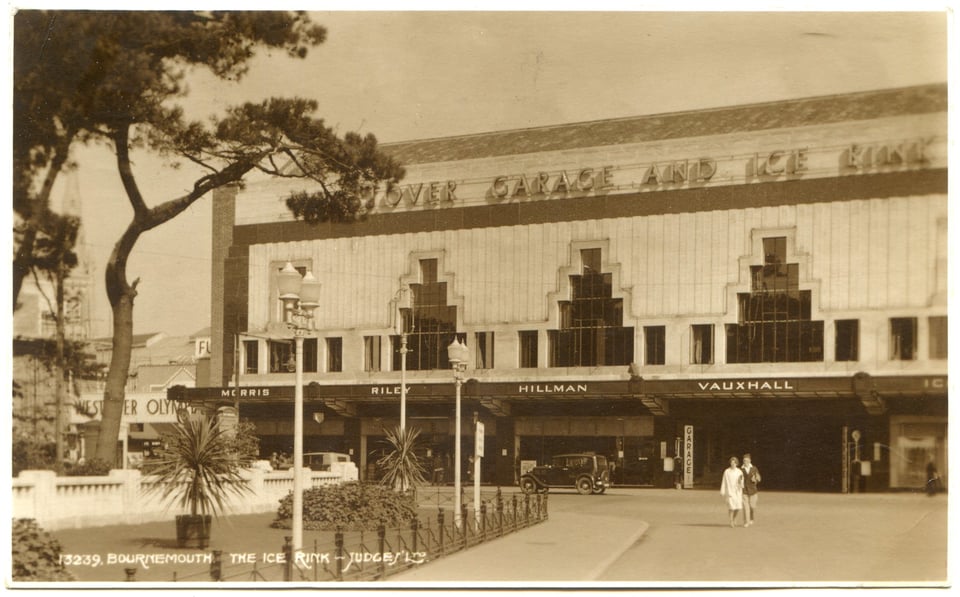
You can see some more photos and read a brief history of Westover in this Bournemouth Post piece.
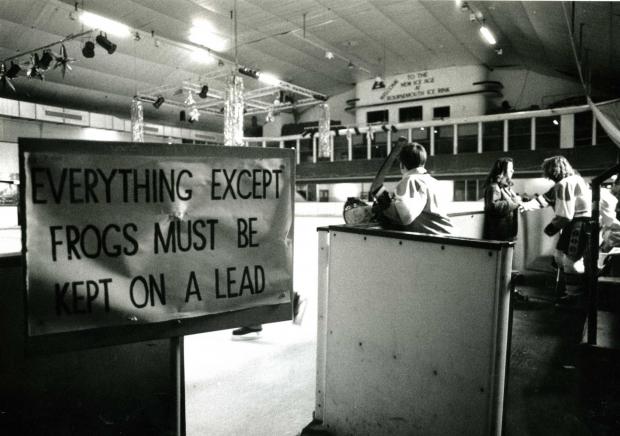
The building is still there: upstairs is a gym chain and downstairs are retail outlets.
Property for sale
If I cover domestic architecture it tends to be where it was council built, and to have some kind of emotional connection to people. But I do see the private houses that come up. And this one is within walking distance of a train station!
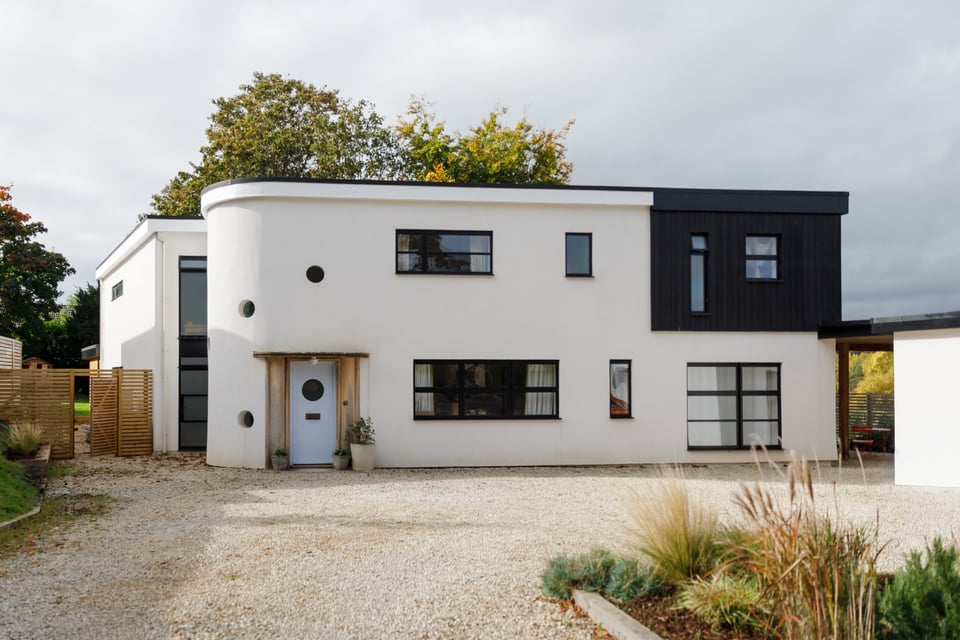
Kaylow (Ronald Vallis, 1951) in Frome, Somerset, has just gone on the market with The Modern House. Originally designed and built by Ronald Vallis, it’s been updated by his grandson Giles. It’s roughly 20 minutes from the station, with Frome being on the Bristol-Weymouth line (plus the odd stopping service to London).
You can read more about it in the Modern House’s journal, or take a look at the listing. It’s £1,350,000 though. (Thanks to Micky for sharing the listing.)
If you know of an event or news item you think I should know about, you can contact me on Bluesky.
Also, I’m starting to plan my 2026 deep dives. If you have a building you think would be a good topic, please let me know. I’m aware I’ve not done anything in Dorset yet.
If you’re enjoying this newsletter, feel free to share it with others.
If someone has sent you this, you can subscribe below.
A free sub will get you the weekly field notes and notice that a deep dive has been published.
A paid sub (£3 a month) will unlock the deep dives early, plus occasional bonus content and the warm knowledge that you’re supporting the project.
Although I rather like the blue twin boxes of Hinkley Point A, apart from the, y’know, the visceral fear of another Chernobyl or Fukushima happening in Somerset. ↩
I’ve written about Somerset County Council’s chief architect at the time, Bernard Adams, in my deep dive into the former Nailsea Library. ↩
