
Boscombe Pier and other news (23 Feb 2026)
A rare twentieth century pier, a question of definitions and local news items.
The signs of spring are arriving fast. The native bluebells I planted in an unloved shady patch of my garden have quietly sent their leaves up, and the council is collecting garden waste again.
The ground is so deeply sodden that my local park becomes a muddy lake at the slightest opportunity. A couple of days’ rain and we go back to checking if the trains are still running through the Somerset Levels’ waters. With luck, tomorrow will remain dry enough that I can go gadding about without being blown over or drenched.
Till then, here’s a midcentury pier and some other bits.
Boscombe Pier buildings (circa 1959, E. C. Whitaker)
Boscombe Pier itself was built in 1888 as a straightforward wooden pier for boats to dock beside. By the interwar years, it had been both acquired by Bournemouth Corporation and remodeled. I think this is where its simple concrete spans - reminiscent of Waterloo Bridge - came from. This may be when the elaborate Victorian entrance building disappeared.
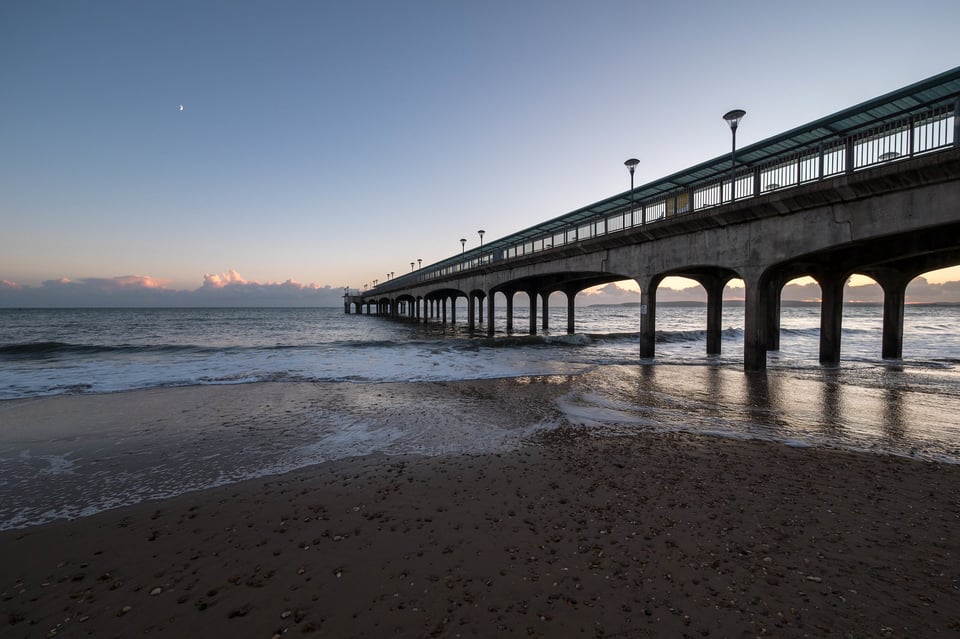
Come the 1950s and Bournemouth Borough Council, which had superseded the corporation, decided to restore an entrance building to it. It’s this 1950s entrance building that is both Grade II listed and in trouble.
Owen Hatherley, in Modern Buildings in Britain, described Boscombe Pier as “a most atypical seaside pier” in a “witty” Festival of Britain style. He also calls it laconic, with its absence of ornamentation on the pier itself.1
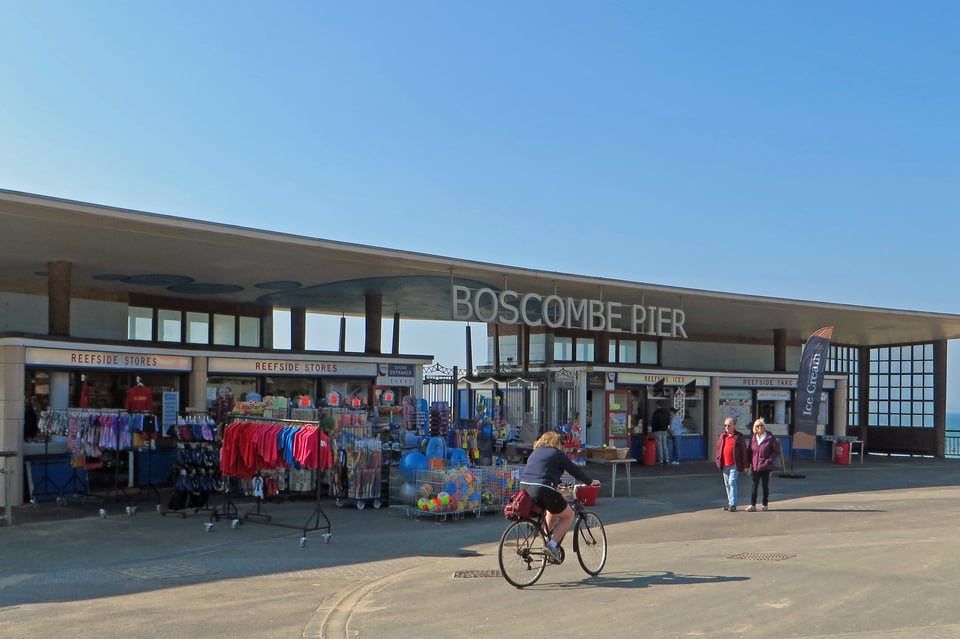
The entrance building is shaped like a boomerang, with its two wings angled towards the centre, guiding people onto the pier. It’s profile is also reminiscent of airplane wings. The roof is supported on thin pilotti, and a lot of original ironwork and lettering is in place.
The way the smaller retail units, toilet block and caretaker’s office nestle below the wing, with the columns holding it floating above them, is what creates the delightful sense that it could take off. These shops are, themselves, in boomerang formation. Huge shelters at each end provide protection at all hours.
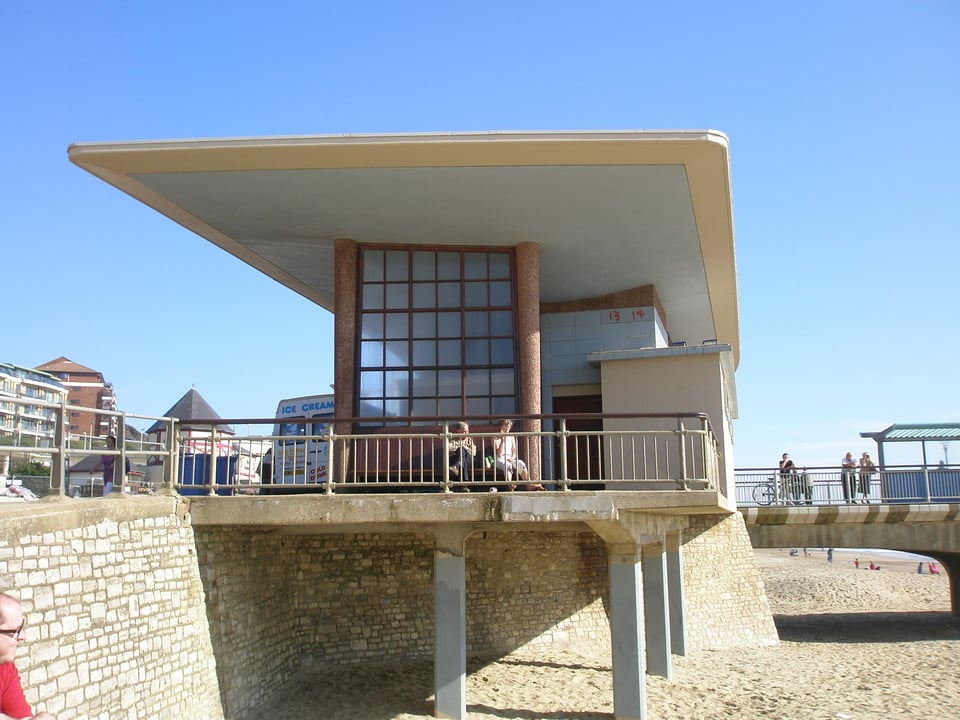
The council have submitted plans to effectively rebuild the overarching wing as the original structure is deemed “failing and dangerous”. Marvelously, the listed building consent application shows some of the updates on top of the original May 1959 design so it’s possible to see the building was designed by E. C. Whitaker, the borough engineer. The main roof is of reinforced concrete, and the lathe and render suspended soffit hung off this from galvanized steel hangers. It’s this soffit that has, after over sixty years of sea air, failed. Not helped by the roof’s 2007 felting reaching the end of its life and letting water into the inside of the structures.
The replacement of the original metal with stainless steel, along with new render and a new roof membrane should enable the building to survive as storms along the south coast get ever rougher. Boscombe Pier is a lovely reminder that not all British seaside piers are Victorian and Edwardian.
Full details of the listed buildings works can be seen on the BCP planning portal, reference P/26/00551/LB.
Defining the ‘west country’ in west country modernism
Boscombe Pier is one of those odd spots where I wonder if it falls under my self-imposed remit. It’s listed in Hatherley’s gazetteer in the south west section. It’s not in the Pevsner for Dorset, on the entirely reasonable grounds that Bournemouth is traditionally a Hampshire seaside resort. Just over the old county border, less than five miles westwards along the coast, is the port of Poole which was equally firmly in Dorset.
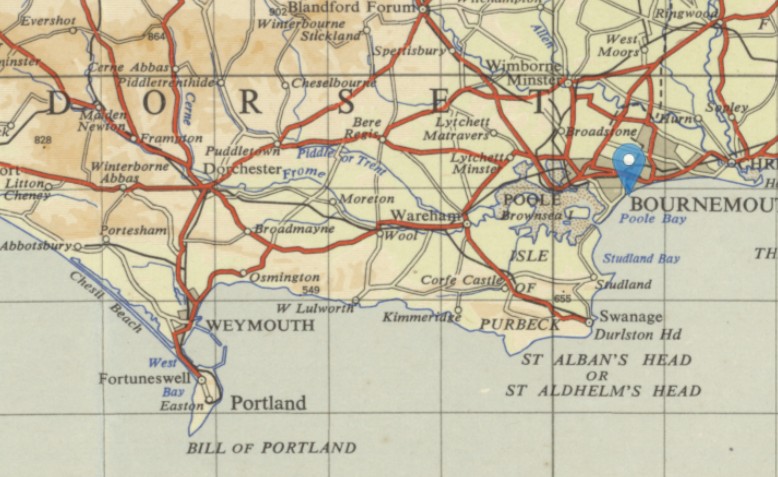
Over the decades, Bournemouth spread westwards and Poole spread eastwards until the two towns merged into a single continuous settlement. In 2019 it became a single unitary authority, the rather clumsily named Bournemouth, Christchurch and Poole Council (aka BCP Council). So Poole is in my area, using my “ceremonial counties of Cornwall, Devon, Dorset and Somerset” definition of west country. But Christchurch and Bournemouth – the eastern half of the same sprawl – would be out. At least during the twentieth century.
This is, of course, the challenge with drawing a border. Any kind of border. Jonn Elledge has written that “No border is inevitable or eternal. They are arbitrary and contingent…”.2 The current political map of the west country overlaps the ceremonial counties Pevsner used. And even these have changed: since 2019 BCP Council is now in the ceremonial county of Dorset.
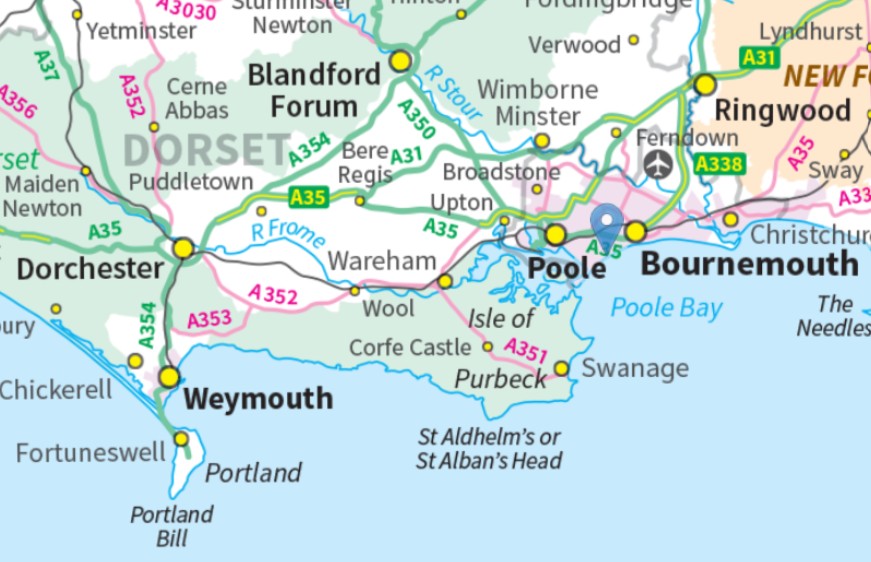
Elain Harwood, in Art Deco Britain, describes Bournemouth as developing its own style of interwar modernism. The unified area of BCP offers some of the most concentrated bursts of moderne in the west country. Boscombe Pier’s celebration of sunny post-war optimism is part of that visual identity. And Bournemouth’s merging with Poole, to the extent they are now a single political identity, means I waver between including and excluding the resort.
I excluded Bristol on the entirely arbitrary grounds that other people were writing about modernism in that city so I feel like including Bournemouth on equally arbitrary grounds balances out?
In brief
Avon calling
Just to the south of the ridiculously picturesque Pulteney Bridge in Bath is both the amazing triple horseshoe weir and the rather less photographed Pulteney Radial Gate.
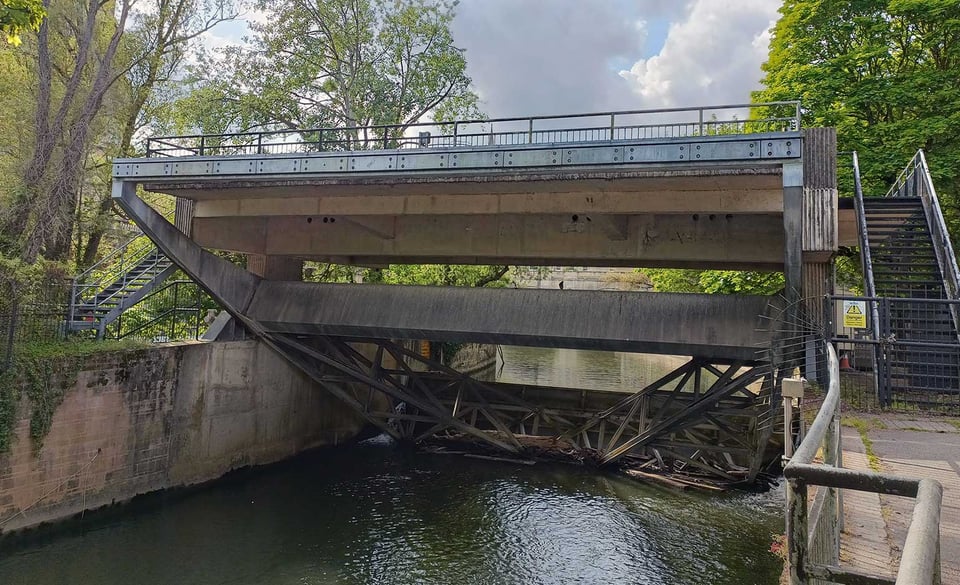
This piece of flood defense architecture was built in 1972, and provides an option to increase the flow of the Avon through Bath by opening the gate of the flood channel. Unlike a normal sluice, this rotated vertically to lift the barrier and open the watercourse. Studies have shown it’s simply not needed, so plans are underway to replace it with a small hydroelectric plant.
We took a trip to Bath in summer 2020 and walked past the radial bridge. I rather enjoyed its simple utilitarianism: so much of the machinery of Bath is hidden.
Now screening in Wincanton
The 1930s cinema in Wincanton (see multiple previous WCM editions) has reopened. Sadly, the BBC video report doesn’t include footage of the interior.
If you have an event or news item you think I should know about, you can contact me on Bluesky. If you’ve received this as an email, you can also just hit reply and the email will reach me.
I’m off to stare at the weather forecast and hope I can risk a field trip to a clifftop site.
If you’re enjoying this newsletter, feel free to share it with others.
If someone has sent you this, you can subscribe below.
A free sub will get you the weekly field notes and notice that a deep dive has been published.
A paid sub (£3.50 a month) will unlock the deep dives early, plus occasional bonus content and the warm knowledge that you’re supporting the project.
