
Molly Taylor and other news (6 Feb 2026)
How can we free ourselves from the Great Man framing of art and architecture history? Plus a water tower conversion, local news and a couple of events.
There were three named storms rolling across the west country in January. That’s prevented me from doing any field trips. Not least as one involves either walking along a narrow lane in dimpsy light, or taking a cliff path when water-logged cliffs are prone to collapsing.
So I’m still inside with books and newsfeeds.
Molly Taylor, Marlow Moss and Women in Modernism
As well as thinking and writing about the built environment, I also run a project about women in history. A couple of weeks ago, I read this newspaper piece about the forgotten painter Marlow Moss, the Cornish-based modernist whose geometric work inspired Pier Mondrian. I thought I’d read that before, and sure enough, here is a piece about her from 2014. And the in-depth essay by Lucy Howarth for the Tate website in the same year. And back in 1998, Willy Rotzler wrote how Moss developed the double line before Mondrian.1
One thing I’ve noticed, going right back to the 1990s, is that women in the arts keep being ‘lost’ and then ‘rediscovered’. It’s as if attempts to move us away from the Great Man narrative just don’t stick. The story keeps forcing itself back. At uni, I learnt that the women of the Bauhaus were in the textiles department. The soft, interior side of design. And the same with architecture. The desire for an author, or more precisely an auteur, of art and design means we seek single visionaries rather than acknowledging the depths of collaboration.
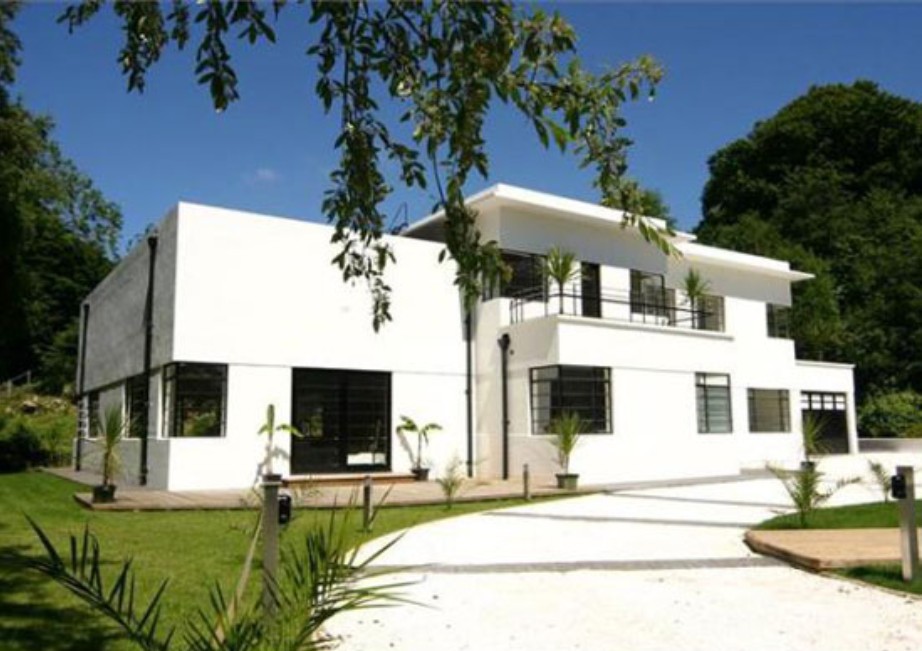
Molly Taylor was an architect in the 1930s, creating buildings at the same time Moss was developing her constructivist work. If you’ve been following the plans to demolish Bath Fire Station, you’ll know Taylor stepped in to complete it in 1938 after her father died. By then, she had already designed Kilowatt House in Bathwick Hill under her married name of Molly Gerrard. She’s also listed as the 1930s architect of St. Batholomew Church, Lyncombe, Bath, which suffered a direct hit in 1942. It’s not clear if the rebuilt church was following her original plans.
Taylor is a woman who designed Moderne buildings in England, in the interwar years. Her extant work is delightful: elegant and clean. Yet, like Moss, she slips from the grasp of history again and again.
This March, Dr Amy Frost will be conducting a walking tour of Bath as part of the curious minds festival, exploring the city women like Taylor created in the interwar period. More details and how to book are here.
Water cooler moments?
I am a sucker for a Grand Designs conversion episode, where people want to make something unique into a new home. Perhaps inspired by the 2024 Northampton episode, someone is seeking planning permission to convert the concrete water tower in Broadclyst, Devon, into a one-bed home.
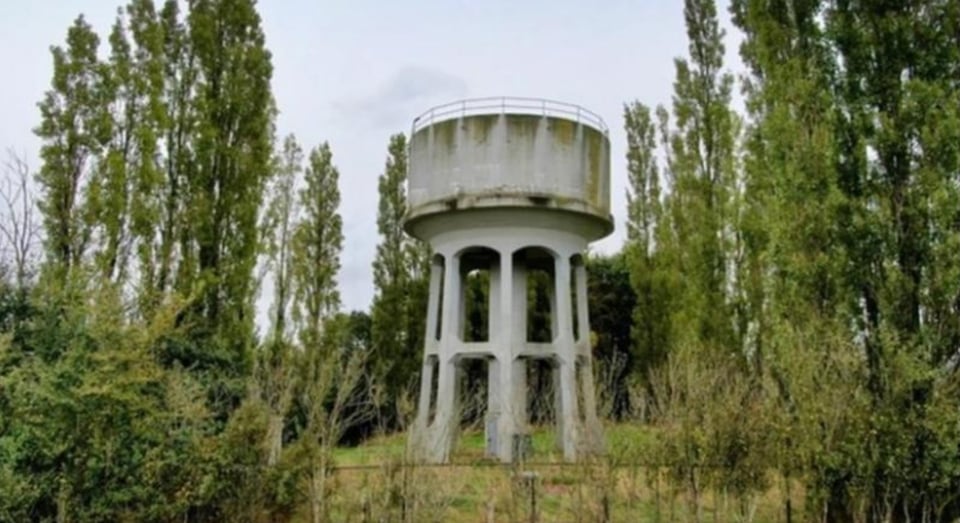
I am, of course, instantly jealous. I always love the idea of these even though in practice I’d be quickly complaining about the stairs. The Broadclyst one is rather close to the M5 for my liking: I’ve always had an eye on the one in Topsham. The Broadcylst one does have a rather lovely open reinforced concrete frame up to the tank compared to Topsham’s enclosed tower. The proposed elevation will keep much of the frame visible, including the rather nice curved arches where they meet the tank and the small feet-like buttresses.
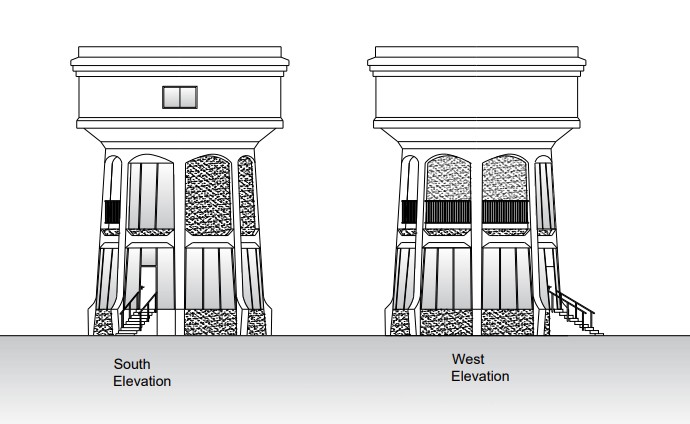
I am very much hoping this will feature in a future Grand Designs episode.
In brief
A postwar dream for the Royal cinema
In Plymouth, the Save the Royal group have discovered the proposed plans for integrating the 1930s Royal cinema into Abercrombie’s postwar vision for the city. These plans (which you can see on their Facebook page) had to be abandoned due to the postwar building restrictions. From the drawings it’s clear the plan would have merged the Royal seamlessly with some of the better statement buildings along Royal Parade instead of stranding it. The group are currently putting together a bid to turn it into a community arts hub. You can read more about their plans on their website.
Peek inside the Civic Centre
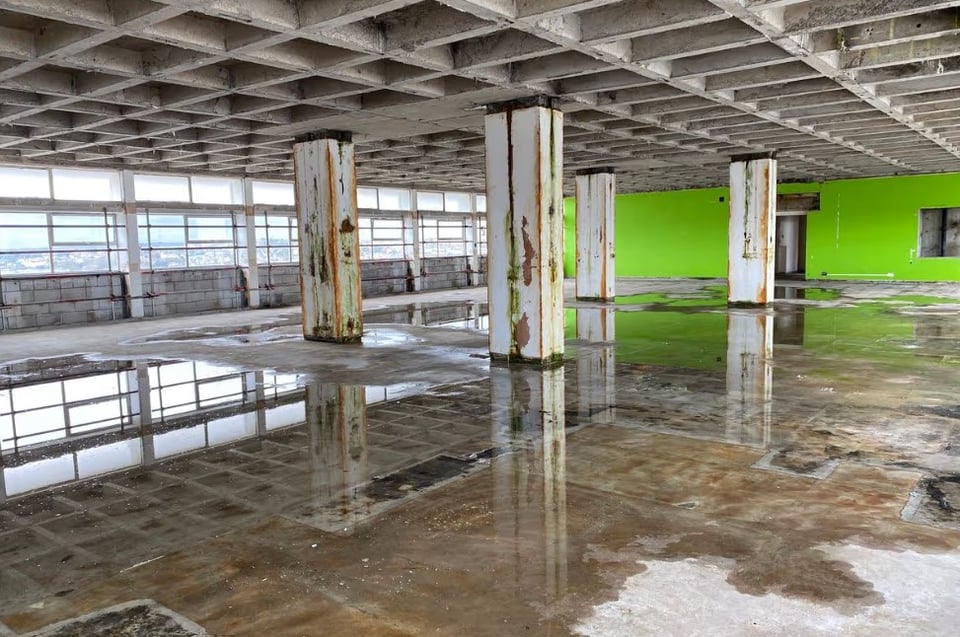
Also in Plymouth, the local press were given a tour inside the ever-divisive Civic Centre now the asbestos has been stripped out. Plymouth Live report the full planning application will be in very soon, which should be an interesting read after Urban Splash failed to do anything to the place.
Events and exhibitions
All Saints tour in Bristol - 20 February
The modernist is offering a tour of All Saints Church in Clifton on 20 February. As with their tour of Broadmead Baptist Church last year, these will be a great chance to meet other fans of postwar modernism in the area. More details and how to book on their website.
People Watching in Dorset - now until 10 May
In Dorchester, the People Watching exhibition has opened at the Museum of Dorset. This exhibition includes around 50 works of sculpture, paintings, drawings, and photography from 1915 to the present day. It includes work by Barbara Hepworth and Bridget Riley, and runs to 10 May. More information on their website.
If you have an event or news item you think I should know about, you can contact me on Bluesky. If you’ve received this as an email, you can also just hit reply and the email will reach me.
If you’re enjoying this newsletter, feel free to share it with others.
If someone has sent you this, you can subscribe below.
A free sub will get you the weekly field notes and notice that a deep dive has been published.
A paid sub (£3.50 a month) will unlock the deep dives early, plus occasional bonus content and the warm knowledge that you’re supporting the project.
- https://archive.org/details/constructiveconc0000rotz/page/180/mode/2up?q=marlow+moss
