
Why Earth Science Should Care about Space Policy
Happy October, JustSpace readers! We have another wonderful guest feature to share with you, this time from Chad Small, a science writer and Ph.D. Candidate in Atmospheric and Climate Science at the University of Washington. He can also be found on Bluesky.
Why Earth Science should care about space policy
by Chad Small
Many people have been fascinated by space since they were children. TV shows like Carl Sagan’s or Neil deGrasse Tyson’s iterations of Cosmos hooked them on all things space and space exploration. I was never one of those kids, however. It was the Jane Goodalls, Steve Irwins, and David Attenboroughs of the world who piqued my early interest in science. While space provides an unlimited well of curiosity for many, the things we have yet to discover about our own planet were always so much more compelling to me.
As someone who rarely feels enamored by space or space exploration, I might seem like an odd choice to contribute to this newsletter. But as someone whose work and love of the scientific enterprise is centered on better understanding our planet, our home, I – and you – need to care deeply about space exploration and space policy. You may not necessarily care about space itself. What you should care about is what we can do from space: observe and learn about the Earth.
Satellites in low Earth orbit (LEO), in particular, highlight the health of our planet in ways that spill over into so many other parts of daily life. That’s why people who aren’t avid stargazers should be invested in policies that affect these satellites.
As an atmospheric scientist, I am borderline obsessed with how weather evolves into climate and what that means for life on Earth. Before the satellite era, we had to rely on what we could see and directly measure within Earth’s atmosphere, and on our mathematical understanding of fluid dynamics to formulate an understanding of weather and climate. Much of how we understood weather and climate came out of solving differential equations framed around conceptual understandings of physics, prior to the 1960s.
However, for atmospheric scientists – and many geoscientists – learning about the Earth by looking down at it has defined the modern era. Observations from satellites in LEO have transformed the study of our planet. We now have images to prove – or disprove – our mathematical understanding of the world. And our insights about our planet keep growing.
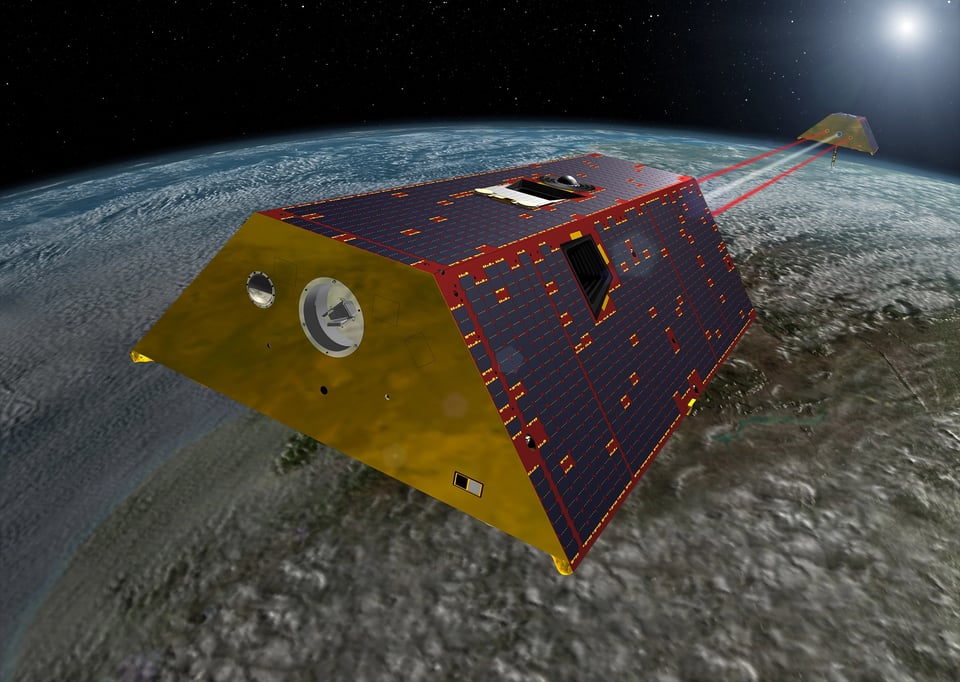
As someone who researches extreme precipitation, I think about water constantly. Until recently, however, geoscientists lacked comprehensive ways to gauge where water on land was going and coming from globally. At the end of 2022, NASA, along with its French counterpart, Centre National D'Etudes Spatiales, launched the Surface Water and Ocean Topography (SWOT) mission to fill precisely that knowledge gap. This satellite mission observes everything from river, lakes, and reservoir heights to ocean features that impact ocean carbon uptake and the transport of debris from storms and tsunamis. While SWOT is nearly four years old, this isn’t the first time a satellite mission has told us something about Earth’s waters. Since 2022, the tandem satellites in the Gravity Recovery and Climate Experiment (GRACE) and GRACE Follow-On missions have been detecting water our eyes could never see. By observing variations in Earth’s gravity, the GRACE missions can find subterranean water. Imagine measuring soil moisture or aquifer levels without sticking your hand in the soil or digging a well: GRACE gives us this information remotely through satellite observations. In fact, research from earlier this summer used GRACE to show that aquifer depletion in Brazil could threaten the country’s agricultural production long-term.
My own research would be critically impacted without satellite observations. I largely study how tropical phenomena can impact extreme rainfall events like West Coast atmospheric rivers. Without the data from NASA’s Global Precipitation Measurement (GPM) constellation of satellites, work like mine would likely be confined to large, developed countries. Nations like the U.S. often have extensive networks of weather stations that monitor everything from temperature to precipitation. Lower-income countries throughout much of the Global South could have hundreds of miles between reliable weather stations. It’s here where Earth-observing satellites not only advance our science knowledge but also bridge some of the equity gaps in weather and climate preparedness and resilience. Missions like SWOT, GRACE, and GPM that provide global coverage are essential for the safety of people who live in places where in-situ observations are scarce.
Ultimately, that’s why these satellites need to be protected – and that protection is becoming more and more necessary. The breadth and depth of Earth-observing satellites (and the data they produce) has come under looming threat since the beginning of 2025. Much of the news during the second Trump Administration has focused on how government science agencies, universities, and related researchers have lost funding for critical research and operations that improve American lives. What was less-discussed is how satellite observing missions could be impacted.
Since last year, at least 14 Earth-observing missions have had their preliminary funding eliminated. Missions like the Orbiting Carbon Observatory-2, which monitors atmospheric carbon dioxide from space and was slated to be terminated last year. This mission not only tracks where carbon dioxide is being emitted and absorbed, it also can help measure crop health from space. Multiple satellite missions that contribute to hurricane observations also had proposed impacts. The Cyclone Global Navigation Satellite System (CYGNSS), which measures wind speeds over the oceans, was targeted for decommission. As of last June, the Defense Meteorological Satellite Program, which has improved hurricane forecasts since the early 2000s, was supposed to stay in orbit, but send no data back down to Earth. Fortunately, many of these proposed cuts have been blocked by members of Congress, but the fact that they were targeted at all is something that should concern all of us.
In the immediate term, losing these missions means national and economic security risks skyrocket. In the long term, it means becoming worse global partners in space-based observations. One of the beautiful things about these missions is that they often share information with our global science partners. If we cease our Earth-observing missions, it erodes long-built trust with partner nations who often co-lead these missions. If we continue to target these satellites for cancellation, at some point our partners will be under no obligation to continue sharing their data with us. This is a dangerous precedent to set. Cutting these critical observing systems is a fast way to isolate ourselves politically and scientifically in a time where every nation can benefit from learning more about how the planet functions.
Take Action
We invite you to apply to join the JustSpace Alliance. Members have access to our virtual community spaces, and in the future, we’ll be able to offer in-person gatherings, more podcast and video content, writing, and more. Supporting JustSpace will help us reach our mission goals by allowing us to compensate people for their time and labor for our future projects, as well as help us cover basic costs like maintaining our website, etc. You can find more information at this link.


Add a comment: