
Beyond the Launchpad: Why Space Ethics Must Begin on Earth
A Guest Piece by Augustina Boateng
Hello, JustSpace readers! We hope you’re doing well, and that at least some of you got to enjoy the total solar eclipse a few weeks ago.
This month we’re excited to share a guest feature by science writer and researcher Augustina Boateng, who writes about innovative stories behind scientific and environmental change. Her work has appeared in publications including Business Insider, NPQ and Niche Canada.
Beyond the Launchpad: Why Space Ethics Must Begin on Earth
By Augustina Boateng
The twenty-first century space race is unfolding with great ambition. Governments are renewing space exploration programs, private space exploration companies are accelerating plans for commercial space stations and planetary missions, and policymakers are debating how these programs should proceed.
As humanity looks towards the Moon, Mars, and beyond, conversations about space ethics have been expanded to include planetary protection, orbital debris, space traffic management, and the equitable governance of outer space. Frameworks such as the Artemis Accords have attempted to establish principles for responsible civil exploration and the use of space resources.
Yet one crucial question remains largely absent from these conversations: Who bears the environmental and social costs of building the current space economy? This crucial omission in the current, ongoing conversation reflects a broader shift to imagine space as detached from terrestrial realities, as though rockets, satellites, and the exploration vehicles are made independently of the political, environmental, and economic systems that produce them. They are not!!
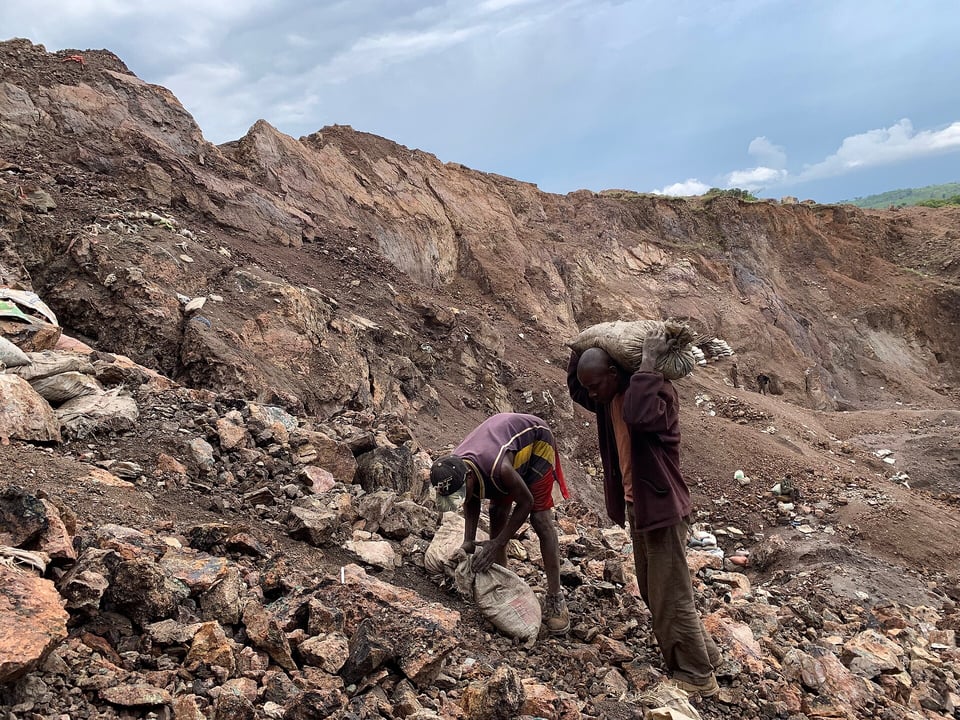
Every launch begins long before the ignition. It begins in mines, refineries, processing plants, factories, ports, laboratories, and communities whose land, labor, and resources make modern space technology possible. Modern spacecraft and the infrastructure supporting the space economy depend on complex global supply chains for their minerals and materials. Lithium, cobalt, nickel, graphite, copper, and many other rare earth elements are important to the manufacture of space technologies. The argument is not that every tonne of these minerals extracted around the world is destined for a spacecraft. These materials supply multiple industries and, as such, move through complicated global networks. The problem is that the space economy is integrated into the same mineral and manufacturing systems that often treat their environmental and social consequences as someone else's issue.
Consider cobalt.
The Democratic Republic of the Congo supplies the overwhelming majority of the world's cobalt, a mineral particularly important to several lithium-ion batteries. Cobalt extraction has become associated with serious concerns over hazardous working conditions, child labor in parts of the artisanal mining sector, environmental degradation, and the unequal distribution of economic benefits.
Now consider lithium.
The lithium-producing regions of Chile, Argentina, and Bolivia have become central to the global transition towards battery-powered technologies. In the salt flats of Chile and Argentina, lithium extraction has generated debates over water use, fragile ecosystems, Indigenous rights, and who has the authority to determine how these territories are developed.
These tensions matter because lithium is increasingly treated as a critical mineral for the clean energy transition and for technologies that support and build the space economy. China plays a dominant role in the global rare earth supply chain, particularly in processing and refining. These materials are essential to numerous high-tech appliances, including the electronics and advanced components relevant to aerospace technologies. Their extraction and processing can also generate significant environmental impacts where safeguards are inadequate. The technologies imagined as symbols of humanity's most advanced future remain dependent on extraction systems carrying some of the oldest inequalities of the industrial economy.
On a large scale, the communities producing these minerals often experience deforestation, water stress and contamination, biodiversity loss, land degradation, displacement, and hazardous working conditions while receiving only a fraction of the economic value generated further along the supply chain. Meanwhile, many of the greatest financial and technological benefits of the emerging space economy are concentrated in countries and corporations with the capital, infrastructure, and expertise to manufacture advanced technologies, launch spacecraft, and control intellectual property. The result is a familiar global pattern, where resources are extracted in one place, value is created somewhere else, and environmental costs remain with communities at the point of extraction.
The emerging space economy risks reproducing this model. As demand for these rare minerals grows, the pressure on terrestrial mining and processing systems has intensified. The environmental footprint of rockets and launches has become an increasingly visible subject of debate. But emissions from launches represent only one part of the environmental footprint of space activity. Every spacecraft represents an intricate web of extraction, processing, manufacturing, transportation, and industrial production. If space justice is to mean anything, it cannot begin only at the launchpad.
A spacecraft or satellite does not begin its life in orbit; its story begins with raw materials. This means that when mining operations contaminate rivers, degrade agricultural land, or undermine the livelihoods of communities whose resources feed the industries that support aerospace and space technologies, those impacts cannot simply be considered external to the ethics of space exploration. They are a huge part of it. This is where existing international frameworks offer an important starting point.
The United Nations Sustainable Development Goals provide one useful lens for considering the terrestrial consequences of space development. SDG 6 addresses clean water and sanitation; SDG 8 concerns decent work; SDG 10 focuses on reducing inequalities; SDG 12 addresses responsible consumption and production; SDG 13 concerns climate action; and SDG 15 focuses on terrestrial ecosystems.
The UN Guiding Principles on Business and Human Rights provide another important framework. They establish expectations around corporate responsibility to respect human rights and conduct human rights due diligence to identify, prevent, mitigate, and account for adverse impacts connected to business activities. Those principles should not become an afterthought simply because a company operates in or supplies the space sector. If a company building spacecraft, satellites, or space infrastructure depends on a mineral supply chain associated with serious human rights or environmental harms, its responsibility should not disappear at the factory gate.
The Artemis Accords also matter, although they are different in character from the UN frameworks. Their principles address issues including peaceful exploration, interoperability, emergency assistance, registration, the release of scientific data, preservation of space heritage, space resources, and the creation of safety zones around activities. But terrestrial supply chains remain largely outside the center of this emerging space governance conversation, and that gap deserves attention. It requires inclusion, and here inclusion means more than static POV representation.
Within the aerospace community, conversations about inclusion have increasingly focused on increasing diversity among astronauts, engineers, scientists, entrepreneurs, and policymakers. That work matters, but more inclusive representation must consult the people directly affected by these struggles, to ask how they would prefer to move forward on mining and extracting in their communities. Their absence from space policy conversations is therefore not merely a representation problem; it is a power problem. Who has the ability to decide where minerals are extracted? Who determines acceptable environmental risk? Who benefits financially? Who is compensated when ecosystems or livelihoods are damaged? These questions belong in conversations about the future of space. The Global South cannot remain the supply chain for someone else's future. For many countries across Africa, Latin America, South Asia, and the Pacific, the promise of the new space economy remains distant. Their role risks being reduced to supplying the raw materials from which other countries capture technological and financial value.
This is particularly important for Africa. The continent possesses significant deposits of many minerals central to contemporary technological industries.Yet mineral wealth has not automatically translated into broad based prosperity. In many resource-rich countries, extraction has historically been accompanied by environmental damage, limited local value capture, and unequal bargaining power.
The emerging space economy presents an opportunity to break from that pattern rather than reproduce it. Instead of asking only how many minerals the space economy will require, it should ask, "Where will those minerals come from? Who will extract them? Under what environmental and labor conditions?” A just space economy should not require resource-rich countries to remain permanently positioned at the bottom of the value chain. Mineral-producing countries should have pathways towards refining, processing, manufacturing, research and development, technology transfer, and participation in the higher-value segments of space-related industries. Otherwise, the new space economy risks repeating an old narrative: the Global South providing resources while wealth and technological power concentrate elsewhere.
The space exploration sector has an opportunity to establish stronger standards before the industry expands further. A just approach should mean that communities affected by extraction have meaningful opportunities to participate in decisions about development; that mineral-producing countries can move beyond the export of raw materials; and that companies cannot treat environmental and human rights harms upstream as someone else's responsibility. Space governance itself should become more attentive to the terrestrial systems on which extraterrestrial ambitions depend. Space justice starts on Earth; the most important frontier in the new space race is not the Moon; it is the supply chain beneath our feet. We still have an opportunity to decide what kind of space economy we want to build.
The people mining cobalt in the Democratic Republic of the Congo, the communities negotiating the consequences of lithium extraction in the Andes, and workers and communities affected by mineral processing and manufacturing are not peripheral to humanity's space ambitions. They are part of the story. If space is truly going to belong to humanity, then the people whose land and labor make that future possible must have a voice in determining what that future looks like for themselves, at least.
We cannot build a just future in space by reproducing injustice on Earth. Space justice must begin long before the rocket launches.
Take Action
We invite you to apply to join the JustSpace Alliance. Members have access to our virtual community spaces, and in the future, we’ll be able to offer in-person gatherings, more podcast and video content, writing, and more. Supporting JustSpace will help us reach our mission goals by allowing us to compensate people for their time and labor for our future projects, as well as help us cover basic costs like maintaining our website, etc. You can find more information at this link.


Add a comment: