
I stare death in the face a lot. Most of the time it looks like a mirror.
One of the hardest things to tell people about how I live my life is that I think about what death means a lot. Not in a grand philosophy way of what might happen after death, but the practicalities of it. That's the thing about studying how to do community death and grief care work as a chronically ill and disabled person: death isn't as far off or unfamiliar because I deal with some form of it every day.
Not all disabilities are like this, but for those of us with specific disabilities like ME and/or degenerative conditions, this can be daily reality. Not from a place of pity, just a fact of life the same way as some people drink coffee every morning.
One book I was reading was talking about chronic pain and how this is rare in death and thus can be managed through medications as the end is assumed to be quite near. Meanwhile, I know people with chronic migraines and fibromyalgia where pain is just a sign that they woke up today.
In the social process of dying, there is the loosening of labels and social roles that one can no longer perform, like caretaker or a career role. Quite a few people I know, myself included, have no real answer to "so, what do you do?" because some days, the only answer is sleep, while others get the rare trip outside. I am too sick to be a consistent presence.
Dying involves letting go of the illusion of control over your body - including losing the illusion of physical independence in the most private areas - like going to the bathroom or showering. I am not there yet, but I do have to save my energy just to rinse off at the end of the day and sometimes have to sit on the floor of my shower to wash my hair. Others I know shave their heads because they just don't have the energy to ever wash their hair or even get out of bed.
Dying tends to make a lot of people uncomfortable, so that while dying, one is also expected to hold the emotions, about your own health, of those around you. This is something the disability and chronically ill community knows all too well. Telling people about daily life can quickly turn into emotionally holding space for someone as they refuse to confront your illness because it will make them contemplate their own mortality. Nothing like a disability to bring out awkward comments like "I couldn't live if I had to__" or the weird arguments as people try to bargain or argue their way out of your limitations. The conversation turns into caretaking them and rarely circles back to caretaking you.
The hope of dying is that you do it when you are old - after you have lived; chronic illness can take the living away long before you die. I have spent almost as much time as a chronically ill adult as I did an adult before I got sick. I got sick at 26. Most people aren't done living at 26 and some haven't even really started. I try to find a middle path, where I am sick and yet living in some way - even if it is just one of my bunnies making me laugh. I am still filled with grief over all the things I wanted to try but didn't have time to, like hiking, learning new languages, even just discovering a joy for the process of cooking. I go through ongoing waves of rage over how people in my disability communities are treated, by family, the medical establishment, purported friends, and just society in general. I try not to take the joys of napping on a sunny day or laughing as a partner does facetious imitations of historical figures for granted. I am fed. I am housed. I have people who care about me. It is a small circle, but I am also an introvert, so it sort of works out. I am lucky. I am privileged.
So no, I have not yet held the hand of a person while they died, but I am familiar with parts of the process --the parts you can't look up online the way you can assigning a power of attorney or how to keep a body cool and dry for a viewing. I have held my own grief. I have held friends as they grieved losses of all sorts - of pets, of dreams of parenthood, of relationships with estranged parents. I hold space, in my own way, for community grief that is often disenfranchised - letting people know I see them in their grief. I hold memories of communities I am a part of, even if only to pass the same books down.
I am a witness. I sit with people as they go through hard things without trying to fix them. Instead, I see them in some of their complexity so that they don't have to be alone. I carry those memories so that they are not yet lost to the tides of time.
This is part of my version of being a librarian: holding on to information and memories until they can be passed to someone else when they need them. Passing notes backwards and forwards through time.
Sometimes the memories are jokes, cute comics, random facts about moss, other times they are the practicalities of sending formal correspondence or knowing someone else who might have more information. Most of the time though, it is listening. Hearing what is said and left unsaid and feeling the weight of both.
This is a huge aspect of how I orient to webs of connection, so while I will definitely share some fun books I am reading a how I keep information somewhat organized, know that underneath this web is the belief that to understand and appreciate life, it is important to hold space for death too.
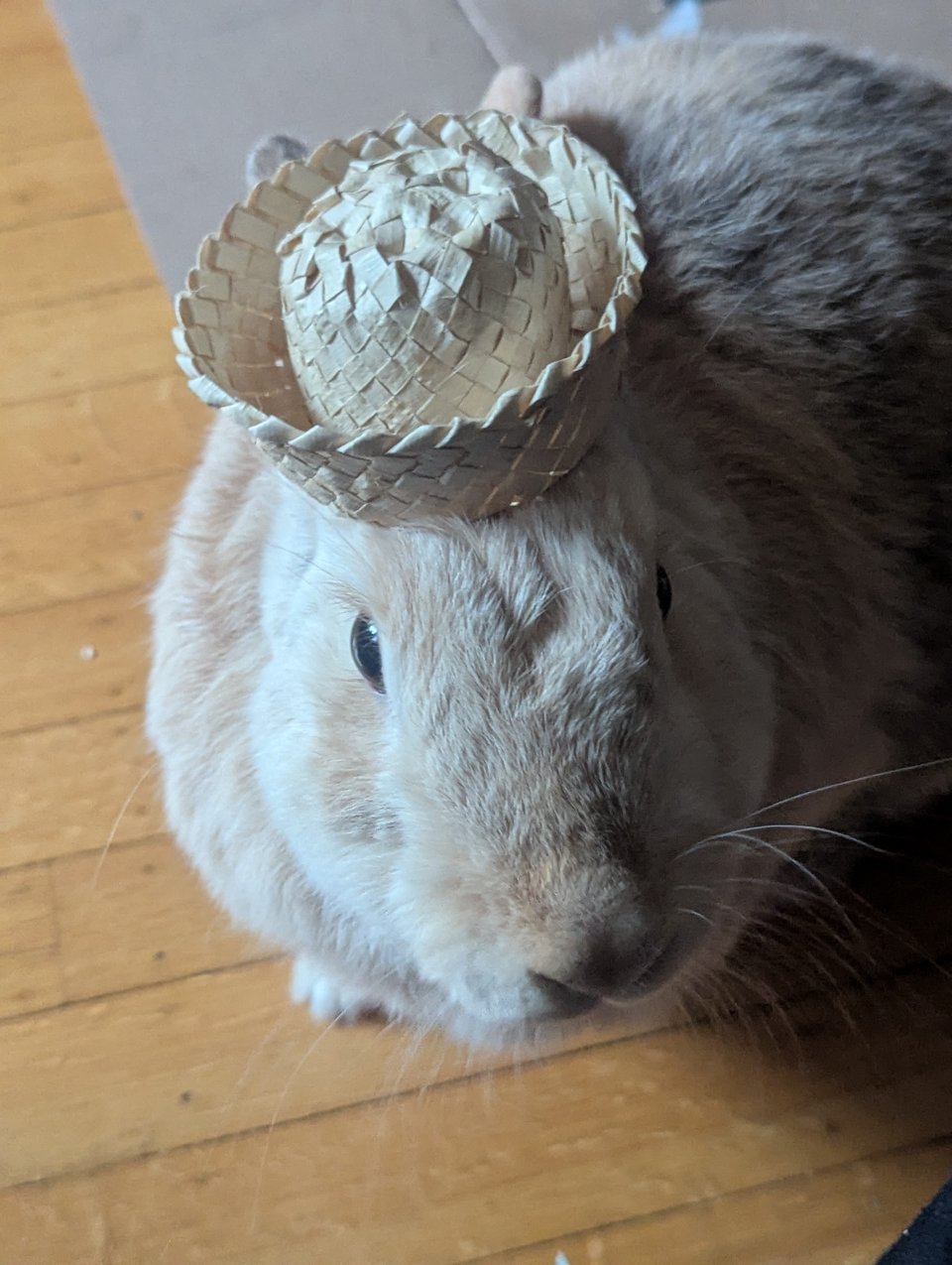
For a bit of cheer, have a photo of one of my bunnies:
For more of this, subscribe to my newsletter here: