Simon Baron-Cohen has entered the chat again
This time in a Guardian piece in which he (sort of) retracts some previous assertions about autistic people and tees up a new multimillion dollar project.

He’s baaaack.
This time in a Guardian piece in which he (sort of) retracts some previous assertions about autistic people and tees up a new multimillion dollar project.
This is a fellow whose work is associated with widespread misapprehensions about autistic people on a number of fronts, most notably regarding empathy and the “male brain.” There isn’t enough space here to cover it all – and no one would have the patience for that – but what SBC says here isn’t, in my opinion, a remotely sufficient mea culpa for his role in false constructions about autistic people.
Probably the most damaging is the misunderstanding about empathy, which SBC blames here more on misrepresentation of his ideas by the news media than on himself for a poor conceptual approach and flimsy basis. Ditto his “extreme male brain” ideas, positioning the human brain as having two basic categories (male and female) and autistic people as falling at some “extreme” of the “male brain” category in how they operate. Because, as we know, sexes exist on a binary and so do brains, and all autistic people conceptualize and think in exactly the same, gendered way [/sarcasm].
SBC and adherents extended this conceptualization to link pattern recognition with maleness (instead of as fed by learning/experiences from which girls and women have been deliberately excluded for most of recorded western history) and specific areas of interest (think sciencey, engineer-y things) as somehow inherently male (instead of deliberately exclusive of the participation of girls and women for most of recorded western history).
In other words, he conflated the same factors that led to boys and men being more readily recognized as autistic with those that led to the lack of girls and women in professions and vocations from which they were deliberately excluded. Turns out, if you systematically exclude a specific population from access or recognition, they won’t be present or accounted for when it comes time to enumerate their representation.
These high-profile distractions delayed important progress for all autistic people, in part by compounding obstacles that prevented that progress, and led to widespread misconceptions about autistic people that persist to this day. I know this because I hear and read comments that are directly related to these misfires, and I take the time to correct the impression whenever possible.
If I had made these scientific missteps, I am pretty sure I would not be able to read the below about myself today (boldface mine):
Speaking to the Guardian before the announcement of a £26m ($34.5m) gift to Cambridge University from the US philanthropist Lisa Yang, Baron-Cohen said the funding would be used for research guided by the priorities of the autistic community. It is one of the largest ever donations to a UK university for autism research and will be used to create the K Lisa Yang Centre for Autism Research, and a clinical autism centre in a future Cambridge children’s hospital, both of which Baron-Cohen will oversee.
About the autism community being centered, he says:
I can’t generalise [EJW: oh, why stop now?], but many autistic people think differently, they’re not just being led by fashion or convention, they’re thinking from first principles for themselves and might come up with a very fresh way of looking at something.
SBC has apparently turned his focus directly to co-occurring conditions for autistic people, including cardiovascular disease and (dear Lord) menstrual issues. The Guardian reports that he has made the (not-at-all) startling discovery that autistic people have increased risk of cardiovascular disease. I am pretty sure that he soon will also report finding that the Pope is Catholic (despite current efforts on the part of some to claim otherwise), but while we await that, let me say the following few things:
Autistic people experience high levels of stress, including chronic stress, because of many factors (social, physical).
Chronic stress and inflammation are a cardiovascular-damaging duo.
Autistic people have higher rates of cardiovascular diseases.
Autistic people also are more likely to have connective tissue disorders, and people with these conditions are more likely to be autistic.
Connective tissue holds our bodies together, and that includes as an extremely important functional and structural component of our blood vessels and other cardiovascular tissues.
Connective tissue disorders are closely linked to risks for cardiovascular issues.
SBC told The Guardian:
If you’d asked me 20 years ago to look at autism and cardiovascular disease, it just wouldn’t have been on our radar, but it’s come from the autism community.
The thing is, any time in the last 20 years, he could have asked the autism community or looked beyond his own biases at the existing literature that has been around during that time. Doing that would have put it on his radar long ago, but he was too busy being galaxy brained about autistic people.
News you can use
It’s disability pride month! More on that in a later issue, but meanwhile, here’s a backgrounder and information on this year’s theme from The Arc: “The World Works Better With Us.”
Claire Jack writes that after an adult autism diagnosis:
Many people find they move from a critical, often harsh assessment of their past actions and choices towards a far more empathic understanding of themselves as someone who made choices from a difficult place.
I’m not one to say you gotta hand it to Florida (in part because I am from Texas and that’s just too close to call), but … I may have to hand it to Florida on two fronts. The state has developed a special alert system, “Spectrum Alert,” launched July 1, along the lines of a “silver alert” for elders who have gone missing, except for autistic people. The alert will go out to cell phones within 5 miles of where an autistic child was last seen. As a parent whose child has simply vanished in the blink of an eye twice – we found him both times, but it was terrifying – I hope this proves to be effective.
On the second front, Florida is offering subsidized swim lessons for autistic children. The measure is a rare outcome of bipartisan support in these trying days and another one that I hope has the intended beneficial effects.
I think women, autistic or not, probably would feel disinclined to go in for highly privacy-invading testing referred to as “smears,” but maybe that’s just me. Either way, autistic women in the UK may be getting some more positive attention to their experiences of distress and dismissed pain associated with getting an annual exam, with a study funded by Cancer Research Wales to look at ways to reduce these barriers. Avoidance of these tests can lead to late diagnosis of cancer and other conditions that often can be successfully treated if found early enough.
UC Davis has a half-day virtual summer institute event coming up on July 24 (registration fee “starts” at $25, registration deadline July 17) that addresses tech use and neurodevelopmental conditions. The event is described as intended to “explore new research on how technology can support people with autism and other neurodevelopmental conditions” and will “feature an expert panel exploring key issues like inclusion, online safety and dating.” The expert panel will include “autistic self-advocates, a clinical psychologist and a police detective.” The event is touted as “ideal for professionals, researchers, individuals with disabilities, family members advocates, students or community members.”
People you should know
Autistic people living in countries in Africa are gaining attention wider attention. The AP covered the journey of a family in Guinea as the parents sought to get support and help for their autistic son (CW for strong language about abandoning an autistic child). Their struggles including trying to get schools to let him remain enrolled, with his mother, Kadiatou Diallo, refusing to simply remove him from school. After her husband died in a car wreck, she found a school for her son, Kazaliou Balde, run by Mariam Aisha Barry, a social worker and philanthropist who cites an autistic daughter as her inspiration for starting the school. Barry told the AP:
Our mission is to break the stigma surrounding autism through awareness-raising, family training and advocacy for better care. These children deserve acceptance, understanding, education and unconditional love.
The journey is still in early stage in Guinea, where many autistic people experience intense stigma. Balde would as well, his mother says, because people in his community ascribe his autism to an “evil” and “want him shunned,” according to the AP. His mother says she “categorically refused” and will not give up on his education. “My most ardent wish is that he knows how to read and write,” she said.
A note!
The newsletter will be on hiatus until July 27. Be on the lookout that day for some commentary on the Autism Science Foundation’s intractable support for applied behavioral analysis.
Thanks for reading, and here’s to a world that works better with us.
Got something autism-related to share with us? Send it along to [email protected].
Got a comment? We’d love to hear from you, so drop us a line below. Please note that comments are moderated per TPGA guidelines.
About the Author
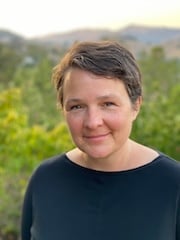
Dr. Emily Willingham is a 2022 MIT Knight Science Project Fellow, and the author of several books, including the upcoming If Your Adolescent Has Autism: An Essential Resource for Parents from Oxford University Press, and has served as a regular contributor to Scientific American and other national publications.


Add a comment: