Can genetics studies ever be a positive for autistic people?
Genetics tools can be used for better or worse. The key is a research ethics framework that ensures that it’s all for the better.

Why study the genetics associated with being autistic? Typically, for a medicalized human condition, the basis for genetics investigations is to treat, prevent, or cure that condition. Gene changes provide targets for drug development or other therapies and for removal or “correction” as we enter into new frontiers of gene editing.
It’s no wonder, then, that autistic people and those who love them might view these efforts as de facto attempts to erase autistic people. Targeting gene variants linked to being autistic is very different from identifying a target for a drug that might cure cancer. Autism is not a disease that involves threats to the body ranging from damage to death. It is the result of brain development that occurs in a substantial proportion of humans, and like all brain development gives rise to humans with related strengths and support needs.
To be clear: There is no such thing as a “normal” human brain, or even a “typical” one, even though we often rely on the framing of “neurotypical” to distinguish well-characterized brain types from a “neurotypical” catchall of “everyone else.” But as I’ve written before, everyone has their something. I don’t care how “neurotypical” someone thinks they are, they have strengths and they have needs related to how their brain developed. If their brain type could be characterized and classified, would they want only their support needs to be used to distinguish them? Would they want to see research that targets their erasure based only on the contours and intensity of those support needs?
I’m guessing not, and autistic people don’t want that, either.
Despite the threat implied in genetics studies – and even sometimes explicitly stated – a substantial proportion of autistic people tend to express the opinion that examining genetics could yield positives. As with all tools, those for sorting out genetic links to any human trait can be wielded for good or for ill, which autistic people seem to recognize. Studies suggest mixed views and consistent concerns around genetics studies and the prospect of genetic testing for autism, with at least half of autistic respondents sharing concerns related to eugenics.
There also are concerns around the accuracy of such testing, especially false-negatives that could result in autistic people not receiving supports and accommodations that they need. This latter concern is a very real one. Most autistic brains likely develop because of dozens or hundreds of genetic inputs of varying impact, and many gene changes related to being autistic may lie undetected for years to come. As with other complex traits, the full picture of the genetics of autism will continue to unfold slowly over time, in complicated fits and starts and incremental gains of information that will long prevent absolute certainty about what any testing indicates.
The end result of false-negatives would be erasure, just as it will be if genetics tools are deployed with explicitly eugenicist intentions.
Where do autistic respondents see potential positives in genetics research? One possibility is the flip-side of the false-negative coin: using gene testing to affirm that someone is autistic when otherwise they wouldn’t be diagnosed, or to gain certainty about one’s diagnosis. Another possibility autistic respondents view as potentially positive is targeting some of their co-occurring conditions, such as gastrointestinal issues and seizures (NB: that link is to a preprint that is a few years old). Table 1 of this publication offers a list of some of the likelier positive and negative outcomes of such research.
There may be some perception that autistic people and their supporters are overreacting when they view genetics research as implicitly or explicitly eugenics oriented. The fact is that many of these projects use the rationale of preventing autistic people as the basis for the work. Sometimes, the premise is couched in language that obscures this ultimate intent, but it often is still made explicit. What would be useful is for researchers involved in this work to engage with autistic people to establish an agreed-upon ethics framework focused on the expressed needs and wishes of the autistic community. The Autistic Self Advocacy Network (ASAN) has developed a statement that gives guidance on how such a framework should look, and there are recent works in progress on that front, including a proposed framework.
I think that the key is establishing a specific convention/declaration related to autism research, much like the Declaration of Helsinki for research involving humans. Granting organizations and journals should require researchers to attest to and affirm adherence to such a declaration in the conduct of their work. That’s a campaign that can’t come too soon for autistic people.
Given the attitude of some genetics researchers in the field, gaining genuine commitment to a set of ideals that respects the wishes and needs of the autistic community likely is not a straightforward ask. There’s money involved in preventing autistic people, especially in countries like the USA, with a health research leader who has repeatedly expressed contempt for the autistic population. As long as people conducting genetics research related to autism can’t stomach meeting with criticism from autistic people over the outcomes of their work, intended or otherwise, the establishment of a functional ethical framework for ensuring dedication to the betterment of autistic people will remain elusive.
##News you can use
Do you think an elder in your family might be an undiagnosed autistic person? Here’s some advice on next steps, and yes, it’s worth it to pursue the question. “Experts largely encourage seeking [an autism or ADHD] diagnosis for an older person – and cite examples where it has been advantageous for people in their 80s and beyond. ‘An autism diagnosis is not just about the here and the now,’ says Rutter. ‘For a lot of people, it triggers a process of reflection across the lifespan and of making sense of who they are now and how they got here.’”
Job alert! ASAN is hiring! A post on social media indicates that the deputy director of programs position is full time at 32 hours per week, remote possible, with an annual salary of $80,000.
Have you read the claims of “overdiagnosis” of autism because of “relaxed” or “expanded” diagnostic criteria? Here’s your wheelbarrow of salt considering that claim, provided by Steven Kapp on Facebook:
The diagnostic criteria for autism was not expanded in the DSM-5 compared to the DSM-IV. And autistics and ADHDers are still under-diagnosed, especially among adults (especially older ones) and girls.
Damage from the colonial medicalized framing of neurodivergence has undermined support systems established by indigenous cultures over time, argue Grant Bruno, Louis Busch, Will Landon, and Leona Makokis in their monograph, “Reclaiming Neurodiversity: Indigenous Perspectives on Autism, Relationality, and Inclusion.” The authors, all indigenous Americans, write:
Indigenous understandings of neurodiversity involve the identification and cultivation of individual gifts and a collective approach to support and care. However, the legacies of colonialism have eroded Indigenous wisdom and knowledge on neurodiversity, resulting in the loss of critical culturally based support systems. Here, we discuss efforts to foster cultural resurgence and reclaim traditional practices that prioritize inclusion and support for neurodivergent individuals within relational and community-driven frameworks.
The list could fill a book, but Ann Memmott has distilled autism “treatment” scams into a list you might find handy, along with red flags for said scams. The list includes the greatest all-time hits such as “gluten-free, casein-free,” chelation, bleach, and camel milk (really).
From the TPGA editors: As we close out Pride Month, a reminder from Steven Kapp about the direct link between ABA therapy and gay conversion therapy: “Indeed, Lovaas was applying the same method to gay/queer boys as to autistic children, to try to make the former gender normative: It had deadly consequences for participants.”
People you should know
For the Christians out there: Autistic author John Allister looks at neurodiversity acceptance through the lens of his religion in his book “Faith, Hope and Autism: Learning to Love Neurodiversity.” As a vicar, his aim is to “help the Church connect with neurodivergent people” (yes, puzzle-piece cross not great).
Take a look at this article by Wonderful Adegoke, a student journalist reporting on students in Nigeria taking on stigma around being autistic. The work the students are doing is unfortunately sponsored by Spark a Spectrum, an initiative of Telehealth ABA World that’s clearly intended to make inroads for ABA in new populations. But ABA isn’t the sole focus of the piece. Instead, Adegoke highlights underdiagnosis in the country because of a lack of access to professional assessments and barriers to education that lead to exclusion instead of inclusion of autistic children in the classroom. He writes:
Changing public perceptions is not merely about correcting misconceptions. It is about ensuring that autistic children are recognized, understood, and supported. It is about creating schools that accommodate different needs, healthcare systems capable of providing timely diagnoses, and communities that value inclusion over exclusion.
Meet the Levines. The child of a Holocaust survivor, author Deborah Levine has written in her local newspaper about how the words in an obituary for an autistic Christian pastor evoked memories of her close connection with her autistic brother Johnny. She describes learning from her autistic cousin Michael A. Levine, a well-known composer and producer for films and commercials, about how Michael had always felt an unspoken connection with Johnny when they were young. Michael is a member of Autism in Entertainment and Blu Star Productions (which hosts filmmaking classes for autistic people) and was diagnosed with autism at age 50. He told Deborah:
As kids, Johnny and I had a hard-to-define connection that I didn't have with most other kids. In retrospect, I suspect at least some of it was the autistic viewpoint. I knew he was 'different,' but I always felt he understood me and vice versa.
“The apple didn’t come from nowhere.” Mark Wright relates how his then 10-year-old autistic daughter one day painted a striking image of an apple after years of producing standard-issue elementary age drawings. He notes that he stopped asking “where did this (ability) come from?” and instead “stopped being a parent trying to pull a child toward me and started being a parent meeting a child where she already was.” In an essay in The Salt Lake Tribune, he writes:
The work that matters most, in my experience, is quieter than the brochures suggest. It’s the work of watching. Of noticing what your kid loves and taking it seriously. Of building a family life that fits the child you have.
Not a fan of the “savant” language, but very much digging the work of Wisconsin autistic artist Grant Maniér, who creates beauty from other people’s discarded materials. He refers to himself as the “Eco-Friendly Artist” and has received several awards for his work. Maniér uses some proceeds from sale of his art to support the needs of others with disabilities. His work always contains his personal signature Easter egg: his face, camouflaged by the multimedia layers he creates in his work.
Autistic musician and advocate Steven Atme was nonspeaking as a child and went on to become a self-taught musician and teacher. He was recently honored by Quebec’s National Assembly for his work in the arts and in humanitarian service. Part of his service has involved sending letters to all of Canada’s provincial health ministers detailing five key proposals he urges be adopted, focused on independent living for people with disabilities.
New on TPGA
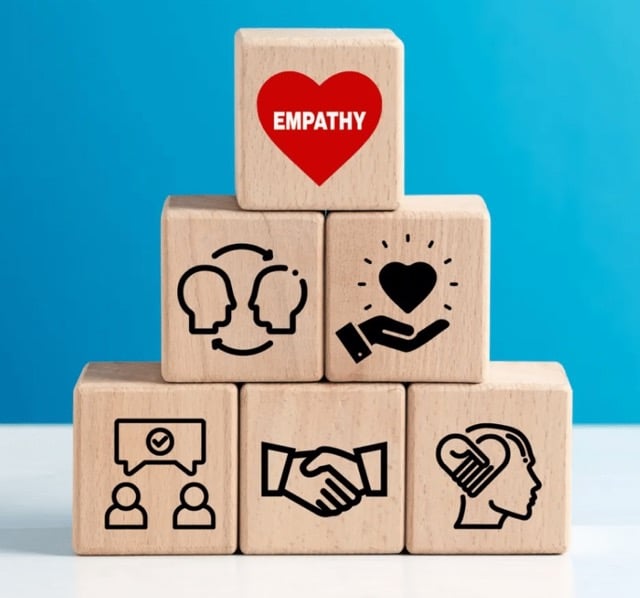
Empathy Tests For Autistic People: What Are We Measuring?
What do people mean when they repeat the myth that “Autistic people lack empathy?” Which sort of empathy? What evidence is there?
Thanks for reading, and here’s to making those connections thanks to shared autistic viewpoints.
Got something autism-related to share with us? Send it along to [email protected].
Got a comment? We’d love to hear from you, so drop us a line below. Please note that comments are moderated per TPGA guidelines.
About the Author
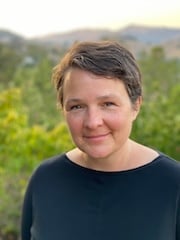
Dr. Emily Willingham is a 2022 MIT Knight Science Project Fellow, and the author of several books, including the upcoming If Your Adolescent Has Autism: An Essential Resource for Parents from Oxford University Press, and has served as a regular contributor to Scientific American and other national publications.
-
What are Dr Emily’s credentials when it comes to autism and research? She has written some precautionary words and seems to be justifying fear related to autism research but this does not address the fact that research, particularly for females and late-diagnosed adults, is very scares.
Genetics is a powerful tool and to hint that it is to be feared without presenting the upscaled and positive potential is careless and does not serve the community well. Perhaps staying with empiracally based articles rather than presenting opposition, particularly when it comes to research, would serve the community in more supportive ways.


Add a comment: