Interagency Autism Coordinating Committee: From Bad to Worse
The current administration continues to be an ongoing disaster-in-the-making for autistic people.

Things have gone from bad to worse on the Interagency Autism Coordinating Committee, as Sylvia Fogel was ousted as chair in favor of John Gaitanis, a hardcore leucovorin stan and ally of Robert F Kennedy the Lesser. Gaitanis already made headlines — and waves — when he was named head of the National Institutes of Health’s child health institute about a month ago.
Fogel, who remains as an IACC member, had just been highlighted in an interview with The Transmitter for her chair role when the switch came down. In that interview, she focuses on “regressive autism,” citing her experience with her son. She describes him as having had “a whole host of very complex co-occurring medical conditions” and who experienced immense relief after receiving a common treatment for immunodeficiency and autoimmune disorders. The entire interview has a red-flaggy feel for multiple mentions of regression, a reference to mitochondrial dysfunction, and “neuroimmunity,” none of which are explicitly part of the IACC brief. Fogel does, however, acknowledge that the situation may involve co-occurrence rather than shared pathways, saying:
One, it may be that a subset of kids who are presenting with neurodevelopmental regression who are then diagnosed with autism, or who may already have autism, but then also have an overlay of a neuroimmune process …
Even that level of modulation of the early 21st-century obsessions of some in autismland will likely disappear with the new appointment. Gaitanis is on the “medical” board for MAPS (Medical Academy Pediatric Special Needs), formerly known as DAN! (Defeat Autism Now!), an organization hell bent on erasing autistic people. MAPS is a quackery-on-steroids joint where terms like “homeopathy” and “functional medicine” are used with a straight face (and a hand in your wallet).
Its president is James Neuenschwander, who also runs the “Bio Energy Medical Center” where you can pay for “services” for autism and read an egregiously illiterate interpretation of genetics and neurodevelopmental diagnoses. His “medical center” describes autism as:
a neurotoxic disorder, because it’s caused primarily by the presence of destructive elements that injured the brain: toxic chemicals, viruses, incomplete proteins, inflammation, immune cells that attack the brain.
Needless to say for anyone paying attention in the last quarter century, what follows is a litany of claims about how autistic people can be “recovered” by avoiding gluten, getting expensive testing for “bio energy” disruptions (at the Center, natch), and, excuse the language, fucking chelation therapy. They specifically offer an acronymic therapy called Complete Elimination Autism Spectrum Expression and Modern Disease, or CEASE, which, dearest reader, is simply another word for DAN! In a surprise to no one, Neuenschwander also operates an ABA center. He’s a busy fellow. He also makes some claims in his biography that I am looking into, including emailing him for clarification, as I cannot find confirmation of those claims.
According to a press release from the NIH, Gaitanis, who presumably advises Neuenschwander in the latter’s role as president of MAPS, received the “MAPS Trailblazer Award” in 2025. I’ve only served on a couple of boards, but it’s a tad odd he would not have been considered ineligible for such awards from an organization he serves as an advisor. But what are petty ethics considerations when there are awards to be dispensed to self-promote everyone involved?
Gaitanis and Neuenschwander make the rounds together, in videos long and short, as “faculty” for MAPS, in chatty Instagram reels, on podcasts, and more. These two are tight, and that’s bad news for autistic people and science.
Meanwhile, elsewhere in the federal attack on autistic people, the current surgeon general nominee, Nicole Saphier, couldn’t bring herself during a Senate hearing to state that the MMR vaccine doesn’t cause autism. Great that a person poised to be the clinical face of the nation can’t even bring herself to follow the evidence on one of the most clearly decided scientific questions of the past 30 years.
News you can use
- In a first-of-its-kind national study, researchers have found that autistic people have higher rates of negative outcomes associated with substance use disorder (SUD). In addition, autistic people with SUD are less likely to receive services they need for the condition.
- A lack of flexible, person-centered communication — a.k.a., the environment — is the reason autistic women encounter barriers to prenatal care, a study indicates. The work, conducted in Brazil, found that the barriers didn’t arise because of the pregnant people were autistic but because of an environment that didn’t respond to their communication and other needs. The study authors conclude that healthcare professionals should be specifically trained in appropriately accessible communication and other strategies for lowering barriers to care for this population.
- It used to happen all the time: If you used “autistic” in public writing, some presumably well-meaning, almost always non-autistic person would sail in with a lecture about using “person-first” language. In the last few years, however, even news outlets have taken up this identity-first terminology. Meanwhile, identity-first language for some conditions has fallen out of use, in some cases quite rapidly, according to a recently published study of these linguistic trends. Whether a condition trended toward person-first or identity-first in recent years seems to have relied on the direction of advocacy and whether or not they are considered a basis for identity, which autism tends to be.
-
Autistic people should be able to complete testing in clinical situations, but often such tests were not developed with their needs in mind. Without considerate adjustments, differences in motor skills that autistic people often experience could affect test outcomes. Professionals need a guide on adapting testing for autistic people to yield the most accurate results possible, and the authors of this study have a few suggestions, including:
- Preparing people ahead of time for what to expect
- Offering sensory supports
- Changing procedures or the testing environment
- Using clear and supportive communication
- Supporting motivation and engagement
- The new film “Masc” focuses on Robin, an autistic, queer, biracial man and his experiences during a year of learning to live with authenticity. But don’t expect the usual stereotypes of any of these identities. Director Bertil Nilsson told Deadline that “Every autistic person is different and so is Robin. He’s not intended as a representation of autism.” Nilsson co-wrote the script with Joshua Griffin, who also plays Robin in the film.
- From the editors: ASAN has an excellent new Plain Language toolkit on why the heavily lobbied “profound autism” label is a dangerous way to impose non-autistic ignorance and parent grievances on autistic people with high support needs.
- The outlet The 74 analyzed 275 million Medicaid claims for autism therapy in the DOGE dataset and showed what we’ve known for a long time: ABA, “an unproven, even harmful, behavior modification system … is crowding out more effective — and humane — treatments for children with autism.” And private equity is the elephant in many of the rooms: The analysis showed that private equity–backed providers represented the greatest proportion of the 381% increase in Medicaid claims for the most common autism “therapies” from 2019 to 2024.
- Maria Town, president of the American Association of People with Disabilities, writes on LinkedIn about her reaction to the Supreme Court ruling against the current administration’s efforts to tank the right to vote-by-mail: “I am relieved to see that on the first day of Disability Voting Rights Week, disability voting rights were protected by the Supreme Court. In 2020, over half of disabled voters cast their ballots via mail.”
- Autistic autism researcher Steven Kapp has a lot to say about the NAS’s announcement that autism is genetic, and he brings the links, too.
-
TPGA’s Shannon Rosa highlights “two nifty new autism and autism-related documentaries worth your time”:
“All of Us“ is about Ruby Bridges Elementary, a fully inclusive K-5 school community in Washington. Since the inception of this school community in 2020, they have designed all learning and instruction with an emphasis on universal design, collaboration and flexible delivery of support and services for all students in their general education learning community.
“Autistics with Power Tools,” from Autistry Studios in San Rafael, CA, is “a groundbreaking therapeutic makerspace for teens and adults. This documentary follows students as they bring their personal journeys to life.”
People you should know
- “Little Shop of Horrors” and “Martin” actress Tisha Campbell, who has been open for many years about being the parent of an autistic child, has been diagnosed autistic herself.
- Kate Wallington is a 20-year-old autistic champion swimmer who also has epilepsy. She holds 14 world records and five Australian records, and has won 11 gold medals at the 2025 Virtus World Swimming Championships. Wallington is now part of a campaign encouraging Australians to get moving, especially hoping to provide people like her a space where they can use movement of their choice to regulate in the way swimming has done for her.
- Philadelphia’s Popcorn for the People began as a more “sheltered workplace” enterprise but has shifted to something much better for neurodivergent workers. In 2026, the company transitioned into a “true Competitive Integrated Employment (CIE) model by opening positions to neurotypical applicants, adding positions, implementing a career ladder, and integrating mixed-neurodiverse teams with natural supports and fair wages.”
Thanks for reading, and here’s to more legal outcomes that protect our rights.
Got something autism-related to share with us? Send it along to [email protected].
Got a comment? We’d love to hear from you, so drop us a line below. Please note that comments are moderated per TPGA guidelines.
About the Author
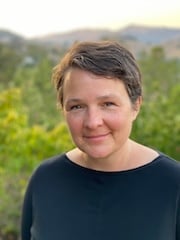
Dr. Emily Willingham is a 2022 MIT Knight Science Project Fellow, and the author of several books, including the upcoming If Your Adolescent Has Autism: An Essential Resource for Parents from Oxford University Press, and has served as a regular contributor to Scientific American and other national publications.


Add a comment: