Celebrating AAC (Augmentative and Alternative Communication) Month
Communication is a human right.
Please note that Emily Willingham is out this week, and that Shannon Rosa is pinch hitting instead.
October is AAC (Augmentative and Alternative Communication) Awareness Month, an important observation for our community as researchers estimate that around 30% of autistic children are “minimally verbal,” and, as we all know, autistic children grow up to be autistic adults. This means a lot of people in our community need support to communicate.
But what exactly is AAC? According to one of our favorite AAC companies, Assistiveware:
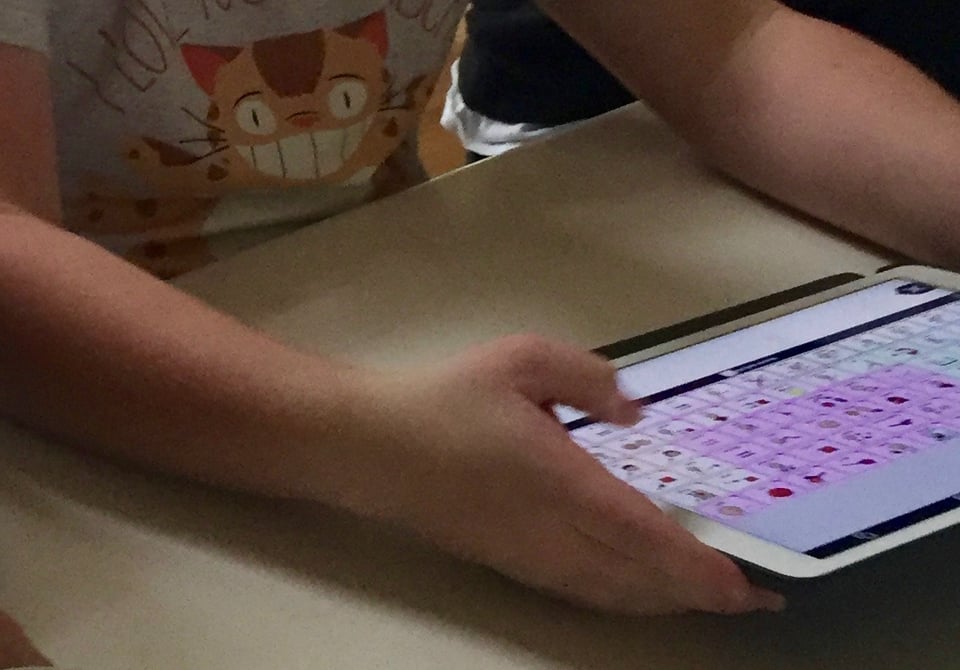
AAC stands for Augmentative and Alternative Communication. It refers to tools and strategies that support or replace speech for people with communication difficulties. AAC can be unaided (like gestures or facial expressions) or aided (like picture boards or speech-generating devices).
And our favorite AAC organizations, CommunicationFIRST, has a plain language explanation:
AAC stands for Augmentative and Alternative Communication. AAC is anything that helps support your spoken words, or that you use instead of spoken words.
If you want to learn why AAC matters, you should pay attention to what nonspeaking autistic people have to say about their communication. We like the short film Listen, also from CommunicationFIRST.
There are many excellent writers who talk about best practices for AAC, including Tiffany D. Joseph (A.K.A. Nigh Functioning Autism), who warns against pressuring AAC users too much:
Speakers get taught how to write and read and even speak their best throughout their entire childhood and beyond. […] AAC users and Nonspeakers or people with differences in communication should be given even more time. They are always expected to do even more with infinitesimally less than non-disabled peers.
One of the more crucial elements of AAC is presuming competence in people who are using (or learning to use) it. Jace Pooley, who types to communicate, explains:
Presuming competence means doing things like reading literature or school textbooks out loud, holding real conversations that are age appropriate (even if nonspeakers can’t respond), and meaningfully involving nonspeakers in whatever is going on. Life is pretty lousy when you’re left out, constantly underestimated, given nothing interesting to do, and made to feel like the future will be just as bleak as the present. Our lives get so much richer when the outside world realizes our humanity and feeds it. That lets us connect with others and do the hard work of finding our voice.
Lack of resources for, and access to, AAC is a significant hurdle for autistic people who do not communicate with spoken language. We desperately need more research and more funding so we can provide functional AAC to the autistic kids and adults who need it, and also so we can better determine which (of the many types of) AAC works best for each individual.
While ideally every autistic child who has a communication disability will be provided with AAC as early as possible, it is also never too late to learn how to use AAC.
News You Can Use
First responder training for autism is not only far from ideal but can backfire on the autistic person in crisis, often fatally. New research suggests that many of the flaws and gaps in autism first responder training have to do with a combination of age and personal familiarity with autism.
Because younger first responders tended to exhibit better knowledge and confidence than older first responders, it is necessary for departments/FR units to make retraining available and required for first responders.
Regardless of how well trained first responders supposedly are, it will still be a cold day in Hades before many of our community members feel safe calling 911.
In no surprise to anyone who follows this newsletter, RFK the Lesser’s grifting remains truly bottomless. (We, however, may run out of pejoratives to describe the man):
Talking to the anti-vaccine group he led so recently is just one of the ways Kennedy is pushing norms. He has also taken cash for book advances, defied his ethics agreement by promoting one of his books on social media and accepted expensive gifts.
Have you noticed that autistic people often do not respond well to being interrupted (and that this is true whether or not they communicate typically)? That’s because, as autistic people know well—and as new research indicates—interruption is devastating for autistics:
Participants described their attention as a sequential, deeply engrossed process. Interruptions, especially from other people, were profoundly challenging, often leading to a collapse of their focus and an exhausting state of vigilance.
I remain irritated by the article "Maternal depression tied to higher risk of special ed needs in kids" as the piece doesn't once mention that official autism criteria changed to be more inclusive of girls only 13 years ago, so there's a non-zero chance some of the moms are autistic but were undiagnosed as children and therefore overlooked by special ed services—and also misdiagnosed with other conditions as adults.
Autistic college students with co-occurring disabilities need stronger, tailored accommodations, unsurprisingly and per new research:
The challenges they faced were not rooted in a lack of ability, but rather in the persistent and often invisible weight of navigating academic life with both autism and co-occurring disabilities.
People you should know
AAC users were a significant presence at last month’s Stanford Neurodiversity Summit, including keynote speaker Hari Srinivasan, and panelists Tyler Fihe, Ava Guardado, and Rachel Kripke-Ludwig. Videos of the summit’s panels and keynotes will be available over the next few weeks.
Camille Proctor of The Color of Autism Foundation has concerns about the Blue Envelope safety program for autistic drivers: “Equitable assistance would start with the officer, not the driver. The burden of a safe traffic stop should not rest on an autistic person's ability to remember a script under stress. Crisis Intervention Team training, and training specifically on autism and race, should be required, not optional. As a certified CIT coordinator, I've seen what trained officers can do. I've also seen how thin that training is spread.”
Emily Paige Ballou has thoughts on how the autistic tendency to choose friendship quality over quantity can also lead to worrying IRL isolation—as was made clear to her during COVID pandemic shutdowns.
New at TPGA
How Should We Be Talking About The Peter Pan Girl?
Thanks for reading, and here’s to functional communication options for everyone who needs them.
Got something autism-related to share with us? Send it along to [email protected].
Got a comment? We’d love to hear from you, so drop us a line below. Please note that comments are moderated per TPGA guidelines.
About the Author

Dr. Emily Willingham is a 2022 MIT Knight Science Project Fellow, and the author of several books, including the upcoming If Your Adolescent Has Autism: An Essential Resource for Parents from Oxford University Press, and has served as a regular contributor to Scientific American and other national publications.


Add a comment: