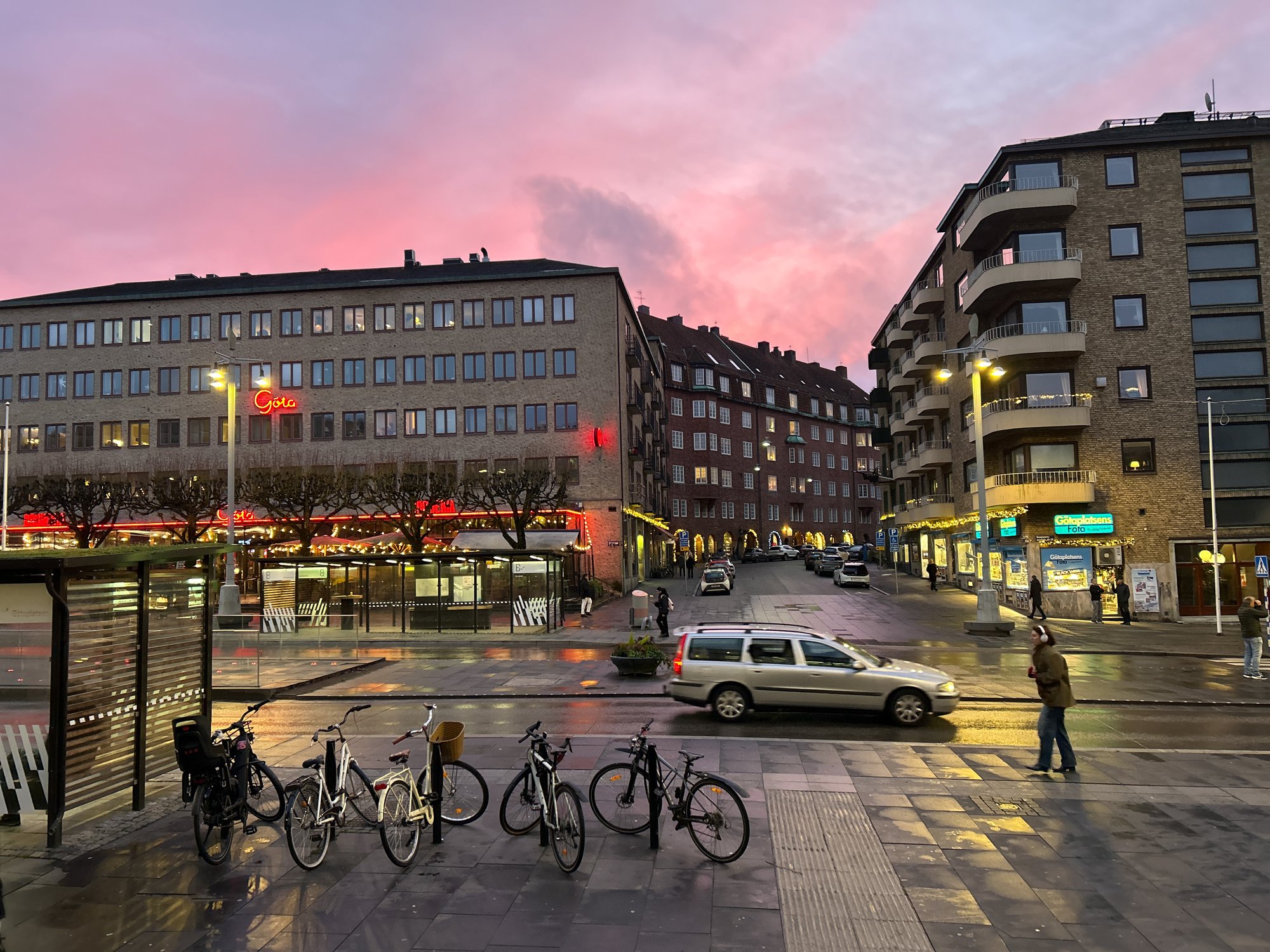
'Service' provokes, comforts, inpsires
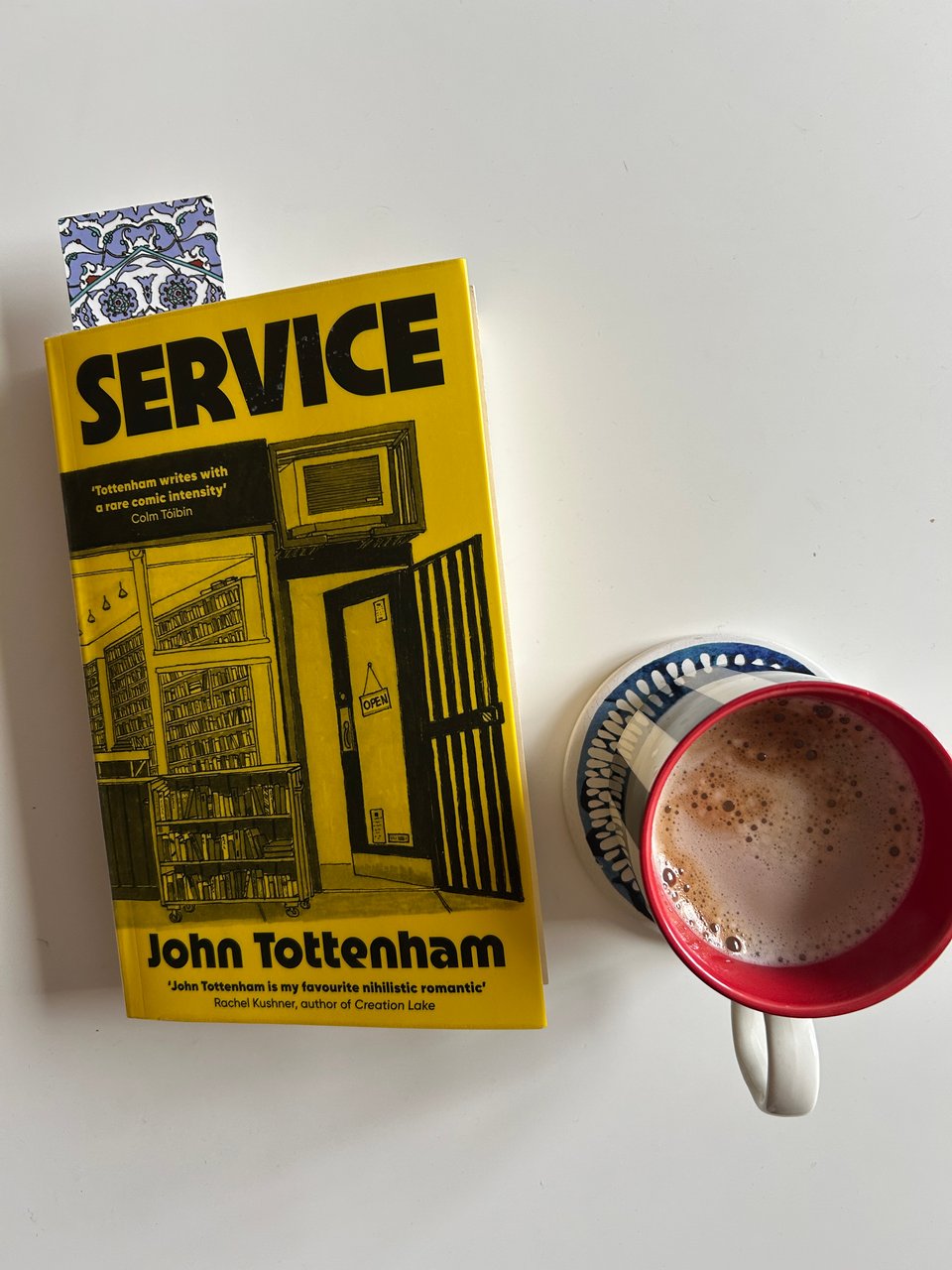
The artist and poet John Tottenham's debut novel, 'Service', is fire (he'll hate this descriptor)
I love reading contemporary literature. As much as it is slammed and dunked on, every once in a while a novel so fresh comes your way that you want to devour it in a day and then start it afresh the next.
A recent novel I didn't foresee as an antidote to the ways in which AI will demolish the service industry is John Tottenham's Service (2025, Semiotexte). Human beings were always supposed to be at the center of this industry, irrespective of what the technocracts would have us believe. And it is such a warm, funny, chaotic consolation of a read with running, salty commentary on preserving neighborhood character/evils of gentrification speak!
(I secretly wonder though what Elif Batuman and Parul Sehgal would make of a novel like this — in short I miss regular, detailed book reviews in news dailies I subscribe to!)
I love it especially when novels — contemporary ones at that — are in direct conversation with some of the more daunting themes that dominate news cycles. Service does all that and more! It not only reminded me of my own days as a copy-editor at India’s leading business newspaper, but it also beautifully highlighted the callous ways in which more and more of these jobs are now threatened by the AI scourge.
Little conversations we used to have, subtle sidebars, niggles with people walking around, stomping all over our jobs, talking at us about our mandates, felt eerily similar to the way Sean experiences the passage of time at his place of work.

I remember us little font, grammar, design and sentence nerds, paragraph perverts, geeking about at work, going deep into internet or dictionary rabbit holes, finding hidden meanings of obviously overused phrases or the ways in which a font or layout could shift sands for a story in the paper’s centrespread.
Sean seems to be a nerd too, and emphatically so, except that he’s also a little bit of an asshole. He acts superior to everyone around, while the people hardly notice him more than a spider plant adorning a window. People around him are perpetually glued to their screens, though in a more 2019 and Delhi kind of a fashion wherein they scream into screens, take video calls in public, watch the world through the 4/6 black mirrors. In those passages, Tottenham comes across as a bard for civilisation at dusk, mirroring our minor niggles about our perpetually screen-addled polis.
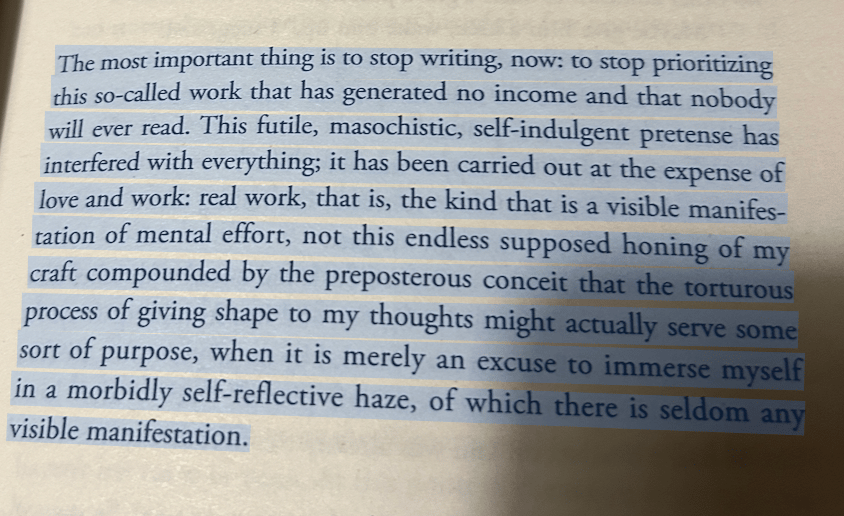
Tottenham writes in a style and language that’s as astute as it’s current. He paraphrases catch-all phrases he’s heard on the fly or which fell into his earshot. The overabundance of “cool”, “oh-my-god”, and “awesome” grate on his senses just as overused words like “amazing”, “apparently” and “slams” grated on mine all those years ago (they still do). And in so doing, Tottenham is able to tap those seriously nagging pet-peeves most of us deal with in our respective domains of work.
Service’s Sean is hardly ever generous, just like the copy-editors at newspapers. He’s forever sniffing other’s baloney, cutting them short and finding better words and phrases for them. Attuned to his environments, the only objects he is lenient towards are books but never their writers (and understandably so, {he too wants to be writer, after all!}). He respects and reads even the books he doesn’t. And there’s something to be admired there.
A generation of us (even though Service’s Sean is close to the mid-century mark) were brought up actively cultivating taste, habits those rare endangered species called extra-curriculars. That thing was not just an elitist marker of sensibilities but also a purveyor of standards. If a certain song didn’t match my standards, I wouldn’t bother buying the cassette. It was really as simple as that. Now everyone’s listening to the same trending Spotify playlist, trying to one-up the others by acting all aloof otherwise.
Our friend Sean, conversely, has deleted the messaging feature on his phone. During evenings and in his off time, he listens to Chopin while luxuriating in the bath, reading a Barbara Pym novel. He does quibble every now and then about not having enough people around he could call genuine friends. But he’s neither sanguine nor keen. Service shows that more than these small acts of worship (reading dedicatedly, writing sans distractions), what is rewarded instead is networking with the right people and showing up at events even though you might not have deep knowledge on a (or any) particular subject.
It’s this register that Sean takes that felt simultaneously satisfying and saddening. Written in attractive, small, almost fetishistic paragraphs, Service feels like a big fag/gulp of a fridge cigarette which makes you nauseous immediately after. A little bit like Lena Dunham’s Girls that no matter how many times I watch it, I feel compelled to revisit every summer to refresh my memory of my own solipsistic, vain, insufferable twenties.

At various stages, it felt to me as if Service was speaking directly to me. The use of mixed language, ample profanities, both daunting, obscure words (balneation) and also colloquial everyday slang makes for a delicious read.
It’s a reader’s novel, specifically focused on a vagarant reader like me because he mentions Knut Hamsun’s Hunger, Kafka’s short stories and (10) novels by George Gissing.
At some point a character quotes Huysmans at Sean: “The bitter promiscuity of the failed romantic”, choking both Sean and I.
I also completely fell into the place, Los Angeles of present day (circa 2019) and the ways of the (screen-addled, loud, asshole-ish) world there. Evoking a sense of place and time in a novel while writing about not being able to do just that, carries both charisma and bravura (Sean, it must be declared here, is trying to write a novel in this novel; it’s a trite enterprise but also immensely rewarding). There’s that sole evocation of the iconic LA Sunset Boulevard too, but in a way that completely buries the lede, inverting the reader’s expectations.
The ease with which Tottenham’s curmudgeonly Sean papers over his own deficiencies and goes on tirades after tirades to highlight where all his colleagues and clientele lack is the USP of this piece. I’d read it again and foist it upon friends, but then I’m a stickler for right words and the nerds come last these days, or do they?
What I’m reading:
Coca-Cola Reached for Nostalgia. Did It Get Marlboro Instead? Isn’t that headline enough? Also related to the topic of font nerdery.
Obssessed with all things Elisa Gabbert (who was awarded the Guggenheim Fellowship this year!!!!) and her essays, this was pretty awesome (😋): Time & the Essay; Elisa Gabbert on the ritual of the pit
On the subject of Gabbert, I interviewed her for this newsletter in the fall of 2024, give it a read: Conversation with Elisa Gabbert
I’ve been revisiting Elif Batuman’s substack essays and the top of the pile is: On Being Butthurt (also her most read one) and boy does she deliver!
Theodore Brown is on the 💰 about a new format of selfies (which aren’t taken from the phones, I’m game!): Since the camera is always watching, why not snap a surveillance selfie?
Thank you!!


Add a comment: