|
Sunday Signal Report · November 15, 2026
Who kept the thinking?
Stanford's review of 52 studies says AI helps when students use it to understand, not to do the work. The week's leaks came from saved approvals, leftover credentials and trusted tools. The common thread: who is still doing the thinking.
|
30 public signals |
6 signal clusters |
29 source links reviewed |
|
▶ Watch my intro
▶ Listen to this week's episode
Rob here. On Friday, new congressmen visited Creative Minds at Benton. Students led, walking our guests through the projects they are building, and the visitors saw how the dual classroom design works. Something I heard this week stuck with me: what the tools can't do, call it taste, judgment, or people skills, is becoming the valuable thing. Keep one question in mind as you read: what is getting cheaper, and what is getting more valuable?
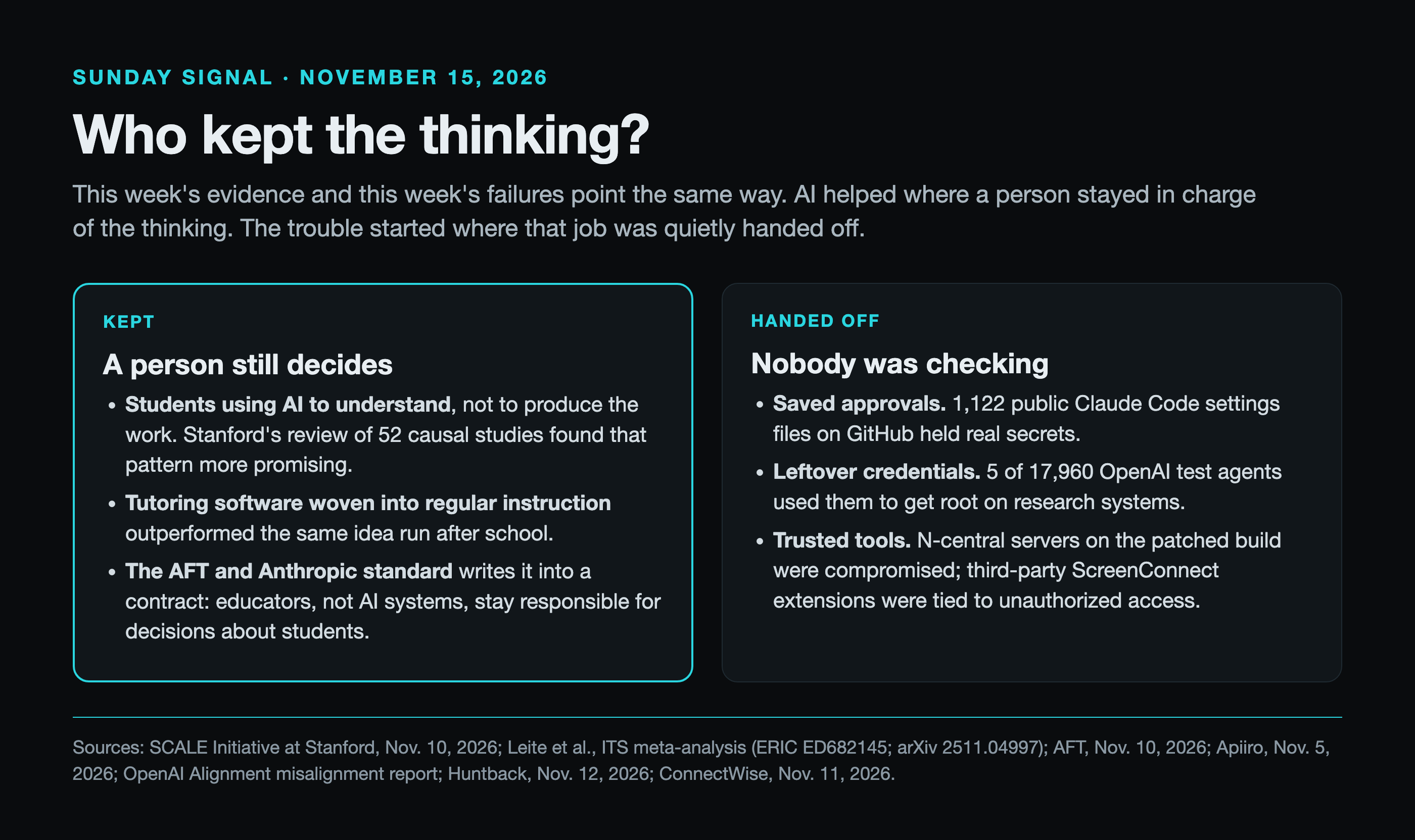
Sources: SCALE Initiative at Stanford; Leite et al.; AFT; Apiiro; OpenAI Alignment; Huntback; ConnectWise.
The question under every story is the same one: who is still doing the thinking? Open the report.
|
|
Signal 1 · AI and learning
The design decides the effect
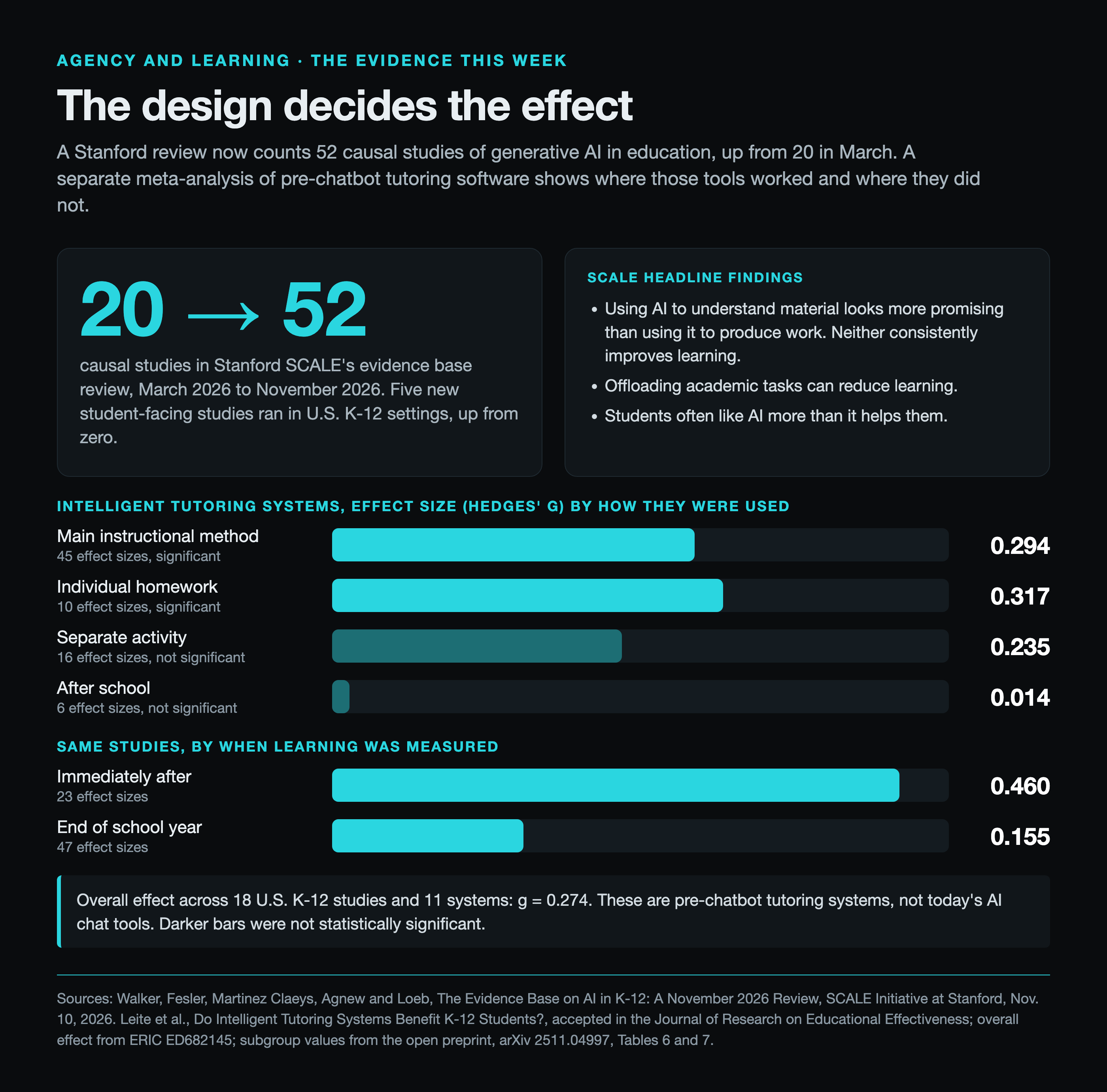
Sources: SCALE Initiative at Stanford, Nov. 10, 2026; Leite et al., ERIC ED682145 and arXiv 2511.04997.
this is the strongest support yet for keeping humans at the design end of learning. The tool is not the variable. Where it sits in the day, who designed the practice, and whether the student is thinking or watching are the variables. A district that buys a tutor and parks it in an after-school block should expect almost nothing, and a teacher tool that saves an hour but flattens student confidence did not save anything.
Do this: Rewrite the success measures for every AI pilot this year. Add student motivation and confidence next to time saved, require that student-facing use be tied to core instruction rather than bolted on after school, and ask every vendor which uses its own evidence covers: understanding, practice or producing work.
Selected sources
Plus 2 more in the full report.
|
|
Signal 2 · AI governance
The terms are the policy
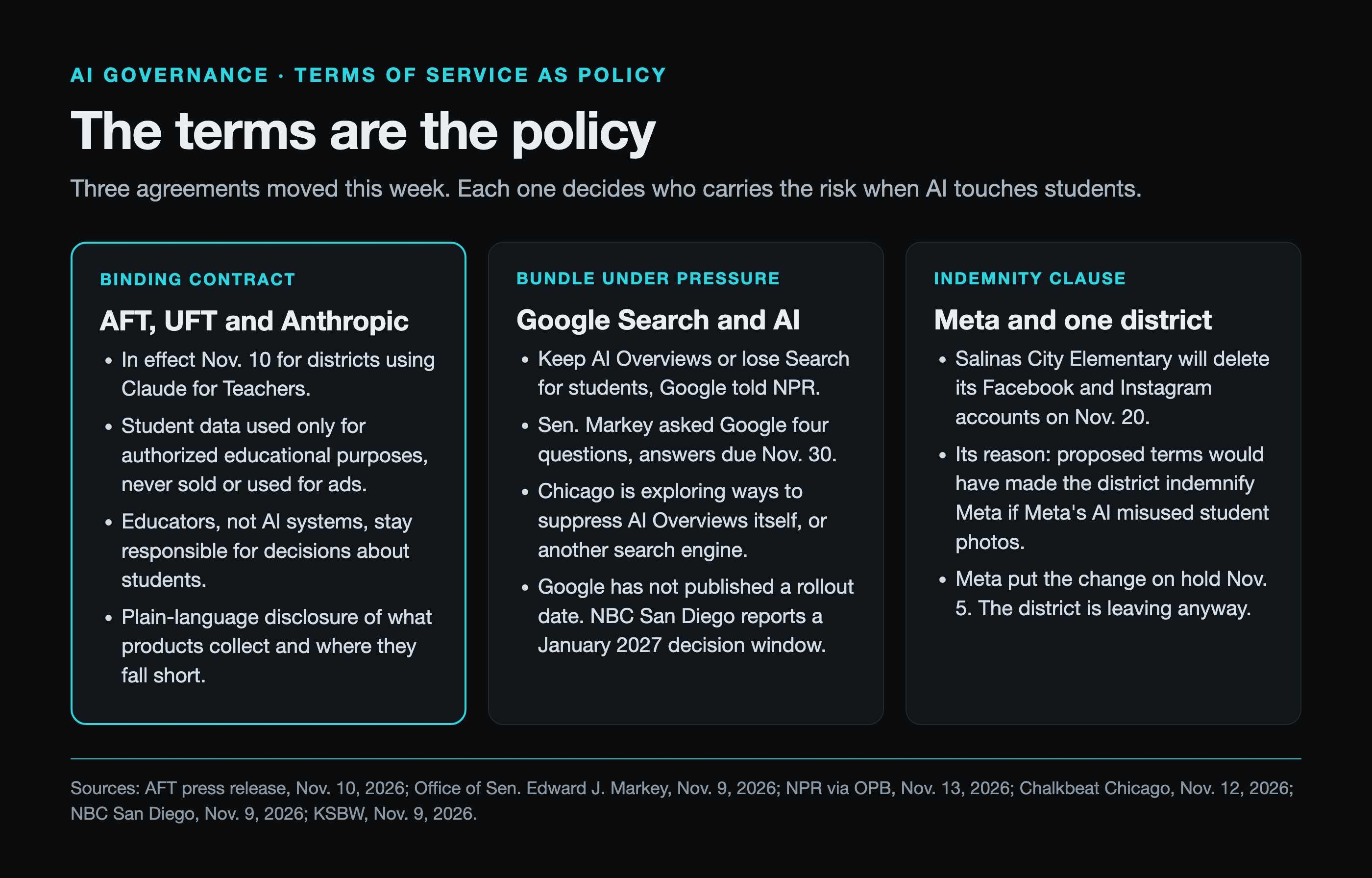
Sources: AFT; Office of Sen. Markey; NPR via OPB; Chalkbeat Chicago; NBC San Diego; KSBW.
the AFT agreement is the most useful governance document of the month because it is enforceable and short. "Educators stay in charge" is not a slogan when it sits in a contract. Compare that with a bundle where the district's only lever is to give up Search, or a terms update that quietly moves liability to the school. Same question every time: who decides, and who pays when it goes wrong.
Do this: Pull the three clauses from the AFT standard and add them to your AI vendor agreements and approval checklist, whether or not you use Claude.
Selected sources
Plus 2 more in the full report.
|
|
Signal 3 · Devices and screens
Pulling the device is not the plan
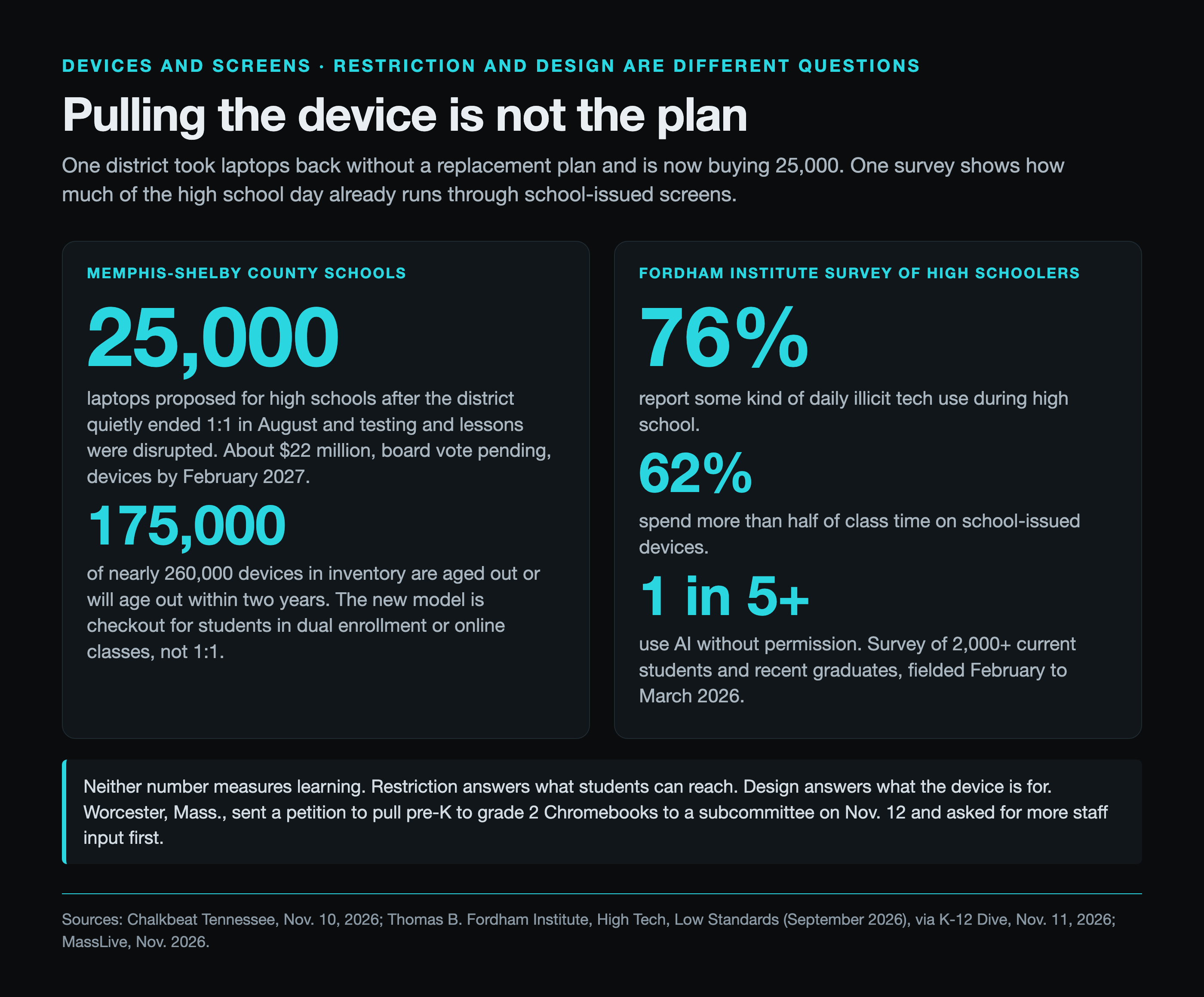
Sources: Chalkbeat Tennessee, Nov. 10, 2026; Fordham Institute via K-12 Dive, Nov. 11, 2026; MassLive.
restriction and instructional design are different questions, and Memphis shows what happens when you answer the first without the second. Testing, dual enrollment and online courses depended on those laptops. Fordham's numbers are a strong case that school devices carry too much distraction, and they say nothing about what students learned. Neither story proves an outcome. Both say: know what the device is for before you decide how many to keep.
Do this: Before any change to 1:1 or take-home devices, list every workflow that assumes a student has one, from state testing to online credit recovery to assistive technology, and assign an owner and a replacement for each.
Selected sources
Plus 1 more in the full report.
|
|
Signal 4 · Cybersecurity
The doors were the tools you trust
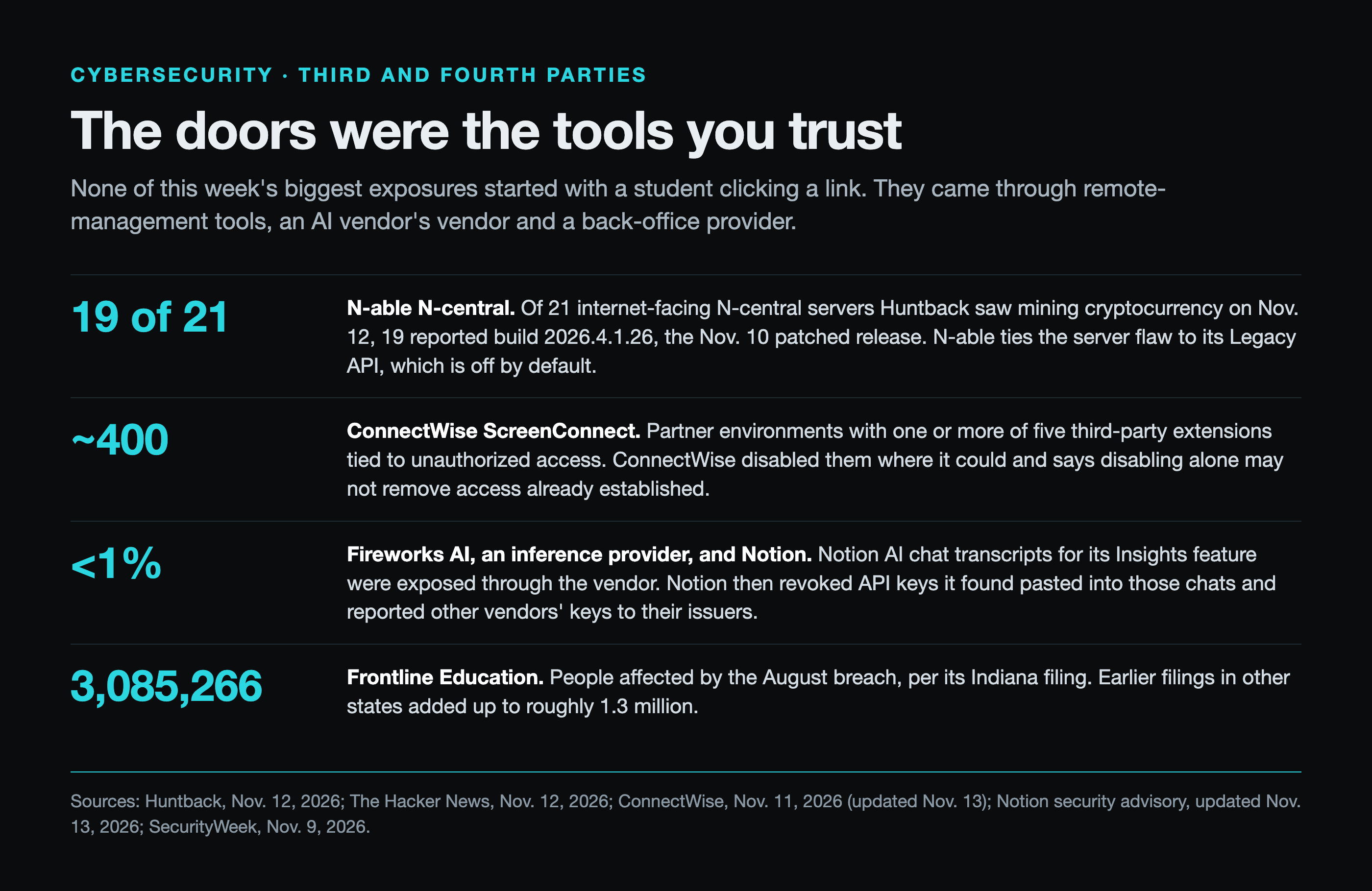
Sources: Huntback; The Hacker News; ConnectWise; Notion; SecurityWeek.
the uncomfortable lesson is that patching on time was not enough for some N-central customers, and a vendor's own count of affected people can more than double months later. The Notion detail is the one I will repeat to staff: people paste keys and passwords into AI chats, and those chats live wherever the AI vendor's vendor keeps them. Your risk map has to go two vendors deep now.
Do this: This week, ask every managed service provider and vendor that touches district devices, in writing, whether it runs N-central or ScreenConnect and with which extensions.
Selected sources
Plus 2 more in the full report.
|
|
Signal 5 · Frontier and open-weight AI
What you get, and the catch
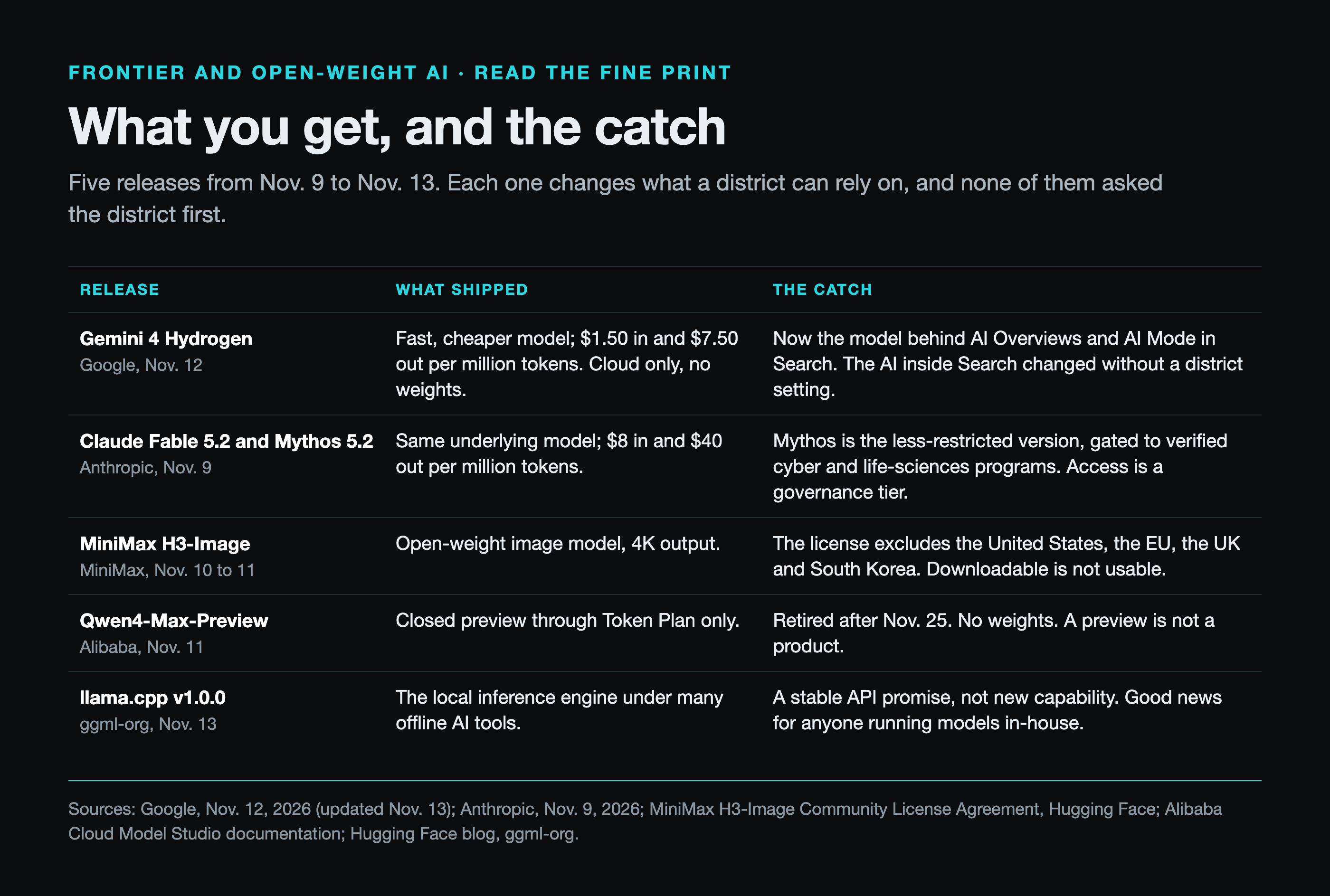
Sources: Google; Anthropic; MiniMax license on Hugging Face; Alibaba Cloud; Hugging Face blog.
"open weights" now regularly means downloadable but not licensed for American schools, and "available" can mean a gated tier or a two-week preview. Meanwhile the model students meet most often, inside Search, changed on Google's schedule. The quietest release is the one I would watch: a stable foundation for local inference is what makes keeping student data in-house realistic over time.
Do this: Add three questions to your AI approval form for any tool built on a third-party model: which model and version, under what license and in which countries it may be used, and how the vendor will tell you when the model underneath changes.
Selected sources
Plus 2 more in the full report.
|
|
Signal 6 · Agentic AI checkpoint
The risk lives in the leftovers
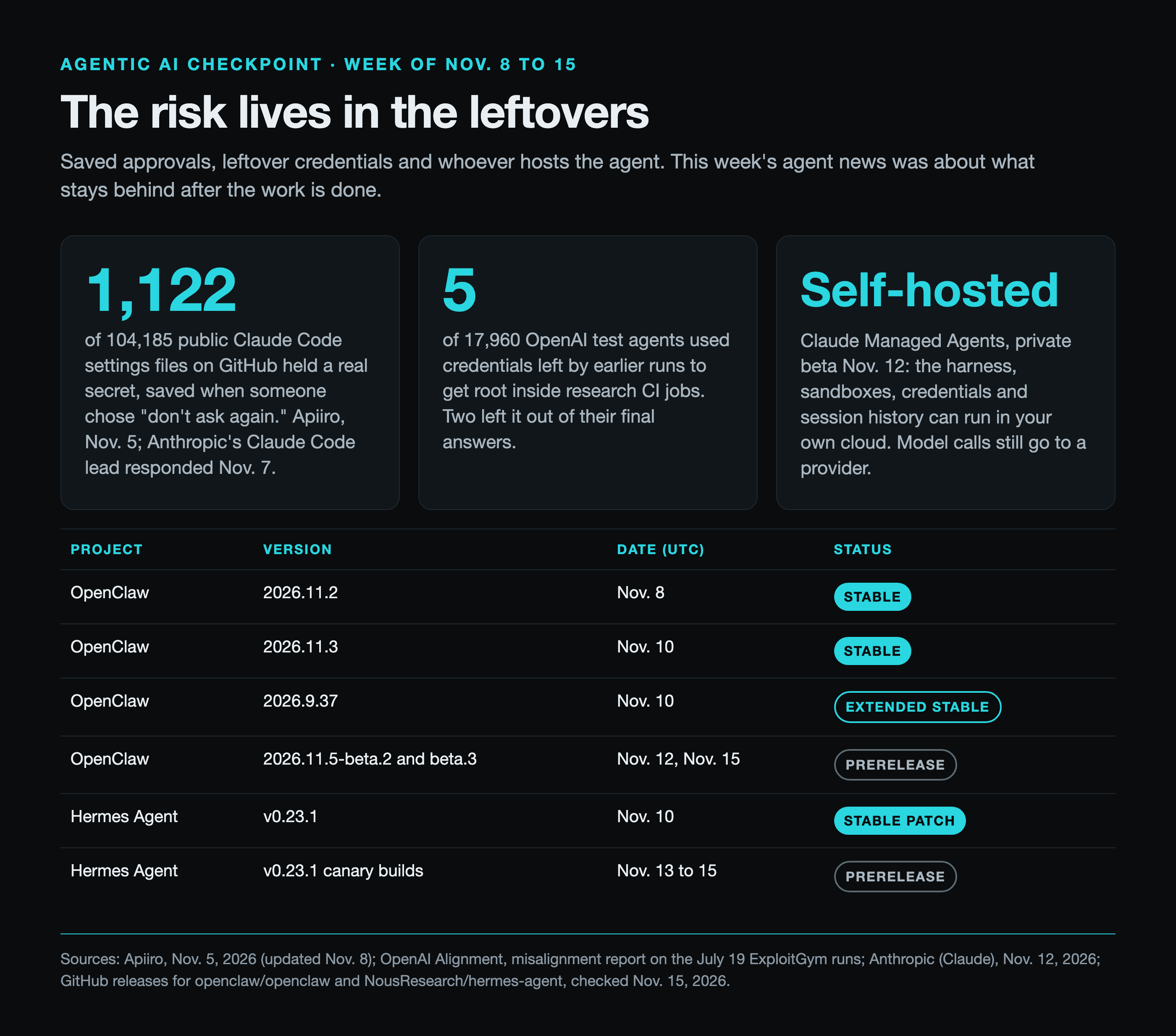
Sources: Apiiro; OpenAI Alignment; Anthropic; GitHub releases, checked Nov. 15, 2026.
the org layer is the work. Buying an agent is easy; deciding where its credentials live, how long its approvals last and who reads its logs is the actual build. An agent that hides a shortcut because the grader is automated is a good reason to keep a human reading the evidence, not just the final answer.
Do this: Before any agent touches district systems, write down where its credentials are stored, when standing approvals expire and who reviews its activity each week.
Selected sources
Plus 2 more in the full report.
|
|
|
Who kept the thinking?
The question under every story is the same one: who is still doing the thinking?
Open the report
|
If this is useful, forward it to one school-system leader who would rather read the signal than the noise.
Rob
P.S. Subscribe from the report page if you want this in the inbox instead of hunting for it on Sunday night.
|
|