
Dysregulation and avoidance
I'm starting to feel a little wary every time I hear the word dysregulation, or dysregulated in reference to a person. It feels a bit pathologising of someone's state of mind or being, but also I worry about regulation as being seen as the end goal for any kind of work on your mental health.
Here's a definition of emotional dysregulation:
Emotional dysregulation is characterized by an inability to flexibly respond to and manage emotional states, resulting in intense and prolonged emotional reactions that deviate from social norms, given the nature of the environmental stimuli encountered. https://en.wikipedia.org/wiki/Emotional_dysregulation
From that definition, it's a good goal to have. Being able to manage emotions in the face of various situations is something worth doing, as being constantly in a state of anxiety or anger or frustration is exhausting and not good for you. However, I'm now hearing dysregulation being used to mean any kind of emotional response, and that is a red flag for me.
Two things:
Sometimes you're going to get emotional. Sometimes something happens that messes you up. And even if you feel your response is out-sized (or it is out-sized), sometimes you need the out-sized reaction to get to some truth about why this is bothering you, what it's triggering, what you need in order to manage moving forward.
It reminds me of that time where people would say resilience to mean 'swallow seven cups of shit without it affecting you at all', and a lot of corporate resilience training seemed to boil down to 'well, we're not going to fix the working environment, so you need to manage'. It's a shifting of the problem from the thing happening, to people's reaction to the thing, when sometimes, it's the thing that's wrong.
The SCB newsletter is entirely reader supported. To receive weekly writing like this, upgrade to a paid subscription from as little a £5 a month
My real concern though is that it reminds me of all the times I've prioritised being regulated over doing any kind of self reflection, or excavating of my feelings. If I was regulated and functional and getting things done, then clearly I was fine and absolutely did not need to pause and reflect. I was scared that if I did stop, I would be completely overwhelmed by emotions and lose myself entirely. I had no internal sense of safety or stability, so I pushed through, and because I could (even if it was exhausting), then that's all that mattered.
I am aware this is a me problem, but I feel it bears exploring. When you've experienced periods of mental illhealth, there is a fear of going back there, or becoming ill again. A lot of people I've spoken to in the course of my wellbeing career have said similar things. It's super easy, both through avoidance and general busy-ness of life, to stop engaging with feelings because you're doing fine, so why rock the boat?
Dysregulation can also conjure images of an out-sized reaction, overreaction, and the shame of realising you've overreacted when you calm down again, and we want to avoid that. There's also the social stigma of being an emotional woman, or similar.
So should we be using the word dysregulated in day to day conversation? Or should we use words like emotional or reaction or becoming activated or something else that brings imagery of an emotional reaction without it being linked to being out of control.
I don't know the answer, this is just me pondering.
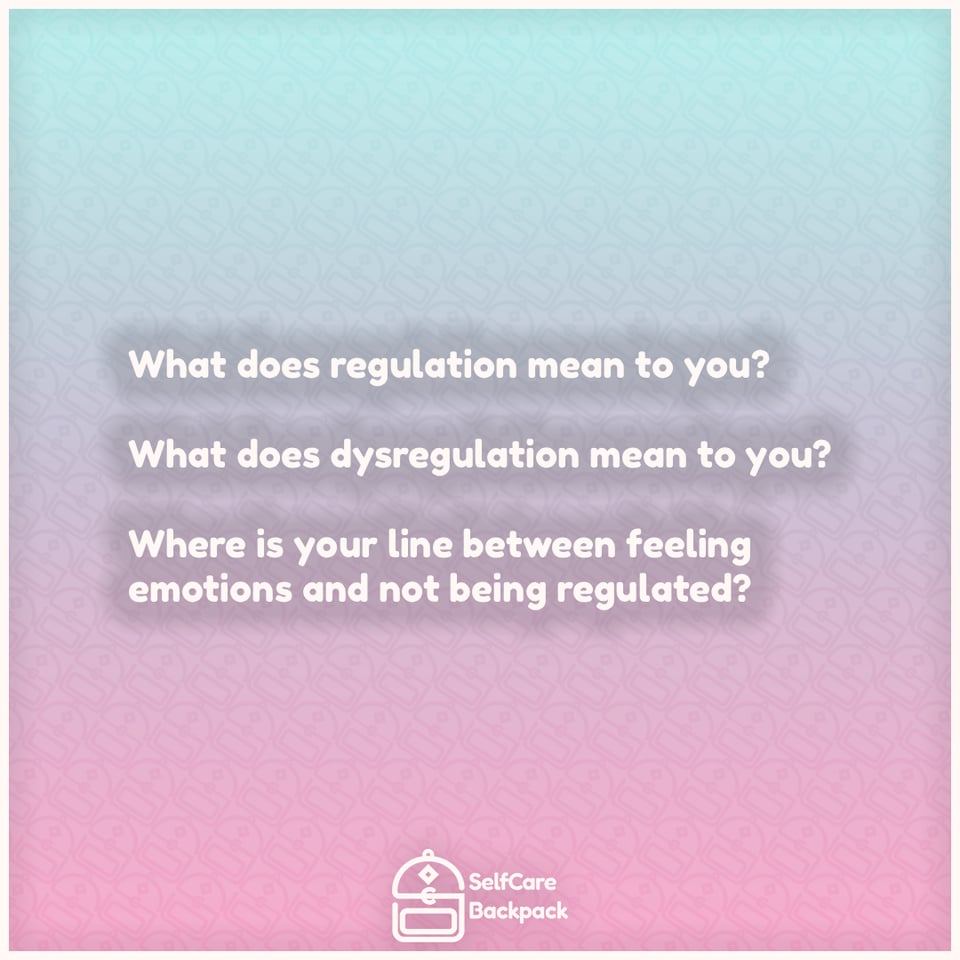
Here's some questions I've been reflecting on, as I recognise this pattern in myself and am wondering what being dysregulated means to me, and where I draw that line.
What does regulation mean to you?
What does dysregulation mean to you?
Where is your line between feeling emotions and not being regulated?


Add a comment: