
008: Your Favourite Magazine Team's Favourite Books
The STP team has expanded since we put out our first issue a hundred years ago in 2022. It used to just be myself (Jonny, Editor) and an ad hoc team of readers who hopped in and out as they were available. Now we have a small but permanent team with dedicated roles, so we thought why not let you get to know us a bit better through some of our favourite books. I asked everyone at STP to come up with one of their all-timer books - not necessarily absolute and immutable favourites, cos I’m not sure such a thing exists, but certainly ones that have have stood the test of time and had a big impact on us as readers. This was the result. Enjoy!
James, Submissions Reader - 2666 by Roberto Bolaño
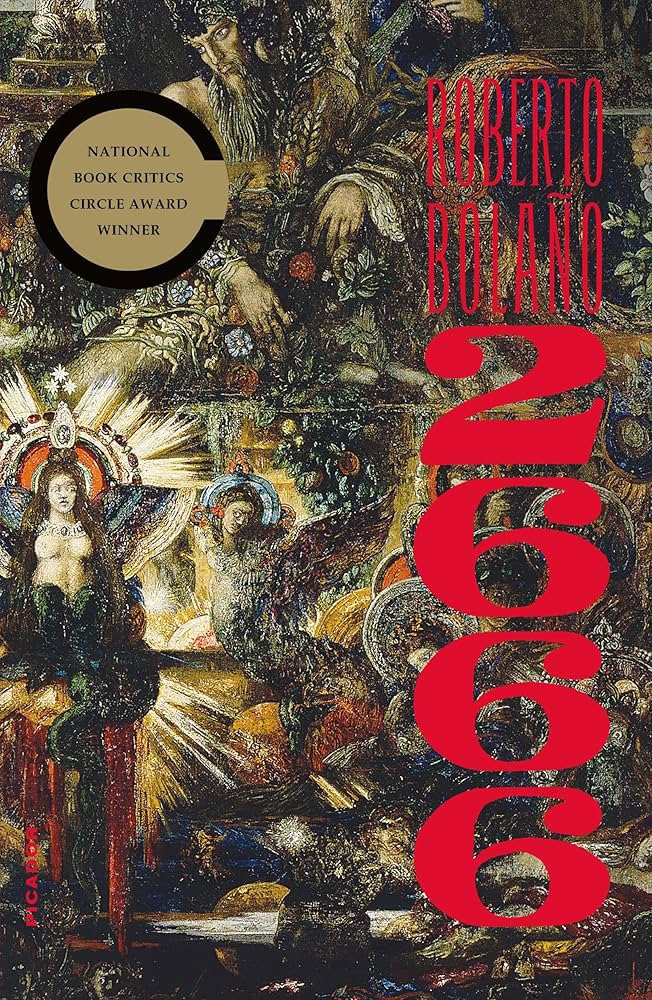
2666 is a sprawling mega-novel written by a dying artist deploying the remainder of his creative power. The novel begins with a circle of literary critics trying to find a mysterious novelist in the city of Santa Teresa. They're largely unaware that in this city every week the desecrated bodies of women are turning up, many of them migrant factory workers working at US factories under NAFTA. The novel climaxes with the horrific ‘Part About The Crimes’ where the discovery of each of these women is detailed, as it becomes clear that the police are in on it, the killers will not be found, there will be no resolution. The final part tells the story of Benno Von Archimboldi, the German novelist sought by the critics. The savage femicide machine of Santa Teresa is connected to the grand old evil of Nazism.
To be kitsch, the novel is War and Peace written by an anarcho-communist Chilean poet via Blood Meridian, humming with Lynchian dread. It played a part in my turn to leftism and my love for the Spanish language.
In the second part of the novel, the main character mourns that people are now ‘afraid to take on the great, imperfect, torrential works, books that blaze paths into the unknown.’ 2666 is one of them.
[T]hey want to watch the great masters spar, but they have no interest in real combat, when the great masters struggle against that something, that something that terrifies us all, that something that cows us and spurs us on, amid blood and mortal wounds and stench.
Rebecca, Assistant Editor - All the Devils are Here by David Seabrook
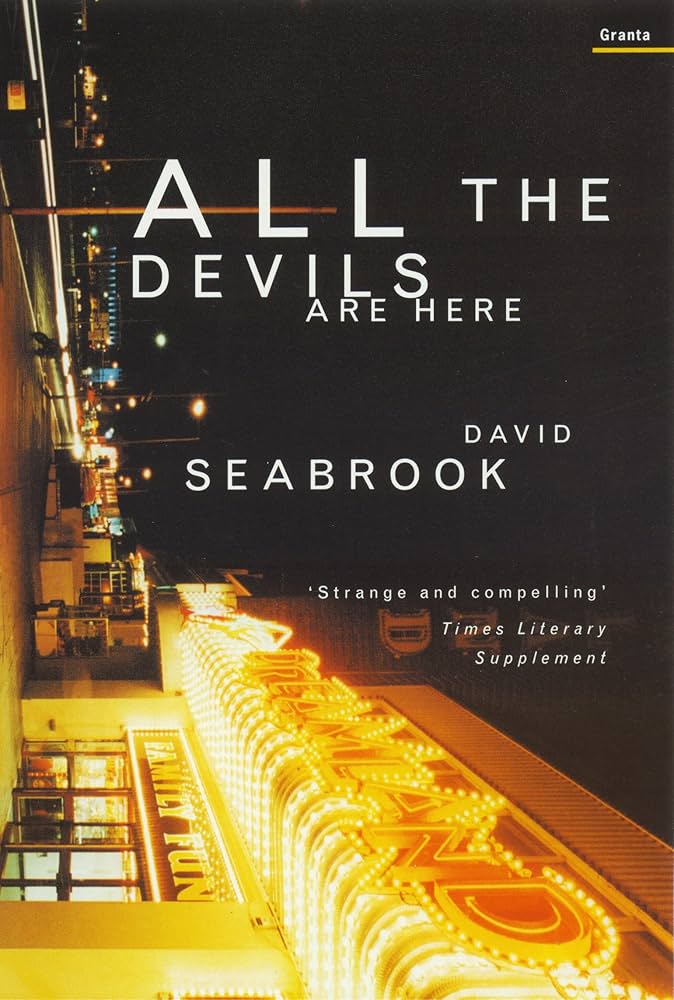
A short collection of essays about the decaying, murky towns of coastal Kent. We start in Margate, on whose beach T.S. Eliot could connect “nothing with nothing” and then moves through the county exploring fascism, patricide, and Carry On actors. It is sordid, grim, and compelling subject matter. Yet what makes this book so special is the author himself. Seabrook’s writing is anecdotal, meandering in such an idiosyncratic way from subject to subject. An interview is truncated because Seabrook has to catch the bus home to Canterbury. There are several moments where he drops in personal anecdotes that you need to re-read to check he’s saying what you think he’s saying. ‘It’s six years since I last came out here. Six years this summer, not long after my fiancée’s funeral (I wasn’t invited).’
The book is full of half-glimpsed truths of a very troubled person. Seabrook passed away in 2009 under rather mysterious circumstances. The late Rachel Cooke described her reaction to Seabrook in this book as someone she was “both afraid for and of”. All the Devils are Here is a strange, flawed, and haunted book that perfectly captures the qualities of the places Seabrook writes about.
Karlo, Non-fiction Editor - The Lord of the Rings by J.R.R. Tolkien
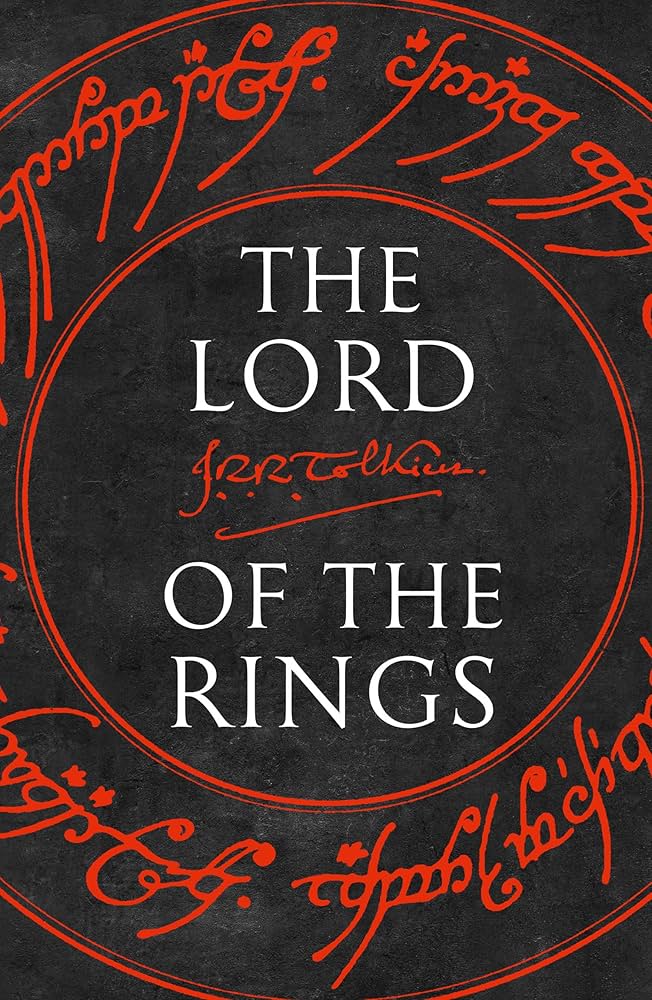
I'd love to simply say The Lord of the Rings is my favorite book but already I'm in trouble. This is because Mr. Tolkien's intentions aside, it's not a book but a trilogy. (As an aside I think Prof. Tolkien might've respected that level of fussiness). There's also the plain fact that it's such a formative book for me and for other writers that it's like saying the sun is your favorite star in the sky.
That said, it's fascinating to see how far his influence threads through genre. Whether it's in imitation, in opposition to, or sometimes to just focus on a gap in the text, writers have been in conversation with Tolkien's work ever since. Without The Lord of the Rings we wouldn’t have gotten Gene Wolfe's The Book of the New Sun, or Ursula K. Le Guin's Earthsea Cycle, or George R. R. Martin's A Song of Ice and Fire. Perhaps some other author (I've often heard Mervyn Peake wishcast for this) could've influenced fantasy in a different direction but as a Ghormenghast admirer, I'm not so sure. As an aside, if you want to read a book influenced by both Tolkien and Peake, try Jared Pechaček's delightful The West Passage.
Is the influence of The Lord of the Rings diminishing? Perhaps, but I like to think he would've gotten a kick out of that.
Jonny, Editor - Candide by Voltaire
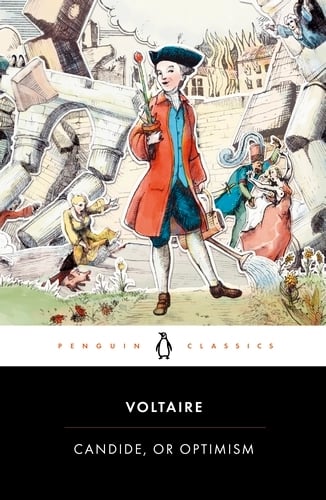
I almost began with a sheepish apology for being too pretentious but fuck it this book is class. First published in 1759 at the height of (and a time of crisis for) the French enlightenment, the novella follows the adventures of a young man, Candide, as he travels the world accompanied by his mentor, the philosopher Pangloss. It was immediately banned - and immediately became a bestseller.
Candide was written in the aftermath of a major earthquake in Lisbon and the outbreak of the Seven Years' War, events which caused such human suffering that they shook many people's faith in a benevolent God. Voltaire's masterpiece heaps ridicule on Optimism, the fashionable philosophical belief that such disasters are part of God's plan for humanity - that 'all is for the best in this best of all possible worlds'.
Genuinely funny even now, Candide is a breathless, breakneck satire whose other targets include bad literature, extremist religion, and the vanity of kings and politicians. It captivated contemporary readers and has proved one of French literature's most enduring classics.
Sign up to the STP newsletter

