When actors mess with their faces
Cosmetic procedures can undercut an actor’s ability to do their job. Unless you’re playing a robot, you better be able to emote.
An actor can have all the talent, charisma and experience in the world. But if their face doesn’t move, what is the point?
Sometimes a character’s facial expressions should match their dialogue. Sometimes it can be compelling when those two things are at odds; delivering reassuring words while an unspoken threat plays out across their features. None of this can be in play when an actor’s visage has been turned into a porcelain mask.
Youth has always been a fetishized commodity in Hollywood. Which is why actors are willing to partake in procedures — surgical or injectable — that freeze the muscles of their faces, undermining any kind of expressiveness that can undergird a performance.
Some examples …
I’m not watching this season of “Euphoria,” but I have seen chunks of it via clips that have been posted online. (I guess this is a post-modern reality: Sometimes you don’t have to watch a show to “see” it.)
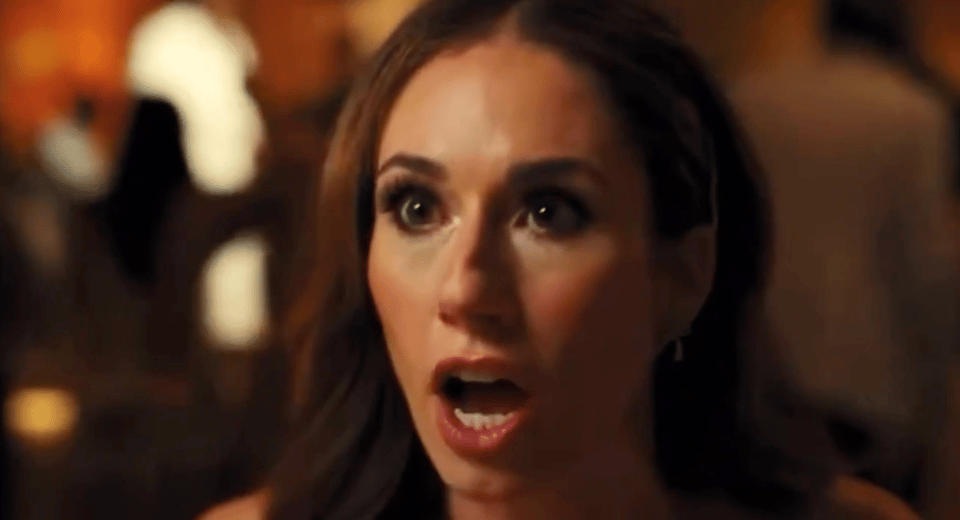
Sydney Sweeney’s character, Cassie, has just gotten married. At her wedding reception, she is confronted by a woman, played by Jessica Blair Herman, who is livid about a business deal gone bad:
Woman: We invested our kids’ college fund.
Cassie is unmoved by the accusation, offering this bored reply:
And what does that have to do with me?

The scene is fascinating because Sweeney can furrow her brow in a way that’s both funny and effective, conveying Cassie’s brattiness.
But Herman’s brow is as smooth as glass.
It’s weird. But more to the point, it makes the scene weird because her character is supposed to be angry and upset. And yet nothing about her expression tells us anything about her emotional state. Her face is blank. Only her vocal delivery suggests she’s pissed off.
I don’t want to get on Herman’s case. She’s an actor whose resume is primarily guest roles on TV shows. An appearance on “Modern Family” here,” an appearance on “New Girl” there, and plenty more shows you haven’t heard of. The longest she was on a series was “American Crime Story” in 2016, for seven episodes.
In other words, like the vast majority of actors, she’s not a star. She’s a working actor trying to get her next gig and keep that SAG-AFTRA health insurance going. No shame in that. It’s hard out here right now for actors who aren’t household names. (Her husband is a bit more well-known; she’s married to the Irish actor Alan Leech, of “Downton Abbey” fame.)
So I’m guessing she’s doing whatever she can to stay in the game and get cast. In all probability, someone — an agent, a manager, a casting director — told her that she needed to do everything in her power to remain “youthful” for as long as possible. At 39, she’s at an age where Hollywood doesn’t know what to do with you. The struggle is real.
I think she’s been given bad advice.
But even A-listers are doing the same. Nicole Kidman is one of the more prominent examples; a wondrous actress who has undercut her craft in recent years in favor of an immovable forehead.
Ironically, perhaps something profound is being conveyed, albeit unintentionally, by these unmoving faces. Does anything betray an actor’s insecurity — and therefore their humanity — more than attempts to cram themselves into a narrow idea of what’s considered appealing? Sell-able?
2024’s “The Substance” rightly understood these pressures as a horror show. And yet the movie’s star, Demi Moore, seems willing enough to live out those horrors in real life. The snake will always eat its tale.
But these procedures completely undermine an actor’s ability to do their job. Because unless you’re playing a robot, you better be able to emote.
The mirror has two faces
The fashion writer Danya Issawi has an essay in The Cut this week about what it means when your own mother alters her face:
One summer while home from college, I noticed something different about my mom’s face. All she’d done was get some Botox injected into her forehead and around her eyes, but to me, she looked entirely new, entirely different. Her soft, sparkly eyes looked stuck in a state of mild surprise, and the line between her brows, the one she’d had as long as I could remember — that would crinkle when I was in trouble, when she was driving, or just before she let out a mischievous laugh — had been smoothed nearly entirely … “I don’t know what you did to your face,” I said to her, “but please don’t ever do it again.” It was the same stern tone she’d used on me when I’d whined about wanting a nose job. Looking back, I think I hurt her feelings, but her face was too frozen to tell.
I didn’t have the words to speak to my mom about what work she’d had done; I only knew it felt like betrayal, like my mom had abandoned me and left someone who only vaguely resembled her in her place.
Issawi feels differently about it now that she’s older, and thinks she was unfair to her mother.
But I’m not so quick to reject the response she had at 19. The betrayal she talks about is worth thinking through more deeply. In a way, it’s a fundamental betrayal of self.
What happens when someone you love chooses to alter their appearance because the world has made them feel self-conscious about their imperfections? What does that say about them? What does that say about you?
Let’s zoom out and ask a different question:
When audiences are fed images where an actor’s facial expression does not match the character’s actual sentiment, will we gradually lose the ability to read facial cues out in the real world?
On Twitter, someone made this observation:
My woke take is that more films need actors who are uglier, older, and fatter and I’m not joking.
Someone replied:
We watched “Alien” when they put it back into theaters a few years ago and I was taken aback by how normal the crew looks and how much it helps with overall immersion.
Agreed. Also if they have wonky — or at least imperfect — teeth, all the better.
It’s not that Hollywood hasn’t always prioritized a certain kind of beauty. But there was also room for more variety, and that seems diminished right now.
It’s as if the ideal has become Katherine Helmond character in the 1985 scifi fascist satire “Brazil,” wherein her face is stretched beyond recognizable proportions.
Or John Travolta, 72, who recently showed up at Cannes looking like … a man who is neither 72 but also not young, either. It’s a third thing that tips over into an uncanny valley.
Vanity among actors is nothing new. But when you’re 72, it’s OK to look 72.
You only get to see yourself age once — why deny yourself this opportunity? Why deny the life you have lived up to this point?
Of course, the illusion is never complete, but a simulacrum of what one’s face once was.
If actors aren’t willing to age, then we aren’t going to see what people in their 60s, 70s and 80s actually look like, on screen. That’s a huge disservice to audiences.
The actress Amanda Peet is 54 and she was recently on the podcast “Q with Tom Power” where she was asked about an essay she wrote 10 years ago titled “Never Crossing the Botox Rubicon”:
I haven’t had any work yet done on my face, not that I need to explain that, because it’s really evident.
She says the decision to get work done, or not, is “very wrapped up in my identity”:
Who am I if I get a facelift and who am I if I don’t get a facelift? And why does it matter — and does it matter?
It’s worth pointing out that her face is very expressive as she talks about this!
She says she wishes she hadn’t written that essay because now she can’t “cross the rubicon because I said I wasn’t going to. So I feel like I boxed myself in.”
I wish she had said more about why she was more open to it now, a decade later.
But she talked about an aspect that goes even deeper than an actor’s toolkit:
It feels to me if you do it, is that tantamount to not having acceptance about death? And if I’m trying to push it away, if I’m trying to deny it, that scares me.