
Launch Lanes Expanding & Defense Deepening: Week in Aerospace 🚀🛡️
Greetings, aerospace professionals. This week, we're tracking some serious thrust. 🚀 Remember when that critical lab equipment calibration would subtly drift, invalidating days of test data? Or the frustration of a simulation failing to converge after hours of compute time? This week, it seems the industry is pushing past its own Jira backlogs and configuration control complexities. ⚙️ We observe diverse launch vehicle progress, from Terran R and Neutron to Vikram-1 and Gravity-1, alongside Starship's latest flight. It is a busy time for getting hardware into orbit. We also examine Lockheed's PAC-3 ACE, showing how missile defense systems adapt to new cost and capability demands. This progress reflects persistent engineering, even with daily challenges. Enjoy the reads! 🛰️
Making Progress: Relativity’s Terran R, Rocket Lab’s Neutron, and PLD Space’s Miura 5
Source: NASASpaceflight
While the focus of late has been on Starship’s test program, Relativity’s Terran R, Rocket Lab’s Neutron, and PLD Space’s Miura 5 are also making progress in new rocket development.
Why it matters: Updates on Terran R, Neutron, and Miura 5 show diverse new launch vehicle development. This diversifies future access to space.
Gravity-1 sea launch off Shanghai puts 9 satellites into orbit
Source: SpaceNews

Commercial launch firm Orienspace launched its third Gravity-1 solid rocket from waters off Shanghai, sending nine satellites into orbit.
Why it matters: Orienspace's Gravity-1 sea launch demonstrates China's growing commercial space capabilities. Mobile launch platforms increase flexibility and resilience.
Skyroot Aerospace Reaches Orbit with Vikram-1 Rocket
Source: Payload Space
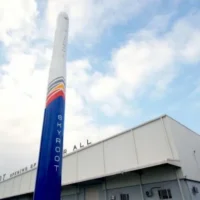
Skyroot Aerospace became the first private Indian company to reach orbit when its Vikram-1 rocket lifted off from India’s primary spaceport, the Satish Dhawan Space Centre.
Why it matters: Skyroot's Vikram-1 achieved India's first private orbital launch. This expands global commercial space access and national launch capabilities.
PAC-3 Adapted Capability Effector Is Lockheed’s New Low-Cost Patriot Interceptor
Source: The War Zone
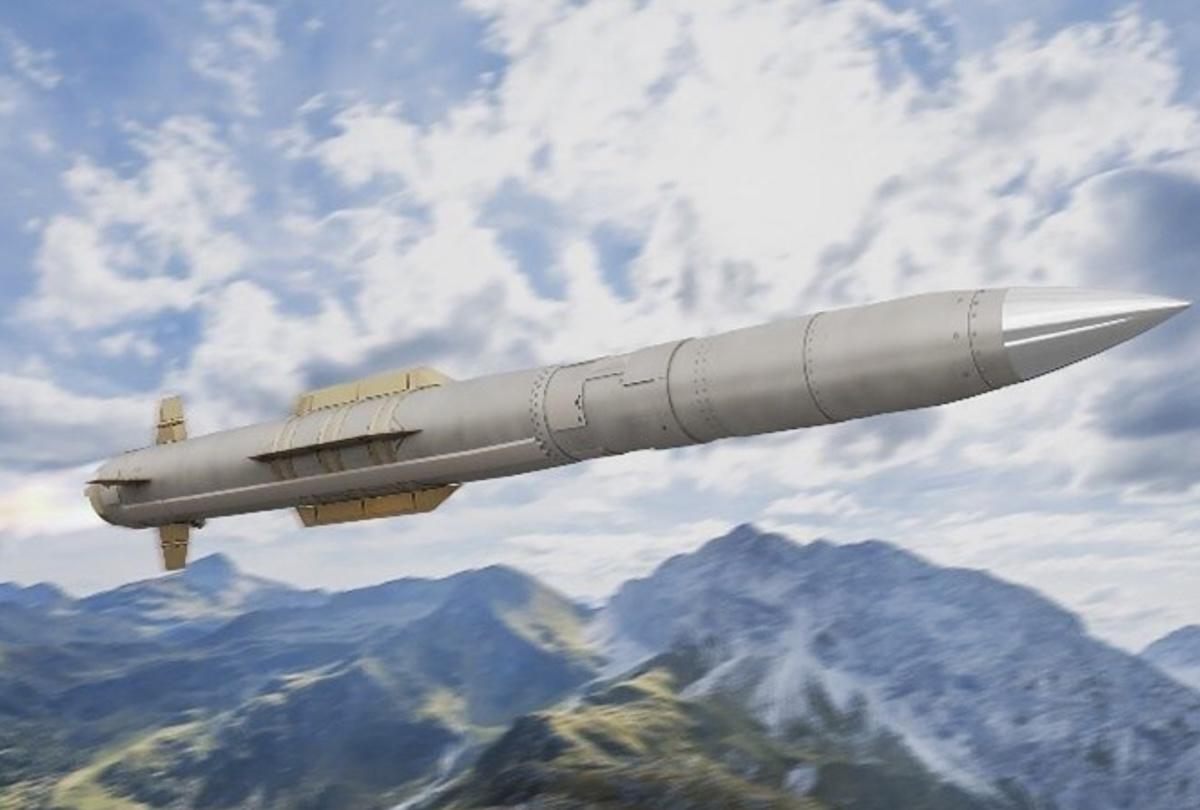
PAC-3 ACE is around half the price of a current PAC-3 MSE and still has the ability to engage short-range ballistic missiles.
Why it matters: Lockheed's PAC-3 ACE offers a cost-effective Patriot interceptor. This enhances missile defense affordability and capacity against ballistic threats.
SpaceX conducts 13th Starship test flight
Source: SpaceNews

SpaceX launched Starship on its 13th suborbital test flight July 24, correcting some of the issues seen on the previous flight while deploying functioning satellites for the first time.
Why it matters: Starship's 13th flight deployed satellites, proving critical operational capability. This advances heavy-lift reusability for future space missions.
🎥 Featured Video
Starship Flight 13 - Where's The Kaboom?
Channel: Scott Manley
Why it matters: Scott Manley breaks down the critical Starship Flight 13, explaining how SpaceX addressed previous engine issues to successfully deploy Starlink satellites. This video offers crucial insights into Starship's iterative development and its path towards full reusability.
🔬 How It Works: Reusable Rocket Technology
Reusable rocket technology fundamentally involves designing launch vehicles to survive atmospheric re-entry and controlled descent, enabling multiple uses of major components, primarily the first stage. This is achieved through robust thermal protection systems (TPS) to manage extreme aerodynamic heating, often using ablative materials or advanced ceramic matrix composites. Aerodynamic control surfaces, such as grid fins, guide the vehicle's trajectory and manage attitude. Propulsion systems are designed for restart capabilities, allowing for "boost-back," "re-entry" deceleration, and "landing" burns for propulsive vertical landing (PVL). The landing burn typically uses throttled main engines for a soft touchdown on a designated pad or drone ship.The structural integrity of reusable stages is enhanced to withstand repeated launch and landing loads, including high-g forces and dynamic pressures. This involves advanced materials and manufacturing to minimize mass while maximizing strength and fatigue life. Guidance, Navigation, and Control (GNC) systems are critical, employing sophisticated algorithms for precise trajectory tracking, attitude stabilization, and autonomous hazard avoidance during descent and landing. These systems integrate data from GPS, IMUs, and radar altimeters for accurate positioning and velocity control, enabling high-precision return. Rapid refurbishment and inspection are prioritized to minimize turnaround time and operational costs.
Learn more from the original source: REUSABLE LAUNCH VEHICLE Technology Development and Test Program
💼 Career Corner: Weekly Openings
- Leading Aerospace & Defense Organization: Seeking an early-career Aerospace Electrical Engineer to support advanced military aircraft integration programs. Contract-to-direct hire opportunity. Aerospace Electrical Engineer Posting
- Geneva Technologies Inc. (GTI): Geneva Technologies Inc. seeks a mid-career Senior Mechanical/Aerospace Engineer to join a small aerospace team. Integral role in design. Senior Mechanical / Aerospace Engineer Posting
- Naval Research Laboratory: The Naval Research Laboratory seeks a late-career Aerospace Engineer for impactful research. High salary range for experienced professionals. Aerospace Engineer Posting
📰 In Other News
- What to know about China's rare ballistic missile test and why it raises concerns - The Washington Post (Washingtonpost)
- Starship Flight 13: Booster 20 Aborts During Ignition (NASASpaceflight)
- Lightning strikes Long March 3B after liftoff, Kinetica-1 launches 5 satellites (SpaceNews)
- U.S. Army Is Buying Older PAC-2 Patriot Missiles For The First Time In Decades (The War Zone)
- Could This New Northrop Spacecraft Use Its Robotic Arms To Attack Enemy Satellites? (The War Zone)
- US rocket-launch bottleneck worries Sweden, which just launched its first military satellite (Defense One)
- Rocket Report: China may soon attempt booster landing; Rocket Lab does rapid response (Ars Technica Space)
- US Navy fears ballistic missile subs can be hit by drones, anti-tank rockets (Defense News)
- Booster 20 completes record duration Static Fire (NASASpaceflight)
- Rocket Lab sees Electron gains, Neutron delays in first half of 2026 (NASASpaceflight)
Wishing you a week filled with successful deployments and minimal compiler warnings! Keep pushing those envelopes. The Max-Q Frontier Team ⚡🛰️