382: maybe add a wizard?
Hullo
Phwoar
Rue
Faster
Secreted
Class
Links
Bye
****
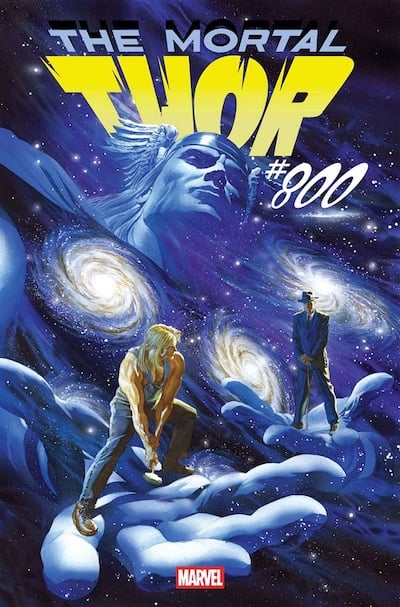
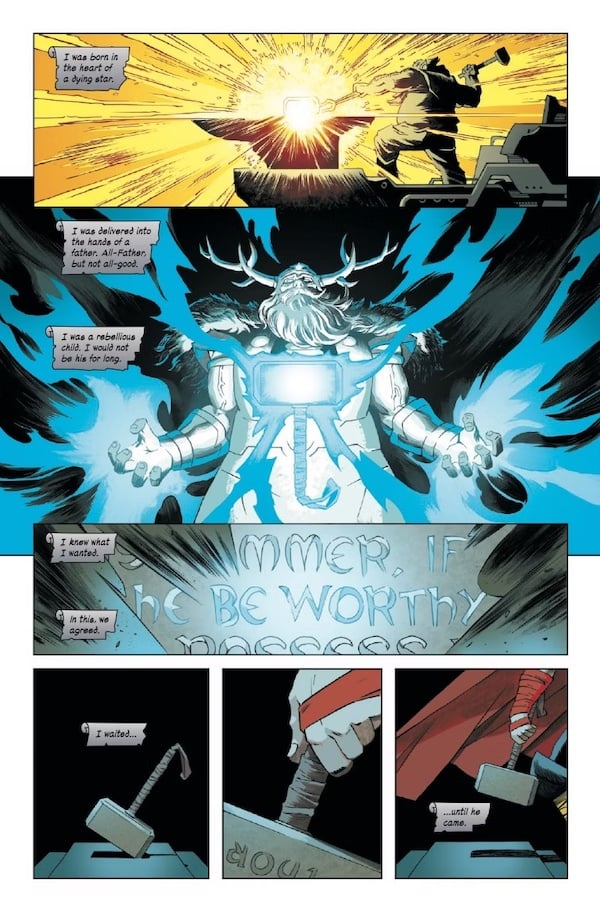
Big week for anniversaries, apparently. THOR #800 is out, where I get together with Declan Shavley for a 5 page short story. I’ve known Dec forever, and never worked together, so this was a nice surprise.
As was saying “yes” to doing it in the first place. I was half way through writing a mail to Wil Moss saying I didn’t have time to think up an idea, and unless one hits me immediately, I’ll have to say no. And by the end of the sentence, the idea was there. It’s a small piece, summing up Thor from an unusual perspective, and I hope you like it.
Here’s the first page...
****
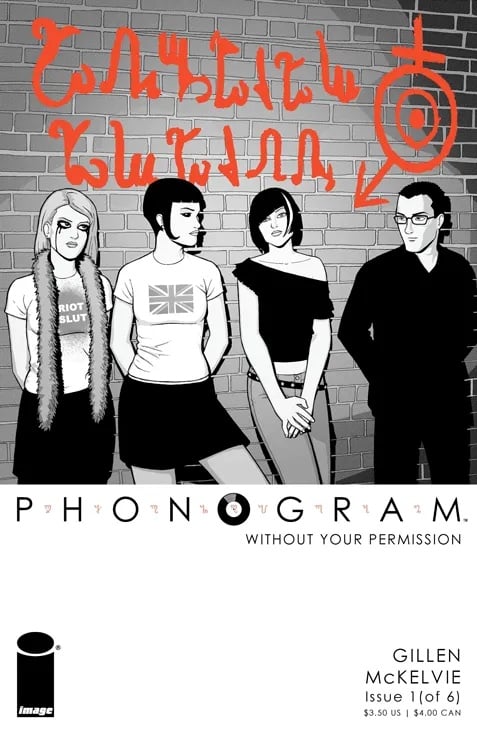
Sunday 16th of August was the 20 year anniversary of Phonogram: Rue Britannia #1. I’d spend the day assembling Iris’ new bed and generally doing family stuff, and it was only a mail around 10:30 at night that reminded me. Which says some things, I suspect. Not least, the difference between where I am now and where I was then.
It’s appropriate, as among the many things Rue Britannia was is the uncanny nature of the gap. The specifics of Rue Britannia are born of being old enough to experience your first nostalgia cycle. A decade passes, and you see things which you were there for be told in a way contrary to your experience. How that messes with your head – especially if you’re someone who no longer claims to care about those events and are also fiercely antagonistic to the concept of nostalgia anyway.
Watched just before I had the idea, I suspect watching 24 Hour Party People was an influence: when the story moves between the Joy Division section of the story, and the Happy Mondays. Joy Division was myth for me – but Happy Monday was contemporary reportage. That. They say print the myth, and they don’t just mean ink. They mean hammering it into your mind.
We are twice as far away from Rue Britannia as Rue Britannia was from Britpop.
It’s a book by a relatively young man who felt impossibly old, in exactly the way you never feel more decrepit in a club than when you’re 23 (as in, feeling older for the first time). In a very specific way, it’s about turning 30, and was written in a frenzy when I was around 28. I traditionally implode around that point. 28 was Phonogram. 38 was WicDiv. 48 was fine. That may be character growth. I hope it is.
I’m still unsure when I actually had the idea. It sort of emerges from my thinking – you see strands of it go way back, even into my juvenilia. I’ve often thought Phonogram happened in 2003 because I didn’t become a full time music journalist in 1998. I think if I was leeching the brain poison over a slower period of time, it wouldn’t have fermented into whatever the fuck Phonogram was.
“Whatever the fuck Phonogram was” was my first real comic, my first book with Jamie, the thing which started my career, my first fans-got-tattoos book, that changed people’s lives (certainly mine) and all the rest. By the time of Singles Club, I was both aware of how precious it was – I recall telling Sheret we blew it on the Thought Bubble dancefloor – and unaware. By Singles Club, and moving to London, we had parties when issues came out. I was green enough to not realise how abnormal that was. Appropriately, we were a scene that celebrated itself.
The moment that most sums up Phonogram as a book was at the Singles Club launch, when two people were making out, and a third person was sitting on the lap of the first person, ignoring the kissing and reading a Luke Haines autobiograph. There you go.
I’m still not sure where the idea came from. The closest I have to a moment of creation is walking past The Trinity in Bath, heading towards the Sainsburys and something clicking there. Did the idea exist before the drunken moment? I dunno.
I do know the influences though. The way we pitched it was Hellblazer meets Chynna Clugston-Flores’ Blue Monday, which certainly cuts to the core. Rue Britannia was a horror-toned pop-comic. There was a lot of Vertigo influence in there – though only Shelly Bond noticed that we were inspired by Milligan more than anyone else in approach (though the Constantine Explores America in that unEnnisian moment in the Ennis Hellblazer run was absolutely all over the Memory Kingdom). But it wasn’t just genre comics – Joe Matt influenced the particularly awful presentation of Kohl and Eddie Campbell’s more romantic approach to Autobiography was in the mix too. There was an attempt to take the material, make it both worse and more romantic than reality, and throw it through a fantasy filter to heighten things. It is the earliest example of my classic writer disease – having a core story idea about the fundamental literary truths of reality and, 10 seconds later, thinking “maybe add a wizard?”
It wasn’t just comics. Jeff Noon’s Needle in the Groove (“What if music was drugs?”) was the obvious antecedent that never gets mentioned. There’s also a whole lot of music criticism, obv. The period one which I feel gave me permission to do it was Paul Morley’s Words & Music. But some was just more personal – there’s a two page spread in the magazine Careless Talk Costs Lives which is about 75% of the core Phonogram cast and 100% of the core vibe. It was a book which was very much in love with everyone I knew, and also thought we were all terrible.
When I glance at it, one of the things which strike me is the distance between the wisdom that’s buried in it, hidden or distorted by the cruelty on the surface. One of the thing the book does is paint my music-critic voice as a character, in this unflattering light, because I was growing away from the awful calcified mid-20s critic stage. The great irony is growing more knowledgable about a form actually makes you make more mistakes than when you knew less. Then, you checked your working. Now, you assume you’re correct, because you mostly are - and all the cruelty that grows from those gaps and assumptions. Knowing is easy, understanding is hard.
One of the things about ageing is seeing the cycles repeat and vary. That’s what Phonogram ends up being about by the third volume, and right in the heart of WicDiv. What is an eternal cycle and what isn’t? I try and be sympathetic when I see critics on their own journey – as it’s fucking hard – but there’s certainly times when I hope someone has their own confrontation with a goddess in a nightclub toilet sooner rather than later. Excuse the old man nonsense. This is a stage too.
Of course, that’s the other thing about Rue Britannia I find interesting. It ends in a place where Kohl has actually come around to kindness and realised his bullshit… and still has his Richey monologue which shows he certainly hasn’t internalised it. Only when thinking about this essay did I realise one explanation for that is the Richey Ghost material is the oldest in the comic, being the core of the demo I wrote to convince Jamie to join me. It dates from years before the latter half.
That would explain it, but I think it was just I was on my journey and hadn’t quite got to where I was trying to get to. Or now. Or now.
Ultimately, I find chunks of Rue Britannia gross, regretful in its choice of metaphors and insufficiently careful with people’s stories. But it’s also a deeply personal, weird book that acts like it may be the only thing the creators ever gets to tell. It has 15 minutes on this stage, and it will play as loud and fast as it can. I try to show it kindness. It’s trying. Sometimes, very trying.
I’m also intrigued how shamelessly inside its world it is, and just assumes people will get it. A friend wrote to me recently saying his response was realising it was done by people who had actually been to Ladyfest. That’s it. It’s a book which doesn’t have much time for the concept of authenticity, but is still authentic. It also just takes so much for granted – so many arguments folks had about Rue Britannia were about things the book simply didn’t say, and folks just assumed it was saying it as it was a book about music obsessives. At least part of Singles Club was born of deciding to show, not to just be, to walk through the steps of the radically-subjective-rainforest-of-pop worldview rather than throw you into it. Afterwards, there were a little less reviews where I wanted to tell the writer “I’m sorry that arsehole at school was a dick about that record you really liked, but they can’t hurt you now, and I think they’re a dick too.”
It wasn’t always going to be an actual comic. When I had the idea – I’d guess in 2002 – it was just after I finished my first collection of black and white zines, collating webcomics I’d done with folks. I’d done a series of short stories which set in a shared world – Homo Depressus, which never got released. I figured my next step was something which was episodic, but also black and white photocopied zines. That was going to be Phonogram. An actual zine, in the british small press scene. In some ways, it never stopped.
That’s a fun way to think of Phonogram, right? Not a comic that never quite sold enough – but a zine that sold spectacularly.
To end with the story most folks would have heard before – enter Jamie. I was sharing a table with Alistair Pulling, selling my HIT zine. Oh – for the record, Alistair was the person who suggested Theban script for Phonogram. Anyway, Alistair was selling his NEVERMIND THE COMICS anthology. Jamie came up, looking for Alistair. He’s wandered off. Jamie showed me his portfolio – which had some pure 00s Oni energy, in an early take on his Suburban Glamour. I apparently said “I’ve got an idea for a comic called Phonogram, and you’d be the perfect artist.”
I don’t remember saying that. I remember thinking it, not realising inside voice and outside voice had got confused, and so being absolutely delighted when Jamie later says he’ll like to do some sketches for the script I sent him.
That our momentum was slow on the book meant it transformed from the original idea to us actually pitching to real companies. I think we actually did pitch to Oni. I forget if they said yes or not. I then showed our pages to Laurenn McCubbin, and the rest is history.
Quite literally. 20 years of history.
It’s a weird ass book, which I still can’t quite believe we got to do. If you’re interested, start with The Singles Club, then go back and try the demo-tape that is Rue Britannia. There are many great comics in the medium, but none of them introduced a bunch of people to Kenickie.
Thanks to everyone who ever joined us on the journey. It’s odd that this distinctly uncommercial book was also the start of my career. That folks read something as spiky as Rue Britannia and found something that echoed with themselves is astounding. I’m glad that I”m 20 years away from it, and glad I’m no longer the person who wanted to write Rue Britannia, but I’m grateful that person existed, and was trying, and folks came along with us. I still carry the way of seeing the world with me, and it’s a rare week that goes by that something doesn’t happen and I don’t think “that’s a Phonogram story”.
Thanks to everyone who supported us – especially our friends and family, who had to put up with all manner of nonsense.
As this just came up on shuffle, let’s end on a song. That’s the phono-way to do it.
Oh – more Phononews: Jamie is in the process of sorting all his remaining Phonogram pages, which will be going up for sale. I’ll obviously plug them when they come out, but save some money.
Also, to celebrate the anniversary month...
****

Script Club supports the mailing list by sending people a script (or similar amount of material) once a month for $5.
This month’s script club (sent out at the end of month) will be PHONOGRAM: FASTER. This is the demo script I wrote to show Jamie what I wanted to do with Phonogram (In fact, it may have been written even before I met him – I can’t remember).
It’s basically the Manic Street Preacher subplot from Rue Britannia, but done in a single 22-page issue. I think it’s only ever been read in full by 2 people – Jamie and Sheret (when he did the Phonogram zine). Oh wait: no, Charlie Chu did too, who said it was drastically overwritten, and he was right. Maybe De Campi too?
But still: this is a raw, blood-red rarity.
Upgrade now****
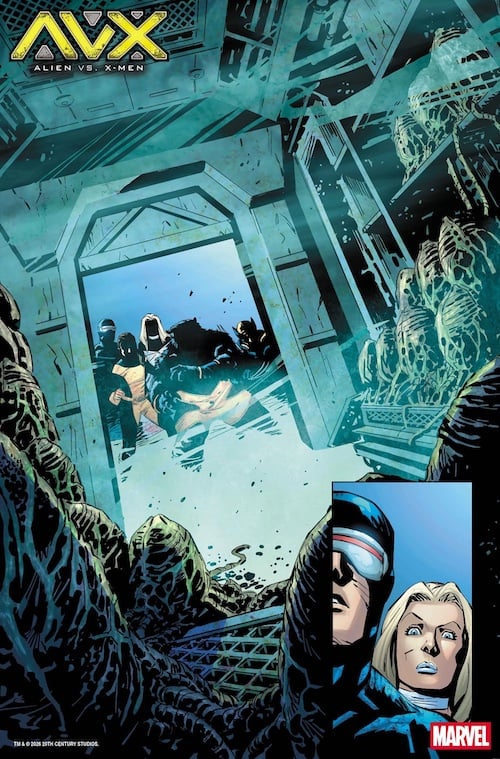
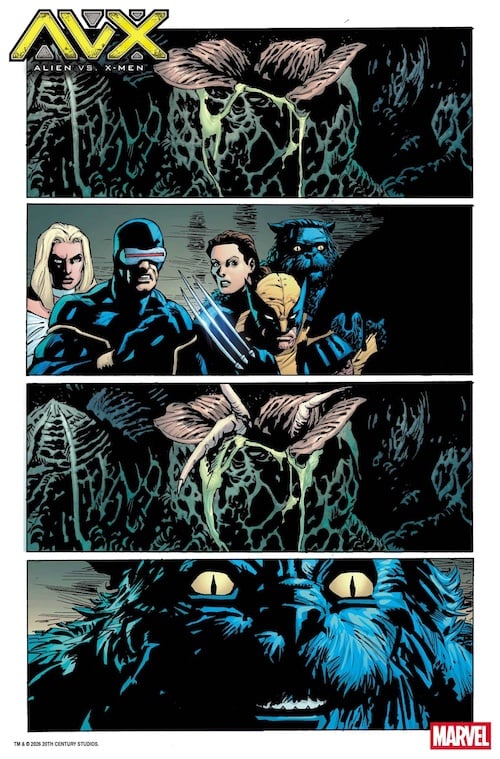
The hype-cycle for ALIEN VS X-MEN is approaching.
There’s an interview over at Collider which uses a few quotes, and Marvel released some preview pages. I’ll include a couple here, but there’s another in the link.
****

I also ran a one-off of Tim Denee’s The-Bear-’Em-Up Every Second Counts, and then Jim and I talked about it on Old Men Running the World. Random quote…
Really, it’s great to see Denee play with different ways of doing things. Like, rather than Paragon-standard glory (Doing well in challenges increases your name dice) players gain camaraderie (doing a challenge with a peer increasing both your score, which increases your teamwork dice). You add the teamwork dice by spending bonds. You earn bonds by having screaming rows with your fellow chefs rather than doing challenges. It’s a game which moves away from “team on a shared task, competing to be number one” to “a deeply dysfunctional team who are their own worst enemies and also their own saviours”.
Basically, it’s clearly a love letter to how Tim sees the Bear. It was great to spend an evening and just get your Bear on.
You can read the rest here and get the game here.
****
I recorded this a while back for Comics Experience – a Master Seminar about surviving Work For Hire Writing. I guess the subtext there is “So far”. To quote the description: “As Jack Kirby put it: “Comics will break your heart.” In this seminar, Kieron Gillen talks about how to not only survive the heartbreak of being a professional comics writer, but to thrive in your career.”
Here’s a list of topics…
Planning your career, both critically and commercially
How to pitch and when not to
How to plan a story, and what to do when a major crossover crashes into it
Why the job isn’t professional fanfic, alas
When to say “Yes” and when to say “No”
Everything he knows about the writing of serial 20-page American comic books
Amusing horror stories, and how to survive them
Cripes. That makes me sound mostly professional and if I know what I’m doing, and haven’t been winging it for 20 years.
****
For those who are missing Decompressed and otherwise Hungry for fine process conversation, Justin Jordan has started Death Or Comics, a Youtube channel where he is teaching comic writing from scratch, in a practical, topic-by-topic basis. He’s already dealt with perennials like formating comics, and moved into things like “How to pitch to Image” and the Economics of the industry. This is really great to see. I can imagine myself cutting and pasting a link to these when I’m asked certain questions.
Simon Parkin’s next book is The Trial Of Space Invaders, where he explores the nearly forgotten case between Nintendo and Magnavox, which is fundamentally about Who Owns Videogames and What does “First” mean? He talks more about it here. Simon’s always been the best of us, so really fascinated to see how he approaches it.
My First Dungeon talk to Mythic Bastionland’s Chris McDowell.
Valeria writes about Wages of Sin, the Mothership (er) campaign at length. Rejoice as it gives her a midlife crisis as it’s so nifty.
A couple of months back there was a plagiarism row over Tillie Walden’s new graphic novel, which blew up hard. If you followed the early accusations (and even if not) you should read the length piece where the claims are examined by someone who has taken the time to actually study both books. It left me more than a little angry.
TPF and DIE editor Katie West writes about Ellis’ return to comics generally and Image’s involvement specifically. She writes kindly and candidly here, but I’m furious that she has to talk about this at all, and am disappointed and angry at Image.
****
I wrote so much about Phonogram! Don’t make me write any more.
In short…
Finished first draft of the final issues of alien vs X-men and an unannounced other project.
Wrapping DIE 12, which is a LOT.
Disassembled a child’s bed.
Assembled a child’s new bed.
Lay on the floor by the bed, so the child can jump off her bed, over me, and into a pile of pillows.
Become addicted to photoshopping Great White Shark Heads on top of soldiers on horseback, for reasons.
That’ll do.
I finished writing this newsletter before lunch, where I went back to rewatch Forks from The Bear Season 2. Due to the Bear re-entering my thinking (see above), I’d been longing to watch it out of context. It’s clear as sentimental as the Bear has ever got, but what an incredible half-hour of television. It’s something I clearly needed, as my thoughts are floating around the concept of excellence right now. Do rewatch yourself, or watch, if you haven’t. You may need it.
Speak soon.
Kieron Gillen
Bath
19.8.2026