
Surrounded by bees 🐝
Karen, Richard, and Matt are professional relations: business partners who are also family members. This issue, Karen and Richard tell us about counting bees, with editing by their son Matt.
“I had no idea there were so many bumblebee species”
Richard: I like the idea of doing citizen science. It’s an interesting way of trying to gather more information about the natural world. The Yorkshire Dales Millennium Trust, which is a local organisation to us, do quite a lot of citizen science projects.
Karen: We recently went on a course to learn how to identify bumblebees. I had no idea there were so many species. What were there, something like 22 species of bumblebees?
Richard: It’s not just about the bumblebees; it’s about all the different flower species they use to gather nectar, and how one bumblebee will focus on red clover, for instance, and will move from red clover to red clover to red clover, rather than from red clover to something else.
Karen: We went on to sign up to do a bumblebee survey walk, and we did see that behaviour on the walk we did.
Richard: Over the years, the Millennium Trust have tried to reinvigorate hay meadows across the Dales, and this bumblebee identification project is linked to that hay meadows project. They’re trying to reintroduce wildflower meadows to the Dales because we’ve lost so many.
“very pleasant conditions for walking in are the best conditions to find bees”
Karen: Why the importance of counting bees? We said we haven’t seen as many in the garden. Is that what the survey is all about? Keeping an eye on bee numbers?
Richard: Bees are one of those species that are under threat. Because we’ve lost so many hay meadows, they’ve lost the flowers they need to forage on. A heavily inorganically fertilised silage field with rye grass on it isn’t going to support many bees, whereas these more traditional hay meadows with a wide diversity of species in them does support them – as we found.
Karen: When you start noticing, when you stop and listen, and just take notice, it’s amazing how many we saw just in one field.
And then you start thinking, well, is that just the same bee?
Richard: It’s not as easy to spot them in the wild.
Karen: No, and at different times of year, there are different types of bumblebees. For each species, there’s a queen, a worker and a male. So at certain times of year, you’ll see the queens out searching for nectar, and then later on, you’ll see the workers, and the question is, is that a small queen? Is it a big worker? Or, what species is it? Is it a faded version of a different species?
Richard: Then there’s the added complication that there are also solitary bees and cuckoo bees, which aren’t bumblebees and which aren’t part of the survey.
But on the one transect where we saw a lot of bees, I think we counted 51. Only two different species, but 51 bees, and they were using five different flower species across the meadow.
And it was a really nice, warm, sunny day.
Karen: We learned bees don’t like it too windy, they don’t like it too hot, they don’t like it too cold. So, very pleasant conditions for walking in are the best conditions to find bees.
There’s more to this interview. Buy us a cuppa on Ko-fi to support our work, and you can read the unabridged versions of this and every Professional Relations interview.
Buy us a cuppa ☕️
21:00 BST, 3+10+17 August, Youtube: I Need A Miracle listening party livestreams, revisiting episodes 4, 5 and 6. Get reminded when I’m going live.
24 August: Crowdfunding begins for I Need A Miracle season 2.
“If we’re to achieve a positive future, we need to be able to imagine it.” Richard reviewed From What Is To What If by Rob Hopkins, and Our Oaken Bones by Merlin Hanbury-Tenison.
The AI Resist List: lots of little actions, under nine big pillars, you can take to push back against this idea of surrender to AI being inevitable. I especially like the Better images of AI library: free images you can use to illustrate stories about AI, that don’t reinforce the marketing myths propping up the hype.
I Need A Miracle
We’re now fundraising for season 2 in two separate rounds. The first round, kicking off on 24 August, is to raise enough to pay writers to write scripts and a casting director to cast them.
To start with, we’re only asking for enough to pay for six scripts – half as many as season 1. If we rip through that goal early in the campaign, we can start pushing for enough funds for 12 scripts.
If people are still pledging after that (imagine!), any extra will go into the pot for actually turning those scripts into episodes.
Questions? Ask me live on Youtube on Mondays at 21:00 BST.
The episode 1 listening party was rough (it was too hot for my poor laptop, and probably my streaming settings were wrong, so lag and buffering made it unwatchable), but I figured it out in time to share and chat about episodes 2 and 3.
Gaze
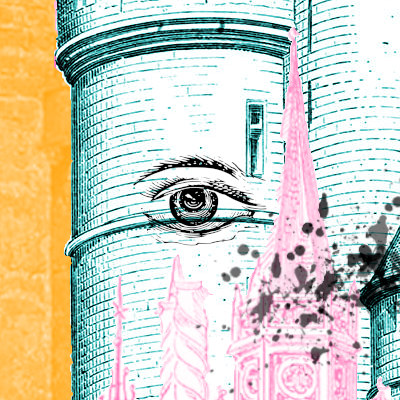
Matt published two new chapters of Gaze: Pottery and Laboratory.
Gaze is a solo playthrough of the storytelling game Tower of Art, by Yanahn. A different room every month until Willis Winter unlocks the Door.
Merely Roleplayers
Our final experiment in using corporate explainer video software to animate scenes from our silly monster hunting story is out!
We’re recording the middle part of the epic final Vigil production in August, with Strat (Brier, the Monstrous), Chris (Kincaid, the Professional) and Marta Da Silva (Harper, the Searcher).
But before that, we’re turning the monster hunting of the Main House on its head in our upcoming (so far untitled) Studio production. Ellie, Nat, and Helen join me for a game of Monster Care Squad, where instead of hunters fighting monsters, you play adventure vets who just want monsters to take their medicine.
We recorded this weekend just gone, so depending on how involved the edit ends up being, expect the first act around late August or September time.
Doing business on a sick planet
Our latest and greatest course is out now. Enroll to learn how best to consider the environment when making business decisions.

Richard highlights Solitaire Townsend:
Solitaire is one of those people who is always up-beat about our future, and this comes through in her writing, both non-fiction and, most recently, in her debut novel, Godstorm (reviewed by Foggy Outline). She is passionate about using storytelling to communicate the sustainability issues we currently face but also the solutions that are available to us. As Chief Solutionist of Futerra, she is listened to by the leaders of some of the biggest corporations in the world.
Visit FoggyOutline.com

