
One notebook to rule them all
Karen, Richard, and Matt are professional relations: business partners who are also family members. This issue, Richard edits his wife Karen’s interview with their son Matt, all about bullet journalling.
“The effort of copying the same to-do list item onto the next week is a mental check-in”
Karen
First question is one I should have asked you a long time ago when you first started putting “bullet journal” on your Christmas wish list. What is it and how does it differ from normal journalling?
Matt (laughing)
Not a huge amount, honestly. When you hear “journalling”, you tend to think of writing a diary. Bullet journalling is a bit more like fancy to-do lists.
It feels a bit more doable. There’s less pressure to write something for posterity. It’s a mixture of recording stuff that’s happened or that you want to keep track of and to plan ahead, and go, I should be doing this on this day, this is my to-do list for this week. The thing that marks it out is a kind of graphic key system – using different kinds of bullets to mean different things.
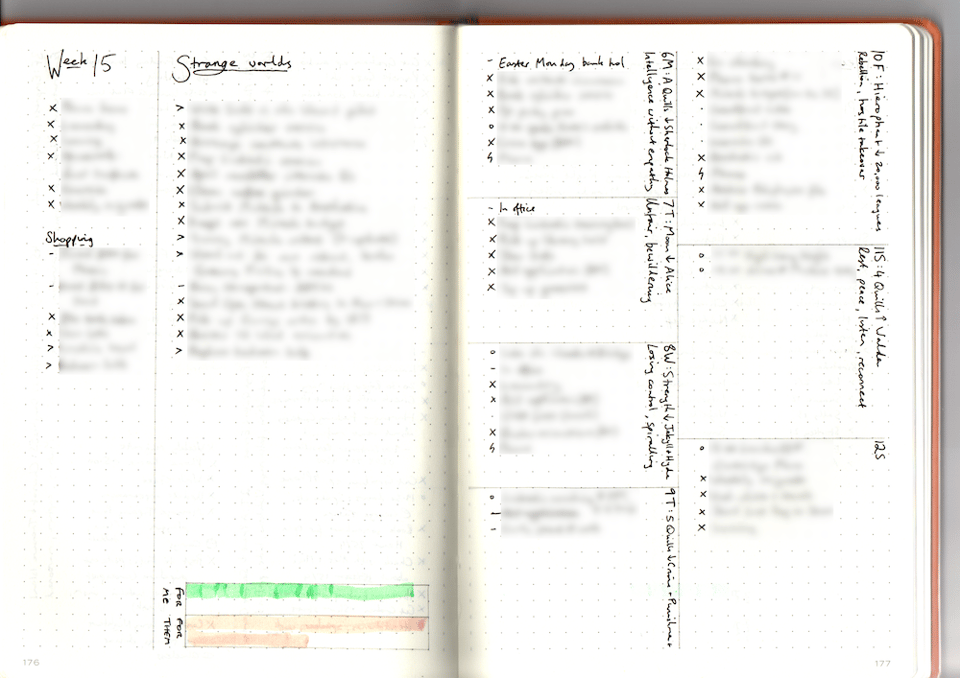
The other thing that makes it bullet journalling is the idea of migrating lists, so when the week ticks over and you’re transferring onto a new page for the new week, you go through everything on that to-do list and note stuff that you’ve done. I’m guilty of feeling like I haven’t really done anything, so it’s quite good to look through and go, actually, I did tick off this, this and this.
And then everything that’s not done, either decide to transfer it to the next week or just cross it out and go, I’m not going to do that! This is why it’s good to do them long-hand. The effort of copying the same to-do list item onto the next week is a mental check-in. Is this worth the effort of transferring it on… If I don’t feel like it’s worth transferring over, I guess it wasn’t really that important anyway.
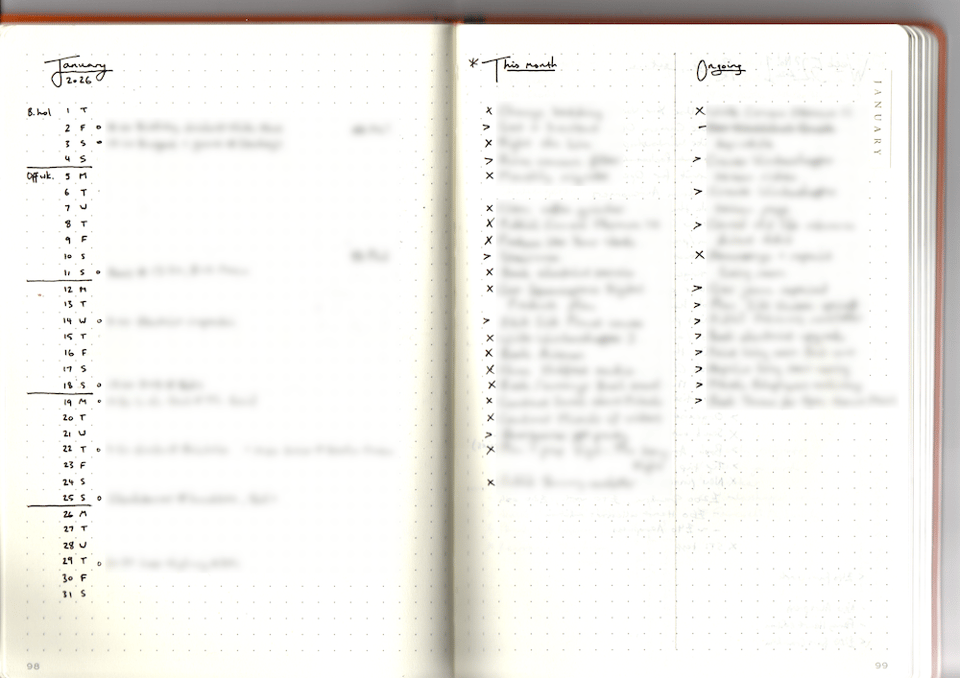
Then you do the same thing for the month. So you have a month list as well, that you might be scheduling stuff backwards and forwards to the week lists from. It’s an organisational tool but also the mindfulness bit is just keeping track of, I did do all of this this week and here’s the stuff I think is worth carrying over.
Karen
I watched a video by someone that sells bullet journals. He was putting timed entries in and saying, 9:32, I’ve done this. It made me think, do I need to have it with me all the time, am I forever journalling? How often do you make entries?
Matt
I certainly don’t put time stamps on things like that. I will put times against things I’m planning. I’ve got my week spread, with a box for each day, so that when I plan the week I can go, 5pm that day I’ve got a haircut. Stuff that I need to not forget about.
I keep it with me most of the time because part of the point for me is having something nearby so that if I have an idea like, I’ve suddenly solved this story problem, I won’t forget it.
Karen
OK, so you use it for that as well as just to-do lists.
Matt
Yeah, or somebody’s called me, and I need to note down the phone number to call them back. I can note it down on that day’s box. But outside of week plans, the productivity spreads, the rest of the book is just kind of free pages for different projects.
I used to have a notebook for every project. But not having the right notebook became an excuse to not work on it. So, one book for everything but with numbered pages and an index that tells me what spreads are for what projects so that I can find them easily.
Karen
What got you started on bullet journalling and what’s made you stay with it?
Matt
Keeping a more detailed weekly plan was one of the things my therapist suggested when I was having cognitive behavioural therapy. The issues I was discussing with her were about feeling that I don’t get enough done, overwhelmed by all the tasks I’ve got to do. She suggested keeping a weekly planner, not one great long to-do list that you’re trying to work through at all times. And feeling that there are 20 things on this list, how can I get any of them done?
On a Sunday evening, I plan each day of the week with the things I’m going to try to get done. It feels a bit more manageable.
Karen
I can see the benefit of that. Sometimes I’m planning a family get-together and I have all these lists floating around in my head and when I start writing a menu and a plan, I do feel calmer about it.
Matt
I’d been starting to see some things about bullet journalling on my social channels. I watched a couple of videos to see how it’s supposed to work. I’ve stuck with it because it’s working for me.
And I label each book afterwards so that I can find stuff again.
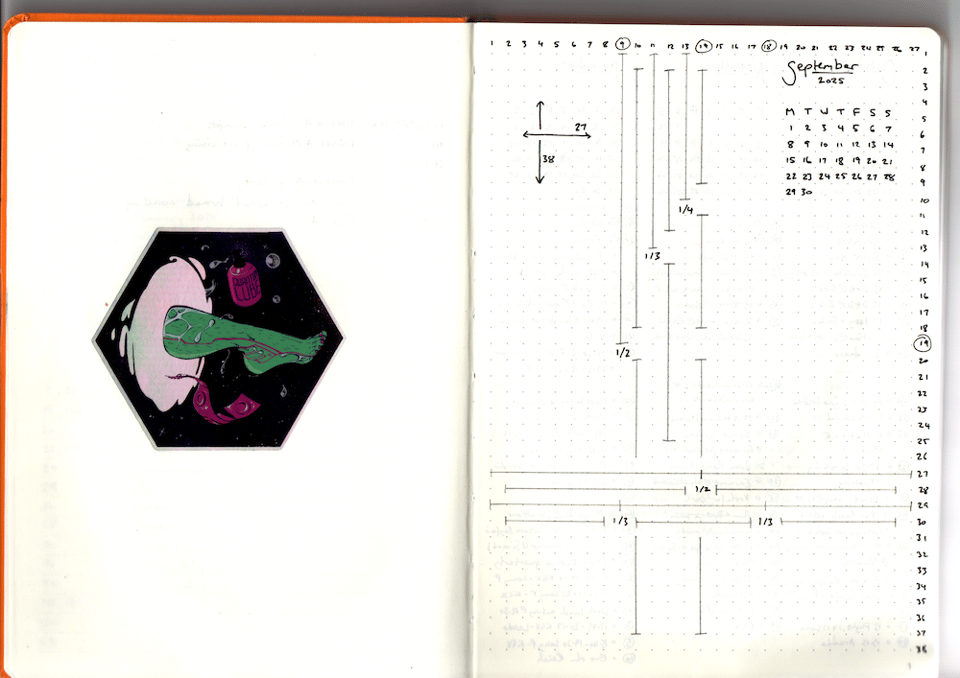
It’s been useful for mundane stuff like remembering what date my boiler broke, that kind of thing. That’s noted in there. It’s the sort of thing insurance companies need to know and that I’m not very good at remembering, as you know.
Karen
What advice would you give to someone who thought they might like to have a go at bullet journalling?
Matt
Keep it simple. Don’t worry about what it looks like. Find whatever bits of the system work for you, use them and leave the rest to one side.
There’s more to this interview. Buy us a cuppa on Ko-fi to support our work, and you can read the unabridged versions of this and every Professional Relations interview.
Buy us a cuppa ☕️
21:00 BST, 6/13/27 July, Youtube: I Need A Miracle listening party livestreams – join Matt live on the Foggy Outline Youtube channel every Monday evening. I’m screening and chatting about each episode in I Need A Miracle season 1 in the run-up to crowdfunding for season 2. Get reminded when I’m going live.
18:30 BST, 9 July, Skipton: Richard will be at the regular People, Planet, Pint meetup.
“Any normal person suffering this degree of violence, both physical and mental, would have crumbled before the halfway point”: Richard reviewed On a Wandering Planet by Jean Harrison. Any recommendations for him to review next?
I Need A Miracle
Mr Chris Smith interviewed me on his Love Da Beat Radio segment, Audio Alchemy. I was mainly on there to start the prodding about our upcoming crowdfunding campaign for I Need A Miracle season 2, but we also covered Merely Roleplayers and even a passing mention of my stage play Audience with the Ghost Finder.
In a couple of weeks, I’m starting up a weekly listening party livestream on Youtube. Each Monday from 21:00 BST, I’ll play an episode from I Need A Miracle season 1, and share some reflections, writing process and backstage stories. Join live from your laptop, tablet or phone to chat, ask questions and share your reactions to the episode.
Doing business on a sick planet

Our latest and greatest course, for small business owners and decision-makers who want to factor in the environment while running a business, is open for enrolment. Point the eco-conscious small business owners you know to this page and let them know if they sign up for updates, they can get a free taster before they commit to the full course.

Matt highlights Tal Minear:
Tal is behind so many cool audio drama podcasts, whether as the ideas person or the production person who actually makes it happen, or often both. They also organised TAFCON, The Audio Fiction Convention, which happened for the first time this month in Boulder, Colorado (and planning is already under way for TAFCON 2 in 2027).
Visit FoggyOutline.com

