In a perhaps unsurprising development, I'm going to be posting Saturday Night Live recaps three times a week from here on out.
I'm sorry. I pour my heart and soul into all my projects. I believe in my ideas. I don't know why.
Then, I'm inevitably devastated when they fail to meet even modest expectations. So, I'm going to slow down here. I love the work, but it's exhausting and depressing trying to make something succeed when the universe seemingly just isn't interested and doesn't care.
Other dreamers have get-rich-quick schemes. I have vow-to-do-an-insane-amount-of-work-for-an-exceedingly-modest-sum-of-money schemes. That would not be the smartest strategy, to begin with, but I never even come close to making the modest sum of money I'm hoping for.
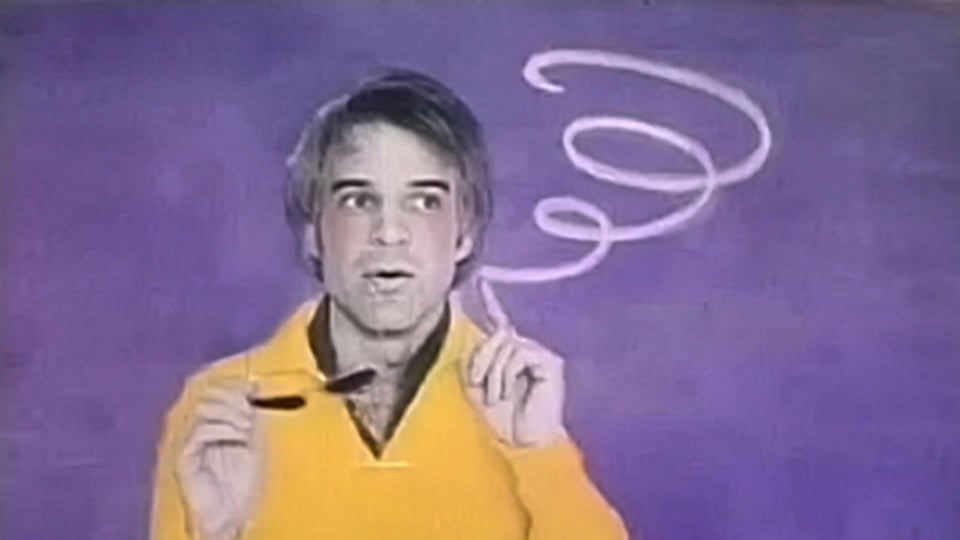
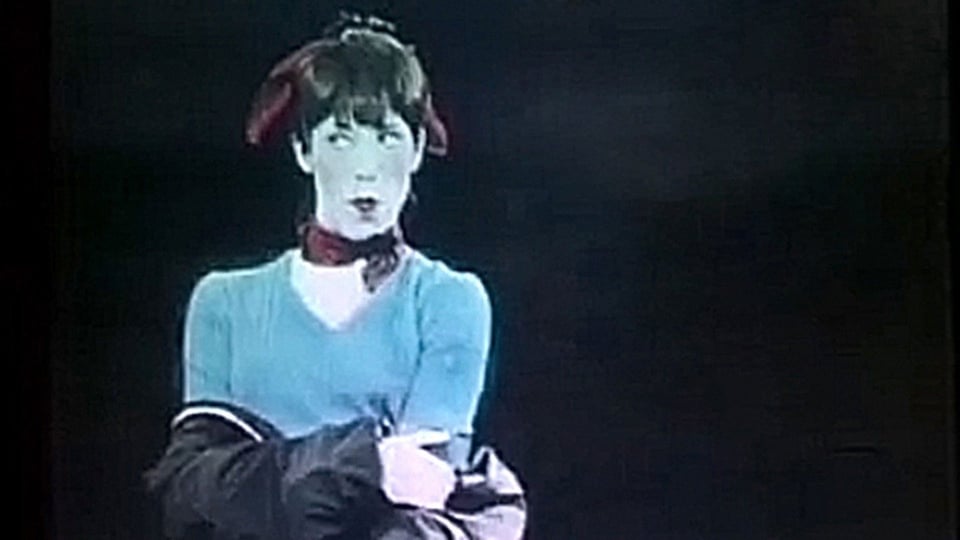
Steve Martin’s second episode as host, like a previous Elliott Gould-hosted episode, begins with Gilda Radner nervously approaching a host she presumably has recently slept with.
In both instances, Radner is the vulnerable one seeking to turn a one-night stand with a handsome, famous man into a relationship, or in Gould’s case, a marriage.
Here at Every Episode Ever, we’re thirty-seven episodes into the epic complete history of Saturday Night Live. I don’t like to brag, boast, be arrogant, or waste words unnecessarily, but I am NEARLY done with four percent of the project.
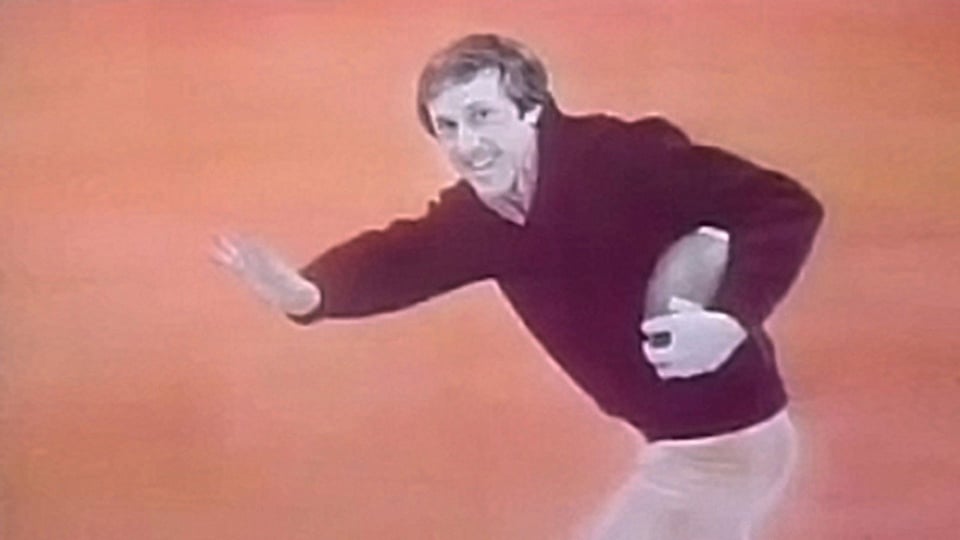
How you like them apples, huh? Yet, we’re still encountering firsts. The twelfth episode of the show’s second season, for example, marks the first time the show has been hosted by an athlete.
One of the reasons I wanted to watch and write about every episode of Saturday Night Live for my Every Episode Ever project at Buttondown is because Lorne Michaels’ comedic institution (which is so crazy sometimes that I think it belongs in an institution) has created more superstars than any other show in television history.
That’s at least partially attributable to the show’s longevity and constant turnover. Saturday Night Live is undoubtedly the only television comedy to have hundreds upon hundreds of cast members over a nearly half-century.
Part of what makes my epic journey through the entirety of Saturday Night Live so fascinating as well as melancholy and bittersweet is knowing the tragic end some of its most distinguished alum would suffer.
John Belushi and Chris Farley were both cursed to die young and hungry, with the talent and promise in the world.
The tenth episode of the second season of Saturday Night Live marked the triumphant return of Andy Kaufman. The anti-comedy icon and peerless human irritant hadn’t appeared on the show for over a year. His last appearance was November 8th, 1975, and Saturday Night Live both had and had not changed an awful lot in the interim.
Kaufman brings back his Foreign Man character. The professional oddball’s alter-ego was a consummate outsider from somewhere in Eastern Europe who trepidatiously tells jokes that don’t make sense and aren’t funny. Then this awkward, eternally out-of-place misfit does impressions that are alternately comically, deliberately terrible, to the point of all sounding the same, and uncannily accurate.
In a recent blog post that proved shockingly popular—it’s been read three times as often as any other Nathan Rabin’s Happy Place yet somehow did not attract any new subscribers—I wrote about how Saturday Night Live has been ending a few minutes short for nearly FIFTY years now. Yet in all of that time, no one seems to have figured out what to do in those awkward in-between moments when the show has ended, but the time to run end credits has not yet arrived, and they’re called upon to fill that dead air with words.
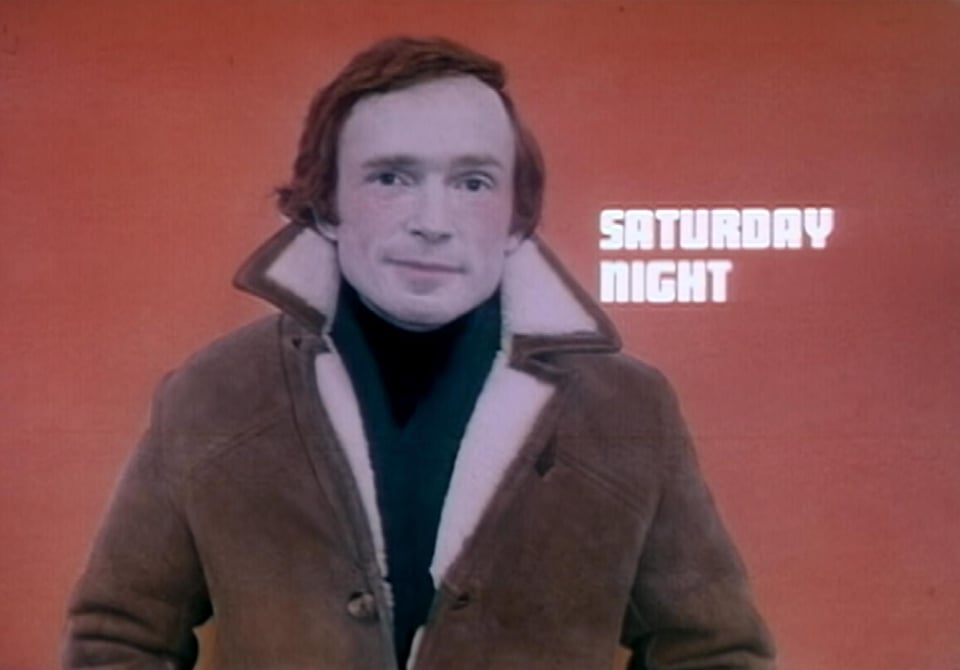
I was inspired by the famously clever and quick-witted Dick Cavett nearly having a panic-induced heart attack when called upon to improvise a minute or two on live television.
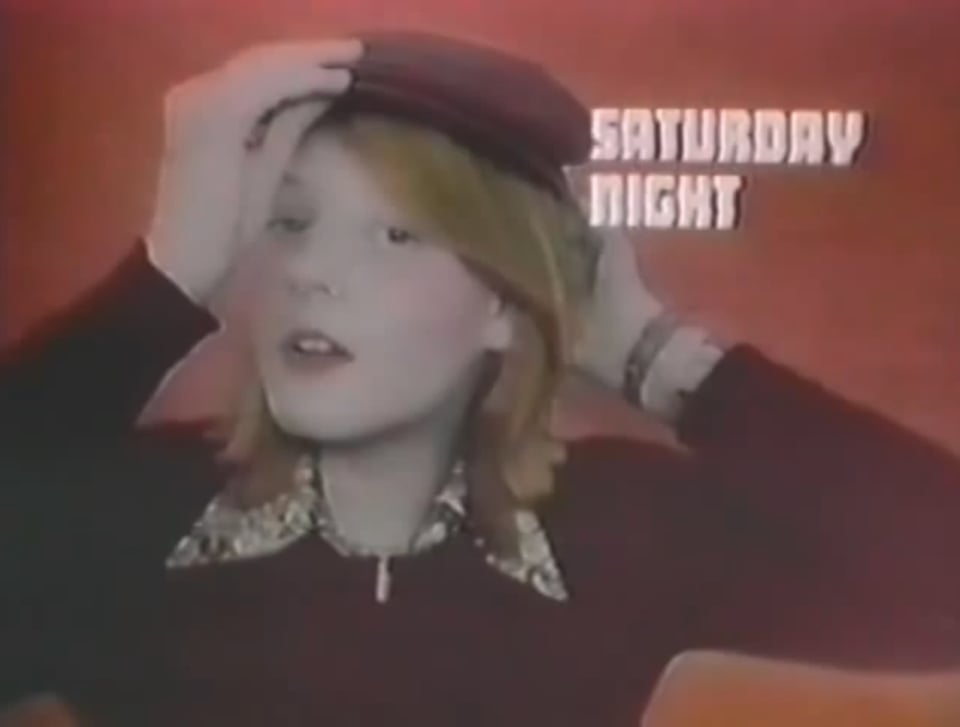
There are certain things children should not do for the sake of their mental health and emotional development. Playing a child prostitute in a brutal, gritty character study of madness and obsession for Martin Scorsese is one of them.
Venturing into the tension-filled drug den that was Saturday Night Live to be the show's very first child host is another endeavor perhaps best left to those 18 and older.
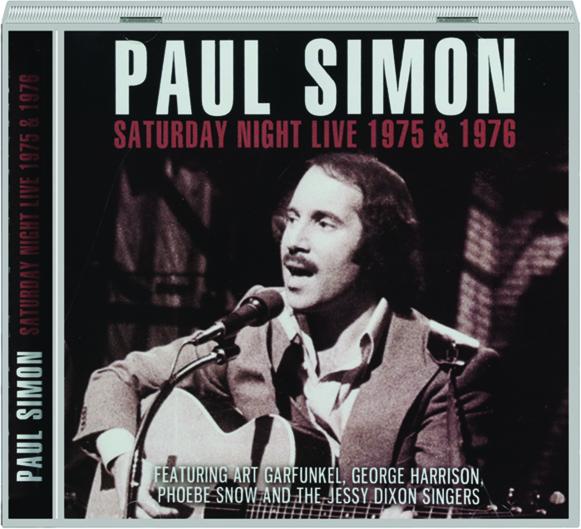
The last time Paul Simon hosted Saturday Night Live, the show was in its infancy. The legendary singer-songwriter turned the second episode of his best friend Lorne Michaels' comic institution into The Paul Simon Show.
Instead of being a comedy show with music, Simon's first episode as host became a music show with comedy. Nabbing a figure as iconic as Simon was a coup for the raunchy new sketch comedy show. It was even impressive that Michaels secured a Simon & Garfunkel reunion for Saturday Night Live as well.
Saturday Night Live began repeating itself early. Audiences for its second season undoubtedly experienced a feeling of deja vu over hosts like Lily Tomlin, Buck Henry, Dick Cavett, Candice Bergen, Elliott Gould, and Paul Simon, all of whom hosted in the first season. Audiences for its second season undoubtedly experienced a feeling of deja vu over hosts like Lily Tomlin, Buck Henry, Dick Cavett, Candice Bergen, Elliott Gould, and Paul Simon, all of whom hosted in the first season.
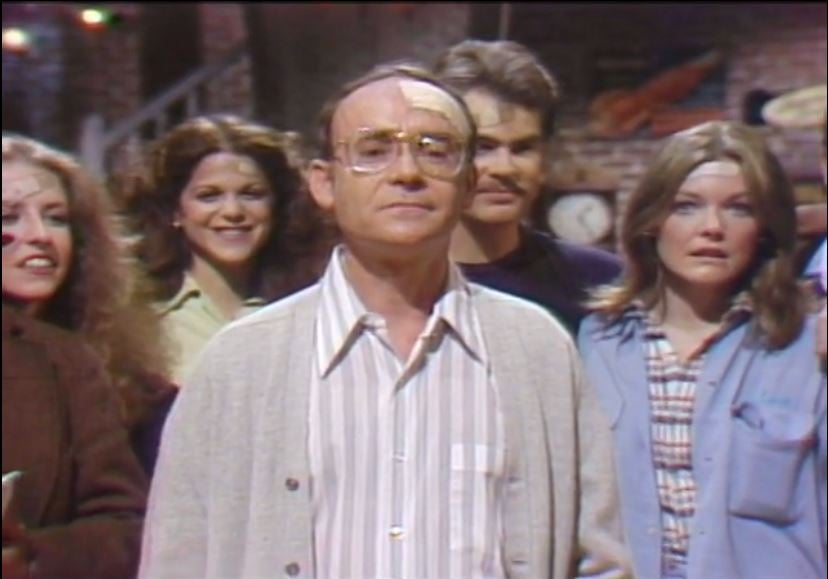
It’s easy to see why Lorne Michaels kept inviting hosts back. With a returning host, the show didn’t have to start from scratch. A returning host understood the assignment. A returning host understood the process. A returning host understood how things worked. And if they were being asked back, it was probably because they’d done a good job the first time, and the cast and crew enjoyed working with them.
We've talked a lot about firsts here at Every Episode Ever. That makes sense, considering how new the show was at that point. But it was old enough to have logged some meaningful endings, whether audiences knew it or not.
Two staples of Saturday Night Live's endlessly mythologized beginnings ended when Jim Henson's Muppets appeared in their final sketch and, on a more auspicious note, the last short film from Albert Brooks ran.
Who is your favorite Muppet? Is it King Ploobis? Or are you more partial to Queen Peuta? Alternately, you might be a die-hard fan of the Mighty Favog although I know that there are a lot of Vazh and Scred obsessives out there as well.
Unless you are a Saturday Night Live super-fan, or subscribe to this nifty newsletter, you probably have no idea what I’m talking about.
Steve Martin was made for Saturday Night Live because he was hip and popular and game for anything, but also because his persona as the ultimate show-business phony has so many commonalities with the personas of Albert Brooks and Andy Kaufman.
In his 1970s heyday, purposeful insincerity was Martin's trademark. Everything was a put-on, a goof, a lark, a gag. Martin protected his fragile artistic soul by harnessing the incredible power of irony.
I hated high school. I hated everything about it. I’m not doing too well these days, but I take comfort in knowing I am not in high school.
But I particularly hated the part where my fellow students would congregate in front of the school before classes and talk to their friends. I had no friends, and the idea of talking to strangers filled me with fear. On a related note, talking to strangers still fills me with fear.
In an unsurprising turn of events, I cannot sustain a seven-day-a-week publishing schedule here without going insane or abandoning or ignoring the many other parts of my life and career.
I was hoping that I'd make so much money from the Indiegogo campaign that I'd be able to focus on this project, but that did not happen. In an unfortunate turn of events, I might lose money on the Indiegogo thing because I want to end it and refund everyone's money but Indiegogo seems intent on getting their suspiciously large cut of the exceedingly small total all the same.
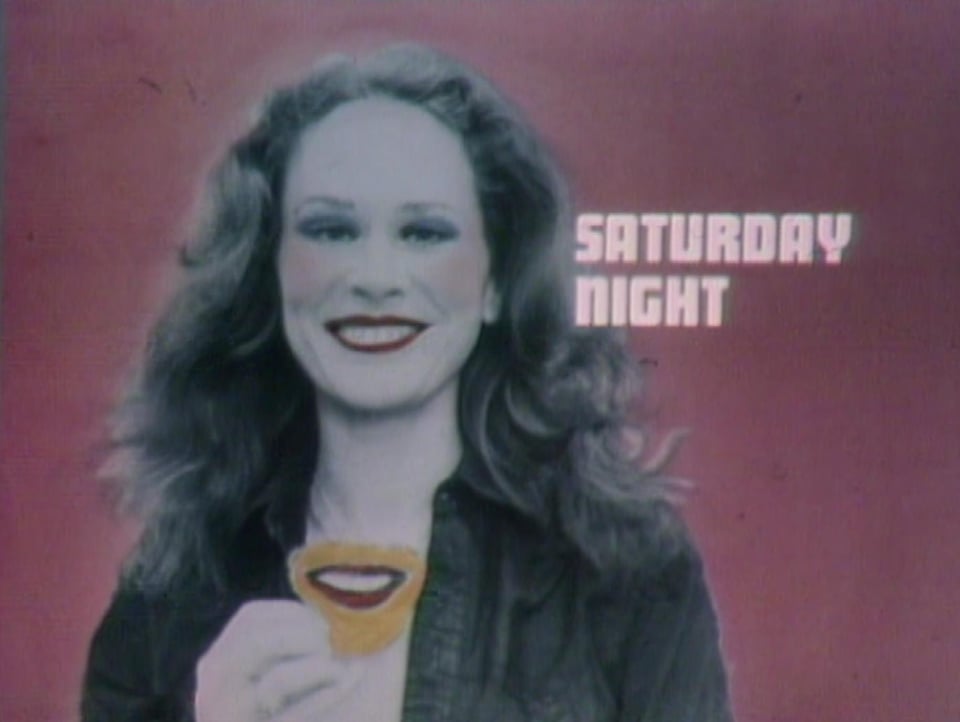
In the first of two hosting stints, Karen Black flagrantly defies the old show business dictum never to work with children or animals.
Black brought her baby son Hunter onstage with her when she delivered her opening monologue, but the little bugger goes delightfully off-script. Instead of resting peacefully on her hip, the tot makes an unabashed play for her milk and life-giving boob in a way that's funny, spontaneous, and more than a little awkward.
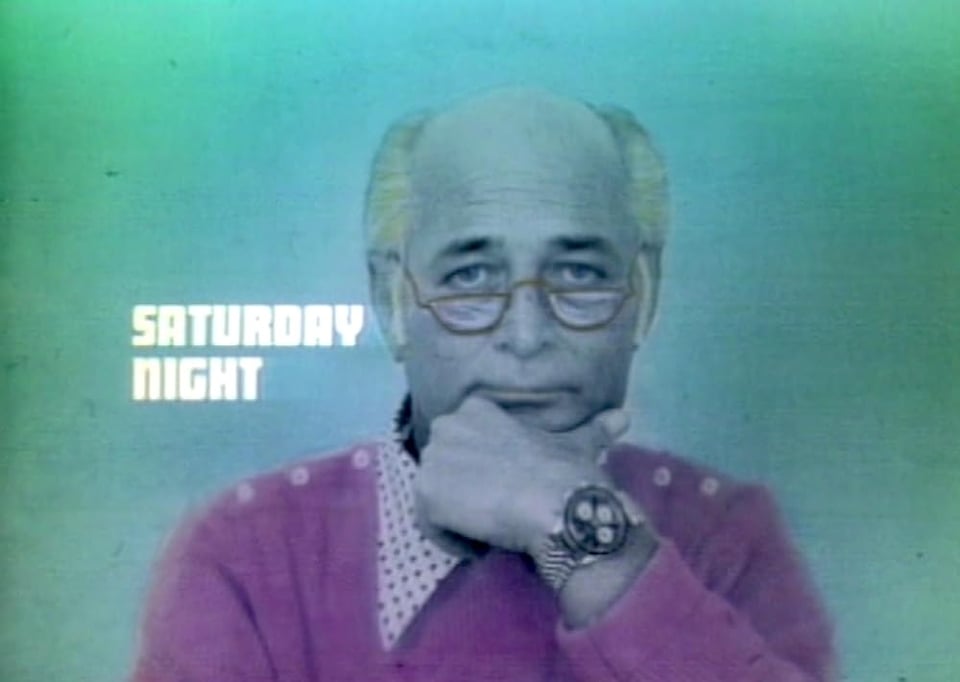
Television mogul Norman Lear was not the first non-entertainer to host Saturday Night Live. That distinction belongs to Ron Nessen, the presidential press secretary whose performance on a famously vulgar episode failed to impress the White House.
Lear was consequently the second host who wasn't a musician, a stand-up comedian, or an actor. The show used the same blueprint that it used for Nessen and would go on to employ with the many non-performers to come, including many politicians and athletes guaranteed to score big ratings, if not big laughs.
The premiere of Saturday Night Live's second season opens with host Lily Tomlin making an ironic superstar entrance surrounded by an entourage worthy of Elvis or Vinnie Chase. She now has her own personal magician, various hangers-on, and a little person chauffeur whose job duties include topping off everyone's champagne.
With the crazed narcissism of a true diva, Tomlin very confidently calls her old friends in the Not Ready for Primetime Players by their wrong names. Chevy becomes Jerry, she mistakes Radner for her Laugh-In colleague Goldie Hawn, and Jane Curtin becomes Jane Belushi.