
14 days without an elevator, then the hotel bill is yours
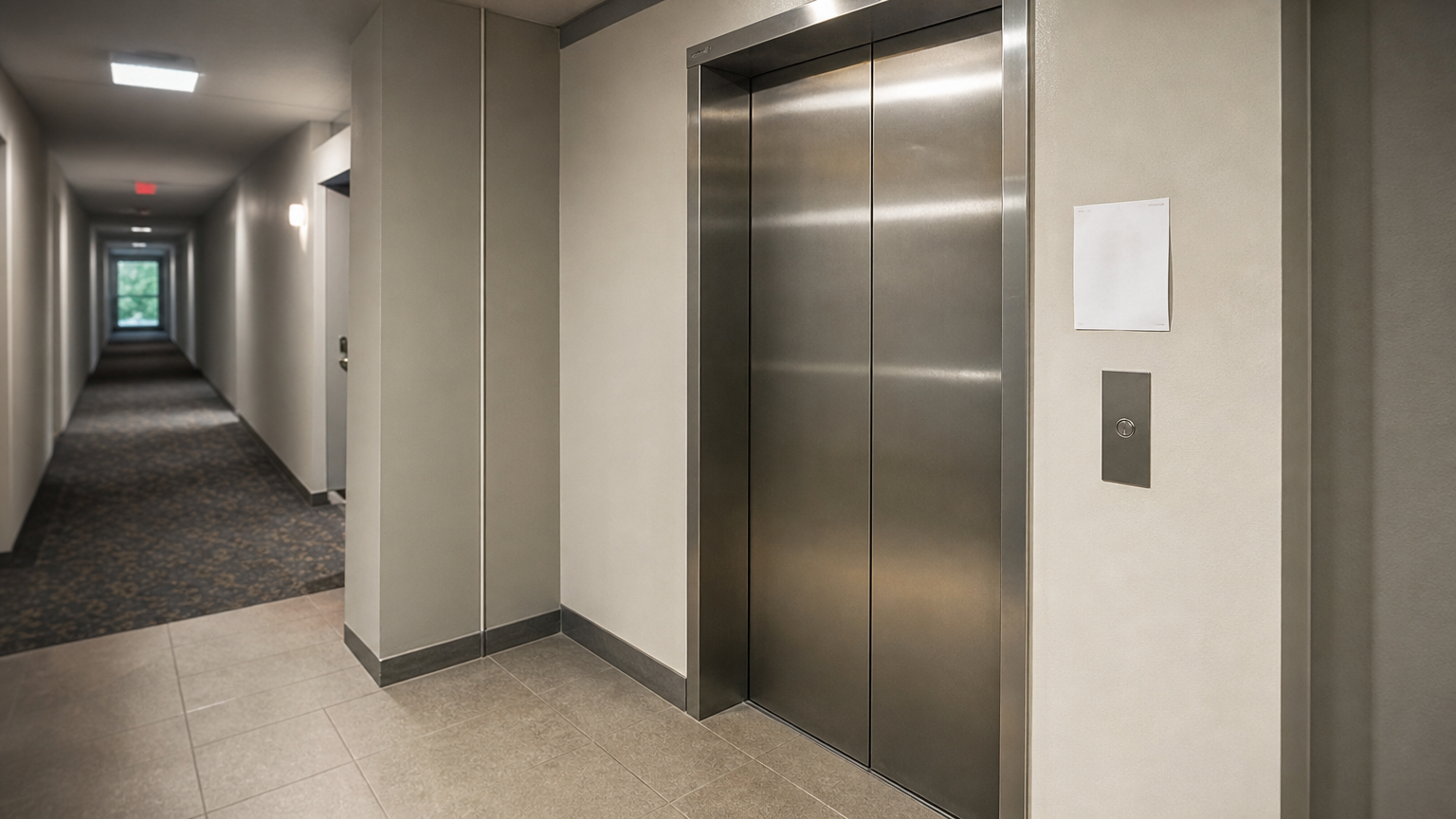
New York City finalized a rule that puts a 14-day clock on residential elevator outages, and outreach starts now ahead of enforcement next year. Plus: Miami-Dade votes today on codifying its elevator safety ordinance, and Illinois has six days left for comments on its door monitoring proposal.
THE SIGNAL
New York City put a 14-day clock on residential elevator outages
The New York City Department of Buildings used National Elevator and Escalator Safety Awareness Week, November 9 to 13, to start outreach on a rule it finalized earlier this year: 1 RCNY 103-19, covering residential buildings whose elevators are out of service. DOB says it will start enforcing the rule next year, after extensive outreach and education.
The mechanics are specific. When DOB gets a report of an out-of-service elevator in a residential apartment building, it dispatches an inspector. If the inspector confirms the elevator is not operating and that repairs or modernization work are not underway, the landlord receives a Class 1 OATH violation, which carries a maximum civil penalty of $25,000. Issuing that violation starts a 14-day clock.
If, after those 14 days, elevator service is still unavailable and repairs have not begun, the landlord is legally required to provide alternative accommodations to affected tenants and to post a notice next to the elevator telling residents about that right. DOB lists what counts: offering a temporary move to an apartment in another building that has elevator service, relocating tenants to parts of the building where an elevator is not required, reimbursing tenants for a hotel room until service is restored, or installing a temporary vertical transportation device.
The exposure does not stop at day 14. Landlords who neither start repairs nor provide the required accommodations can face additional violations and penalties for each day DOB inspectors return and find neither in place. Two limits matter. The rule is aimed at buildings or building sections where all residential elevators serving them are out of service, and it does not apply to elevators undergoing modernization.
What this means for you: If you own or manage residential buildings in New York City, the cheapest time to prepare for this rule is during the outreach window, before enforcement starts next year. The rule rewards one thing above all: documented, active repair work. From the first hour of any outage, keep the dispatch record, the technician findings, the parts orders, and the approval dates in one file, because an inspector's finding that repairs are not underway is what starts the clock. Then price your accommodation options in advance, hotel rates, sister-building units, and temporary lift options, so day 14 is an execution problem, not a shopping problem. The deep cut below is a five-step playbook for building that file.
INDUSTRY WATCH
Miami-Dade votes today on putting its elevator safety rules into county code
Agenda Item 4(B) at today's November 17 Board of County Commissioners meeting is a proposed ordinance creating Chapter 8F of the Miami-Dade County Code, the Elevator, Escalator, and Similar Equipment Safety Ordinance. It mostly codifies what the county already enforces: Miami-Dade is the authority having jurisdiction for elevators countywide under its state delegation, except in the City of Miami and Miami Beach, which hold their own state agreements. Two pieces are new or newly priced. The ordinance adds a relief process, not currently in Florida Statutes Chapter 399, for temporarily dormant equipment, with annual inspections to confirm it stays safely secured while out of service. And the companion fee order restores the annual Certificate of Operation fee to $150 per unit, across roughly 10,000 certificates a year. It is a proposal on today's agenda, not an adopted ordinance yet. If you hold Miami-Dade buildings outside Miami and Miami Beach, watch the vote and budget the $150 per unit.
Illinois door monitoring comments close Monday, November 23
Six days remain in the Illinois comment window covered in Issue 17. The Office of the State Fire Marshal is accepting comments on the Elevator Safety Review Board's proposed amendments to the Illinois Elevator Safety Rules, Part 1000, through Monday, November 23, 2026, the end of the 45-day period that opened October 9. The amendments would adopt ASME A17.1-2025, including its door monitoring provisions, which would require most existing elevators without a door monitoring system to add one, with a compliance deadline seven years from anticipated adoption. Comments go by email to [email protected], or in writing to Blake Fawns, Administrative Rules Coordinator, at the OSFM office in Springfield. If your Illinois buildings would carry a retrofit under this rule, this week is the last cheap input you get. After Monday, the record closes and the next step is the Board's.
THE DEEP CUT
Build your 14-day outage playbook before the clock starts
New York's new outage rule turns on one question you can answer only with records: were repairs actively underway? A landlord who can show the work started, and kept moving, is in a different position from one who made a phone call and waited. Build the file before you need it.
First, log the outage from hour one. Record when the car went out, who reported it, when your service provider was dispatched, and when a technician was on site. Keep the dispatch confirmation and the technician's written findings in one folder per outage, not scattered across inboxes. If an inspector arrives on day three, that folder is your first answer.
Second, prove the repair is moving. Save the parts order with its order date and promised ship date, the quote you approved and the date you approved it, and every schedule update from the contractor. A backordered part is a fact. An undocumented delay looks like inaction. If the timeline slips, get the new date in writing the same day and add it to the file.
Third, decide your accommodation options now, while no clock is running. Price the realistic choices for your buildings: a hotel block rate nearby, vacant units in sister buildings that do not require elevator access, and what a temporary vertical transportation device would cost and how fast it could be installed. You will not negotiate well on day thirteen.
Fourth, assign the clock to one named person. That person counts the days from any violation, posts tenant notices, and updates residents on a set schedule, even when the update is that a part is still in transit. Silence reads as neglect to tenants and to inspectors.
Fifth, know the line the rule draws. Modernization work underway sits outside this requirement, but a planned modernization that has not started is not the same thing. If a car is down and a modernization is coming, get your provider's written start date and keep it with the outage file.
The rule is in outreach now and enforcement starts next year. The buildings that handle it well will be the ones whose paperwork was already in order.
Run your contract through the free Contract Scanner
Free tool: the Contract Scanner
An outage clock is only half the exposure. The other half is what your service agreement actually obliges your provider to do, and how fast. Upload your contract and the Scanner flags the response and repair language, the exclusions, and the auto-renewal traps that decide who carries an extended outage.
P.S. Want more than a flag? The Decode report is a full line-by-line breakdown of your specific agreement, including the exclusions and the triggered-code exposure, for $29.